
Reviewed · ANCIENT CORINTH & CANAL DAY TRIPS
The original Christian tour on Paul’s footsteps in Athens and ancient Corinth
Athens and Corinth in one long, meaningful day. What makes this tour stand out is the blend of iconic ruins with a clear Christian thread, starting at the Areopagus where Saint Paul is traditionally linked. I liked the private-vehicle setup, because you get picked up and dropped off, then you concentrate on the sights instead of the transit.
I also liked how the Acropolis monuments are paced so the hill feels like a connected walk, not a checklist. One possible drawback: entrance fees are not included for most major sites, so plan for buying tickets in advance and building in time for entry.
In This Review
- Quick hits before you go
- Private Athens and Corinth Day: What You Really Get
- Is $445.77 for Up to 3 Good Value?
- Getting From Piraeus Into Athens: Coastal Drive Feel
- The Areopagus Hill (Mars Hill) Connection to Paul
- Acropolis Highlights: Propylaea, Athena Nike, Parthenon, Erechtheion
- Propylaea gate and the Pericles building ambition
- Temple of Athena Nike and the war scenes
- Parthenon: the Doric culmination and Delian League treasury role
- Erechtheion and the famous caryatids story
- Ancient Agora: Athens After the Sermon
- Corinth Canal and Peloponnese Drive: Why This Gap Matters
- Lunch Timing in Ancient Corinth and Staying Comfortable
- Ancient Corinth (Archaia Korinthos): Time Among the Crossroads
- Driver vs. Licensed Guide: Pick the Right Guidance Level
- Who Should Book This Private Paul’s Footsteps Tour
- Should You Book This Tour?
- FAQ
- Is this a private tour and how many people can join?
- Do you pick up cruise passengers at Piraeus?
- Is the tour in English and do you provide transportation?
- Are entrance fees and lunch included in the price?
- Can I have an English-speaking licensed guide inside the sites?
- How long is the tour and what fitness level do I need?
- What dress code should I follow?
- If I cancel, do I get a refund?
Quick hits before you go
- Paul’s setting at the Areopagus: you stop at the hill connected to the Sermon on an Unknown God, with a bronze plaque at the rock’s base.
- A full Acropolis sequence: Propylaea, Athena Nike, Parthenon, and Erechtheion come one after another, so details actually register.
- Greek geography with real payoff: the Corinth Canal stop is short but meaningful, especially when you understand why it mattered for ships for centuries.
- Driver-led insights, optional licensed guide: a driver explains on the move, but licensed site guiding is available for an extra cost.
- Ancient Corinth time to breathe: you get over an hour on location, not just a quick look from the bus.
Private Athens and Corinth Day: What You Really Get
This is an 8-hour private day focused on Athens first, then Corinth. You roll from place to place by a private, air-conditioned vehicle, with pickup offered either from your Athens hotel or from the Piraeus cruise port area.
You are not just seeing stone landmarks. You’re getting a guided route that threads through the big public spaces people associate with ideas, debate, worship, and daily life. The day includes major Acropolis monuments, the ancient agora, then the Corinth Canal and Ancient Corinth, with a lunch break in between.
Other ways to spend the day near Athens
- From Athens: Ancient Corinth Day Trip with Canal & VR Guide
★ 4.6 · 1,073 reviews - Private Biblical Tour Ancient Corinth & Isthmus Canal from Athens
★ 5.0 · 762 reviews - Athens: Ancient Corinth & Nafplio Full Day Trip with Swim
★ 4.8 · 531 reviews
Is $445.77 for Up to 3 Good Value?
The price is $445.77 per group, up to 3 people. If you split it three ways, it lands around $149 per person, which is often a fair rate for a private day when you factor in hotel or cruise pickup plus a comfortable ride.
The key value point is flexibility and time efficiency. You don’t waste half your day on buses and lineups for transfers. That said, your real cost can rise a bit because entrance fees are not included, and a licensed English-speaking site guide is also not included by default.
Getting From Piraeus Into Athens: Coastal Drive Feel
You start with a pickup and a drive along the Saronic Gulf coastal road, with views of the Piraeus and Athens riviera. This is a nice warm-up because it gives you a sense of where Athens sits, between the city and the sea, before you climb into the ancient story on the hill of the Acropolis.
The stop in Piraeus is time-efficient. You get around 20 minutes there, with admission marked as free. It’s short, but it helps you arrive in Athens already oriented.
The Areopagus Hill (Mars Hill) Connection to Paul
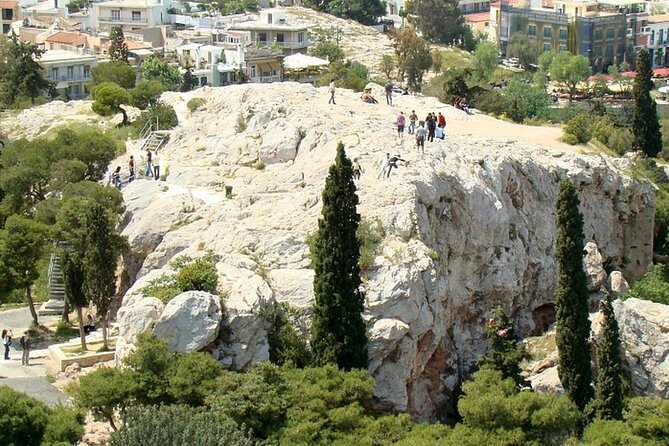
From the Acropolis area, the next major spiritual stop is the Areopagus, also called the Hill of Ares. This is where you hear the court and council role the hill had in classical times, and it’s also where the Paul connection is made.
In the classical imagination, the Areopagus served as a judicial site, linked with famous trials. In later tradition, it connects to Saint Paul delivering what is known as the Sermon on an Unknown God, said to be sparked by an altar dedicated to an unknown deity. There is a bronze plaque at the foot of the rock that you can see on-site.
Practical tip: this is a stop that rewards listening. The Areopagus is not a massive building you can just stare at. The meaning comes from context, and that’s where having your driver explain while you are there matters.
A short hop away, these too:
- Athens: Acropolis & up to 5 Archaeological Sites Combo Pass
★ 4.2 · 13,904 reviews - Athens: Acropolis, Parthenon & Acropolis Museum Guided Tour
★ 4.8 · 9,316 reviews - The Acropolis, Parthenon & Acropolis Museum Guided Tour
★ 4.7 · 8,493 reviews - Athens: Cape Sounion & Poseidon Temple Sunset Half-Day Trip
★ 4.8 · 8,241 reviews
Acropolis Highlights: Propylaea, Athena Nike, Parthenon, Erechtheion
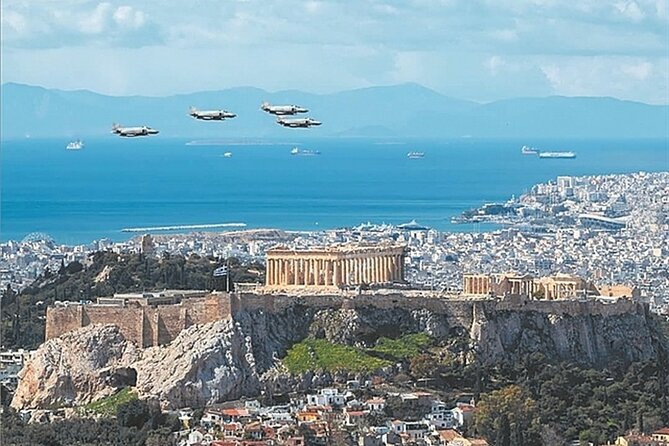
This is the heart of the day. The Acropolis is described as a sanctuary dedicated primarily to Athena, dominating the modern city from its rocky crag. The monuments are treated as masterpieces of Classical architecture, reflecting Athens at its height under Pericles.
From there, you move through several key structures, each with its own “why it mattered” story.
Propylaea gate and the Pericles building ambition
The Propylaea are the monumental gates to the Acropolis precinct. What I like about this stop is that it sets the tone for the whole visit: gates, repairs, and big design attempts, not just a single temple.
The current grand version fits into the Periklean building program, planned by Mnesikles and erected between 437 and 432 BC. The earlier gate phases and Persian damage also get part of the explanation, so you understand why parts look the way they do and why the plan had complications.
Admission here is not included, and the stop is brief, about 5 minutes. That means you should be ready to take it in fast and focus on the big visual cues.
Temple of Athena Nike and the war scenes
The small temple of Athena Nike is built between 426 and 421 BC. It sits on a bastion at the southwestern edge of the Acropolis. Even though it is compact, you are given a sense of the symbolism through its relief-carved frieze.
The tour notes that each side tells different stories: gods gathering around Zeus, battles involving Greeks and Persians, and scenes tied to events like Marathon. The pediments are described too, including battles linked to the Giants and Amazons.
This stop is also about 5 minutes, and admission is not included. If you want to linger for photos, try to do it without blocking others, because the viewing spots can get tight.
Parthenon: the Doric culmination and Delian League treasury role
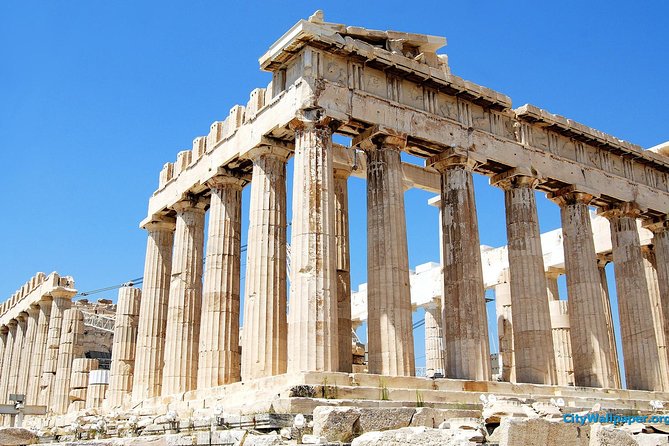
The Parthenon is the main moment. It dominates the hill and was dedicated to Athena Parthenos. It’s often described as the culmination of Doric architectural development, and it ties into Athens’ golden-age building program after the Greco-Persian wars.
One detail that helps the Parthenon click is the political and economic role it had. It wasn’t only a shrine. It also served as the treasury of the Delian League, a confederacy of Greek states under Athens.
You get about 45 minutes here, and admission is not included. That is enough time to see it from key angles and still read the key points if the site layout lets you.
Erechtheion and the famous caryatids story
Erechtheion is famous for its caryatids, six maidens acting like columns. The tour explanation goes beyond the visual and into the real-world history of the sculptures.
Some caryatids were removed to the Acropolis Museum in 1978 and replaced with replicas due to severe weathering and pollution. Another figure is linked to Lord Elgin’s removal of sculptures in the early 1800s, later displayed in the British Museum after 1816.
There’s also a blunt note about damage during a misguided attempt to brighten sculptures in 1937 and 1938. This is one of those stops where you come for the architecture, then leave thinking about ethics, preservation, and how history is handled.
The stop is about 5 minutes, and admission is not included. If you care about the sculpture details, this is where your driver’s framing helps, because you do not have long.
Ancient Agora: Athens After the Sermon
After the Acropolis, you head to the Ancient Agora, roughly 20 minutes by road. This is a different kind of Athens, more about civic life than religious spectacle.
The agora is described as the gathering place, first as an assembly and also as a marketplace in everyday use. The site has layers of use for about 5,000 years, which means you are not seeing one moment. You’re seeing how the space kept being rebuilt, destroyed, and rebuilt again.
You get about 1 hour 20 minutes here, and admission is not included. My practical advice: treat the Agora as a “how a city worked” site. You’ll get more out of it if you try to imagine people moving through it, meeting, trading, and holding public functions.
Corinth Canal and Peloponnese Drive: Why This Gap Matters
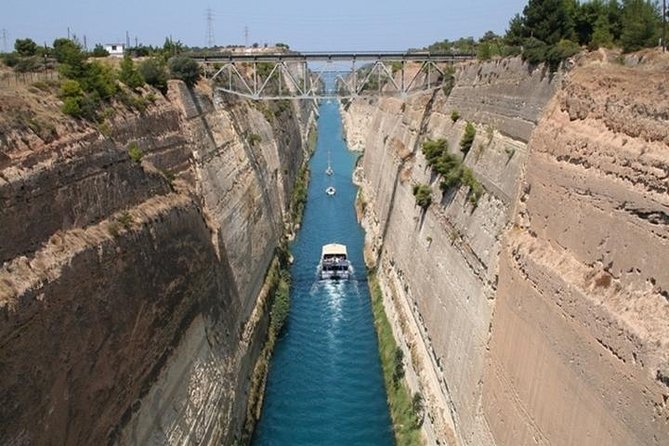
Next comes the drive through the Peloponnese region toward the Corinth Canal. The tour description frames the canal as a waterway linking the Gulf of Corinth to the Saronic Gulf, effectively separating the mainland from the Peloponnese like an island.
Even though the canal was dug in the late 19th century, the idea is presented as a 2,000-year dream. The important “story why” is about shipping routes: without the canal, ships had to circle the Peloponnese, adding long extra travel.
The canal is described as 6.4 kilometers long and about 25 meters wide, and the explanation mentions the earlier concept of the diolkós, a stone road where ships could be transferred on wheeled platforms.
You only have about 15 minutes for the canal itself, with admission marked free. That’s enough for photos and a short walk to take in the scale. What makes it worth it is the context you get before you arrive.
On the drive, the Peloponnese section also includes a quick culture cue about native grapes and wine roads, with examples like Moschofilero-Mantinia and Agiorgitiko-Nemea, plus Mavrodafni for dessert wine. It’s not a tasting stop, but it gives you a feel for the region you’re passing through.
Lunch Timing in Ancient Corinth and Staying Comfortable
After the canal, you travel about 20 minutes to Ancient Corinth. Lunch is built in as free time for a meal at a traditional restaurant where you can experience Greek cuisine, but it is not included in the price.
The day runs long, and the weather can be brutal in summer. In one example from earlier departures, a driver made a point of keeping the car cool between stops and ensuring water was available. You can treat that as a sign of how the day is meant to be managed, but still, bring your own sun protection and expect walking on uneven ground.
Keep your lunch plan simple. If you’re hungry and ready to move, you’ll enjoy your time in Ancient Corinth more.
Ancient Corinth (Archaia Korinthos): Time Among the Crossroads
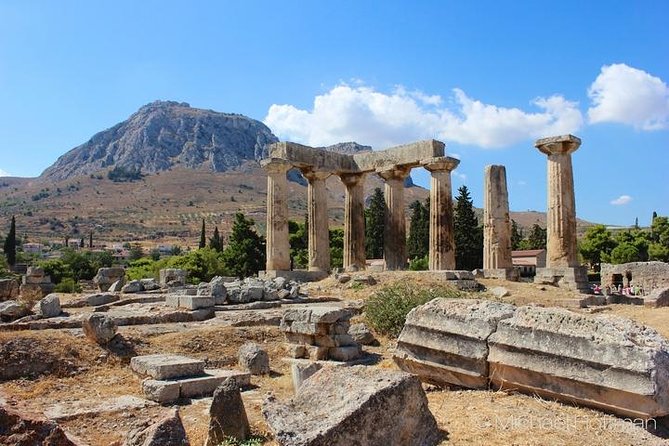
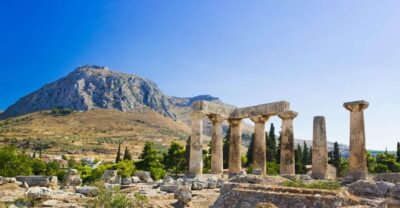
Ancient Corinth gets about 1 hour 20 minutes. This is the second big anchor of the Paul-in-Greece theme, because it connects Athens to the Corinth region where early Christianity spread.
The site is described as first inhabited in the Neolithic period, around 6500 to 3250 BC. What really stands out in the explanation is why Corinth grew: fertile soil plus a strategic location at intersections of land routes and waterways linking the western Mediterranean with the east.
The tour also mentions how that location fueled trade and prosperity early on, and that in the 8th century BC Corinthian colonies were founded, including places like Corfu and Syracuse. That gives you a sense of Corinth not as a backwater, but as a node in a much wider network.
Admission is not included for this stop. If you want to read more than a quick glance offers, consider the licensed-guide option.
Driver vs. Licensed Guide: Pick the Right Guidance Level
One of the most important choices here is what you want from the human part of the day.
Included in the price is a professional English-speaking tour driver who can explain history and culture while you are traveling and before you enter sites. That driver can talk up the context, point you toward what to notice, and keep the day flowing.
But there is also a major limitation: tour drivers are not licensed to accompany you inside archaeological sites and museums. If you want someone inside the ruins and museum spaces doing the full guided walk, you can arrange an English-speaking licensed tour guide for an extra cost, subject to availability.
If you want a specific style of expertise, names from past departures give you a clue. Danai came up as an archaeologist by profession in one account, and drivers like Spyros and Michael were praised for being friendly and attentive, including for practical details like water. David also got credit for providing an ok job of explanation. The takeaway is simple: you get the most story-per-minute when you match your expectation to the guide setup.
If your goal is Bible-and-history meaning, book the licensed guide. If your goal is mainly to see key sites efficiently and learn basics on the road, the driver-led format may be enough.
Who Should Book This Private Paul’s Footsteps Tour
This works best for a small group that wants efficiency and structure.
It’s a strong fit if:
- You want a private day, not a big group bus experience.
- You are traveling with a cruise ship or want smooth pickup and drop-off.
- You care about the link between faith history and the physical places in Athens and Corinth.
- You are comfortable with a moderate physical level, since you will be walking through ruins and over uneven ancient surfaces.
It might not be your best match if:
- You expect continuous, inside-the-site guidance at every stop without paying extra.
- You dislike entrance-fee planning. Since tickets are not included for many monuments, you need to handle that part ahead of time.
Should You Book This Tour?
I’d book it if you want a single-day route that makes Athens and Corinth feel connected, with your Paul-related stop anchored at the Areopagus. The private vehicle plus pickup and drop-off are real perks, especially when you factor in how much time you would otherwise lose getting across town.
Before you book, do two things that raise the odds of a great day:
- Pre-purchase your admission tickets when possible, since availability can be limited and some major stops require separate entry.
- If you want deeper guidance while you stand in the ruins, plan to add a licensed English-speaking site guide.
If you want a day that is efficient, meaningful, and manageable in a long 8 hours, this is a solid choice. Just go in with the right expectations about what your included driver can do versus what a licensed guide can handle inside the sites.
FAQ
Is this a private tour and how many people can join?
Yes. It is a private tour/activity, and it’s priced per group for up to 3 people.
Do you pick up cruise passengers at Piraeus?
Yes. Cruise ship passengers are picked up at the cruise ship pier at the Port of Piraeus, and you meet the driver/guide outside the terminal exit.
Is the tour in English and do you provide transportation?
The tour is offered in English, and it includes transportation by a private air-conditioned vehicle. A professional English-speaking tour driver is included.
Are entrance fees and lunch included in the price?
Entrance fees to archaeological sites and museums are not included. Lunch is also not included; you get free time for lunch in a traditional restaurant in Ancient Corinth.
Can I have an English-speaking licensed guide inside the sites?
A licensed English-speaking tour guide is not included in the base price. The provider says they can arrange one for an extra cost, subject to availability on the booking day.
How long is the tour and what fitness level do I need?
The duration is about 8 hours. Travelers should have a moderate physical fitness level.
What dress code should I follow?
The stated dress code is formal.
If I cancel, do I get a refund?
Free cancellation is available. You must cancel up to 24 hours in advance for a full refund.
Freshly listed near Athens
- Athens: Premium Guided E-Scooter Tour in Acropolis Area★ 5.0 · 133 reviews
- Athens: Wine Workshop Create your Own Wine under the Acropolis★ 5.0 · 77 reviews
- Ceramic and Pottery Creative Workshop with Two Local Artists★ 4.0 · 57 reviews
- Private Tour and Tasting at Zeginis Winery★ 5.0 · 18 reviews
- Athens: Greek Wines Tasting with Sommelier and Acropolis Views★ 5.0 · 88 reviews
- Private Day Trip to Nafplio from Athens★ 5.0 · 20 reviews
- Athens Old City Private Photoshoot Tour / 2 hrs★ 5.0 · 109 reviews
- Greek food and wine tasting★ 5.0 · 18 reviews
Ancient Corinth & Canal Day Trips, compared.
Ancient Corinth Day Trip with Canal & VR Guide
Read our review →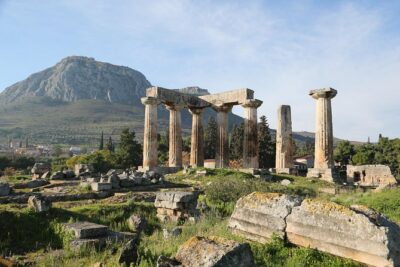
Private Biblical Tour Ancient Corinth & Isthmus Canal from Athens
Read our review →

Corinth Canal, Mycenae & Nafplio Premium Guided Tour
Read our review →
Private Tour of Apostle Paul’s Footsteps in Ancient Corinth
Read our review →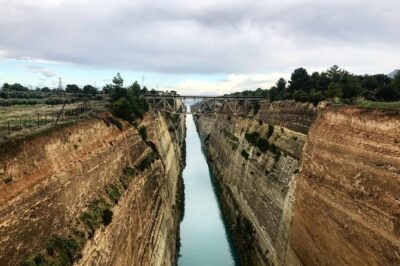
Corinth Half-Day Trip from Athens with Entrance Tickets
Read our review →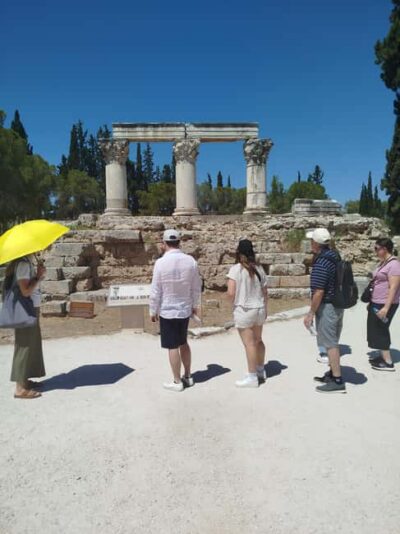
Ancient Corinth Tour with Official Guide & Tickets
Read our review →
Ancient Corinth, Epidaurus, Nafplio full day private tour from Athens
Read our review →Browse the lists this tour appears in