
Reviewed · MYCENAE & EPIDAURUS DAY TRIPS
Ancient Corinth, Epidaurus, Nafplio full day private tour from Athens
That thin strip of land keeps you moving for hours. This private route strings together Corinth and Epidaurus in one full, satisfying day, with a real stop in Nafplio at the end. I especially love the St. Paul connections at Corinth and the way Epidaurus theater sound still feels like magic. One thing to know up front, you cover a lot of ground, so comfort and good shoes matter.
You’ll get a door-to-door setup, with pickup from your Athens address and Wi-Fi on board. Lunch is included, plus you can choose a more traditional Greek restaurant style meal. The driver leads the day, but this is not the same as a licensed guide walking you inside every site.
If you want the deep, site-by-site storytelling inside the ruins, plan for the optional licensed guide add-on. Also budget for entrance fees at the main archaeological sites, since those are not included in the base price.
In This Review
- Key highlights you should care about
- Price and logistics: what $229.14 really buys
- Corinth Canal: the quick stop that makes everything click
- Ancient Corinth and the museum: where Paul’s story meets city life
- Temple of Apollo and Acrocorinth: two exterior stops, big payoffs
- Epidaurus museum and theatre: the best kind of two-step
- Sanctuary of Asklepios: how medicine became a religious experience
- Nafplio time: lunch, Bourtzi views, and the fortresses up the hill
- Bourtzi and the harbor photo moments
- Acronauplia: the oldest part with a transformed past
- Palamidi Castle: the steps that prove you committed
- Driver-led experience: comfort, timing, and what to request
- What to pack for a long day of walking and stairs
- Should you book this Corinth, Epidaurus, Nafplio private tour?
- FAQ
- How long is the Ancient Corinth, Epidaurus, Nafplio private tour from Athens?
- Is hotel pickup and drop-off included?
- Are entrance fees included in the price?
- Does the tour include lunch?
- Is there Wi-Fi on the vehicle?
- Is this a private tour or shared group?
- Do you get a licensed tour guide?
- What kind of transport do you use?
- Is a mobile ticket used?
Key highlights you should care about
- Corinth Canal viewpoints that frame the Isthmus and give context fast
- Ancient Corinth plus the museum for the Paul of Tarsus connection
- Epidaurus Theatre timed right, with time to absorb the setting
- Asklepios sanctuary for a clearer sense of how ancient medicine worked
- Nafplio in daylight with harbor views, Bourtzi, and two fortresses
- Private transfers with Wi-Fi so you’re not wrestling buses all day
Price and logistics: what $229.14 really buys
At about $229.14 per person for an 8 to 9 hour private day, you’re paying mainly for transportation, convenience, and an experienced driver who can explain what you’re seeing. It’s not just getting from A to B. You’re buying a smooth, controlled schedule with door-to-door pickup and an air-conditioned vehicle.
Here’s the value math that matters: entrance fees are extra for the two main archaeological stops. You should expect about €15 for Ancient Corinth and its archaeological museum, and about €20 for Epidaurus plus its archaeological museum. Some stops on the route are free, like the Corinth Canal viewpoint areas and key exterior points, but you should still plan for that €35 total.
The format is also a key part of the deal. You’re with your own group only, and the driver will not enter the archaeological sites with you. They can still answer questions and provide commentary in fluent English, and a licensed tour guide is available on request depending on availability. If you’re the type who wants the full on narration inside every ruin, that optional guide is the difference between a good day and a truly guided day.
Other ways to spend the day near Athens
- From Athens: Ancient Corinth Day Trip with Canal & VR Guide
★ 4.6 · 1,073 reviews - Private Biblical Tour Ancient Corinth & Isthmus Canal from Athens
★ 5.0 · 762 reviews - Athens: Ancient Corinth & Nafplio Full Day Trip with Swim
★ 4.8 · 531 reviews
Corinth Canal: the quick stop that makes everything click
The day starts with Corinth Canal, and it’s a smart opener. The canal cuts through the Isthmus of Corinth at sea level, with no locks, and it’s narrow enough that many modern ships cannot pass. Standing high up, you get a clear view of the steep limestone walls and the vessels as they move through below you.
This is the kind of stop that saves time. In 15 minutes, you understand the geography that shaped ancient travel and why these places mattered. It also gives you a visual reset before the historical digging starts.
Tip for your photos: if it’s bright when you arrive, plan one careful look from above, then keep your camera ready. The best shots come when you wait for a ship to appear in the canal throat.
Ancient Corinth and the museum: where Paul’s story meets city life
Ancient Corinth is one of those sites where names you already know suddenly feel real. Corinth was a major city-state on the Isthmus, and it sits about 5 km from the modern city. For Christians, it’s tied to Paul through the letters of First and Second Corinthians, and also referenced in the Acts of the Apostles during his missionary travel.
You also get the broader ancient context. Corinth was large and influential, and later the Romans destroyed it in 146 BC, built a new city in 44 BC, and eventually made it a provincial capital. That timeline helps you read the ruins with less guessing.
Then there’s the archaeological museum of Ancient Corinth, constructed between 1931 and 1932 to display excavated finds from the site. Even with a shorter visit, the museum gives you structure. You’ll see major elements associated with the archaeological area, including the Hadgimoustafa spring, the Lechaion Road, and features like the stoa and agora.
What I like about pairing the ruins with the museum in one day is that you’re not just staring at stones. You’re learning how the city was laid out and used.
A practical note: museum and site entrance is not included, so bring that extra budget and plan your timing so you’re not rushing when you step indoors.
Temple of Apollo and Acrocorinth: two exterior stops, big payoffs
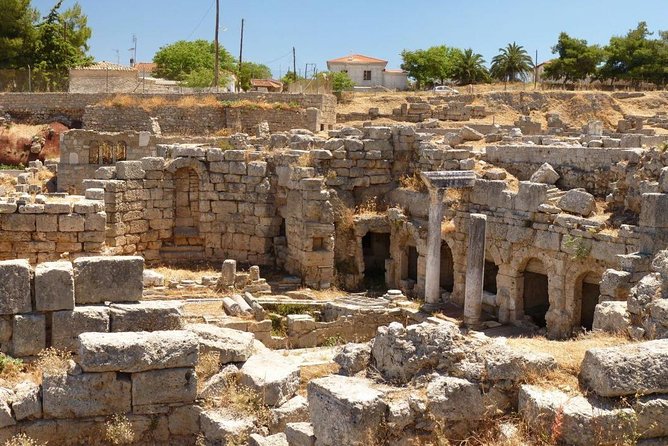
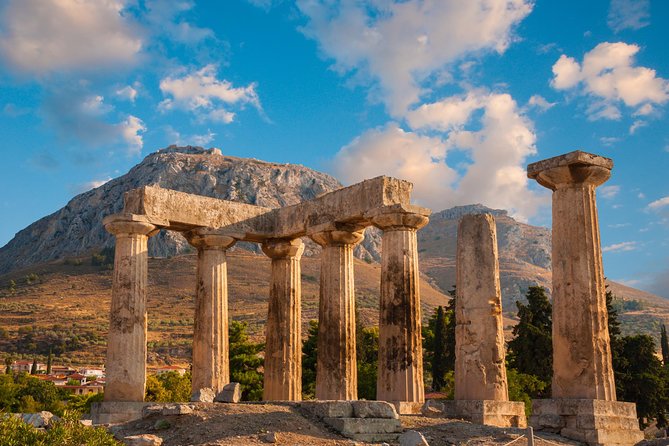
After Ancient Corinth, the day turns toward elevation and defense. The Temple of Apollo at Corinth dates to around 550 BC, and even a short stop at the site helps connect the city to older religious life before you head up to the fortress.
Then comes Acrocorinth, the upper citadel rock that dominates the region. It’s monolithic, it overlooks the ancient city, and it’s basically built for control. Acrocorinth’s fortress system had a secure water supply and repeatedly served as a last line of defense, because it commanded the Isthmus and could block land entry into the Peloponnese.
This stop is free, but don’t treat it like a quick photo break. Depending on where you park and how you walk, you may climb and walk more than you expect. Comfortable, grippy shoes help a lot.
If you’re sensitive to heat, this is also one to pace. Go slow, take breaks, and save your energy for the later climbs in Nafplio.
A short hop away, these too:
- Athens: Acropolis & up to 5 Archaeological Sites Combo Pass
★ 4.2 · 13,904 reviews - Athens: Acropolis, Parthenon & Acropolis Museum Guided Tour
★ 4.8 · 9,316 reviews - The Acropolis, Parthenon & Acropolis Museum Guided Tour
★ 4.7 · 8,493 reviews - Athens: Cape Sounion & Poseidon Temple Sunset Half-Day Trip
★ 4.8 · 8,241 reviews
Epidaurus museum and theatre: the best kind of two-step
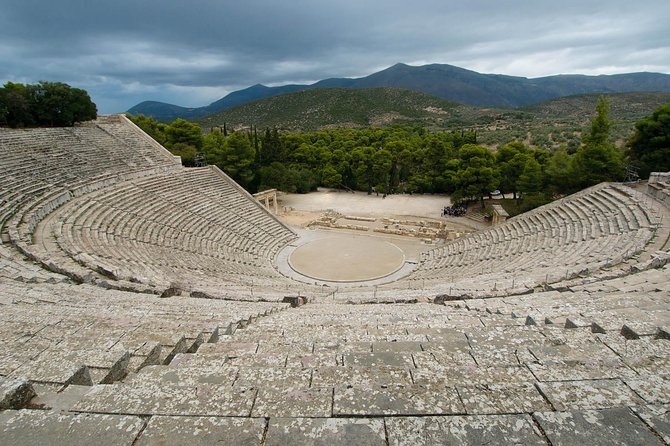
Epidaurus is usually remembered for the theatre, but the schedule works because you start with the museum. The Epidaurus archaeological museum opened in the early 1900s and is known for reconstructions, including temple forms, plus columns and inscriptions from the site.
That museum time makes the theatre stop easier to enjoy. You’re not walking into a famous shell with zero context. Instead, you understand what you’re looking at and why this sanctuary mattered.
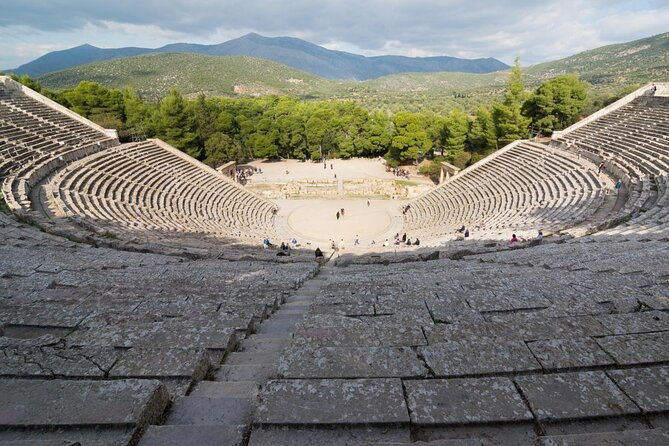
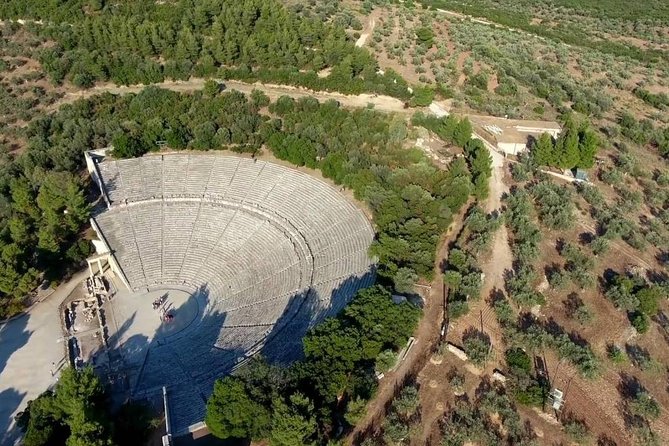
Then you move to the Ancient Theatre of Epidaurus, considered the most perfect ancient Greek theatre for acoustics and aesthetics. It keeps the classic tripartite design, the theatron for seating, the orchestra for the performance space, and the skene behind it. And unlike many theatres, it did not suffer major Roman modifications, so you get a more intact feel for the original design.
This is where the day shifts from learning to feeling. Even without a long explanation, the setting does the teaching. The air, the slope, and the open view help you understand why people came here.
The only drawback is time pressure. You do get a limited slot, so if you love lingering, arrive with a simple plan. Pick your spot in the seating area, take a couple of minutes, then walk the edges just long enough to get oriented.
Sanctuary of Asklepios: how medicine became a religious experience
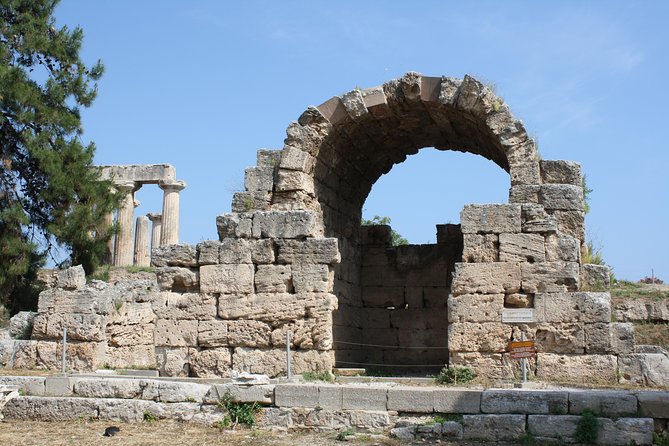
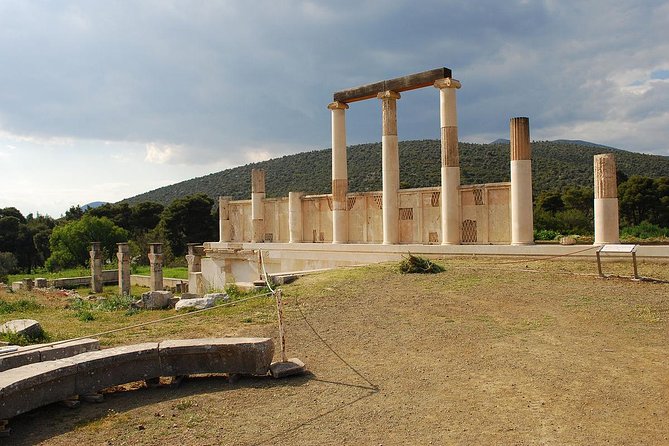
Right after the theatre, you head to the Sanctuary of Asklepios, the main holy site dedicated to Asclepius. The sanctuary was a major rival to places like Olympia and Delphi, which tells you it was not a small, local cult.
The temple is dated to the early 4th century BC, and the story of its later life is part of the emotional weight of the site. The sanctuary’s religious role would likely have been disrupted during the late Roman period when non-Christian worship was restricted. Knowing that timeline makes the ruins feel like more than architecture.
In practical terms, this stop helps you balance the day. Corinth gives you the city, Epidaurus gives you culture and performance, and Asklepios gives you a different kind of meaning. It turns the day into a theme, not just a checklist.
Admission for Epidaurus and the museum is extra, so budget for it and treat this stop as an equal partner to the theatre.
Nafplio time: lunch, Bourtzi views, and the fortresses up the hill
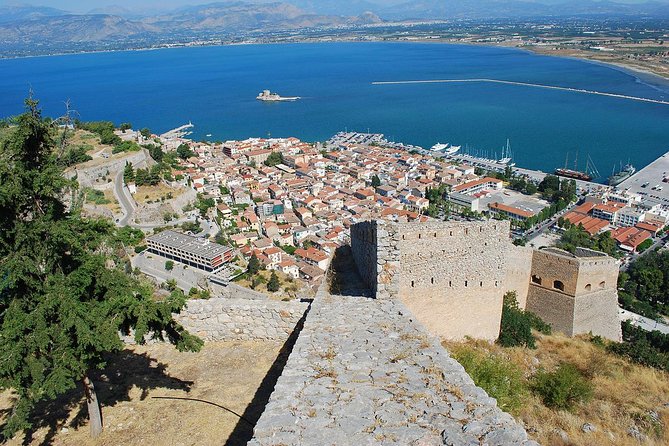
By the time you reach Nafplio, you get the reward break: a beautiful seaside town with cobbled squares, Venetian architecture, and castles with commanding views over the Argolic Gulf. Nafplio is often called the Naples of the East, and the nickname makes sense once you see the waterfront and the hilltop fortifications.
You also get freedom time. There’s time set aside for lunch, coffee, or shopping, followed by more exploring on your own. This is the part of the day where you can slow down, decide what you want, and not feel like you’re being herded.
If you prefer structured meals, lunch is included on the tour, with an option for traditional Greek food. Then later, use the Nafplio break for whatever fits your style, a post-lunch stroll or a quick coffee with a view.
Bourtzi and the harbor photo moments
Bourtzi is a Venetian castle on the water, right in the middle of Nafplio’s harbor. You get a short viewing window to take photos from the harbor side. It’s quick, but it’s also one of those visuals that instantly makes Nafplio feel special.
If you’re planning photos, aim for a calm moment. The castle looks best when you get a clean line from the promenade and you can include the water reflections.
Acronauplia: the oldest part with a transformed past
Then you’re pointed toward Acronauplia, the oldest part of Nafplio. Until the 13th century it was its own settlement, and later the Venetians and Franks integrated it into fortifications. At one stage, it was used as a prison, and then the Greek government built a hotel complex there to benefit from the views.
Even if you don’t linger, it helps to know what you’re standing near. You’re not just looking at walls. You’re looking at layers of the town’s history.
Palamidi Castle: the steps that prove you committed
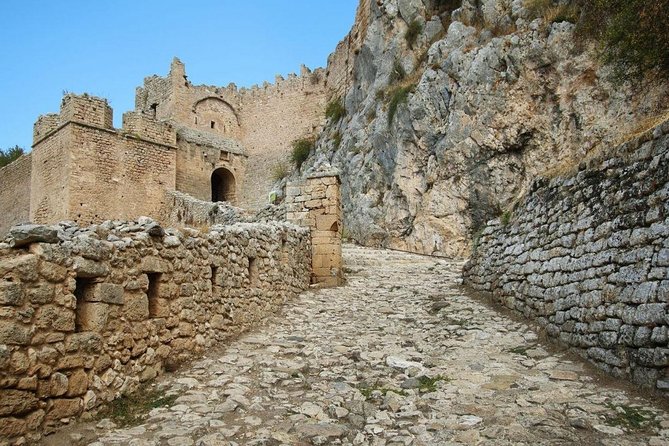
Palamidi Castle sits east of Acronauplia and is reached by a long stair climb. The fortress was built by the Venetians during their second occupation, from 1686 to 1715. It sits on a hill about 216 meters high and gives impressive views over Nafplio and the surrounding countryside.
The steps matter here: there are 913 steps in the commonly stated count, though local sayings put it at 999. Either way, this is the one stop where you should wear footwear you trust.
If you want great views but not a brutal climb, consider the classic strategy: go as far as you feel comfortable, take in the panorama, then return at a pace that keeps your energy for the drive back.
Driver-led experience: comfort, timing, and what to request
This tour runs through a driver-led format. Drivers are not licensed tour guides who enter sites with you, but they provide commentary in fluent English and can answer questions. That means you’ll learn in motion, during transitions, and at drop-off points where they can give you context.
In practice, this format works best if you like a guided narrative but also enjoy walking at your own pace inside ruins. You’ll still want to read signs where available, but your driver can help you connect dots quickly.
If you’re the type who wants a spoken guide inside major archaeological areas, ask for the optional licensed tour guide in advance if possible. That extra guide role can turn your museum time and ruin time into something more detailed and less self-directed.
One more practical benefit: pickup is adjustable upon request, and you’re returned to the same place or a point you prefer. In a long day, that flexibility saves energy.
What to pack for a long day of walking and stairs
This is a full day outside Athens with multiple archaeological stops and hills. Even if some stops are short, you’re likely to walk more than you expect.
Bring:
- Comfortable, grippy shoes for ruins and castle stairs
- Sun protection, especially around the hilltop areas
- Water, even though bottled water is included
- A light layer if you’re sensitive to air-conditioned vehicles
If you plan to use your own phone data for maps, remember Wi-Fi is available on board, which can make navigation and ticket access easier.
Also, keep entrance fees simple and ready. You can purchase them on-site, but being prepared reduces stress when the schedule is moving.
Should you book this Corinth, Epidaurus, Nafplio private tour?
Book it if you want a door-to-door day that covers four major stops with minimal hassle, and you prefer not to rent a car. It’s a great fit for first-timers who want a strong overview of the region’s geography, religion, and classical culture in one outing.
Choose it with extra planning if you care deeply about spoken interpretation inside the ruins. Since the driver does not enter the sites, you may want the optional licensed guide add-on, especially for Ancient Corinth and Epidaurus.
Skip it or consider another style if you dislike long driving days or heavy steps. Palamidi can be a leg-burner, and Acrocorinth also asks for real footwear.
FAQ
How long is the Ancient Corinth, Epidaurus, Nafplio private tour from Athens?
It runs about 8 to 9 hours.
Is hotel pickup and drop-off included?
Yes. Pickup and drop-off are included from your preferred Athens address, hotel, apartment entrance, or airport or port meeting point.
Are entrance fees included in the price?
No. Entrance fees are not included for Ancient Corinth and its archaeological museum, and for Epidaurus and its archaeological museum. They can be purchased on-site.
Does the tour include lunch?
Yes. Lunch is included, with a Greek traditional food option.
Is there Wi-Fi on the vehicle?
Yes. Wi-Fi is available on board.
Is this a private tour or shared group?
It is private. Only your group participates.
Do you get a licensed tour guide?
A licensed tour guide is not included by default. It is offered on request depending on availability. The driver is not an official tour guide inside the sites, but they can provide commentary and answer questions.
What kind of transport do you use?
You travel in a private, air-conditioned vehicle, with bottled water provided.
Is a mobile ticket used?
Yes. The tour uses mobile tickets.
More Day Trips out of Athens
- From Athens: Hydra, Poros, and Aegina Day Cruise with Lunch
★ 4.1 · 4,305 reviews - Cape Sounion and Temple of Poseidon Half-Day Small-Group Tour from Athens
★ 4.5 · 3,205 reviews - From Athens: Delphi Full Day V.R. Audio Guided Tour
★ 4.6 · 3,028 reviews - From Athens: Small-Group Delphi, Museum & Arachova Day Trip
★ 4.8 · 2,476 reviews
More Mycenae & Epidaurus Day Trips in Athens
- From Athens: Small-Group Mycenae, Epidaurus & Nafplio Trip
★ 4.8 · 2,805 reviews - From Athens: Mycenae, Epidaurus & Nafplio Full-Day Tour
★ 4.5 · 2,530 reviews - Mycenae, Epidaurus and Nafplio Tour from Athens
★ 4.6 · 2,201 reviews - 4-Day Classical Greece Tour: Epidaurus, Mycenae, Olympia, Delphi, Meteora
★ 4.5 · 732 reviews
Freshly listed near Athens
- Athens: Premium Guided E-Scooter Tour in Acropolis Area★ 5.0 · 133 reviews
- Athens: Wine Workshop Create your Own Wine under the Acropolis★ 5.0 · 77 reviews
- Ceramic and Pottery Creative Workshop with Two Local Artists★ 4.0 · 57 reviews
- Private Tour and Tasting at Zeginis Winery★ 5.0 · 18 reviews
- Athens: Greek Wines Tasting with Sommelier and Acropolis Views★ 5.0 · 88 reviews
- Private Day Trip to Nafplio from Athens★ 5.0 · 20 reviews
- Athens Old City Private Photoshoot Tour / 2 hrs★ 5.0 · 109 reviews
- Greek food and wine tasting★ 5.0 · 18 reviews
Mycenae & Epidaurus Day Trips, compared.
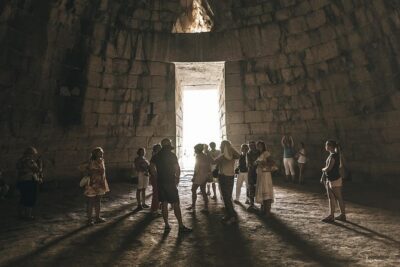
Small-Group Mycenae, Epidaurus & Nafplio Trip
Read our review →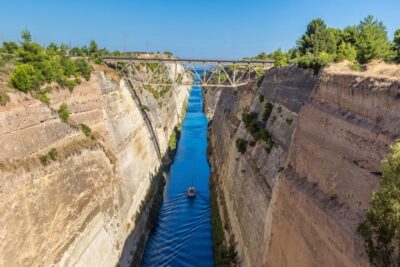
Mycenae, Epidaurus and Nafplio Tour from Athens
Read our review →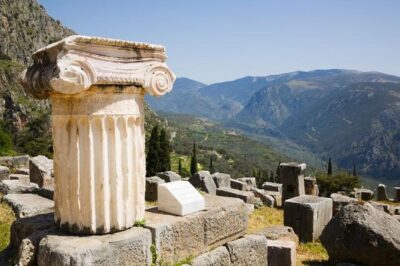
4-Day Classical Greece Tour: Epidaurus, Mycenae, Olympia, Delphi, Meteora
Read our review →
Mycenae and Nafplion Day Trip from Athens with Official guide
Read our review →
3-Day Classical Greece Tour: Epidaurus, Mycenae, Nafplion, Olympia, Delphi
Read our review →
Corinth Canal, Mycenae & Nafplio Premium Guided Tour
Read our review →
Mycenae, Epidaurus & Nafplio Full-Day V.R audio guided Tour
Read our review →Browse the lists this tour appears in