
Reviewed · ANCIENT CORINTH & CANAL DAY TRIPS
Private Tour of Apostle Paul’s Footsteps in Ancient Corinth
Corinth felt close to the Bible. This private day tour strings together key places tied to Apostle Paul, from the Corinth Canal to Acrocorinth.
I like the private pacing too, because you can linger at the spots that grab you, and your driver keeps the day flowing without rushing.
You’ll also appreciate the pairing of practical comfort and history. You get an air-conditioned vehicle, bottled water, and WiFi onboard, plus a professional English-speaking driver who can connect the setting to what Paul’s letters meant in daily life.
One consideration: not everything is included in the site access. Entrance fees to the archaeological areas and museum are not included (budget about €15 per person), and a licensed guide inside the sites is also not part of the package.
In This Review
- Key highlights worth planning for
- Corinth Canal to Acrocorinth, what this day trip really delivers
- Pickup and private format, how the experience stays personal
- Isthmus of Corinth and the Diolkos, ancient ships without the scary detour
- Kenchreai port, Paul’s arrivals, and the name Phoebe
- Ancient Corinth’s Agora and Bema area, where faith met city life
- Museum time in Ancient Corinth, artifacts that make the ruins easier
- Acrocorinth fortress, from fortifications to Aphrodite
- Apostolos Pavlos Church, a modern mosaic finish
- Getting more out of the day: how to frame Paul’s story in Corinth
- Price and value, what $169.03 buys for 5 to 6 hours
- Who this tour suits best, and who might want to rethink it
- Should you book this private Apostle Paul in Ancient Corinth tour?
- FAQ
- How long is the private tour?
- What does the tour cost?
- Do I get pickup and drop-off from Athens?
- Are entrance fees included?
- Is a licensed guide included inside the archaeological sites?
- Is the tour private, and what language is it in?
- What if weather is bad or I need to cancel?
Key highlights worth planning for
- Corinth Canal, plus the Diolkos ship-haul trackway: big engineering, ancient purpose
- Kenchreai port and Phoebe connection: where Paul’s story links to early community life
- Ancient Corinth’s Agora and the Bema area: the civic center behind the letters
- Museum stop after the ruins: artifacts help you “read” what you just walked through
- Acrocorinth fortress and the Temple of Aphrodite setting: views plus layers of Greek to Ottoman-era rebuilding
- Apostolos Pavlos Church mosaic: modern art that ties Paul’s journey to today
Corinth Canal to Acrocorinth, what this day trip really delivers
This is one of those Athens day trips where the driving matters. You start at the Isthmus side, then work your way toward the old city core, and finally climb up to Acrocorinth. The result is a full arc: travel routes, ports, marketplaces, and the hilltop fortress that shaped who could control Corinth.
If Paul is your focus, you’ll feel the “why” behind each stop. If you’re not a Bible-focused traveler, you can still enjoy it as a great Greek history day: engineering at the canal and Diolkos, urban life in the Agora, and the views from a major fortress town.
The tour runs about 5 to 6 hours, including travel time. Plan it as your main Corinth block, not a quick taster.
Other ways to spend the day near Athens
- From Athens: Ancient Corinth Day Trip with Canal & VR Guide
★ 4.6 · 1,073 reviews - Private Biblical Tour Ancient Corinth & Isthmus Canal from Athens
★ 5.0 · 762 reviews - Athens: Ancient Corinth & Nafplio Full Day Trip with Swim
★ 4.8 · 531 reviews
Pickup and private format, how the experience stays personal
The private setup is the main reason to choose this over a standard group bus. Your party stays together, and the schedule is built around stops rather than packing in as many photo ops as possible.
Pickup is included in the basics: you can arrange hotel pickup and drop-off, and port pickup also works. The driver meets you at the entrance for hotel and apartment locations, or at the port gate with a sign showing your name. If you’re starting from Athens International Airport, airport pickup and drop-off is optional for an additional €50 per booking.
Vehicle comfort is handled well for a half-day format. It’s air-conditioned, and for groups of 1 to 4 people, you’re in a sedan. That matters here because some streets and turns around Corinth can feel tight.
And the small things add up: bottled water on board, WiFi, and a driver who is used to people asking questions and wanting photos without feeling like they’re slowing the whole group down.
Isthmus of Corinth and the Diolkos, ancient ships without the scary detour
Your day starts with the Isthmus of Corinth, the narrow land bridge that historically connected mainland Greece with the Peloponnese. Even without getting too technical, you can feel the logic of the place. If you control this strip, you control movement.
Then you reach the modern Corinth Canal area. The big fact to remember is that the canal slices through a narrow stretch of the isthmus, and it has been doing that since the late 1800s (1893). It’s a striking introduction because you get to see steep limestone walls dropping into clear water. It’s also a reminder that geography is destiny, and human solutions keep changing over time.
A short walk brings you to the Diolkos, an ancient ship-haul system that predates the canal by more than two thousand years. The idea is simple and clever: instead of forcing ships to take the rougher sea route around the Peloponnese, they could be hauled overland across the isthmus. When you walk along what remains, you’re stepping into a story of trade, practical problem-solving, and how crucial shipping was to Corinth’s economy.
Time-wise, these stops are quick. Expect around 20 minutes for the canal area and about 10 minutes for the Diolkos. That’s enough time to get oriented and understand the “movement story” behind Corinth.
Kenchreai port, Paul’s arrivals, and the name Phoebe
From the Isthmus, you move to the eastern side of Corinth, to the ancient port area of Kechreae, often tied to the name Kenchreai. This is one of the more emotionally satisfying parts of the route because it connects place to a specific point in Paul’s timeline.
Around 51 A.D., this is where Paul is associated with disembarking during his first visit to the city. Later, he is linked with sailing out from here toward Ephesus. And this stop ties into a named person you may have heard of: Phoebe, described as a deaconess in the local community, connected with Paul’s letter delivery to the Romans.
What’s tricky is also honest: only modest traces of the old port remain. You won’t feel like you’re walking through a preserved dock museum. Instead, you’re absorbing significance in an open-air way, using the ground and the shoreline context to imagine what arrivals and departures meant for early Christian networks.
This is a 20-minute stop. Use that time to slow down, because the spiritual weight here comes from realizing how travel routes became communication routes.
A short hop away, these too:
- Athens: Acropolis & up to 5 Archaeological Sites Combo Pass
★ 4.2 · 13,904 reviews - Athens: Acropolis, Parthenon & Acropolis Museum Guided Tour
★ 4.8 · 9,316 reviews - The Acropolis, Parthenon & Acropolis Museum Guided Tour
★ 4.7 · 8,493 reviews - Athens: Cape Sounion & Poseidon Temple Sunset Half-Day Trip
★ 4.8 · 8,241 reviews
Ancient Corinth’s Agora and Bema area, where faith met city life
Now you get into the heart of the ruins. Ancient Corinth was one of the major cities of the classical world, wealthy and influential. That matters for Paul because his letters to the Corinthians weren’t written in a vacuum. They were written in a place where civic life, trade, and public religion were all part of the daily rhythm.
In the core ruins area, there’s a key focal point called the Bema, a raised platform. It’s believed that Paul addressed people here and that he also stood trial before the Roman proconsul. Whether you approach the site as sacred text or as historical reconstruction, the idea is compelling: this is where a message could be publicly argued, and where power met persuasion.
Nearby is the Agora, the marketplace and everyday hub. If you want to understand what “context” means, the Agora is it. You’re surrounded by the idea of shops, chatter, contracts, and public announcements. That’s the real-life setting for why Paul’s guidance could land so sharply with locals.
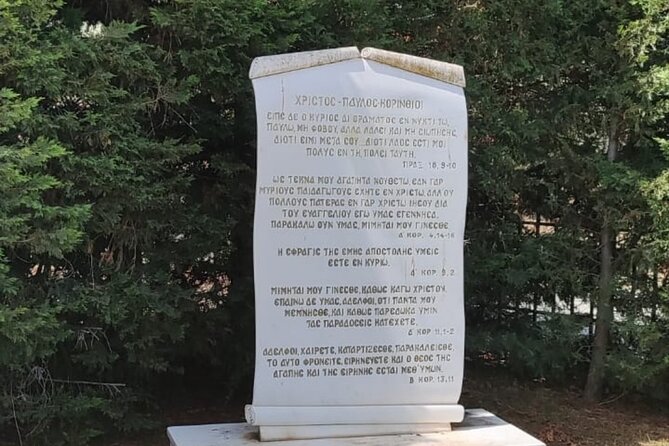
You’ll also see the Temple of Apollo nearby, a reminder that Corinth had deep, layered religious traditions long before Christianity. The contrast between pagan beliefs and the new movement isn’t something you have to force here. The stones and the layout help you feel how different belief systems shared the same city streets.
Important practical note: this is one of the stops with entrance fees not included. Also, a licensed guide to accompany you into the archaeological sites is not included. In plain terms, you rely on your driver’s historical context for the storytelling, while official site staff are for ticketing and site access.
Plan for about 40 minutes here, but keep in mind that shade can be limited and you’ll likely want a few extra minutes for photos and orientation.
Museum time in Ancient Corinth, artifacts that make the ruins easier
After walking the ruins, the Archaeological Museum of Corinth helps you reset your brain. This museum was built in 1932 specifically to preserve artifacts from the excavations. It’s not just a “see more stuff” stop. It’s where you can start connecting what you saw in the city core to objects that show daily life and religious practice.
A couple of highlights you’ll want to pay attention to are the prehistoric finds and items linked with the Sanctuary of Asklepios. Asklepios is the god of healing, so those collections can show you another layer of what people in Corinth valued and feared, not just what they believed about politics or commerce.
Museum time is about 45 minutes, and that’s usually the right length for seeing the main galleries without turning it into a sprint. Since museum entry is also not included (budget the same entrance fee level mentioned for archaeological sites), this stop can affect how you plan your total day cost.
If you like archaeology as much as you like the biblical connection, this is where your visit becomes clearer. The ruins tell you where, the museum helps you picture what.
Acrocorinth fortress, from fortifications to Aphrodite
The final major ruins stop is Acrocorinth, the fortified acropolis that protected the city across ancient and medieval periods. This is a very different type of site from the Agora. Instead of “where people worked and shopped,” Acrocorinth is “where power sat.”
You’ll see fortification walls, towers, and bastions that were built and reinforced through multiple eras: Greek, Byzantine, Frankish, Venetian, and Ottoman periods. That means the climb is not just a view bonus. It’s a layered history lesson in stone.
There’s also a religious layer. Acrocorinth is tied to the Temple of Aphrodite, a sanctuary associated in tradition with a community of up to 1,000 priestesses. Even if you don’t focus on the exact numbers, you can understand the point: Corinth’s hilltop was not only about defense, it was also about religious identity and social structure.
This stop is free for entry in the context of the tour plan. Time-wise, it’s about 40 minutes. Wear shoes you trust, and pace yourself. You don’t need to “race to the top” to enjoy it. The views are what make it worth the climb, and you’ll want a few moments to take them in.
Apostolos Pavlos Church, a modern mosaic finish
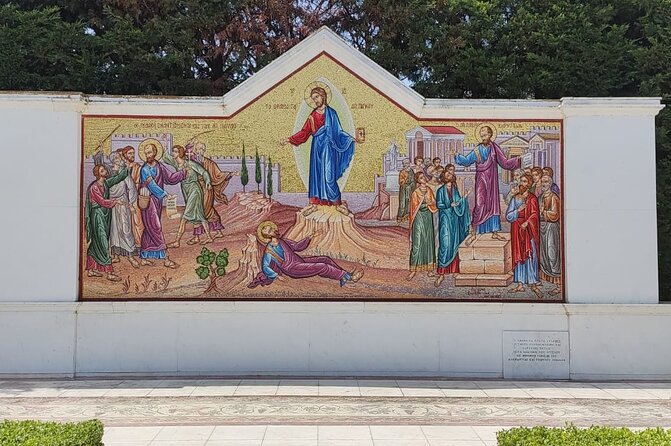
To close the day, the tour brings you to the modern Church of Saint Paul, called Apostolos Pavlos Church. It sits in the heart of the historic Corinth area, so the setting feels like a bridge between the ancient and the current world.
Inside, you’ll find a striking mosaic created by artists Pastorutti and Tsotsonis. The mosaic depicts Paul’s journey and mission in the city. This kind of art is useful because it gives you a place to pause, especially if you came for the spiritual connection. It doesn’t replace the ruins, but it can soften the edges of the day and help you step out of “history mode” for a moment.
This stop is about 20 minutes and is free in the tour plan.
Getting more out of the day: how to frame Paul’s story in Corinth
One reason this tour works so well is that it doesn’t treat Paul as a floating figure. You’re seeing the city’s working parts.
Here’s a simple way to get more out of it while you’re on the move:
- At the port, ask how travel timing affects communication. Letters mattered because people moved slowly.
- In the Agora, think about public argument. Paul’s message wasn’t delivered in private rooms only.
- At the Bema area, connect civic power to persuasion, since the site is linked to a trial and public address.
- On Acrocorinth, remember how fortified places control information and safety, which changes how communities grow.
The drivers for this tour are specifically described as professional English-speaking with in-depth knowledge. In practice, I’ve seen how that helps with the pacing too: you’re not just collecting facts, you’re understanding why those facts fit together. Names like Nick, Ruslan, Giannis, and George come up often for their clear explanations and patient attitude on the day.
If you enjoy Bible sites but prefer them explained through geography and daily life, this route fits that style well. And if you’re visiting for broader Greek history, you’ll still find plenty to enjoy without feeling like the day is only about one story.
Price and value, what $169.03 buys for 5 to 6 hours
At $169.03 per person, this is not the cheapest way to do Corinth from Athens. But it is a classic value-for-comfort option because you’re buying a private day with pickup, a vehicle, and a driver who carries the storytelling.
What’s included:
- Air-conditioned vehicle and WiFi
- Bottled water
- Hotel and port pickup and drop-off
- Professional English-speaking driver with history knowledge
- Group discount availability
- Mobile ticket
- Private format, only your group participates
What’s not included:
- Entrance fees to archaeological sites and museum, listed as €15.00 per person
- A licensed guide to accompany you inside the archaeological sites
So your all-in budget is fairly predictable. You’ll pay for admissions directly for the paid sites. The payoff is that you’re not trying to coordinate buses, tickets, and timing on your own.
If you’re traveling as a couple, this can be a strong choice because you get privacy without paying for a larger group arrangement. If you’re traveling solo, it’s still doable because the private format and pickup can save you energy.
Who this tour suits best, and who might want to rethink it
This tour is a good fit if you want:
- a structured half-day that hits the major Corinth anchors
- a private format where you can go at your pace
- Paul-related context tied to real places, not only general summaries
It may not be ideal if you expected a strictly religious-focused experience. The day balances spiritual references with archaeology, architecture, and engineering, like the Corinth Canal and Diolkos. It’s also wise to know that the “licensed guide inside sites” piece is not included, so your driver provides the historical narrative, while site staff manage official site operations.
If you’re short on time in Athens and still want a high-impact day trip, Corinth is one of the best choices you can make. And if you care about both archaeology and storytelling, this route gives you enough structure to feel like you learned something beyond the photos.
Should you book this private Apostle Paul in Ancient Corinth tour?
Yes, if you want a calm, private Athens day trip that connects Paul’s story to ports, marketplaces, and hilltop power, all without the stress of self-guided logistics. The included pickup, comfort, and driver-led context are a real plus, especially if you’re visiting multiple major sites in one day.
Book it with eyes open on costs. You should plan for the €15 per person entrance fees at the paid archaeological areas and the museum, since those are not included. If that’s fine for you, this is a meaningful way to experience Corinth, one stop at a time.
FAQ
How long is the private tour?
The tour lasts about 5 to 6 hours, with travel time included.
What does the tour cost?
The price is listed as $169.03 per person.
Do I get pickup and drop-off from Athens?
Yes. Hotel and port pickup and drop-off are included. For hotel or apartment pickup, the driver waits at the entrance. For port pickup, the driver waits at the gate holding a sign with your name.
Are entrance fees included?
No. Entrance fees to archaeological sites and the museum are not included, and are listed as €15.00 per person.
Is a licensed guide included inside the archaeological sites?
No. A licensed guide to accompany you into archaeological sites is not included. The tour includes a professional English-speaking driver with in-depth history knowledge.
Is the tour private, and what language is it in?
Yes, it’s private, meaning only your group participates. It is offered in English.
What if weather is bad or I need to cancel?
The experience requires good weather. If it’s canceled due to poor weather, you’ll be offered a different date or a full refund. Free cancellation is available up to 24 hours in advance for a full refund.
Freshly listed near Athens
- Athens: Premium Guided E-Scooter Tour in Acropolis Area★ 5.0 · 133 reviews
- Athens: Wine Workshop Create your Own Wine under the Acropolis★ 5.0 · 77 reviews
- Ceramic and Pottery Creative Workshop with Two Local Artists★ 4.0 · 57 reviews
- Private Tour and Tasting at Zeginis Winery★ 5.0 · 18 reviews
- Athens: Greek Wines Tasting with Sommelier and Acropolis Views★ 5.0 · 88 reviews
- Private Day Trip to Nafplio from Athens★ 5.0 · 20 reviews
- Athens Old City Private Photoshoot Tour / 2 hrs★ 5.0 · 109 reviews
- Greek food and wine tasting★ 5.0 · 18 reviews
Ancient Corinth & Canal Day Trips, compared.
Ancient Corinth Day Trip with Canal & VR Guide
Read our review →
Private Biblical Tour Ancient Corinth & Isthmus Canal from Athens
Read our review →

Corinth Canal, Mycenae & Nafplio Premium Guided Tour
Read our review →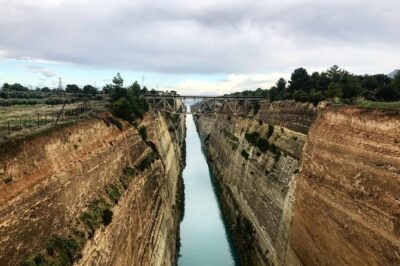
Corinth Half-Day Trip from Athens with Entrance Tickets
Read our review →
Ancient Corinth Tour with Official Guide & Tickets
Read our review →
Ancient Corinth, Epidaurus, Nafplio full day private tour from Athens
Read our review →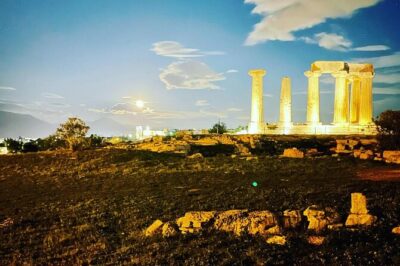
Paul”s Footsteps Ancient Corinth Biblical Tour
Read our review →Browse the lists this tour appears in