
Reviewed · ANCIENT CORINTH & CANAL DAY TRIPS
The Apostle Paul’s Missionary Journey in Athens and Corinth
Paul’s letters come with real streets.
What makes this day trip click is the mix of biblical places and classical Athens and Corinth, all connected by door-to-door transport from your hotel or the port. I also love the practical pacing for a private group, with a car that keeps you comfortable between sites plus Wi-Fi on board and bottled water for the long, warm day. The one thing to plan for is that some of the most important ruins cost extra because key archaeological admissions are not included.
You’ll spend 8 to 9 hours moving between Athens and Corinth, with a guide focused on Paul in context, not just dry facts. The big win is that you get the “why” behind what you see, from where debates happened in Athens to where Paul faced Roman authority in Corinth. Just keep your expectations honest: entrance fees are on you for select sites, and walking is part of the experience.
In This Review
- Key things I’d highlight before you go
- Paul’s Athens to Corinth: What a full day really feels like
- Door-to-door pickup, car comfort, and Wi-Fi that saves the day
- Stop 1: Ancient Agora of Athens, where Paul met Greek life
- Stop 2 and 3: Areopagus and the Church of Saint Dionysius
- Stop 4: Corinth Canal, an engineering shortcut through time
- Stop 5: Ancient Port of Kenchreai, trade meets early Christianity
- Stop 6: Ancient Corinth (Archaia Korinthos), Paul at the Bema area
- Stop 7: Museum of Ancient Corinth, where artifacts explain daily life
- Stop 8: Acrocorinth, the fortified finale with panoramic views
- Price and value: why $200.25 can work, and when it might not
- What you should pack and how to keep the day comfortable
- Which guides you might meet, and how that affects your day
- Should you book this Paul in Athens and Corinth tour?
- FAQ
- How long is the tour?
- Is this tour private?
- What is included in the price?
- Are entrance fees included?
- Do you offer pickup from the port?
- Do you provide Wi-Fi during the tour?
- What should I wear and bring for the day?
- FAQ
- Can I cancel for a full refund?
- Is the tour dependent on weather?
Key things I’d highlight before you go
- Private group setup (1 to 4 people), often in a sedan for a more personal day
- Hotel or port pickup and drop-off so you spend less time wrangling logistics
- Wi-Fi on board plus bottled water, helpful when the sun is doing its job
- Paul-focused stops from the Ancient Agora to the Bema area and Acrocorinth views
- Museum + hilltop finale, so the day ends with perspective, not just ruins
- English-speaking driver with history expertise, with the tradeoff that licensed site guiding is not included
Paul’s Athens to Corinth: What a full day really feels like
This is the kind of trip that works because it uses time well. Instead of bouncing between random viewpoints, you follow a logical route: start where Greek ideas and crowds met, then connect those themes to the Roman world Paul dealt with in Corinth. The day is long, but it is structured. You know what you are seeing next.
The “private” part matters more than you might think. When it is just your group, the driver can slow down when you ask questions and keep the pace from turning into a rush job. In the real world, that means you can actually read the clues in the ruins, not just point and move on.
Other ways to spend the day near Athens
- From Athens: Ancient Corinth Day Trip with Canal & VR Guide
★ 4.6 · 1,073 reviews - Private Biblical Tour Ancient Corinth & Isthmus Canal from Athens
★ 5.0 · 762 reviews - Athens: Ancient Corinth & Nafplio Full Day Trip with Swim
★ 4.8 · 531 reviews
Door-to-door pickup, car comfort, and Wi-Fi that saves the day
Your day begins with pickup right where you are staying (or at the port arrival area with a name sign). The driver waits for you outside, which cuts out that awkward, time-wasting “Where are you?” dance. If you’re arriving by cruise, it is also a simple setup, since you meet the driver in the arrival area.
In the car, the practical perks help. You have an air-conditioned vehicle, bottled water, and Wi-Fi on board. That combination sounds small, but on a full day, it matters. Wi-Fi can keep you oriented with maps or translations, and bottled water keeps you from burning time hunting for refreshments.
If you are traveling as a couple or a small group, you may travel in a sedan (the tour notes that groups of 1 to 4 use sedan vehicles). That usually means less crowding and easier conversations with the driver.
Stop 1: Ancient Agora of Athens, where Paul met Greek life
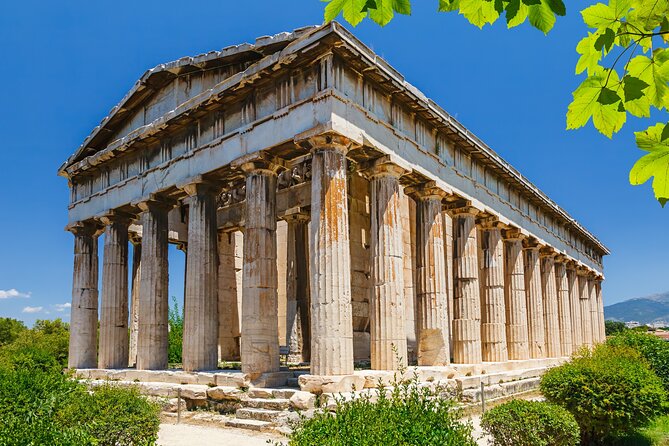
The Ancient Agora is the best starting point because it was the center of everyday Athens. This was where politics, trade, social life, and religion collided in the same places. When Paul arrived, he stepped into a city used to ideas being argued in public.
On this stop, plan to slow down. Even when you know the Bible story, the physical layout helps. You are trying to picture how someone like Paul would communicate in a city where philosophers and thinkers were already part of the social scene. That is the heart of the experience here: you see not just a church story, but a contact zone between faith and culture.
Practical note: admission for the Agora is not included, so factor in ticket cost when you budget.
Stop 2 and 3: Areopagus and the Church of Saint Dionysius
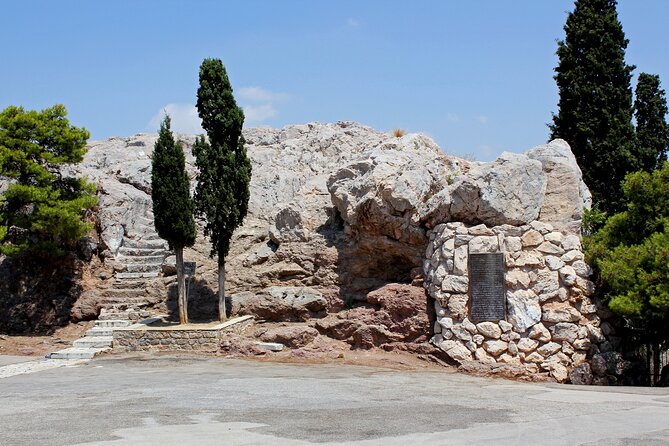
A short hop from the Acropolis area brings you to the Areopagus, a marble hill used for legal and political discussion. In Paul’s time, it was also known for intellectual debate. This is a great stop for people who like the “context” side of history, because it helps you imagine how Paul’s message landed in a setting trained for argument and reasoning.
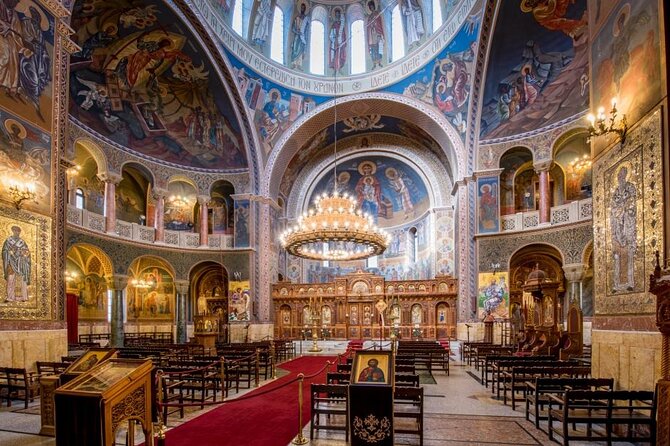
Next is the Church of Saint Dionysius the Areopagite in Kolonaki, on Skoufa Street. This one adds an early Christian link to the Areopagus story: Dionysius is traditionally described as being converted by Paul and later becoming Athens’ first bishop. Even if you are not visiting for religious tradition alone, the location makes the connection feel personal. You are not only in ancient ruins, you are in a living city with layers of faith.
Both of these stops keep time reasonable: about 30 minutes for the Areopagus and around 20 minutes for the church. That pacing matters because you still have a long drive ahead toward Corinth.
Good to know: Areopagus admission is free, and the church is free too.
A short hop away, these too:
- Athens: Acropolis & up to 5 Archaeological Sites Combo Pass
★ 4.2 · 13,904 reviews - Athens: Acropolis, Parthenon & Acropolis Museum Guided Tour
★ 4.8 · 9,316 reviews - The Acropolis, Parthenon & Acropolis Museum Guided Tour
★ 4.7 · 8,493 reviews - Athens: Cape Sounion & Poseidon Temple Sunset Half-Day Trip
★ 4.8 · 8,241 reviews
Stop 4: Corinth Canal, an engineering shortcut through time
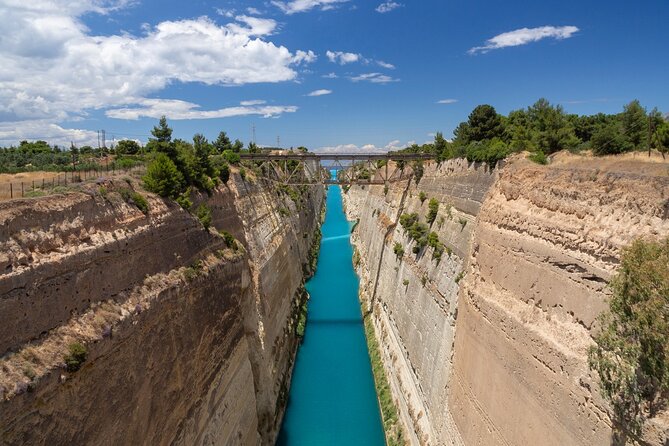
Corinth Canal is not biblical, and that is exactly why it’s useful. It shows you how the region stayed strategically important long after Paul’s era. The canal slices through the Isthmus of Corinth, connecting two gulf waters and making the Peloponnese feel like an island.
What I like about this stop is that it gives your brain a modern reference point. You start to understand why trade routes and movement mattered, which is a big theme for Paul’s missionary work. When you grasp geography, the stories stop feeling abstract.
Admission here is free, and the stop is quick at about 20 minutes.
Stop 5: Ancient Port of Kenchreai, trade meets early Christianity
At the Ancient Port of Kenchreai (Kechrees), you are looking at a place shaped by shipping, commerce, and travel. This was Corinth’s eastern port, and during the Roman era it was a key hub. Some ruins are submerged or in pieces, but even so, you can still pick out remnants like storerooms, breakwaters, a nymphaeum, sanctuaries, and an early Christian basilica from the 4th century A.D.
This is a powerful stop because it blends the “Paul traveled here” angle with the bigger story of movement. Ports are where cultures touch. They are where ideas spread along with goods.
Another plus: the tour describes this as the place where Paul arrived in 51 A.D. to begin his mission in Corinth. That connection is why the stop feels more than scenic.
Time is about 20 minutes. Admission is free.
Stop 6: Ancient Corinth (Archaia Korinthos), Paul at the Bema area
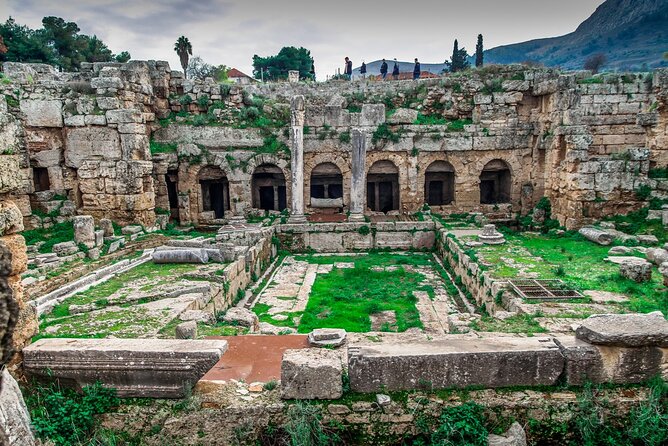
Ancient Corinth is the place to slow your pace and let the meaning land. This site was one of the most powerful and prosperous cities in the classical world, and it stayed relevant through Roman rule.
For Christian visitors, the key idea is the Bema, a raised platform in the city center. Paul is believed to have addressed people there and also stood trial before the Roman proconsul. Whether you picture every detail or just the general moment, the physical scale helps you understand the stakes of public speech in a place under Roman authority.
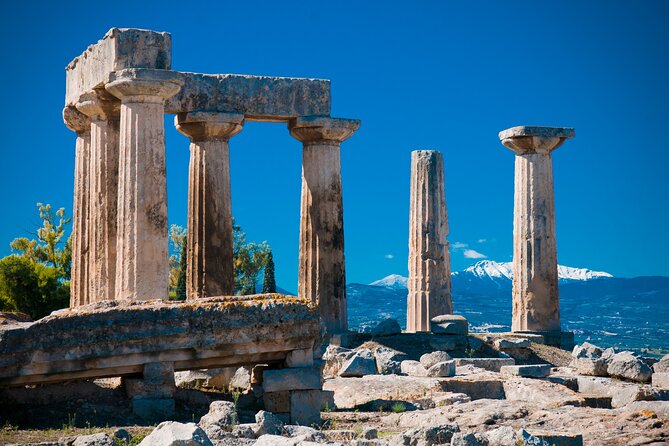
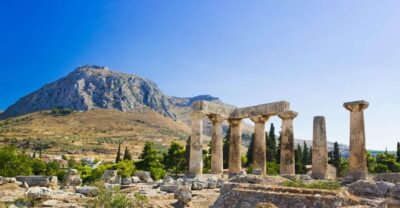
You also get a sense of everyday life through the Agora. Even in ruins, marketplaces communicate how people lived, traded, argued, and gathered. Nearby is the Temple of Apollo, which is a reminder that religion here did not disappear. It layered.
This stop lasts about 1 hour, and admission is not included.
Stop 7: Museum of Ancient Corinth, where artifacts explain daily life
The Archaeological Museum of Corinth is a smart bridge between the big outdoor site and the final hilltop. The museum was established in 1932 and helps you make sense of what you see outside. It holds prehistoric finds as well as items from places like the Sanctuary of Asklepios.
What I like in museums like this is how they turn ruins into routine. You stop thinking only about major events and start noticing daily patterns: how people lived, what they practiced religiously, and what they made.
This visit is about 45 minutes, and admission is listed as free.
Stop 8: Acrocorinth, the fortified finale with panoramic views
You end at Acrocorinth, the hilltop stronghold that guarded the area across centuries. This is where your brain finally gets perspective because it sits above the city and landscape. The ruins here are both military and religious.
The site includes the famous Temple of Aphrodite, traditionally said to have housed up to 1,000 priestesses. Even if you focus more on Paul than on mythology, the religious angle helps you understand the social environment Paul wrote into. People did not live in separate categories. Faith and power were mixed.
Time is about 30 minutes, and admission is free.
Price and value: why $200.25 can work, and when it might not
The price is listed at $200.25 per person for an 8 to 9 hour private experience in English, with pickup and drop-off, air-conditioned transport, bottled water, and Wi-Fi. That is the core value: you are paying for time-saving logistics and an English-speaking driver who can explain what you are seeing.
What is not included are the entrances you will want at certain stops and museums, plus the tour does not include a licensed guide to escort you inside archaeological sites. In practice, this can still be a great day because the driver provides history and context. But if you prefer a site-license guide inside every museum space, you should expect to pay extra.
Also, budget for heat and walking. Comfortable shoes are not optional. The day includes uneven ground, and you will cover enough to feel it, especially in warm months. The tour supplies water, but you will still want your own sun strategy.
What you should pack and how to keep the day comfortable
Plan around walking and Mediterranean sun. The tour advice is straightforward: wear comfortable shoes and bring a hat and sunscreen. That matches what you will experience on sites with rocky or uneven surfaces.
If you have mobility concerns, be realistic. One review specifically flags uneven pavement and the fact that walking is involved. This tour is not built as a sit-everywhere day. You will get vehicle transfers, but you still do the museum and ruins part.
If you want a smoother lunch, use the driver. Several guides in past days have gone beyond the standard script by pointing guests toward restaurants and helping with timing. That is not listed as a formal inclusion, but it is the kind of practical hospitality you can often ask for.
Which guides you might meet, and how that affects your day
This tour is run by a professional English-speaking tour driver with history expertise. Names that have shown up in real experiences include Ruslan, Yannis, Kostas (Costas), Katerina, Giannis, Karas, George, and Fortis.
Why does that matter? Because this is a narrative tour. The quality of your day depends on how well someone can connect place to story. If your guide speaks clearly, gives you time to look on your own, and answers questions without rushing, you get far more out of each stop.
If you care about Paul’s context, ask questions early. You’ll start noticing how Athens’ debate culture and Corinth’s Roman environment connect.
Should you book this Paul in Athens and Corinth tour?
Book it if you want a meaning-driven itinerary that follows Paul through both famous archaeology and the geography behind his mission. It’s a strong choice for first-timers who want to see the major anchors in Athens and Corinth without dealing with separate tickets, public transport, and route planning.
Skip it or adjust expectations if you hate walking on uneven ground, or if you want a licensed guide inside every archaeological space. Also, if you are very budget-sensitive, factor in extra entrance fees on top of the base price.
My take: for a private, English-led day that ties together Athens debates, Corinth’s Roman setting, and a hilltop finale from Acrocorinth, this is good value, especially if you want to understand Paul in context, not just collect stamps.
FAQ
How long is the tour?
It runs about 8 to 9 hours.
Is this tour private?
Yes. It is a private tour/activity, so only your group participates.
What is included in the price?
The tour includes an air-conditioned vehicle, Wi-Fi on board, bottled water, and hotel pickup and drop-off (or port pickup). You also get a professional English-speaking tour driver with history knowledge.
Are entrance fees included?
No. Entrance fees to archaeological sites and museums are not included. Some stops are marked as free (like Areopagus, the church, the Corinth Canal area, Kenchreai, the Corinth Museum, and Acrocorinth), while others are marked as not included (like the Ancient Agora and Ancient Corinth).
Do you offer pickup from the port?
Yes. For port pickup, the driver waits at the arrival area holding a signboard with your name.
Do you provide Wi-Fi during the tour?
Yes, Wi-Fi is available on board.
What should I wear and bring for the day?
Wear comfortable shoes for walking on uneven ground. Bring a hat and sunscreen, since Greece can be hot and sunny. Bottled water is provided.
FAQ
Can I cancel for a full refund?
Yes. You can cancel up to 24 hours in advance for a full refund.
Is the tour dependent on weather?
Yes. The experience requires good weather. If it is canceled due to poor weather, you will be offered another date or a full refund.
Freshly listed near Athens
- Athens: Premium Guided E-Scooter Tour in Acropolis Area★ 5.0 · 133 reviews
- Athens: Wine Workshop Create your Own Wine under the Acropolis★ 5.0 · 77 reviews
- Ceramic and Pottery Creative Workshop with Two Local Artists★ 4.0 · 57 reviews
- Private Tour and Tasting at Zeginis Winery★ 5.0 · 18 reviews
- Athens: Greek Wines Tasting with Sommelier and Acropolis Views★ 5.0 · 88 reviews
- Private Day Trip to Nafplio from Athens★ 5.0 · 20 reviews
- Athens Old City Private Photoshoot Tour / 2 hrs★ 5.0 · 109 reviews
- Greek food and wine tasting★ 5.0 · 18 reviews
Ancient Corinth & Canal Day Trips, compared.
Ancient Corinth Day Trip with Canal & VR Guide
Read our review →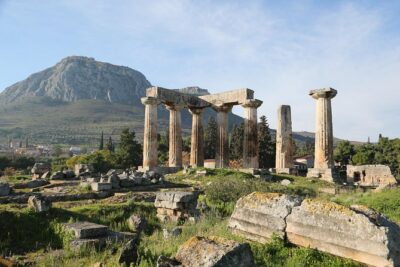
Private Biblical Tour Ancient Corinth & Isthmus Canal from Athens
Read our review →

Corinth Canal, Mycenae & Nafplio Premium Guided Tour
Read our review →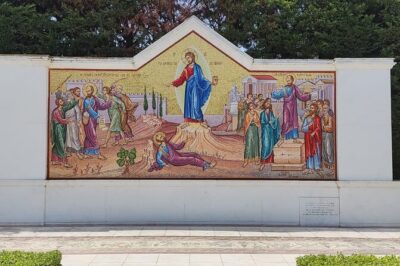
Private Tour of Apostle Paul’s Footsteps in Ancient Corinth
Read our review →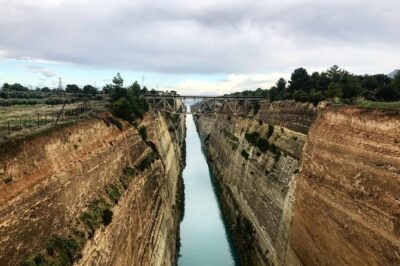
Corinth Half-Day Trip from Athens with Entrance Tickets
Read our review →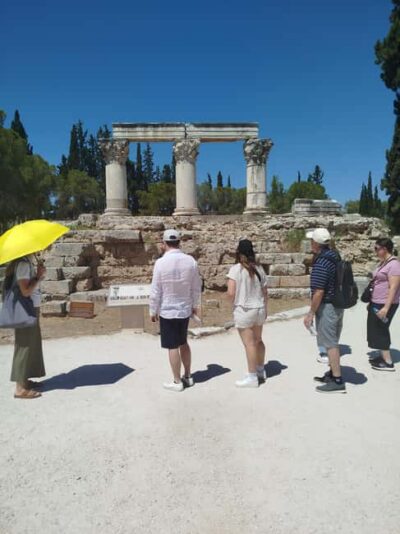
Ancient Corinth Tour with Official Guide & Tickets
Read our review →
Ancient Corinth, Epidaurus, Nafplio full day private tour from Athens
Read our review →Browse the lists this tour appears in