
Reviewed · ANCIENT CORINTH & CANAL DAY TRIPS
From Athens: City & Corinth Guided Day Tour
Athens plus Corinth in one long day can be a lot. This guided loop helps you hit the biggest sites with smart timing, clear context, and plenty of photo breaks. I love the way it pairs the Acropolis and Acropolis Museum with the St. Paul sites in Corinth, and I also like the extra city stops like Panathenaic Stadium and the changing of the guards. One consideration is that you will still pay entrance fees on your own, and the day runs on a packed schedule.
The best part is how the story stays linked as you move from modern Athens to ancient Corinth. You get big architectural moments, like the Parthenon area and the Temple of Olympian Zeus, and you also get the practical stuff that makes sightseeing easier, like cold water, Wi-Fi, and round-trip transfers. A possible drawback is that the driver cannot accompany you inside every site, so you will want to keep up with meeting times.
If you get the right driver, it really shows. People highlighted guides like Nikos, Takis, Odysseus, and Odysseas Zournatsidis, and they all seemed to focus on turning stones and streets into a real sense of place. The day is also heavily walking once you are at the sites, so comfortable shoes matter.
In This Review
- Key things that make this tour work
- Athens and Corinth, One Day: The Big Value Pitch
- Pickup, Transfers, and the Rhythm of a 9.5 Hour Day
- First Stop Energy: Acropolis Area and the Acropolis Museum Combo
- What you will notice at the Acropolis
- Why the Acropolis Museum is worth your time
- Temple of Zeus, Panathenaic Stadium, and Quick Hits Around Athens
- Temple of Olympian Zeus: the “pass by” that still counts
- Panathenaic Stadium photo moment
- University and neoclassical Athens
- Plaka free time, plus the practical edge
- Mount Lycabettus and the Parliament Changing of the Guard
- Mount Lycabettus for panoramic Athens views
- Parliament changing of the guards
- Southbound to Corinth: Canal Views and the Geography Lesson
- Quick stop etiquette tip
- Corinth Ruins: Kechries, Acrocorinth, and Temple of Apollo
- Kechries guided time
- Acrocorinth scenic views
- Temple of Apollo, mostly self-guided
- The St. Paul Connection in Corinth: Why That Stop Feels Different
- Museum practical note
- Break Time, Lunch Options, and Shopping Around Ancient Corinth
- What About Entrance Tickets, and How to Think About Them?
- The Most Praised Part: How the Right Guide Changes the Day
- Logistics and Small Friction Points to Plan For
- Should You Book This Athens and Corinth Day Tour?
- FAQ
- What is included in the tour price?
- Are entrance fees included?
- Is lunch included?
- Where are the pickup locations?
- What time are the Acropolis Museum and Acropolis open?
- How much are tickets for Corinth and the Acropolis Museum?
Key things that make this tour work
- Acropolis + museum in one sweep so you see monuments, then connect them to what you learn indoors
- Corinth Canal photo stop gives you a dramatic geography moment before the ruins
- St. Paul altar moment in Corinth helps the religious history feel specific, not vague
- Guided views and viewpoints at Acrocorinth plus scenic drives for context from above
- Time to explore on your own in ancient Corinth and around Plaka for flexible pacing
- Private group up to 3 keeps it more tailored than a huge bus day
Athens and Corinth, One Day: The Big Value Pitch
This day tour is built for people who want maximum payoff without doing the planning math. You’re in a private group (up to 3), so you are not squeezed with strangers, and the guide can adjust the pacing if your cruise timing or your energy level is off. At $471 per group, the price can look high at first glance, but it can work out well if you book as a group of three. In rough terms, that is about $157 per person if you fill the group, then it climbs if you travel with fewer people.
What makes the value feel real is that you get both scale and storyline. Athens covers the political and cultural myth of democracy, with the Acropolis as the headline. Corinth adds a different angle, with ancient ruins and the specific locations tied to St. Paul’s teaching. This isn’t only a checklist. It is a guided arc across two cities that most people would otherwise cobble together on separate days.
The pacing is intense, but it is not random. You get a scenic drive component, planned stops for photos, and a mix of guided time plus self-guided time so you can move at your own speed where it counts most.
Other ways to spend the day near Athens
- From Athens: Ancient Corinth Day Trip with Canal & VR Guide
★ 4.6 · 1,073 reviews - Private Biblical Tour Ancient Corinth & Isthmus Canal from Athens
★ 5.0 · 762 reviews - Athens: Ancient Corinth & Nafplio Full Day Trip with Swim
★ 4.8 · 531 reviews
Pickup, Transfers, and the Rhythm of a 9.5 Hour Day
The tour starts with round-trip transfers from your hotel, cruise ship, or preferred Athens area. Two pickup area options are listed, Athens and Pireas, and you are asked to wait about 10 minutes in the hotel lobby before pickup. This matters in Athens because traffic and curbside logistics can be messy, so having a clear pickup window saves stress.
On the road, you also get small comforts that add up on long days: cold drinking water, Wi-Fi, and a mobile phone for use during the tour. That can be a lifesaver if you want maps, group chat, or quick coordination during photo stops.
Your guide role here is important to understand. It is an English-speaking driver/guide, but the driver cannot escort you inside the sites. That means you should expect brief meetups, not a hands-on, shoulder-to-shoulder walkthrough inside every building. The upside is that you get the benefits of explanation while you are traveling and at key stops, then you are free to wander inside at your own pace.
First Stop Energy: Acropolis Area and the Acropolis Museum Combo
The Acropolis is the kind of sight that can feel impossible to get wrong. Even if you only catch it for an hour, it anchors the whole trip. This tour is timed so you visit the Acropolis and then continue to the Acropolis Museum afterward. That sequence is smart because you see the monuments outdoors, then you can connect the details to objects, reconstructions, and context inside.
What you will notice at the Acropolis
You are led through the main areas, including famous structures associated with Athenian power and myth. Expect time around the Parthenon area plus stops tied to the Erechtheion, Propylaea, and the reconstructed Temple of Athena Nike. The names matter because they help you decode what you are looking at while you are standing there, not after you go home.
Practical tip: the Acropolis can be slippery, so watch your footing, especially in wet or humid weather. Also, the Acropolis hours differ by season, with the site open longer in summer and shorter hours in winter. And in summer, plan on heat and strong light, so bring light clothing and athletic shoes.
More day trips out of Athens:
- From Athens: Hydra, Poros, and Aegina Day Cruise with Lunch
★ 4.1 · 4,305 reviews - Cape Sounion and Temple of Poseidon Half-Day Small-Group Tour from Athens
★ 4.5 · 3,205 reviews - From Athens: Delphi Full Day V.R. Audio Guided Tour
★ 4.6 · 3,028 reviews - From Athens: Small-Group Mycenae, Epidaurus & Nafplio Trip
★ 4.8 · 2,805 reviews
Why the Acropolis Museum is worth your time
The Acropolis Museum is not just a cool building. It helps you make sense of what you saw outside. You can learn how different eras shaped the site, and you get a better grasp of why certain spaces were sacred or political.
Ticket cost is listed at €10 for the museum. Hours are wide, with the museum open from 8 AM to 8 PM, which is helpful if you want flexibility. It was also voted one of the top museums in the world, and while awards can be marketing, the museum’s popularity is grounded in how well it supports the Acropolis story.
Temple of Zeus, Panathenaic Stadium, and Quick Hits Around Athens
Between the museum and the rest of the Athens highlights, the tour threads through a bunch of “worth seeing even if you only get a minute” stops. These are not filler. They give you variety: ancient grandeur, modern tradition, and a sense of how Athens layers time.
Temple of Olympian Zeus: the “pass by” that still counts
You will see the Temple of Olympian Zeus largely from the outside, with a short pass-by time. Even without long time inside, it is an instant scale lesson. It is described as the largest temple of ancient Greece, and you can really feel that size when you stand near the ruins.
Panathenaic Stadium photo moment
The Panathenaic Stadium is a quick stop, but it is a good one. The site hosted the first modern Olympics in 1896, and that fact gives the place extra meaning. Even a short photo break here can help you connect ancient athletic traditions to modern national pride.
University and neoclassical Athens
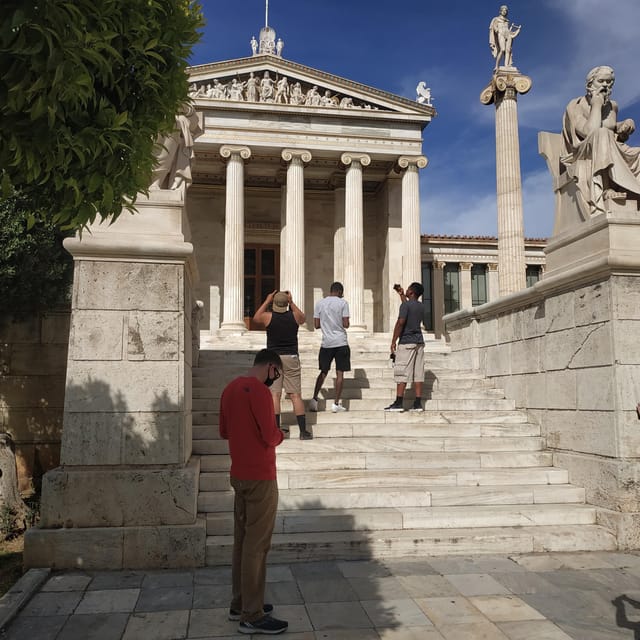
You also get photo stops for major neoclassical buildings like the University of Athens and the Academy of Art and Sciences, plus the National Library area. If you enjoy architecture, these quick stops are a bonus because they show Athens as more than just ancient sites. Athens also has a confident, 19th and early 20th century identity.
Plaka free time, plus the practical edge
You end with time in Plaka, which is one of those neighborhoods where you can pick up snacks, gifts, or a late meal if you are still running on energy. This is a helpful design choice because it gives you control after a day that is otherwise timed and structured.
Mount Lycabettus and the Parliament Changing of the Guard
Two overview highlights add a different kind of payoff: a panoramic viewpoint and an active, living tradition.
Mount Lycabettus for panoramic Athens views
The tour includes a panoramic view over Athens from Mount Lycabettus. If you want a single “wow” shot of Athens as a whole, this is the kind of stop that makes your photos look like they belong together with your ancient ruins pictures. Even if you only get a short time, the perspective can help you understand where everything sits in the city.
Parliament changing of the guards
You also watch the changing of the guards at the Parliament. This one is not about ancient architecture, and that is part of why it works on a day focused on antiquity. It adds a sense of present-day Greece, plus it is an easy, memorable event to anchor your evening walk later.
Southbound to Corinth: Canal Views and the Geography Lesson
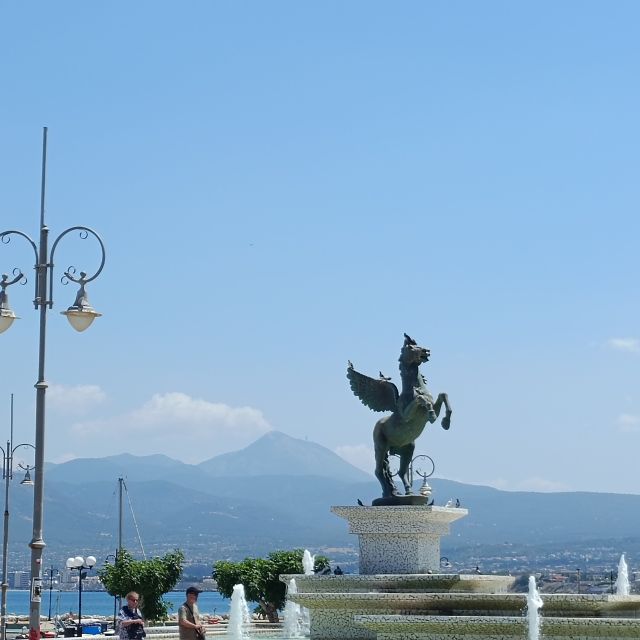
After Athens, the tour drives southwest toward Corinth. Expect scenic driving time plus a photo stop at the Corinth Canal and the area around the Diolkos, which helped move ships across the land. Even if you are not a history nerd, you will probably appreciate this because the canal is visual proof that humans keep rewriting geography.
This is also a good mental reset. Athens is densely layered with monuments you climb through and photograph. Corinth gives you a different texture: open ruins, ancient site layouts, and a strong feeling of distance from the modern street level.
Quick stop etiquette tip
At the canal photo stop, keep your walk tight and your camera ready. The time window is short, so you will want to decide quickly what you want to capture: the canal itself, the bridges, or the broader view from the viewpoint area.
Corinth Ruins: Kechries, Acrocorinth, and Temple of Apollo
Once you arrive at ancient Corinth, the day shifts into a more archaeological rhythm. You will visit areas including Kechries, then head up for Acrocorinth viewpoints, then visit the Temple of Apollo and spend time in the ancient Corinth area.
Kechries guided time
At Kechries, you get a guided visit. This is the kind of stop where guidance helps because early layers and less famous areas can look confusing if you are just wandering. Guided time here helps you recognize what you are seeing and why it mattered.
Acrocorinth scenic views
You also get time at Acrocorinth with scenic views on the way. This is where you get context for why Corinth mattered, because viewpoints naturally make the geography feel real. You can often spot how the land shape influences routes, settlement, and defensive thinking.
Temple of Apollo, mostly self-guided
The tour lists Temple of Apollo as self-guided for about an hour. That is a smart mix. You get enough guidance earlier in the day to know what to look for, then you can roam at your own pace. If you like reading signage and figuring out ancient site layout, self-guided time is the sweet spot.
The St. Paul Connection in Corinth: Why That Stop Feels Different
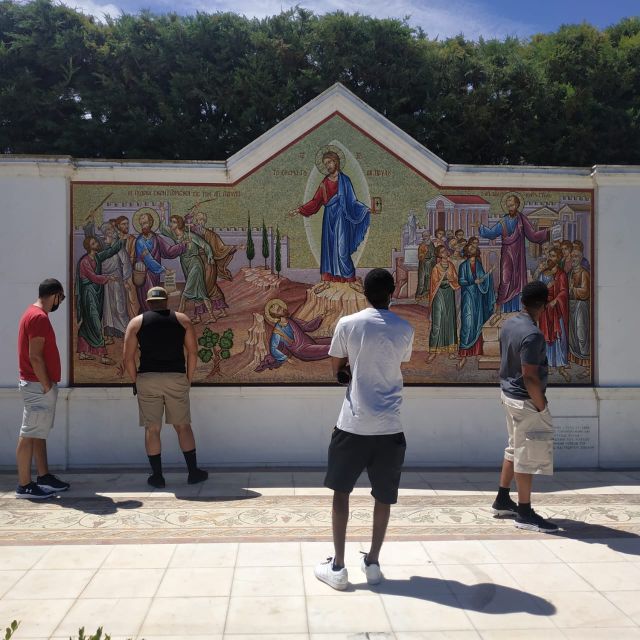
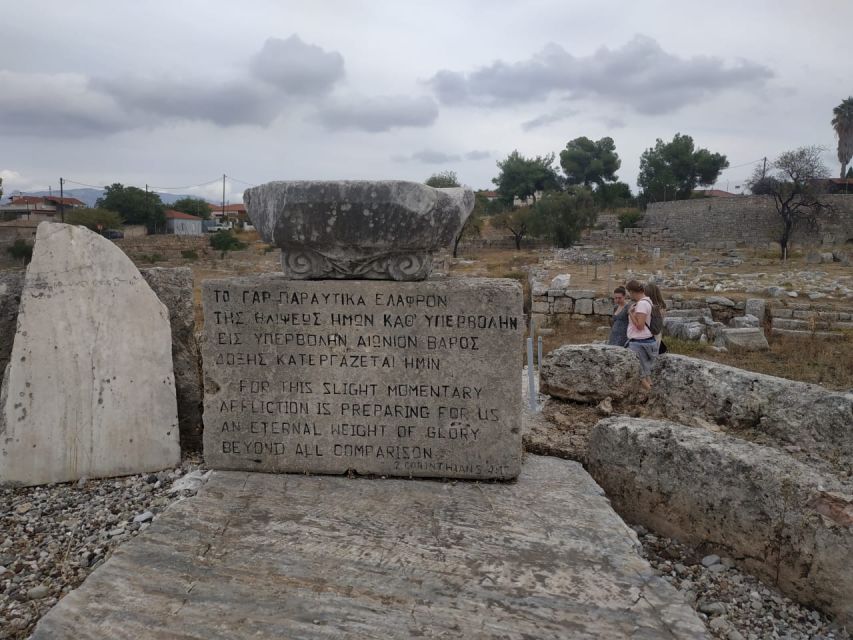
One of the most distinctive highlights is standing near the altar where St. Paul spoke about Christianity. That moment matters because it turns the day from only architecture into something more personal and specific. You are not just visiting old stones, you are visiting a place tied to a human story and a specific speech site.
The tour also includes additional Corinth highlights such as the ruins of two theaters, temples from the Roman period, and Roman emperor imagery in the Corinth Museum, where you can see statues of Roman emperors. Corinth’s museum experience can be especially helpful if you want to connect the outdoors ruins to artifacts and later interpretations.
Museum practical note
The tour highlights the museum as interesting for hundreds of artifacts across different periods. While entrance fees are not included, this stop can be the place where the whole day starts to click.
Break Time, Lunch Options, and Shopping Around Ancient Corinth
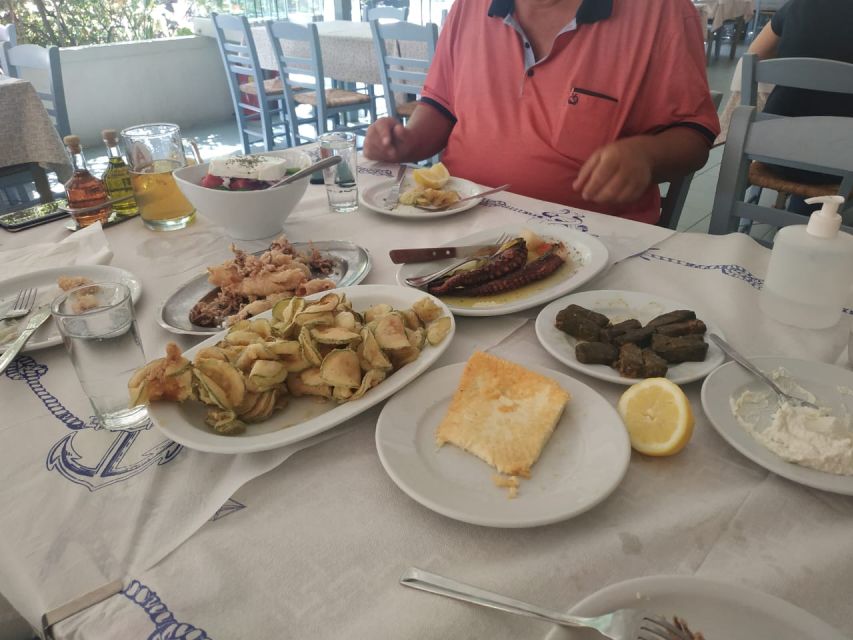
You get a break in ancient Corinth with time for lunch (optional), free time, and shopping. This is where the tour gives you a human-friendly reset, because after walking and climbing, you do not want every minute scheduled.
Important: entrance fees and lunch are not included, so you should plan to have some cash or a card ready. Also, some days can have site closures and special hours on holidays, so if you are traveling around major Greek holidays, you might need flexibility in your expectations.
What About Entrance Tickets, and How to Think About Them?
Entrance fees are not included, and the day includes several places where tickets may be required. The Acropolis Museum ticket is listed at €10. The Acropolis site ticket prices and options include multi-tickets, with a multi-ticket listed at €30 that bundles several sites including the Temple of Zeus, Ancient Agora, Roman Forum, Kerameikos, and the Theater of Dionysos.
Corinth’s ticket cost is listed as €8 in summer and €4 in winter. Those season prices are worth factoring into your budget because they change your effective cost.
This is where the tour’s “skip the ticket line” detail matters. It does not remove the ticket cost, but it can remove delays. On a day this packed, saving time in line can be the difference between seeing everything planned or feeling rushed.
The Most Praised Part: How the Right Guide Changes the Day
The reviews you provided point to a clear pattern: guide quality strongly affects how memorable the day feels. Names like Nikos, Takis, Nikoios/Nokios, Odysseus, Odysseas Zournatsidis, Spiros, and Demitrios came up repeatedly. The common thread was not only facts, but also smooth timing and flexible adjustments when schedules shifted, such as adapting to shorter cruise stays.
You should also know what you are buying. This is described as an English-speaking driver/guide with a private group. If you ask questions while you are riding between stops, you tend to get more out of the day than if you only listen at the monuments.
One small but real advantage: some guides were noted as helping with extra moments like added stops. You should not assume every guide will do the exact same thing, but the fact that flexibility showed up in feedback suggests this operation cares about customizing the experience when possible.
Logistics and Small Friction Points to Plan For
This tour is well structured, but it comes with a few practical considerations.
1) You must manage ticket lines and meeting points. The driver can’t escort you inside every site, so you will need to stay on schedule.
2) Walking time adds up. Between the Acropolis area and Corinth’s archaeological grounds, wear shoes you trust.
3) Weather can hit hard at the Acropolis. Summer heat and slick surfaces can both be a factor. Light clothing and sun protection help.
4) Order can change. The order of visits can shift due to unforeseen circumstances, which is normal but worth keeping in mind when you are chasing specific photos.
None of these are deal-breakers. They are just the realities of a one-day Athens and Corinth hit list.
Should You Book This Athens and Corinth Day Tour?
Book it if you want a single, organized day that connects Athens and Corinth with a story tied to St. Paul. I like that the tour balances big ticket moments, like the Acropolis and Acropolis Museum, with active geography stops like the Corinth Canal and viewpoint time at Acrocorinth. The private group format up to 3 also makes it more comfortable than the standard big bus shuffle.
Skip it, or at least shop carefully, if your priority is slow travel, deep museum time, or lots of free wandering. This is a full-day schedule with several short stops and only a limited amount of self-guided time. If you want to linger, you will need to add extra time on your own.
If you do book, choose shoes first, then plan for tickets. Bring a little patience, show up ready for walking, and you’ll get the kind of day that leaves you with photos and context that actually go together. And if your guide is one of the names mentioned in the feedback, you can expect the day to feel far more than a drive-by.
FAQ
What is included in the tour price?
Round-trip transfers from your hotel, cruise ship, or preferred Athens location, an English-speaking driver/guide, cold drinking water, a mobile phone, and Wi-Fi.
Are entrance fees included?
No. Entrance fees are not included, so you should plan to buy tickets for sites and museums as needed.
Is lunch included?
Lunch is not included. Lunch is optional during the break time in the ancient Corinth area.
Where are the pickup locations?
Pickup is available from Athens or Pireas, depending on your option, plus it is also listed as including your Athens accommodation or the port area.
What time are the Acropolis Museum and Acropolis open?
The Acropolis Museum is open 8 AM to 8 PM. The Acropolis opening times vary by season, and the schedule is listed as 8 AM to 7 PM in summer, or 8:30 AM to 3 PM in winter.
How much are tickets for Corinth and the Acropolis Museum?
The Corinth site cost is listed as €8 in summer and €4 in winter. The Acropolis Museum ticket cost is listed as €10.
Freshly listed near Athens
- Private Guided Tour: Athens, Acropolis and Acropolis Museum★ 4.9 · 62 reviews
- Private Athens Tour with a Local- Highlights & Hidden Gems★ 4.9 · 64 reviews
- Athens: Private Acropolis Tour with focus on Kids & Families★ 4.8 · 51 reviews
- Poros Island: Full Day Trip From Athens with Swimming★ 4.8 · 33 reviews
- Piraeus Port: Acropolis Museum and Parthenon Mythology Tour★ 3.7 · 29 reviews
- Athens: Ouzo Tasting at Brettos Plaka★ 4.3 · 32 reviews
- Athens Old Town: Greek Olive Oil & Herbs Tasting★ 4.2 · 41 reviews
- No Diet Club – Unique local Food Tour in Athens!★ 4.9 · 38 reviews
Ancient Corinth & Canal Day Trips, compared.
Ancient Corinth Day Trip with Canal & VR Guide
Read our review →
Private Biblical Tour Ancient Corinth & Isthmus Canal from Athens
Read our review →

Corinth Canal, Mycenae & Nafplio Premium Guided Tour
Read our review →
Ancient Corinth Tour with Official Guide & Tickets
Read our review →
Corinth, Cave of Lakes, Odontotos Railway Private Tour with Greek Lunch Included
Read our review →
Paul’s Biblical and Ancient Corinth Half-Day Tour
Read our review →
Browse the lists this tour appears in