
Reviewed · ANCIENT CORINTH & CANAL DAY TRIPS
Biblical Corinth: St. Paul and His Letters to the Corinthians
A trip to Corinth can feel like homework. This one turns St. Paul’s world into a walkable day of “oh, so that is why” moments. You start in Athens at Areopagus Hill, then head into the Corinth area where Paul taught, worked, and wrote to the people who became his longest friendships.
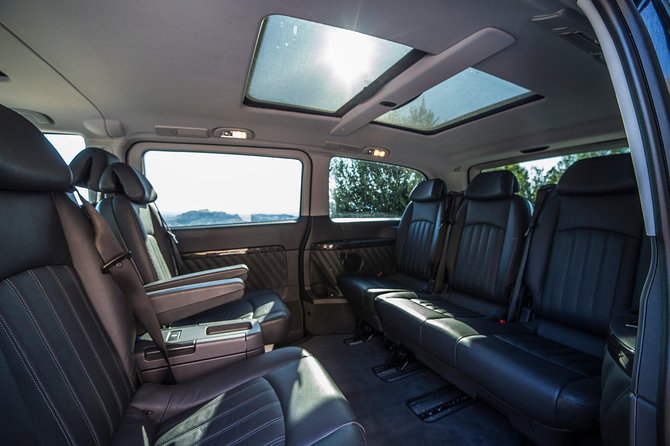
I especially like the private pacing. With a dedicated driver, you can linger when a view hits, or move on when you want more ruins time. I also like the on-board Wi-Fi and the clear, practical commentary from drivers such as Alex, George, Stephanos, and Spiros, who get praised for answering questions without rushing you.
One thing to consider: the driver is not a licensed tour guide who enters the archaeological sites with you. You will still get context, but if you want a full inside-the-ruins guided walkthrough, you may need to request a licensed guide, and entrance tickets for Ancient Corinth and the Isthmia museum are extra.
In This Review
- Key moments you will remember
- A full day from Athens that stays human-sized
- Areopagus Hill, also called Mars Hill, with philosophy in the background
- Corinth Canal and the Diolkos: engineering that shaped trade and travel
- Isthmia: Poseidon, the games, and Paul the tentmaker
- Isthmia Museum: artifacts that make the region feel lived-in
- Ancient Corinth and the Bema, Gallio’s decision in your mind
- Cenchreai (Kechries), Paul’s vow moment, and Phoebe’s role
- Apostolou Pavlou church and Akrokorinthos fortress views
- Lunch in Corinth, plus pacing tips for comfort
- Price and value: what $218.43 gets you
- Should you book this St. Paul to Corinthians tour?
Key moments you will remember
- Mars Hill in the open air where Paul addressed the council of Athens, centered on the unknown god idea
- Corinth Canal views from above, plus a smart stop that explains why the Diolkos mattered before ships used the canal
- Isthmia Games connections, including why Poseidon and the tentmaker detail fit Paul’s daily rhythm
- Ancient Corinth’s Bema, tied to Gallio’s refusal to judge Paul’s case in Acts
- Kenchreai (Kechries) and Phoebe, tying Acts 18:18 and Paul’s letter to the Romans to a real port setting
- Akrokorinthos fortress viewpoints, a good payoff if you do not mind a hike up
A full day from Athens that stays human-sized

This is an 8 to 9 hour private outing, built for one group at a time. You get hotel or port pickup and drop-off, an air-conditioned vehicle, bottled water, and onboard Wi-Fi so you can fact-check notes or pull up your Bible references when the driver mentions something specific.
What makes the format work is the “your pace” feel. Even with a full slate of meaningful stops, the group stays flexible. A lot of people also love that the driving part comes with history context, not just directions. You do not have to feel like you are being shuttled from one signpost to the next.
Other ways to spend the day near Athens
- From Athens: Ancient Corinth Day Trip with Canal & VR Guide
★ 4.6 · 1,073 reviews - Private Biblical Tour Ancient Corinth & Isthmus Canal from Athens
★ 5.0 · 762 reviews - Athens: Ancient Corinth & Nafplio Full Day Trip with Swim
★ 4.8 · 531 reviews
Areopagus Hill, also called Mars Hill, with philosophy in the background
You begin at Areopagus Hill, tied to Paul’s speech in Athens. The big idea here is not only that Paul preached, it is how he navigated a city where thinking was public and arguments were part of daily life. This stop blends spiritual reflection with the feel of ancient civic space, since you are standing where a message was aimed at the Athenians’ intellectual world.
You will walk through the sacred grounds of the Acropolis area first, then focus on the Areopagus Hill moment. It helps if you go in ready to listen for contrasts. Paul is not just adding a new religious label to the mix. He challenges assumptions and redirects attention to the unknown god theme, which would have landed differently in a philosophical city than it does in a modern church.
Practical note: it is short, but it is still outdoors and on foot. Wear shoes you can trust on uneven ground, and bring water since this day can run warm.
Corinth Canal and the Diolkos: engineering that shaped trade and travel
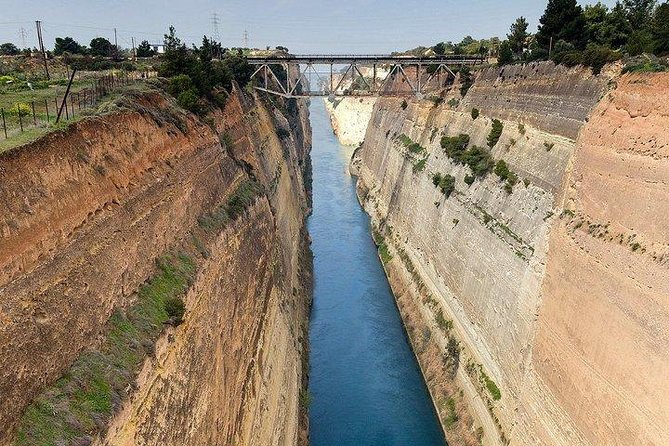
Before Corinth proper, you get a morning of “how did they do that?” stops. The Corinth Canal is the headline view. It cuts across the Isthmus of Corinth, linking the Gulf of Corinth in the Ionian Sea with the Saronic Gulf in the Aegean Sea. The impressive part is scale and limitations: it is about 6.4 kilometers long, but only around 21.4 meters wide at the base, and it has no locks. From higher ground, you can see the steep limestone walls and get a feel for how narrow and strict this route is for modern shipping.
Next comes the Diolkos, an ancient overland roadway that moved ships across the isthmus long before the canal existed. You do not need to be an engineering nerd to appreciate the point. The Diolkos was a solution to a problem, and it made the area a crossroads for merchants, sailors, and travelers. That matters for Paul because it places Corinth into the flow of Mediterranean movement. People were constantly arriving, leaving, and talking.
If you like history that connects cause and effect, this is one of the better stretches. You start seeing the “Paul’s world was connected” idea in physical terms, not just in textbook lines.
Isthmia: Poseidon, the games, and Paul the tentmaker

Isthmia is where the day becomes more than ruins. The sanctuary site is connected to the Isthmian Games, held in honor of Poseidon and second in importance only to the Olympic Games. You can feel why this location mattered. It sits where the Peloponnese meets mainland Greece, so it functioned like a meeting point for athletics, religion, and commerce.
The Paul connection is what makes Isthmia special on a Biblical tour. The story you are walking through is that Paul is believed to have worked as a tentmaker in the area. Whether or not every detail is exact, the meaning is clear: when crowds gathered for games and traveling visitors arrived, Paul had a reason to be there and a way to meet people face to face. This is why the “tentmaker” detail keeps coming back in Paul-focused travel. It is not abstract. It is a job that places you in a crowd.
You also have a couple of ways to see Isthmia’s religious and cultural layers. At the archaeological site, you can look at the Temple of Poseidon, rebuilt over centuries, along with the ancient stadium where the games took place. Nearby is the Sanctuary of Palaimon, devoted to the patron of sailors, which helps explain the blend of worship types you would have encountered around the ports and travel routes.
One more contrast comes at the ancient theater. The setting was originally for musical contests tied to the games, with Roman mosaics depicting sea creatures and scenes from Dionysian mythology. Standing in that cultural context while you think about Paul’s message is a strong “two worlds” moment. It makes you notice how Christianity arrived into an environment with established festivals, gods, and entertainment tied to religion.
A short hop away, these too:
- Athens: Acropolis & up to 5 Archaeological Sites Combo Pass
★ 4.2 · 13,904 reviews - Athens: Acropolis, Parthenon & Acropolis Museum Guided Tour
★ 4.8 · 9,316 reviews - The Acropolis, Parthenon & Acropolis Museum Guided Tour
★ 4.7 · 8,493 reviews - Athens: Cape Sounion & Poseidon Temple Sunset Half-Day Trip
★ 4.8 · 8,241 reviews
Isthmia Museum: artifacts that make the region feel lived-in
The Archaeological Museum of Isthmia is not the biggest museum stop on the day, but it is a valuable one because it gives you objects to attach to what you just walked through. You will see displays tied to the Sanctuary of Poseidon and the Isthmian Games setting.
A highlight includes glass panels from Kenchreai, the nearby port area associated with Paul’s sailing route out toward Syria. Even if you have read those references already, seeing port-linked material in the place where you are standing helps turn a route into a lived journey. You can also find statues, votive offerings, and burial artifacts that show the variety of people and beliefs present in the region.
Plan for a short stop here, not a long museum day. If you come in expecting a fast, focused museum browse, it will feel efficient rather than rushed.
Entrance is not included for the museum, so you will want to bring a card or cash ready for the on-site purchase.
Ancient Corinth and the Bema, Gallio’s decision in your mind

Now you get to the heavy hitter: Ancient Corinth. This city sat on the strategic isthmus between mainland Greece and the Peloponnese, and it thrived as a major trade and religious center. Paul spent more than 18 months here, and his letters to the Corinthians became part of the New Testament. In other words, Corinth is not a “brief stop in the story.” It is one of the places where his message took root into community life.
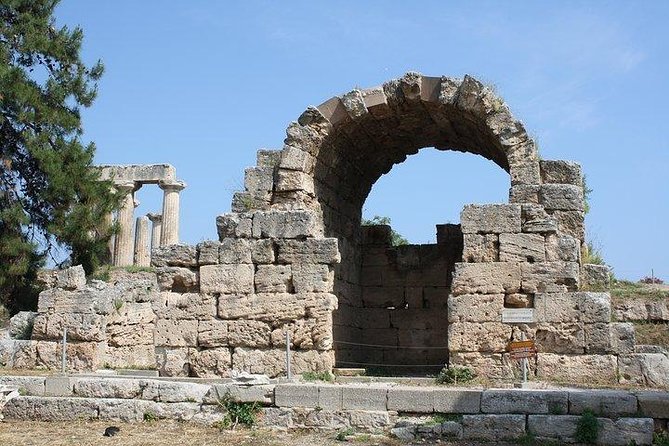
The centerpiece stop for many people is the Bema, the judgment seat. This is where Paul is believed to have stood before Proconsul Gallio. In Acts, Gallio refuses to judge the matter, viewing it as an internal religious dispute among the Jews. That moment matters because it allowed Paul to keep going without Roman authorities shutting him down. Standing at the stone platform today makes that historical pivot feel immediate.
You will also want to look around for other landmarks as you wander. The site is extensive, and many visitors are surprised by the scale, so wear shoes you can walk in comfortably. Since the driver is not licensed to guide inside the ruins, your best move is to ask questions before you enter certain zones, then read the signs as you go. The driver can usually point out what to notice, even if they remain outside the archaeological areas.
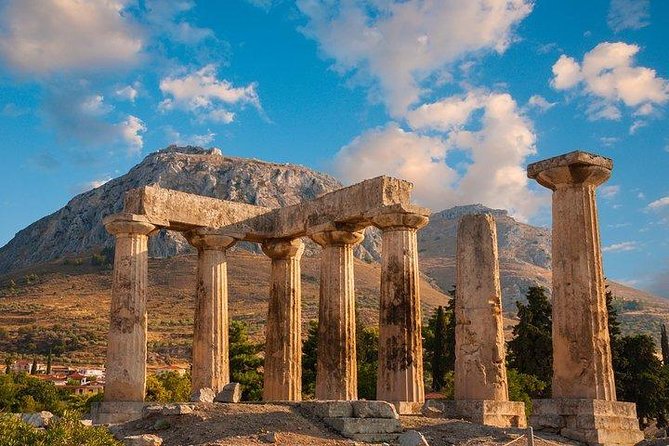
Temple of Apollo is another visual anchor in this zone. It is one of the oldest and most important temples in Greece, built around 560 BC, with massive monolithic Doric columns. Even if you do not do architecture tours, it is hard not to think about how a landscape dominated by Apollo would shape the religious backdrop Paul encountered. The contrast between idol-centered worship and Paul’s message is part of why this stop lands.
Entrance to Ancient Corinth is not included, so budget for that on-site fee.
Cenchreai (Kechries), Paul’s vow moment, and Phoebe’s role
Corinth is not only about the city ruins. You also visit Kechries, the location of ancient Cenchreae, Corinth’s eastern port. This is tied to Acts 18:18, where Paul cuts his hair before departing for Syria with Priscilla and Aquila, in connection with a vow. The emphasis on a port location matters because you are not only tracking Paul’s preaching. You are tracking his movement, his travel choices, and the kind of commitments that show up before a journey.
This port area also links to early Christian life. In Romans, Paul speaks warmly about Phoebe, described as a trusted servant, a diakonos, of the church there. On a spiritual history day trip, Phoebe is a powerful inclusion because it reminds you that early Christianity spread through real people with real responsibilities, including women holding key roles in church life.
If you prefer a tour that links Bible references to physical places you can walk through, Kechries is one of the best stops on the day. It gives your brain a map, not just a list of verses.
Apostolou Pavlou church and Akrokorinthos fortress views

After port and city connections, you shift to the Christian commemoration side with Apostolou Pavlou, a church dedicated to Apostle Paul. It stands as a living reminder of his time in Corinth around 51 to 52 AD. Even if you are not a church-tour person, it is worth stepping in because it closes the loop between the ruins you explored and the Christian tradition that remembered them.
Then you can climb to Akrokorinthos, the fortress overlooking Ancient Corinth. This hilltop viewpoint is a big payoff if you do not mind a walk up. From there, you can picture the city below and think about what Paul might have seen as he planned his next steps, wrote to communities, and kept his mission moving across cities and ports.
This is also the best place to slow down and look. The fortress perspective helps you understand why Corinth was defensible and important, and it turns your earlier stops into a single picture.
Lunch in Corinth, plus pacing tips for comfort
Midday, you stop for a leisurely lunch at a traditional seaside Greek taverna in Corinth. If you choose the Greek traditional food option, the meal cost is already included in the tour price.
This lunch break is not just about food. It is where you reset your legs and decide how much time you want to spend in the later viewpoints and ruins. Many people enjoy having a driver who can suggest a good spot and a smooth order, especially on a day that has a lot of walking.
Practical tip: ask your driver where the least crowded restroom break is. In the feedback I saw, drivers like George and Alex were praised for knowing calmer spots away from crowds. On a long day, that is the difference between feeling relaxed and feeling stressed.
Price and value: what $218.43 gets you
At $218.43 per person, you are paying mainly for private transport plus structured time with a driver who puts the day into context. For most people, that value shows up in three places.
First, the vehicle is comfortable, with air-conditioning and onboard Wi-Fi plus bottled water. Second, you get pickup and drop-off at your hotel or port, which saves you from fighting Athens transit on a time-sensitive day. Third, the day includes a lunch option with traditional food if you select it when booking.
The extra cost to watch is entrance fees. Ancient Corinth and the Archaeological Museum of Isthmia have an admission fee you will pay on-site, around 15 euros per person. Everything else on the day is listed as free admissions, so your budget is predictable if you plan for those two charges.
If you want a private, Paul-focused route with a driver who explains what you are seeing, this price can make sense. If you only want a self-guided walk through one site and nothing else, you might find a cheaper option. But if you want the whole story arc, Athens to Corinth connections included, this one is built for that.
Should you book this St. Paul to Corinthians tour?
Book it if you want a day where St. Paul’s life is tied to real places you can walk through, from Areopagus Hill to Cenchreai. Book it if you like history that connects religion, daily work, and travel routes, not just big monuments. And book it if you appreciate a private setup where you can adjust pacing, ask questions, and take breaks without a loud crowd management system.
Skip it or consider upgrading your guide expectations if you know you want a licensed guide inside every major archaeological site. The driver provides fluent English commentary, but they do not enter the ruins with you as a licensed guide. You can still get plenty from the driver and the signs, yet if you want a deeper inside-the-site narration, you should ask about the licensed guide option before you go.
If you are craving the kind of meaningful trip where you can look at the ground and think, Paul really stood here, this is one of the better ways to do it from Athens.
Freshly listed near Athens
- Athens: Premium Guided E-Scooter Tour in Acropolis Area★ 5.0 · 133 reviews
- Athens: Wine Workshop Create your Own Wine under the Acropolis★ 5.0 · 77 reviews
- Ceramic and Pottery Creative Workshop with Two Local Artists★ 4.0 · 57 reviews
- Private Tour and Tasting at Zeginis Winery★ 5.0 · 18 reviews
- Athens: Greek Wines Tasting with Sommelier and Acropolis Views★ 5.0 · 88 reviews
- Private Day Trip to Nafplio from Athens★ 5.0 · 20 reviews
- Athens Old City Private Photoshoot Tour / 2 hrs★ 5.0 · 109 reviews
- Greek food and wine tasting★ 5.0 · 18 reviews
Ancient Corinth & Canal Day Trips, compared.
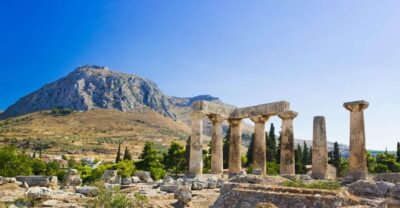
Ancient Corinth Day Trip with Canal & VR Guide
Read our review →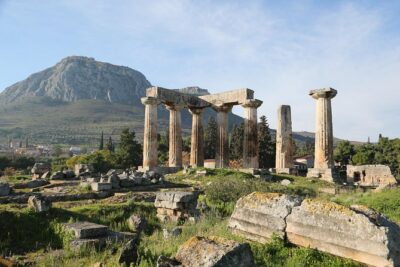
Private Biblical Tour Ancient Corinth & Isthmus Canal from Athens
Read our review →
Corinth Canal, Mycenae & Nafplio Premium Guided Tour
Read our review →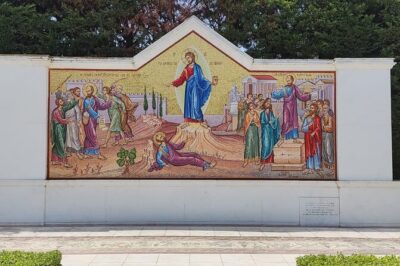
Private Tour of Apostle Paul’s Footsteps in Ancient Corinth
Read our review →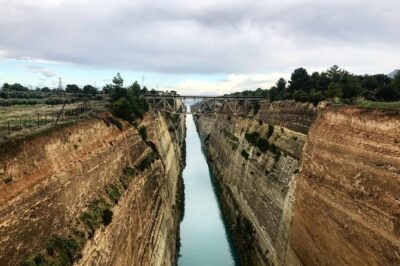
Corinth Half-Day Trip from Athens with Entrance Tickets
Read our review →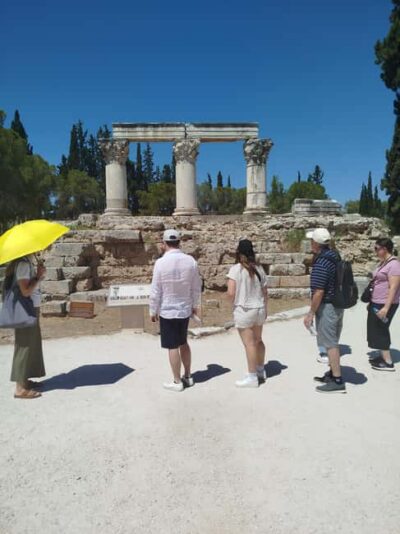
Ancient Corinth Tour with Official Guide & Tickets
Read our review →
Ancient Corinth, Epidaurus, Nafplio full day private tour from Athens
Read our review →Browse the lists this tour appears in