

Reviewed · MYTHOLOGY WALKING TOURS
Mythology, Philosophy and Democracy Tour
Democracy gets its origin story in Athens, fast. This Mythology, Philosophy and Democracy tour ties together Pericles-era ideals, street-level debate, and the thinking that helped shape Western ideas. I especially liked the way it connects big themes to specific places, like the Pnyx hill for early parliamentary life. One possible drawback: it is a walking-heavy morning style experience, so you’ll want to plan for heat and sun.
Two things I really liked: first, you get a small-group format with a guide who makes the material feel like conversation, not a lecture. Second, the stops are spread across Athens beyond the obvious, so you spend less time guessing and more time understanding what you are looking at. Price-wise, the ticket is only $50.69 per person, and most sights on the route are free to enter, so you are mainly paying for the guidance and the storytelling that links it all.
In This Review
- Key takeaways before you go
- Myth, philosophy, and democracy in one focused Athens walk
- Price and value: $50.69 and what you actually get
- Meet Panos: the guide who turns history into questions
- The itinerary, stop by stop, and why each place matters
- Kerameikos: ceramics, graves, and Pericles’ democratic speech
- Ancient Agora: the heart of discussion, politics, and literature
- Monastiraki Square: slow walk through the market side of Athens
- Roman Agora: the layered city north of the Acropolis
- Tower of the Winds: clocks, weather, and science-like thinking
- Hadrian’s Library: Roman learning on the edge of the Acropolis
- Plaka: the postcard streets that still feel lived in
- Pnyx: the first parliament and a prime view for sunset
- Philopappos Hill: Acropolis views, Athens at night, and the tour’s end
- Where the tour starts and ends, and why timing matters
- Walking pace, group size, and comfort tips that actually help
- Who this tour is best for
- Should you book this Mythology, Philosophy and Democracy tour?
- FAQ
- How long is the tour?
- Is the tour in English?
- How big is the group?
- Where does the tour start and end?
- Are admissions included for the stops?
- What is the price per person?
- Can I bring a service animal?
- Can I get a full refund if I cancel?
Key takeaways before you go
A 3-hour theme tour, not a random sight list
Small group capped at 12 for an easy pace and real interaction
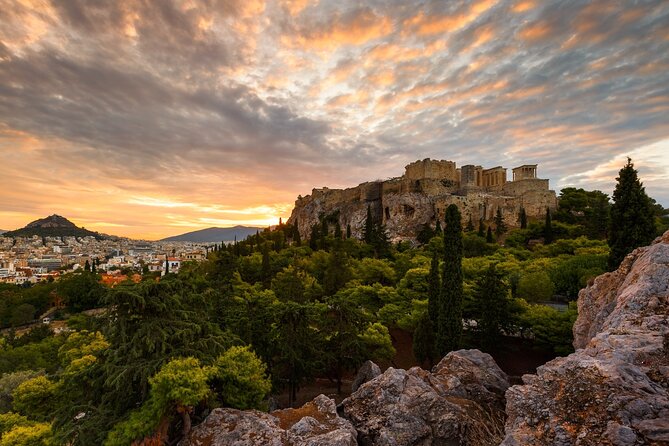
Two major Acropolis viewpoints, including sunset-ready Pnyx
Most admissions on the route are free, so value comes from the guide
A thought-provoking ending with an Ancient Greek philosophy symposium
Heat plan matters, and the guide may add water and ice cream breaks
Myth, philosophy, and democracy in one focused Athens walk
Athens can feel like a museum that won’t stop talking. This tour gives it a spine. In about half a day of walking, you trace a line from myth and belief toward rational inquiry, and then into the political machinery of democracy.
What makes it work is the structure. Instead of showing you ruins and moving on, the guide builds connections between ideas and the ground you are standing on. Even if you only remember a couple names, you’ll leave with a clearer sense of how Athenian thinking shaped argument, law, and public life.
It also helps that the route covers both “serious” political places and quieter, often overlooked corners of central Athens. So you don’t just learn where power sat, you also see the everyday texture around it.
More mythology walks around Athens:
- Athens: Mythology of Delphi, Museum and Arachova Guided Tour
★ 4.7 · 5,102 reviews - Athens & Acropolis Highlights: Greek Mythology Small-Group Tour
★ 5.0 · 2,370 reviews - Athens: Acropolis and Mythology Highlights Small Group Tour
★ 4.8 · 2,275 reviews
Price and value: $50.69 and what you actually get
For $50.69 per person, you are buying three main things: a guided route, a small group size, and free entry to most of the stops on the itinerary.
The route includes major Athens landmarks such as Kerameikos, the Ancient Agora area, and Pnyx, plus Roman-era Athens touches like Hadrian’s Library and the Roman Agora. Each stop has an on-the-ground explanation, and the guide ties them back to the tour’s core question: how did philosophy and debate become part of civic life?
That matters because many self-guided walks turn into, at best, “I saw it, I moved on.” Here, you’re not just looking. You are being coached through meaning, from Pericles’ famous democratic praise to the places where debate and debate-like behavior actually happened.
Meet Panos: the guide who turns history into questions
The standout on this experience is the guide, Panos. People consistently describe him as witty, engaging, and intensely enthusiastic about the material. He does more than recite facts. He makes you think, and he does it in a way that feels like you are walking with a sharp, friendly teacher.
A big plus is that he does thematic storytelling. You’ll hear how mythology, philosophy, politics, and literature start to connect as you move through Athens. The pacing also feels designed for questions, not just photo stops.
At the end of the tour, there’s mention of an Ancient Greek philosophy symposium, which works like a capstone lesson. If you came wanting history, you get it. If you came wanting ideas, you get those too, and you get them tied to real locations you walked through.
The itinerary, stop by stop, and why each place matters
This route is easy to follow and intentionally shaped around concepts. Here is what each stop contributes, and what to watch for.
Other ways to spend the day near Athens
- Athens: Acropolis & up to 5 Archaeological Sites Combo Pass
★ 4.2 · 13,904 reviews - Athens: Acropolis, Parthenon & Acropolis Museum Guided Tour
★ 4.8 · 9,316 reviews - The Acropolis, Parthenon & Acropolis Museum Guided Tour
★ 4.7 · 8,493 reviews - Athens: Cape Sounion & Poseidon Temple Sunset Half-Day Trip
★ 4.8 · 8,241 reviews
Kerameikos: ceramics, graves, and Pericles’ democratic speech
Kerameikos is the kind of Athens site that feels underrated, even though it is historically huge. The area’s name is tied to ceramics, because it was linked with workshop life. It was also used as Athens’ cemetery for many centuries, and that gives the place a strong sense of time.
The tour’s connection point here is Pericles. You learn about the setting tied to his famous Epitaph, the speech honoring early casualties of the Peloponnesian War, where he praises Athenian virtues and democratic culture. Standing in a place that was both work area and burial ground makes the political story feel less abstract.
Practical note: this is a free admission stop in the tour plan, so you can focus on the explanation without budgeting extra ticket time.
Ancient Agora: the heart of discussion, politics, and literature
Next comes the Ancient Agora, the civic center where people actually talked. This stop matters because it anchors the tour’s central idea: democracy runs on public reasoning. You will connect the place to major figures linked to philosophy, politics, and drama.
Expect names like Socrates and Plato, but also political and civic leaders connected to Athenian life, such as Solon, Themistocles, Pericles, and Thucydides. Literary names show up too, like Sophocles and Aristophanes. The result is a sense that debate was not limited to philosophers in isolation. It lived in the public space.
Even if you only catch a few names, the bigger takeaway is how often Athens fused civic identity with thinking out loud.
Monastiraki Square: slow walk through the market side of Athens
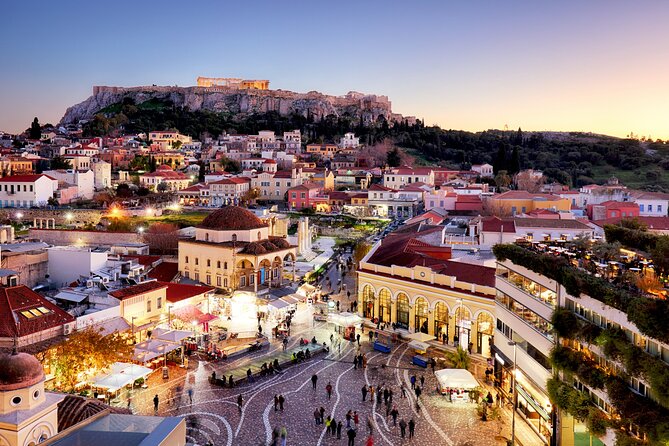
Monastiraki Square is where the tour shifts tone. You get an easy pace stroll through the flea market area, with antique and tourist shops.
This is not the deepest historical stop on paper, but it has real value in practice. It gives you a breather and shows you that Athens is not a set of disconnected ruins. The city still runs on street life, bargaining, and casual wandering.
If you are shopping, keep your expectations simple. This segment is more about walking and atmosphere than about treasure hunts with guaranteed finds.
Roman Agora: the layered city north of the Acropolis
Then you move to the Roman Agora, located north of the Acropolis and east of the Ancient Agora. This helps you see Athens as a palimpsest. Greeks built and defined civic space, and later Roman Athens reused, reworked, and reinterpreted parts of it.
The value here is context. Without this kind of stop, a visitor can come away thinking Athens is only one era at a time. With it, you remember that cities evolve, and ideas travel with them.
Tower of the Winds: clocks, weather, and science-like thinking
The Tower of the Winds is a standout if you like the science angle. This octagonal structure, associated with Andronicus of Kyrristos, dates to the 1st century BC. It served as both a wind indicator and a clock.
A fun detail you’ll hear is that the timekeeping was solar, but when clouds interfered, there was also a hydraulic mechanism that produced a sound every hour. It is like Big Ben paired with a meteorological station, and it is often treated as an early station for tracking weather information.
This is where the tour’s claim about moving from blind faith toward early science starts to feel real, because the emphasis is on measurement and observation in the public realm.
Hadrian’s Library: Roman learning on the edge of the Acropolis
Hadrian’s Library was created by Emperor Hadrian in AD 132 and sat on the north side of the Acropolis. The tour explains that it was the second largest in the world at that time, which gives you a sense of how seriously Romans treated the infrastructure of learning.
Even if you only get a quick look, the idea lands. When empires invest in libraries, they are investing in the long-term power of knowledge. It also reinforces the theme that philosophy and public life tend to travel with education.
Plaka: the postcard streets that still feel lived in
Plaka is the scenic neighborhood segment. Expect small houses and narrow, picturesque streets.
This stop is lighter, but it can be helpful if you want a break from intense historical concepts. Also, you get a sense of where people want to spend time in Athens, not just where ancient power once operated.
Pnyx: the first parliament and a prime view for sunset
Pnyx Hill is a major anchor for the tour. It is described as the first parliament of the world, and it’s also one of the best areas for views.
This is where you get a big payoff: the architecture and the political purpose of the place meet in your field of vision. You’re not just reading about democracy, you are standing where it functioned in early form.
It is also a great sunset spot, and the tour plan treats it as one of the better viewpoints. Even if you do not time it perfectly for golden hour, the high vantage helps.
Philopappos Hill: Acropolis views, Athens at night, and the tour’s end
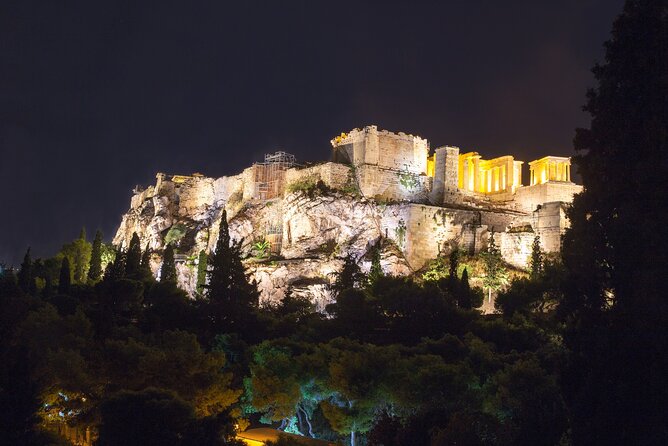
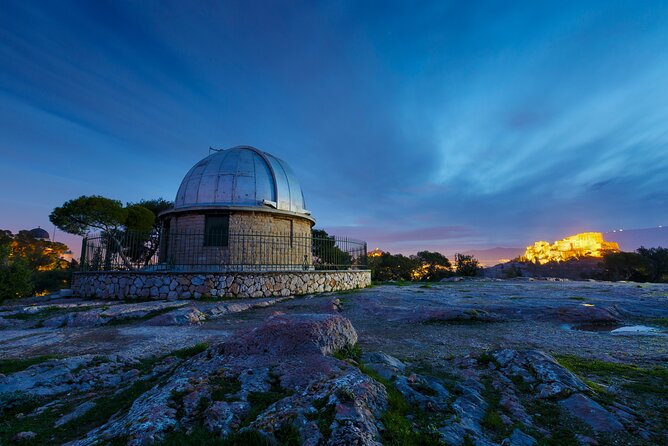
The finish is at Philopappos Hill, also known as the Hill of the Muses. This is your final viewpoint, and it is described as one of the best for seeing the Acropolis and Athens by night.
Depending on when you start, you may get more or less of that nighttime feeling. Either way, it is a fitting ending. You walk through political philosophy, then you land at a place where you can look back and see how the modern city wraps around the ancient one.
If you remember only one practical tip: bring a light layer. Hill winds can change the feel of the evening, and you’ll be happier if you’re comfortable while you look out.
Where the tour starts and ends, and why timing matters
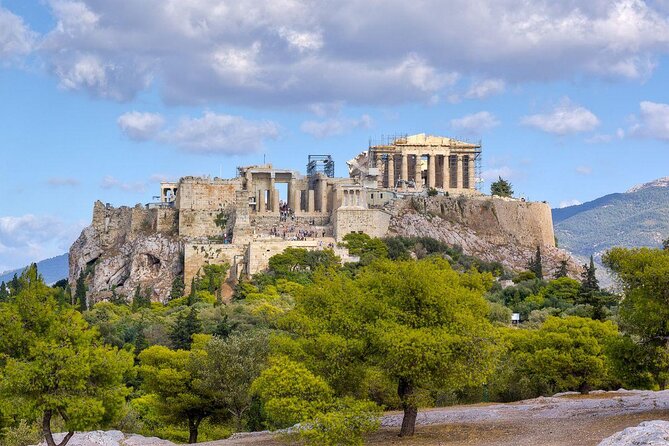
The meeting point is the Statue of Theseus in Athens. The tour ends at Philopappos Hill (listed with an address on Φυλής).
The duration is about 3 hours. That is a sweet spot. You get enough time to understand each place without feeling trapped for half a day. Also, it is short enough that you can pair it with other Athens staples, like the Acropolis complex, the same day.
Timing-wise, plan for heat if you go in summer. One review specifically calls out how hot conditions can make walking harder, and mentions the guide being gracious with water and ice cream stops. So yes, you should bring your own basics, but also know the guide likely has a practical heat rhythm in place.
Walking pace, group size, and comfort tips that actually help

The tour caps at a maximum of 12 travelers. That small group size changes the entire experience. You’ll have more space, easier conversation, and less time spent waiting for the slowest person in the group.
The itinerary has multiple stops and short segments. It is not a sprint. But it is still a real walk through central Athens, so your comfort plan matters.
Here is what I’d do to set yourself up well:
- Wear comfortable shoes you trust for uneven pavement and uphill bits, especially near viewpoints
- Bring water, even if you’re counting on the guide’s extra breaks
- Consider a hat and sunscreen. Athens sun can be relentless
- If you’re sensitive to heat, aim for a start time that gives you better light without peak afternoon sun
Because it is offered in English and is described as suitable for most travelers, it is also a good choice if you want clear explanations rather than a self-guided audio tour.
Who this tour is best for

This experience fits best if you want your Athens to be more than photos. If you like the big ideas behind Western thought and you want a physical route that makes those ideas stick, you’ll probably love it.
It is also a strong option for families who want a structured, conversational learning experience, not a long museum slog. The tour’s themes are built for discussion, and the guide often seems to steer the story toward critical thinking, comparisons to current life issues, and why the old questions still matter.
If you prefer pure sightseeing with minimal interpretation, you might find it too “brain-forward.” But if you like history that asks you to think, this is exactly the right kind of walk.
Should you book this Mythology, Philosophy and Democracy tour?

Book it if you want a smart, guided Athens morning that connects places to ideas. With Panos, the strongest value is how he connects myth, philosophy, and democracy to the actual streets, viewpoints, and civic sites you walk through.
Skip it only if you want a low-effort sightseeing loop or you do not want much discussion. Since it is a thematic guide-led experience, the payoff depends on your willingness to engage.
If you are trying to pick one Athens tour where the guide does real interpretation and not just directions, this is an excellent choice.
FAQ
How long is the tour?
The tour lasts about 3 hours (approx.).
Is the tour in English?
Yes, it is offered in English.
How big is the group?
This tour has a maximum of 12 travelers.
Where does the tour start and end?
It starts at the Statue of Theseus in Athens and ends at Philopappos Hill.
Are admissions included for the stops?
The itinerary lists admission ticket free for the stops included.
What is the price per person?
The price is $50.69 per person.
Can I bring a service animal?
Service animals are allowed.
Can I get a full refund if I cancel?
Yes. Free cancellation is available if you cancel up to 24 hours in advance for a full refund.
Freshly listed near Athens
- Athens: Premium Guided E-Scooter Tour in Acropolis Area★ 5.0 · 133 reviews
- Athens: Wine Workshop Create your Own Wine under the Acropolis★ 5.0 · 77 reviews
- Ceramic and Pottery Creative Workshop with Two Local Artists★ 4.0 · 57 reviews
- Private Tour and Tasting at Zeginis Winery★ 5.0 · 18 reviews
- Athens: Greek Wines Tasting with Sommelier and Acropolis Views★ 5.0 · 88 reviews
- Greek food and wine tasting★ 5.0 · 18 reviews
- Private Day Trip to Nafplio from Athens★ 5.0 · 20 reviews
- Athens Old City Private Photoshoot Tour / 2 hrs★ 5.0 · 109 reviews
Mythology Walking Tours, compared.
Mythology of Delphi, Museum and Arachova Guided Tour
Read our review →
Athens & Acropolis Highlights: Greek Mythology Small-Group Tour
Read our review →
Acropolis and Mythology Highlights Small Group Tour
Read our review →
The History of Athens: Greek Mythology Private Tour
Read our review →

Greek Mythology Treasure Hunt for Kids – Athens Private Tour
Read our review →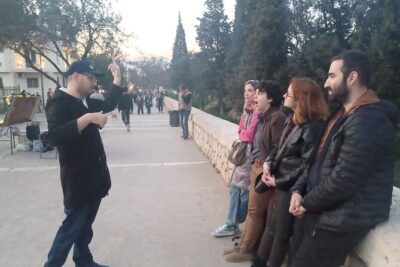
Horror Mythology Evening Experience – Myths Come to Life
Read our review →Browse the lists this tour appears in