
Reviewed · ACROPOLIS TICKETS & GUIDED TOURS
Athens & Acropolis Highlights: Greek Mythology Small-Group Tour
Myths become guideposts on Athens stonework. I like the small-group pace and the way stories connect directly to what you see at the Acropolis. One catch: the biggest sites need separate entry tickets, so you should budget extra on top of the $54.42 tour price.
This is a smart way to get oriented fast. You meet near the Arch of Hadrian area at the start, then walk a clear route through the city’s key landmarks, finishing at the Ancient Agora of Athens.
One more practical note before you go: plan for a fair amount of walking and climbing around ancient sites. If stairs and uneven ground wear you out, bring good shoes and pace yourself.
In This Review
- Key highlights worth your attention
- Why this Athens myth-and-ruins tour makes sense
- Price and tickets: what the $54.42 really turns into
- Starting at Olympian Zeus: the story begins before the Acropolis
- The Theatre of Dionysus: Greek drama in one quick stop
- Acropolis time: Parthenon plus the temples that explain the myths
- Parthenon: the headline, explained
- Temple of Athena Nike: victory with a boundary
- Erechtheion: myth, cult space, and sacred meaning
- Timing and crowd reality
- Ancient Agora: the other half of Athens
- Temple of Hephaestus: one of the best preserved, and why that matters
- What walking is like, and what you should bring
- How the guide makes or breaks the experience
- Where the meeting point helps, and how the tour finishes
- Who this tour is best for
- Should you book it or skip it?
- FAQ
- Is the Acropolis admission fee included?
- Is the Ancient Agora admission fee included?
- How long is the tour?
- What is the group size?
- Where do we meet?
- Where does the tour end?
- What language is the tour offered in?
- Can you pre-purchase entrance tickets for me?
- Do I need to bring anything special?
- Are strollers or large bags allowed?
- What if weather is bad?
- Is there free cancellation?
Key highlights worth your attention
- Myth-to-stone explanations that make the Parthenon and the temples feel less abstract
- Small group of up to 15, so questions are actually possible
- Acropolis core monuments covered in a focused route: Parthenon, Athena Nike, and Erechtheion
- The Theatre of Dionysus stop that adds context for Greek drama and festivals
- Ancient Agora grounding, so Athens feels like a living city, not just a monument
- Great-photo guidance style is a recurring theme, with guides often using visual aids to explain what used to be there
Why this Athens myth-and-ruins tour makes sense

Athens can feel like a pile of big ruins if you do it with no plan. This tour fixes that. It’s built around Greek mythology, but it never treats the myths like bedtime stories floating above real stone. Instead, it helps you connect the gods to the spaces where people worshiped, celebrated, argued, and worked.
You also get a practical route. The tour starts at the Temple of Olympian Zeus area, then climbs up to the Acropolis, and later comes down to the Agora. That order matters. You’ll see the city’s “top layer” first, then the political and everyday life layer.
Best of all, it’s designed for real conversation. With a max group size of 15, the guide can keep people together and answer questions without turning the whole thing into a lecture you can’t hear.
More Acropolis entries and guided walks:
- Athens: Acropolis & up to 5 Archaeological Sites Combo Pass
★ 4.2 · 13,904 reviews - Athens: Acropolis, Parthenon & Acropolis Museum Guided Tour
★ 4.8 · 9,316 reviews - The Acropolis, Parthenon & Acropolis Museum Guided Tour
★ 4.7 · 8,493 reviews
Price and tickets: what the $54.42 really turns into
The tour itself is $54.42 per person, and it runs about 4 hours. The good value here is the expert certified guide and the focused route through multiple top sites.
What’s not included is the entry fee for the main archaeological areas. For the 2-hour and 4-hour options, you need the Acropolis admission fee of €30.00 per person. For the 4-hour tour, you also need Ancient Agora admission of €20.00 per person.
So your planning math is simple:
- Tour price: $54.42
- Add Acropolis: €30.00
- Add Agora (for the 4-hour): €20.00
Good news: you can usually pre-purchase tickets if you let the operator know. That’s helpful because the Acropolis and Agora ticket lines and options can get confusing for first-time visitors.
Starting at Olympian Zeus: the story begins before the Acropolis
Your first stop is the Temple of Olympian Zeus (Olympeion). It’s a colossal ancient sanctuary that once stood as one of the grandest temples in the Greek world. You spend about 15 minutes here, and importantly, it’s from the outside.
That outside viewing time is not a throwaway. When you stand near a massive marble temple site, you start understanding scale. The guide’s job is to connect what’s missing today with what mattered then, including why Zeus was such a big deal in the civic imagination.
Practical tip: use this stop to get your bearings. Once you see where the Acropolis sits in relation to the city, the climb feels less like random tourism and more like following a storyline that actually has geography.
The Theatre of Dionysus: Greek drama in one quick stop
After the initial Acropolis orientation, the route includes the Theatre of Dionysus Eleuthereus for about 15 minutes.
This stop adds something you can’t get from a rushed “see-the-ruins” visit. Dionysus was tied to wine and grape harvest, but the theatre is also where major Greek playwrights’ works were first performed. You’re not just looking at seats in stone. You’re looking at a place where festivals and public life met art.
If you’re even mildly interested in theatre, this is one of the most rewarding short stops on the whole tour.
More mythology walks around Athens:
- Athens: Mythology of Delphi, Museum and Arachova Guided Tour
★ 4.7 · 5,102 reviews - Athens: Acropolis and Mythology Highlights Small Group Tour
★ 4.8 · 2,275 reviews - Athens: Mythology Tour for Families
★ 4.8 · 173 reviews - Athens: The History of Greek Mythology Private Tour
★ 4.7 · 53 reviews
Acropolis time: Parthenon plus the temples that explain the myths
The core of the experience is the Acropolis, with about 1 hour 30 minutes allocated here. Admission is not included in the tour price, but the guide brings structure so you don’t feel lost once you get inside.
Parthenon: the headline, explained
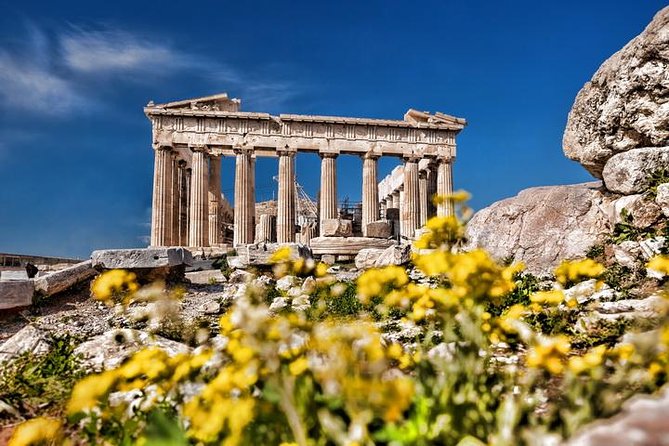
You’ll spend around 20 minutes at the Parthenon. It was built in the mid-5th century BCE and dedicated to Athena Parthenos (Athena the Virgin). You’ll also hear about why it’s considered the culmination of the Doric order, which helps you look beyond “pretty columns” and notice design choices.
One practical way the storytelling helps: you’ll know what to look for, so you spend less time guessing what you’re seeing.
Temple of Athena Nike: victory with a boundary
Next is the Temple of Athena Nike for about 10 minutes. The guide connects it to Athena and Nike, the goddess of victory. There’s also a famous detail linked to the cult statue: the idea that Nike had no wings so she would never leave Athens.
That kind of explanation makes the temple feel like a message, not just a structure.
Erechtheion: myth, cult space, and sacred meaning
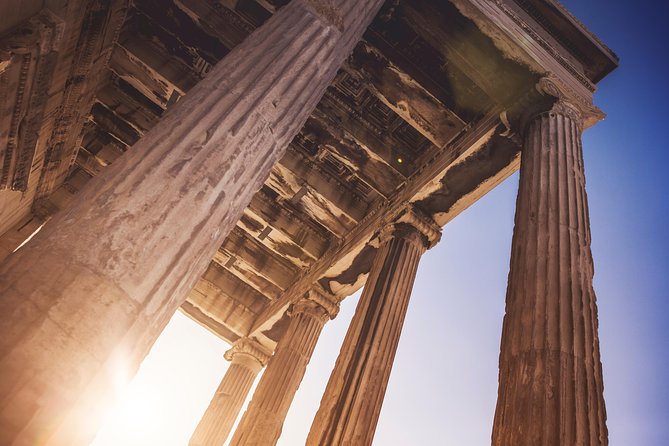
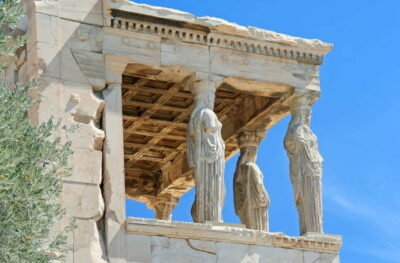
You’ll also stop at the Erechtheion (about 10 minutes). It’s tied to housing an ancient wooden cult statue of Athena, and it reflects how the Acropolis wasn’t only about one building. It was a whole sacred system.
Even if you don’t catch every term, you’ll leave with a clearer sense of why the Acropolis mattered to daily belief and public identity.
Timing and crowd reality
The Acropolis can get packed, and stairs are part of the deal. A recurring theme from strong guides is pacing, with frequent pauses so people can rest and keep up. You’ll do better if you plan for this climb honestly, bring water, and don’t treat the whole thing like a sprint.
Also, note this: at times there may not be a microphone. If you’re sensitive to sound or you hate missing parts of the talk, position yourself closer to the guide.
Ancient Agora: the other half of Athens
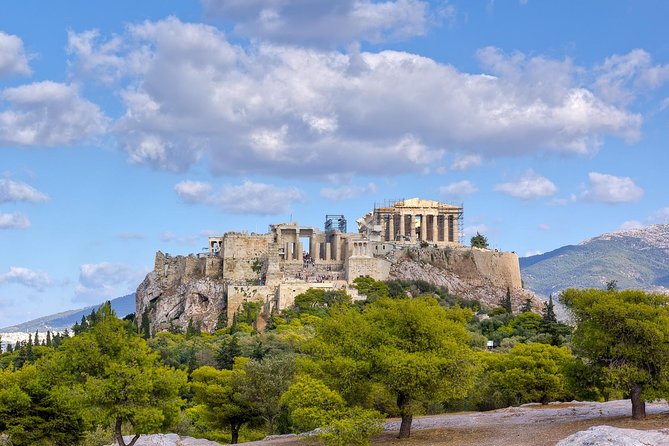
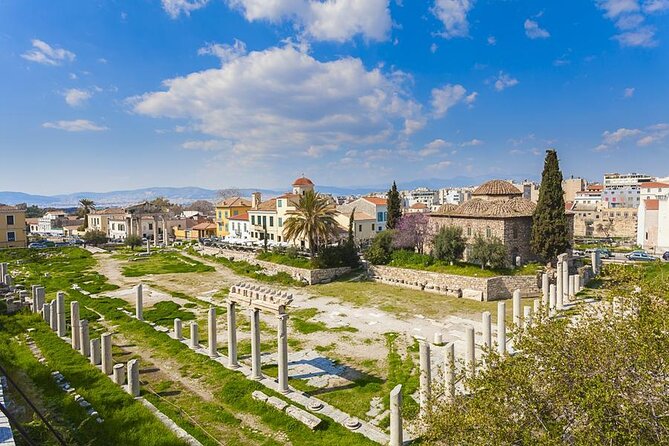
Then the tour shifts from religious monuments to the heart of civic life at the Ancient Agora of Athens. You get about 1 hour here.
The Agora was the hub for political, commercial, administrative, and social activity, and it was also tied to religion and justice. This matters because it changes how Athens feels. Instead of only looking up at temples, you start thinking like a citizen moving through arguments, markets, and daily decisions.
If the Acropolis is Athens the symbol, the Agora is Athens the machine.
Temple of Hephaestus: one of the best preserved, and why that matters
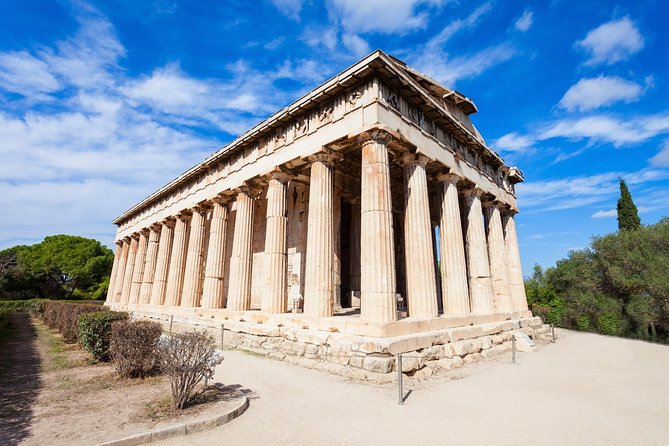
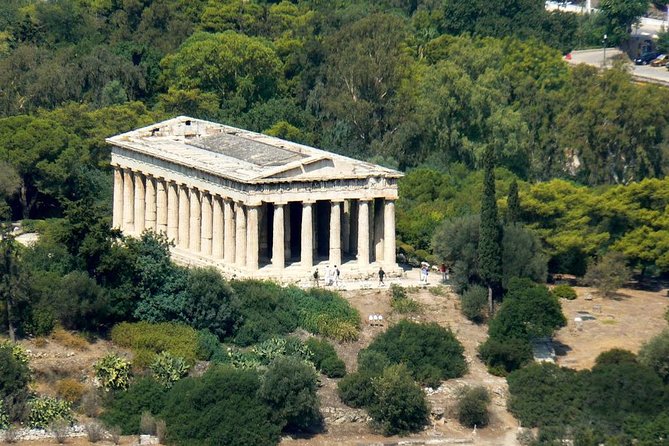
The tour ends at the Temple of Hephaestus area for about 20 minutes. It’s described as one of the best preserved ancient temples in the world, and it connects directly to working life. Hephaestus was protector of metallurgists, while Athena Ergani protected potters and cottage industries.
This last stop is a great “click moment.” You’ve spent hours hearing about gods, but now you see how those gods connected to jobs and trade. The ruins stop being distant and start feeling like a city system.
What walking is like, and what you should bring
This is a walking tour. Expect uneven surfaces and plenty of stairs around ancient sites. Bring:
- Good walking shoes
- Water
- A hat (seriously, Athens sun can be blunt)
Two more rules you’ll want to know before you show up:
- No strollers at the Acropolis
- No backpacks or big bags at the Acropolis
Plan your day so you’re not stuck carrying awkward loads. Also, since the tour is small-group and route-based, try not to lag behind. If you do, you’ll slow the whole flow for yourself.
How the guide makes or breaks the experience
This tour’s whole point is the storytelling that ties mythology to architecture. In practice, that means the guide’s delivery matters a lot.
From examples of guides who have led this experience, the strongest ones do three things well:
- They use visual aids like printed photos to explain what parts used to look like.
- They keep the group moving but still stop often enough to answer questions and rest.
- They can handle both big-picture questions and niche details without making you feel silly for asking.
I’d book this tour if you enjoy learning as you go and you like your monuments explained in plain language, not as a dry list of facts.
Where the meeting point helps, and how the tour finishes
You meet at the Arch of Hadrian area, specifically Leof. Vasilisis Amalias 50, Athens. You finish at the Ancient Agora of Athens.
That finish is useful because it puts you near another major cluster of things to do and see. It also means you aren’t repeating steps back toward the Acropolis hill.
Who this tour is best for
This fits you best if:
- You want Greek mythology tied directly to real buildings and locations
- You’d rather ask questions than just follow a self-guided audio app
- You value a small group experience with an expert guide
- You’re doing Athens for a first time and want the big hits without wandering
It might be less ideal if you:
- Get exhausted by stairs and uneven ground
- Want a fully laid-back sit-down tour with minimal walking
- Hate dealing with extra admission fees for top sites
Should you book it or skip it?
Book this if you want Athens to make sense fast. The combination of Acropolis monuments plus Agora civic context gives you a two-sided view of the city, and the mythology focus helps you remember what you see.
Skip it only if you already plan a detailed, self-guided deep plan and you don’t want to pay extra for the site tickets. Otherwise, this is a solid way to turn famous ruins into a coherent story you can actually picture.
FAQ
Is the Acropolis admission fee included?
No. The Acropolis admission is not included in the tour price. You’ll need to pay the Acropolis fee of €30.00 per person for the 2-hour and 4-hour options.
Is the Ancient Agora admission fee included?
No for the 4-hour option. You’ll need to pay the Ancient Agora fee of €20.00 per person for the 4-hour tour.
How long is the tour?
The duration is approximately 4 hours.
What is the group size?
The tour has a maximum of 15 travelers.
Where do we meet?
You start at the Arch of Hadrian area, Leof. Vasilisis Amalias 50, Athens.
Where does the tour end?
The tour ends at the Ancient Agora of Athens.
What language is the tour offered in?
The tour is offered in English.
Can you pre-purchase entrance tickets for me?
Yes. You can pre-purchase entry tickets, and you just need to let the provider know.
Do I need to bring anything special?
Bring a valid ID or passport for people under 25 (for possible discounts). Also, the Acropolis has restrictions, and you should plan for walking and climbing.
Are strollers or large bags allowed?
No strollers are allowed at the Acropolis, and big bags or backpacks should not be taken on the tour.
What if weather is bad?
This experience requires good weather. If it’s canceled due to poor weather, you’ll be offered a different date or a full refund.
Is there free cancellation?
Yes. You can cancel up to 24 hours in advance for a full refund.
Freshly listed near Athens
- Private Guided Tour: Athens, Acropolis and Acropolis Museum★ 4.9 · 62 reviews
- Private Athens Tour with a Local- Highlights & Hidden Gems★ 4.9 · 64 reviews
- Athens: Private Acropolis Tour with focus on Kids & Families★ 4.8 · 51 reviews
- Piraeus Port: Acropolis Museum and Parthenon Mythology Tour★ 3.7 · 29 reviews
- Poros Island: Full Day Trip From Athens with Swimming★ 4.8 · 33 reviews
- Athens: Ouzo Tasting at Brettos Plaka★ 4.3 · 32 reviews
- Athens Old Town: Greek Olive Oil & Herbs Tasting★ 4.2 · 41 reviews
- No Diet Club – Unique local Food Tour in Athens!★ 4.9 · 38 reviews
Acropolis Tickets & Guided Tours, compared.
Acropolis & up to 5 Archaeological Sites Combo Pass
Read our review →
Acropolis Ticket with Optional Audio or Live Guide
Read our review →
Acropolis, Parthenon & Acropolis Museum Guided Tour
Read our review →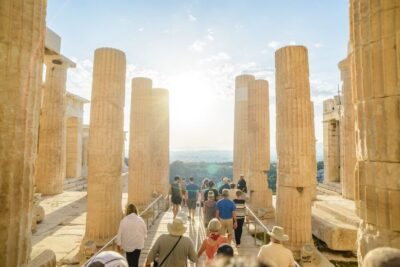
Acropolis: Premium Acropolis and Parthenon Guided Tour
Read our review →


Athens Scenic Electric Bike Tour with optional Acropolis visit
Read our review →
Acropolis monuments & Parthenon Walking Tour with Optional Acropolis Museum
Read our review →Browse the lists this tour appears in