
Reviewed · METEORA MONASTERY DAY TOURS
Meteora Small Group Hiking tour with Transfer and Monastery Visit
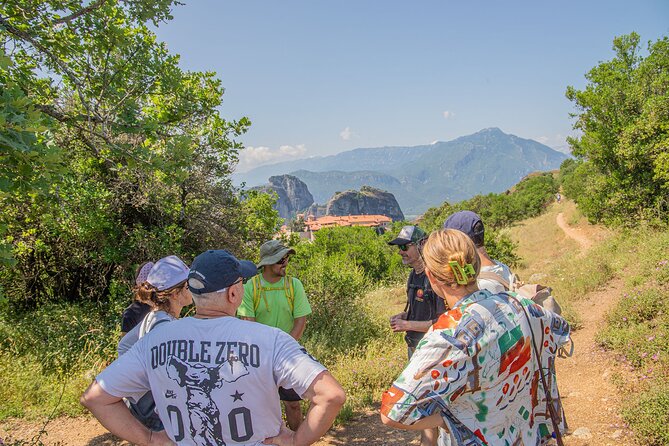
Meteora feels personal on foot. This small-group hiking tour takes you along quieter paths through the rock pillars and pairs the walking with monastery stops, including the Great Meteoron and Ypapanti tucked inside a rock cavity. I love the hidden trails and the pace that lets you absorb both views and stories, and the one drawback to plan for is that you still need to be ready for uneven uphill terrain and a strict monastery dress code.
Pickup and drop-off make the morning easy, and bottled water plus a mobile ticket keep logistics simple. At $36.28 per person, you are paying for guided walking, air-conditioned transport, and a monastery visit, with the main extra cost being entrance fees of 5€ per person.
In This Review
- Key highlights worth your attention
- Why Meteora Looks Different From the Trail
- From Kalambaka or Kastraki: Transfers That Actually Help
- The 2-Hour Rock Forest Hike: Hidden Paths and Big Views
- Stop at Great Meteoron: The Oldest, Biggest Monastery Stop
- Ypapanti Old Monastery: The One That Fits in a Rock Cavity
- The Route Also Includes Varlaam and Saint Nicholas of Anapafsas
- Pacing and Fitness: What Manageable Means Here
- Dress Code at the Monasteries, Trousers and Skirts Provided
- What You’re Paying For: Price and Value at $36.28
- Guides Who Set the Tone: Chris and Evan Stand Out in Feedback
- Weather Reality: Fog, Rain, and How to Prepare
- Who Should Book This Tour, and Who Might Skip It
- Should You Book This Meteora Small-Group Hike?
- FAQ
- What time does the Meteora tour start?
- How long is the tour?
- Where do pickups happen?
- How big is the group?
- What is included in the price?
- Are monastery entrance fees included?
- What should I wear for the monasteries?
- Is there a fitness requirement?
- Can I cancel and get a full refund?
Key highlights worth your attention
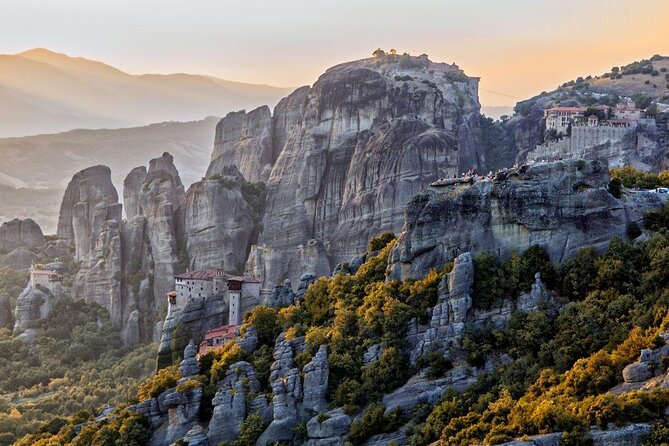
- Guided walk on lesser-known routes through Meteora’s “rock forest” viewpoints
- Stops at landmark monasteries like Great Meteoron plus Ypapanti
- Small group size (max 12) for a more personal pace
- Round-trip transfers from Kalambaka or Kastraki in an air-conditioned minivan
- Ypapanti Old Monastery visit included, with its short, pleasant approach
- Guides who bring Meteora to life, with strong storytelling and good pacing
Why Meteora Looks Different From the Trail
Meteora is famous for its monastery towers, but hiking puts the whole place in context. From ground level, you understand why those rock pillars feel like they were built for isolation, faith, and survival. The morning timing also helps. You get big views before the day gets crowded, and the walk gives you angles that you just do not get from bus stops.
One of the best parts of this tour is the mix. You do not only park yourself near the “main view” and call it a day. You follow paths that feel practical and local, then you top it off with monastery time where you can actually read the setting. That combination is why this feels like a real Meteora experience, not a rushed highlight reel.
More Meteora monastery days:
- Athens: Meteora Monasteries Day Trip with Caves and Lunch
★ 4.7 · 4,670 reviews - Thessaloniki: Full-Day Bus Trip to Meteora
★ 4.8 · 3,471 reviews - Athens to Meteora: Monasteries, Caves & Seaside Stopovers
★ 4.7 · 2,958 reviews
From Kalambaka or Kastraki: Transfers That Actually Help
This tour starts at 8:30 am, with pickup from hotels and Airbnbs in Kalambaka or Kastraki. You also get drop-off back to the same area afterward. That matters because Meteora’s roads and parking can turn into a time sink, especially if you arrive late or want to avoid driving between scattered monastery areas.
You ride in an air-conditioned minivan, which is a comfort boost even in mild weather. You also get bottled water for the hike. The tour uses a mobile ticket, and you should receive confirmation at booking time, so you are not stuck guessing details the night before.
And yes, the group stays small. With a maximum of 12 travelers, you are less likely to feel like you are being herded. It also means your guide can actually manage the pace, keep everyone together, and pause when conditions call for it.
The 2-Hour Rock Forest Hike: Hidden Paths and Big Views
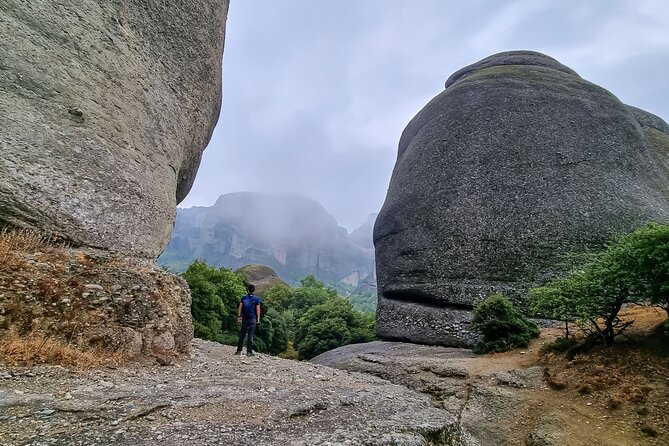
The first part is a morning hike of about 2 hours through Meteora’s rock-stacked terrain. This is not a long, punishing trek, but it is still real hiking on trails that do not exist for show. The goal is to move through the area where the monks once arrived and settled, then look up at those giant stone pillars from angles that make the whole UNESCO setting click.
The tour description frames it as paths only locals know, and that matches the vibe you want here. You are not just walking a loop near the most obvious overlooks. You are moving through the “rock forest,” so the scenery changes as you go. Expect moments for photos, brief pauses for explanations, and a guide who points out features in the environment instead of leaving you to figure it out alone.
In the feedback I see, guides often get praised for pacing. That is important because even a manageable hike can feel hard if you go out too fast. On some days, you may find the walking intensity varies by trail conditions, like heat, fog, or wet ground.
Stop at Great Meteoron: The Oldest, Biggest Monastery Stop
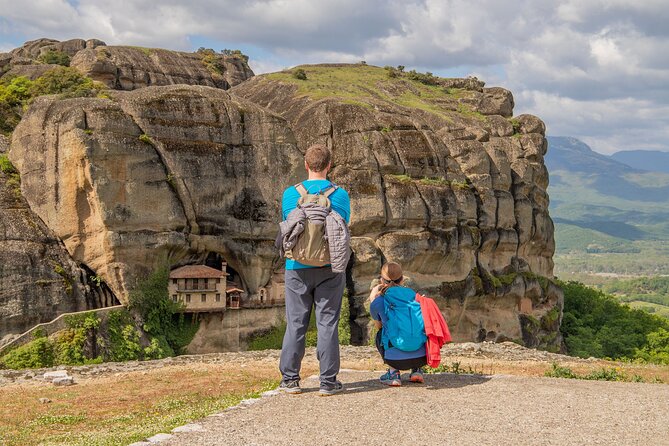
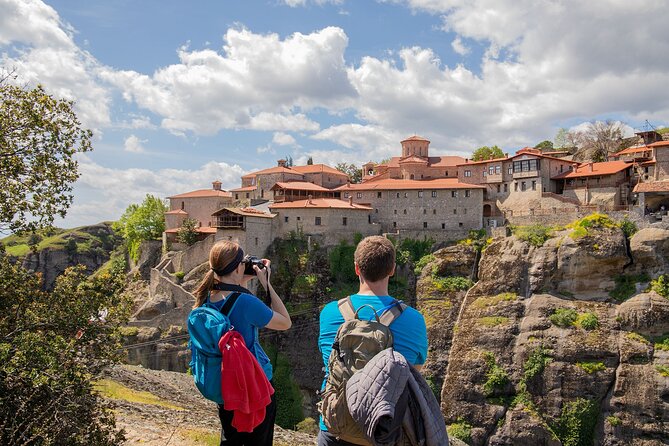
Next comes Great Meteoron Monastery, often described as the biggest and oldest one in the group. The story goes that it was built on top of a massive rock formation, so it became known as the monastery that was “suspended in the air” from the word meteoro.
You get about 1 hour here. That timing is helpful. It is long enough to take in the scale, absorb the religious architecture, and understand what you are looking at without feeling trapped inside for ages. If you like context, this is where the guided piece pays off. The monastery is tied to Saint Athanasios the Meteorite, who is credited with systematic organization of monastic life in Holy Meteora. Knowing that background makes the site feel less like random stonework and more like a turning point in how the community grew.
Drawback to keep in mind: the itinerary focuses on selected monasteries rather than sweeping through every single major stop. If your goal is to tick off every monastery building you can see on a map, you might still want additional independent time.
Other ways to spend the day near Meteora
- Kalabaka: Meteora Small-Group Hiking Tour w/ Monastery Visit
★ 4.9 · 205 reviews - Meteora: Sunset Hike to Secret Caves
★ 4.9 · 56 reviews - Kastraki: Meteora Via Cordata Hiking Tour to the Great Saint
★ 5.0 · 27 reviews - Meteora: Hiking Tour with Local Guide and Monastery Visit
★ 4.8 · 20 reviews
Ypapanti Old Monastery: The One That Fits in a Rock Cavity
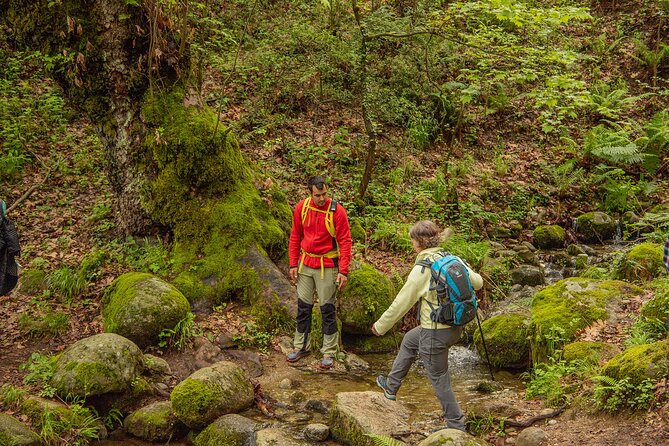
After Great Meteoron, you head to Holy Monastery Ypapanti, and this stop is short at about 30 minutes. The approach is described as simple and pleasant, which is a nice balance after the main hiking segment. Ypapanti stands out because it is constructed inside a large cavity of a rock, not perched on a peak like some others.
You learn how it was founded in 1367 AD by monks Nilos and Cyprianus. There is also a dramatic chapter in its history: it was destroyed in 1809, when Papathymios Vlahavas was arrested there by the Turkish army of Ali Pasha. That kind of timeline detail can make a quick stop feel meaningful, not superficial.
Practical plus: entrance for Ypapanti is listed as free. You still plan for the overall 5€ per person entrance fee noted for the tour, but knowing one stop is free helps you budget.
The Route Also Includes Varlaam and Saint Nicholas of Anapafsas
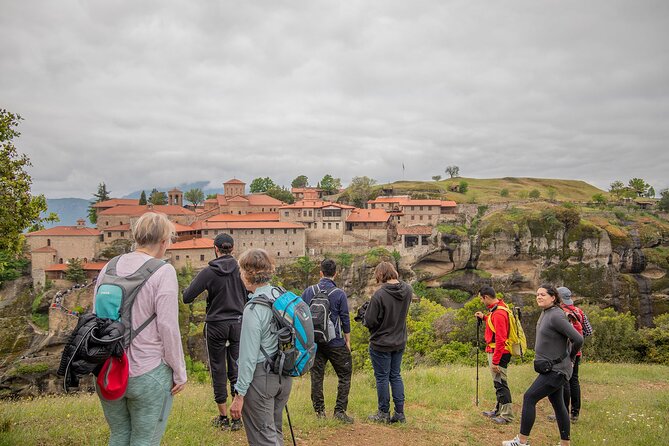
Even though the itinerary emphasizes the main hike plus two key monastery visits, the route is built around viewing several major monastic sites along the way. You pass by or cover additional points like Varlaam, described as the second biggest monastery, and Saint Nicholas of Anapafsas, which is the first monastery you encounter on the route upward.
Varlaam is tied to mid-14th century origins and the monastic figure Hosios Varlaam. There is also a note about the Catholicon built in 1541-42, with church decorations and wall-painting attributed to a hagiographer from Thebes, Frago Catelano. Even if you are not spending a long sit-down visit there, these details help you recognize what you are seeing as you move through the area.
A helpful way to think about it: this tour is designed to let you feel Meteora as a system, not as a list. You get walking, viewpoint time, and a couple of deep monastery stops rather than a schedule that forces you to sprint between entrances all morning.
Pacing and Fitness: What Manageable Means Here
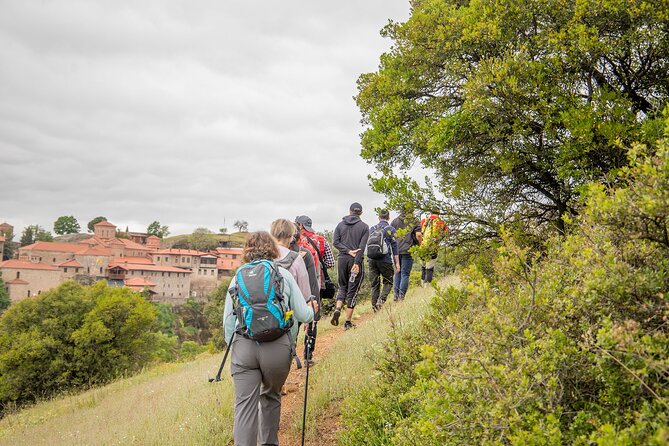
This tour requires you to be physically fit, with guidance targeting travelers with moderate physical fitness. The hike is repeatedly described as not too difficult in feedback, but there is also a realistic note that some sections after monastery visits can feel more challenging.
What I’d tell you to watch for is your own comfort on uneven ground. Meteora trails can be rocky, and the route can add up even when it feels “doable.” One person noted it was tough for a mid-aged woman not in great shape, while another mentioned it was still doable even with knee injuries, thanks to a guide who managed breaks and pacing. That range tells me the tour is flexible for people who are ready to move slowly and take short rests.
If you have knee issues, bring supportive footwear and be ready to use breaks. If you are someone who hikes regularly, you will probably find this a satisfying workout without being a misery.
Dress Code at the Monasteries, Trousers and Skirts Provided
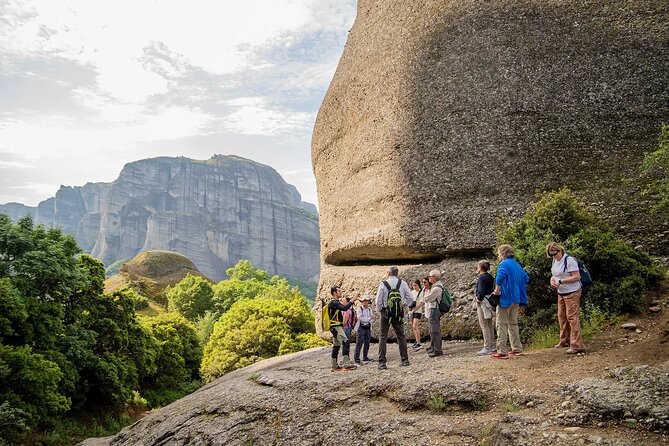
Monasteries in Meteora have a strict dress code. The rule is simple: men must wear trousers and long sleeves, and women must wear a long skirt. If you show up in shorts, trousers and skirts will be provided, so you are not totally stuck, but do plan to be uncomfortable for a bit if you are not prepared.
Practical tip: wear long sleeves even if it feels warm. It will save you time and keep you from doing last-minute outfit changes in a place where bathrooms and mirrors can be limited.
Also, take this seriously because it affects the whole flow of your visit. When the group has to wait while people sort out clothing, the monastery time shrinks. A good guide keeps it moving, but your preparation still helps.
What You’re Paying For: Price and Value at $36.28
At $36.28 per person for a tour lasting around 4 hours, you are paying for four things that are hard to replicate on your own without extra effort:
1) Guided hiking on local-style trails
2) Air-conditioned round-trip transport from Kalambaka or Kastraki
3) A local guide who explains monasteries and the natural setting
4) A included monastery visit to Ypapanti
Your main extra cost is entrance fees listed at 5€ per person. So you should budget for that. Still, you are not just buying a ride to a single viewpoint.
What makes this value better than a bare-bones tour is the structure. You start early, you walk through the area, and you finish with monastery time that is not rushed. If you compare it to driving yourself, the big win is not just convenience. It is that your guide tells you what to notice, which makes Meteora feel understandable instead of just stunning.
Guides Who Set the Tone: Chris and Evan Stand Out in Feedback
A lot of the praise centers on the guides. Names that show up in feedback include Chris, Evan, Christos, Dimitris, and Kristos. Across those accounts, the common thread is that they do three things well:
- Pace the hike so different ability levels can manage it
- Explain the area, including history and the natural environment
- Keep the group safe and moving, with breaks when needed
You will feel this during the hike. When a guide is good at pacing, your knees and your mood both benefit. When a guide is good at storytelling, the scenery becomes more than background noise.
Weather Reality: Fog, Rain, and How to Prepare
Meteora weather can shift quickly. One account mentions foggy conditions where the hike still felt worthwhile, and another mentions that bad weather led to a switch from hiking to a bus-style approach to still cover monasteries.
So plan for Plan B. Bring layers you can add or remove, and use shoes that handle damp rock. If the weather is wet, go slower than you think you need to. The goal is steady footing, not speed.
Who Should Book This Tour, and Who Might Skip It
This tour fits best if you want:
- A guided hike through Meteora’s rock terrain, not only monastery interiors
- A way to see major sites while still having a manageable schedule
- A small group experience that feels calm and organized
It might not fit as well if you:
- Want to visit every major monastery in depth during one half day
- Cannot handle hiking on uneven ground, even with breaks
- Are not able to follow the monastery dress code
If you are traveling with teens or mixed ages, this kind of guide-led pacing can be a big help. If you are traveling solo, it is also a low-stress way to get oriented quickly.
Should You Book This Meteora Small-Group Hike?
I think this is a strong choice if you are staying in Kalambaka or Kastraki and want Meteora to feel like a place, not a checklist. The small group size, the guided trail route, and the monastery pairing are exactly what make this tour worth your time.
Book it if you care about views plus context, and you are comfortable with a few hours outdoors. Skip it or add a separate plan if your top priority is visiting the maximum number of monastery entrances in one go.
If your schedule is tight, this is the kind of tour that gives you both orientation and memorable scenery, without demanding you master the Meteora logistics on your own.
FAQ
What time does the Meteora tour start?
The start time is 8:30 am.
How long is the tour?
The duration is about 4 hours.
Where do pickups happen?
Pickup and drop-off are offered from hotels and Airbnbs located in Kalambaka and Kastraki village.
How big is the group?
The tour has a maximum of 12 travelers.
What is included in the price?
Included features are hotel pickup and drop-off, air-conditioned minivan transport, a local English-speaking mountain guide, bottled water, and a visit to the hidden Ypapanti monastery.
Are monastery entrance fees included?
No. Entrance fees are listed as 5.00€ per person and are not included in the tour price.
What should I wear for the monasteries?
You need to follow the strict dress code: men should wear trousers and long sleeves, women should wear a long skirt. If you arrive in shorts, trousers and skirts are provided.
Is there a fitness requirement?
Yes. This tour requires guests to be physically fit with a moderate physical fitness level, and you should bring comfortable hiking shoes.
Can I cancel and get a full refund?
Yes, there is free cancellation. You can cancel up to 24 hours in advance of the experience for a full refund.
Freshly listed near Meteora
- Kastraki: Meteora Morning Horse Riding with Monastery Visit★ 5.0 · 27 reviews
- Kastraki: Meteora Via Cordata Hiking Tour to the Great Saint★ 5.0 · 27 reviews
- Meteora Monasteries Tour from Athens★ 4.9 · 37 reviews
- Meteora: Morning Monasteries Tour with Photo Stops★ 5.0 · 26 reviews
- Meteora: Sunset Small Size Tour with Monasteries & Caves★ 4.8 · 252 reviews
- Meteora: Half-Day Meteora Monasteries Small Group Tour★ 4.7 · 232 reviews
- Meteora: Hiking Tour with Local Guide and Monastery Visit★ 4.8 · 20 reviews
- From Athens or Piraeus: Meteora Full-Day Private Trip★ 4.9 · 35 reviews
Meteora Monastery Day Tours, compared.
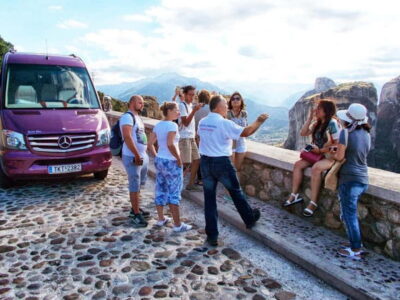
Meteora Monasteries Day Trip with Caves and Lunch
Read our review →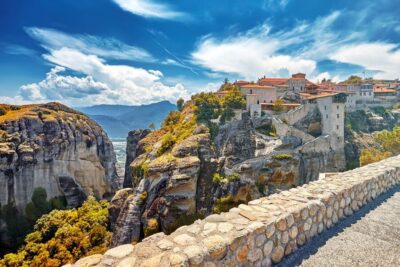
Athens to Meteora: Monasteries, Caves & Seaside Stopovers
Read our review →
Full-Day Meteora Tour with Local Guide & Greek Lunch
Read our review →
Meteora Monasteries, Caves & Coastal Stopovers with Lunch
Read our review →
Meteora Monasteries & Caves DayTrip from Athens with Greek Lunch
Read our review →
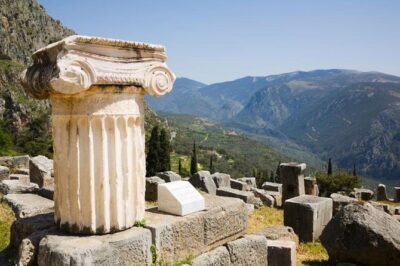
4-Day Classical Greece Tour: Epidaurus, Mycenae, Olympia, Delphi, Meteora
Read our review →Browse the lists this tour appears in