
Reviewed · ACROPOLIS TICKETS & GUIDED TOURS
Athens: Acropolis, Parthenon & Acropolis Museum Guided Tour
The Acropolis is impressive, even before you learn. This guided walk turns the Parthenon and surrounding monuments into a clear story, then you top it off at the Acropolis Museum where the details finally click. My favorite part is how often the guide stops, explains, and helps you look like a pro instead of just taking in stone.
Two things I really like: you get a licensed guide who connects myths to real building functions, and you also get the museum side so the sculptures are not just decoration. One drawback to plan for is the walking and stairs, so comfortable shoes and a realistic pace matter a lot.
In This Review
- Key highlights that make this tour work
- Where to meet Athens Walks and how the tour actually starts
- The Acropolis climb: from Theatre vibes to Parthenon sightlines
- Temple of Athena Nike and the Propylaea gateway moment
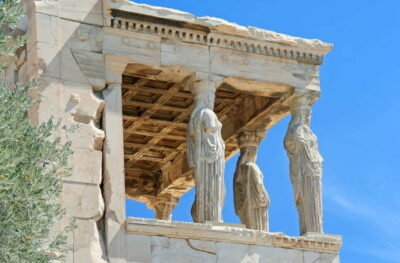
- Erechtheion Caryatids: the sculpture stop that anchors the whole visit
- Theatre of Dionysus, Odeon of Herodes Atticus, and the Athens that performed
- Temple of Asclepius and the “why that matters” explanation
- Acropolis Museum: where the sculptures start making sense
- Timing, comfort, and what to bring so the half-day feels easy
- Price and value: what $70 really buys (and what you pay extra)
- Best fit: who will love this tour most
- Should you book this Acropolis guided tour with museum stops?
- FAQ
- What is included in the tour price?
- Do I need tickets for the Acropolis and the Acropolis Museum?
- Where do I meet the guide?
- How long is the guided experience?
- Is the tour available in multiple languages?
- What happens on Mondays when the museum closes early?
Key highlights that make this tour work
- Skip-the-line entry help (you still need your tickets, but you avoid the slow, crowded counter experience)
- Licensed guide storytelling that ties monuments to how classical Athens thought and lived
- Photo-friendly pauses as you climb, so the steep path does not mean you rush past everything
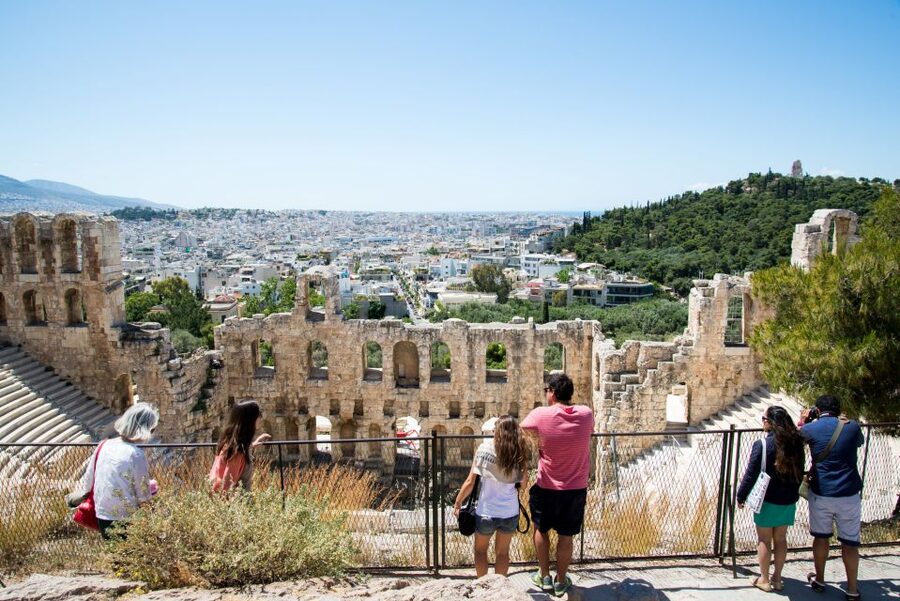
- Caryatids at the Erechtheion plus iconic sightlines like the Theatre of Dionysus
- Acropolis Museum galleries built for understanding, not just sightseeing
- Museum timing logic on Mondays, when the museum closes at 16:00 and the plan shifts to the Ancient Agora
Where to meet Athens Walks and how the tour actually starts
You meet your guide at Athens Walks office at Porinou 5, 11742, at ground floor. Arrive at least 15 minutes early so you can check in without stress. One person in your group checks in indoors, and then you get slotted into your group.
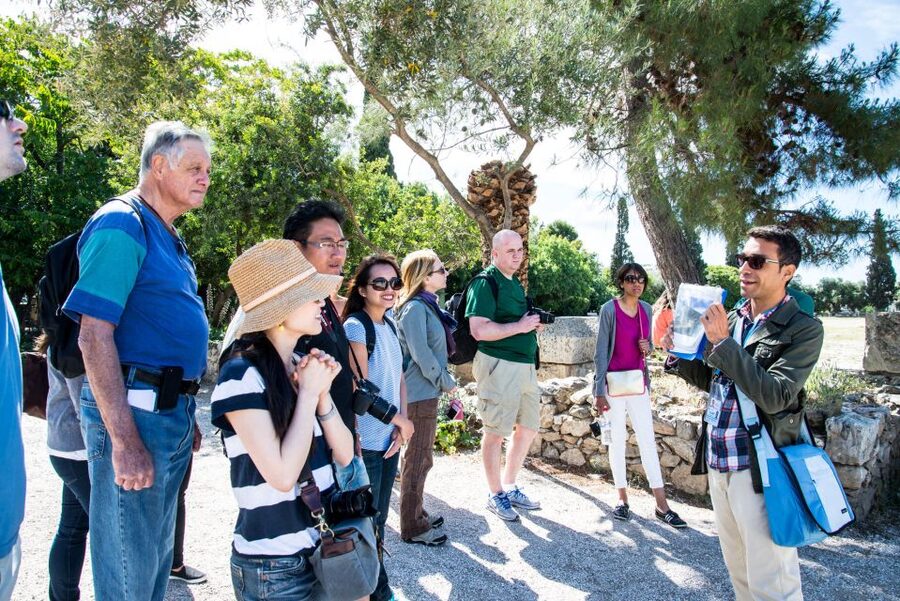
The company provides hearing devices, which is a big deal on the Acropolis. Wind, crowds, and elevation can make normal talking hard, so it helps you catch the important stuff instead of guessing what your guide said while you stare at marble.
Also, no pickup or drop-off is included. If you are coming from central Athens, plan a little buffer so you are not sprinting across neighborhoods. This tour works best when you arrive relaxed.
More Acropolis entries and guided walks:
- Athens: Acropolis & up to 5 Archaeological Sites Combo Pass
★ 4.2 · 13,904 reviews - Athens: Acropolis, Parthenon & Acropolis Museum Guided Tour
★ 4.8 · 9,316 reviews - The Acropolis, Parthenon & Acropolis Museum Guided Tour
★ 4.7 · 8,493 reviews
The Acropolis climb: from Theatre vibes to Parthenon sightlines
The tour is built around a walking route up to the highest point in Athens, so your first job is simple: pace yourself. Even on a “short” half-day plan, you are going uphill with real uneven stone and steps. The guides tend to keep things moving but still make stops for explanations, and that matters because otherwise the Acropolis can feel like one long stairway to nowhere.
As you move through the Acropolis area, you start to connect different “zones” of classical life. The Theatre of Dionysus is part of the story you hear early, and that is key. Most people see the word theatre and assume it is just entertainment, but this is where drama, civic identity, and public storytelling were linked. You’ll also hear about the broader cultural role of the Acropolis, not only the big-name buildings.
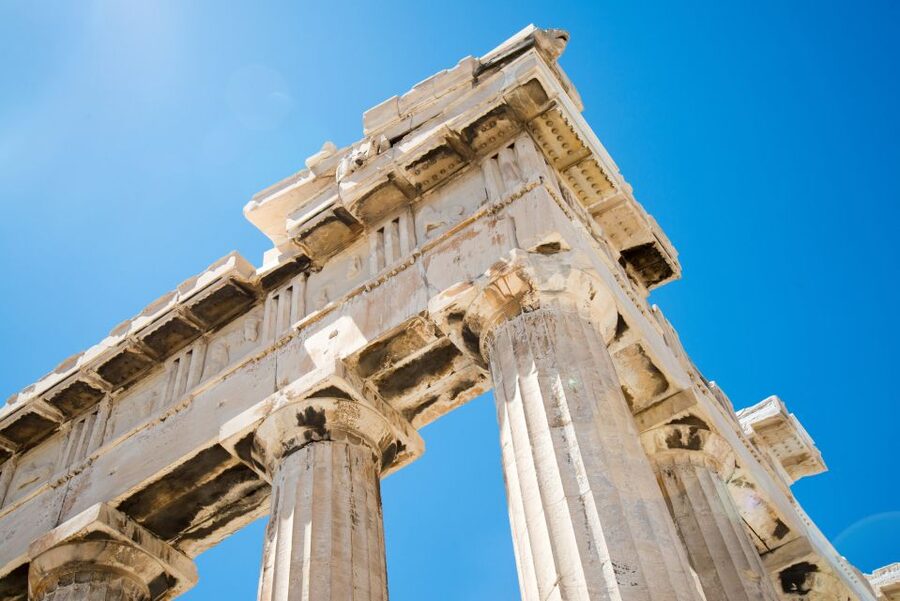
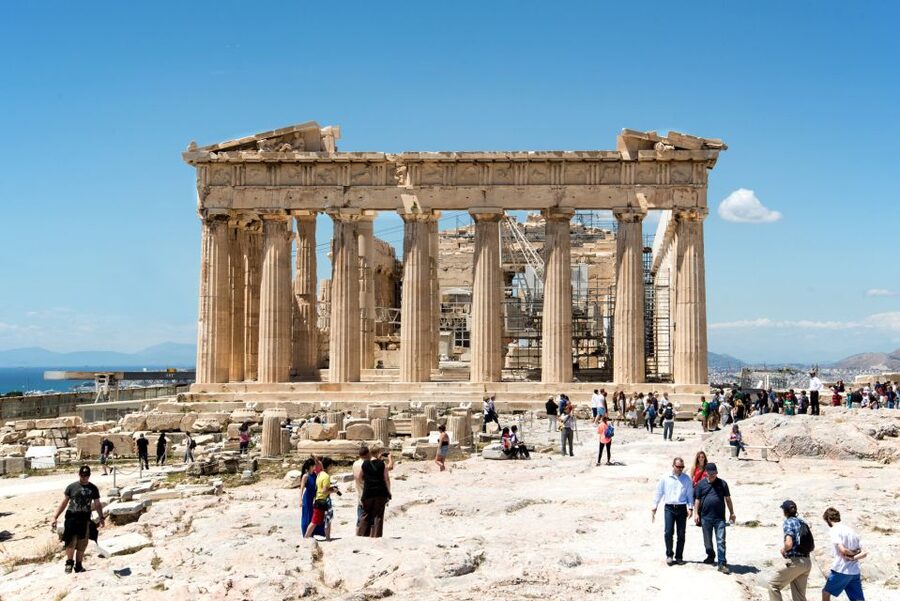
When the Parthenon comes into view, it does not just look grand. It starts to feel intentional. The guide helps you understand why the buildings were placed and designed the way they were, so you can recognize what you are looking at instead of memorizing dates.
A practical note: the climb can look steeper than it feels, until you do it. Bring a hat and sunscreen, and plan to drink water when the guide pauses. You will get more from the tour if you are not doing the “heat math” in your head the whole time.
Temple of Athena Nike and the Propylaea gateway moment
One of the best parts of a guided Acropolis visit is how quickly you learn to read architecture. The tour specifically includes the Temple of Athena Nike, often described as the Temple of Wingless Victory. Standing near this spot helps you understand how victory and divine protection were expressed in stone and placement, not just in speeches.
Then you reach the gateway of the Propylaea. This is one of those areas where your brain goes blank if you are doing it alone. With a guide, it becomes a purposeful threshold: you are transitioning from the city’s world into the sacred, symbolic world of the Acropolis. That change in space is one of the reasons guided tours feel worth it here.
If you care about photography, this is where you want to stop and actually look around. You get the city below in the framing, and the light can be dramatic. The guide’s pauses also help you avoid that frantic snapping where you only catch the tourists’ backs.
Erechtheion Caryatids: the sculpture stop that anchors the whole visit
The Erechtheion is famous for a reason, and the reason is human-shaped sculptures. The tour takes you to admire the Caryatids at the Erechtheion. Up close, you see why these are not just ornaments. They are tied into the building’s identity and the myths linked to the area.
This stop is often the “wait, look closer” moment. Alone, you can walk past them as impressive. With a guide, you start noticing proportions, symbolism, and the way sculpture connects to architecture. It’s also a great moment for photos, because you are no longer just looking at distant views. You are studying details.
Then the route continues past landmarks that help you understand how many “layers” of Athens existed at the same time. The guide connects the monuments to roles they played at the center of classical civilization in the Western hemisphere, so the Acropolis starts feeling like a living system, not a single temple.
Other ways to spend the day near Athens
- Athens: Mythology of Delphi, Museum and Arachova Guided Tour
★ 4.7 · 5,102 reviews - Athens: Acropolis, Parthenon & Acropolis Museum Guided Tour
★ 4.8 · 3,579 reviews - Acropolis monuments & Parthenon Walking Tour with Optional Acropolis Museum
★ 5.0 · 2,678 reviews - Athens All Included: Acropolis and Museum Guided Tour with Ticket
★ 4.5 · 2,673 reviews
Theatre of Dionysus, Odeon of Herodes Atticus, and the Athens that performed
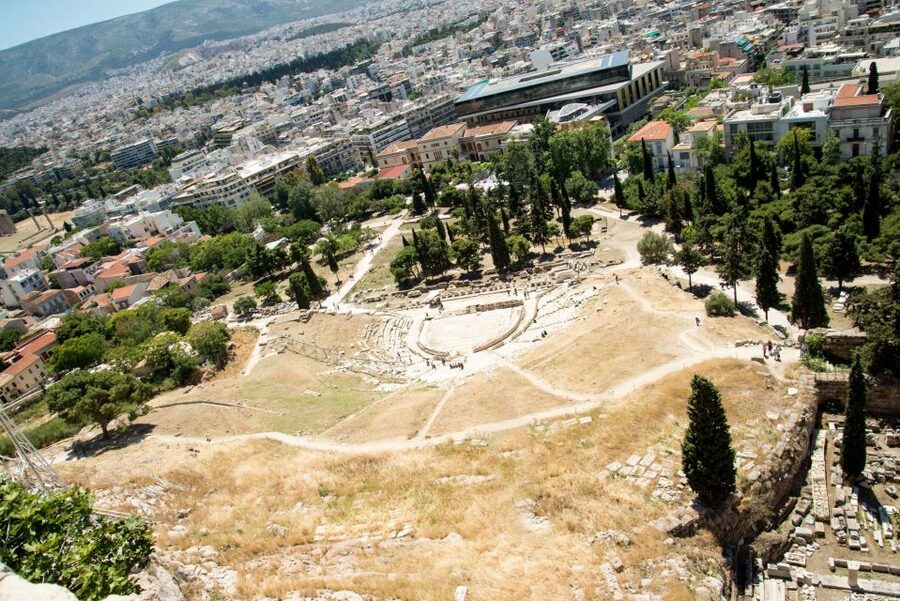
Two cultural landmarks you’ll hear about are the Theatre of Dionysus and the Odeon of Herodes Atticus. The theme here is performance and public assembly. Athens did not treat art as a side hobby. It used theatre and music as public tools, tied to identity and community life.
The Theatre of Dionysus is often an eye-opener because it helps you imagine voices and crowds where you now see stone steps and silence. That matters because it changes how you interpret the space. Instead of only seeing the architecture, you also see the audience shape and how the place would work when people filled it.
The Odeon gets folded into the same cultural arc. Even if you are not an architecture buff, the guide’s storytelling makes the connection feel logical: this was a city that built spaces for ideas to be heard, debated, and remembered.
If you are traveling with kids or anyone who worries they will get bored on a museum-like walk, this is where the tour often lands well. Theater and stories are built for attention, and guides often use myth to keep the group engaged.
Temple of Asclepius and the “why that matters” explanation
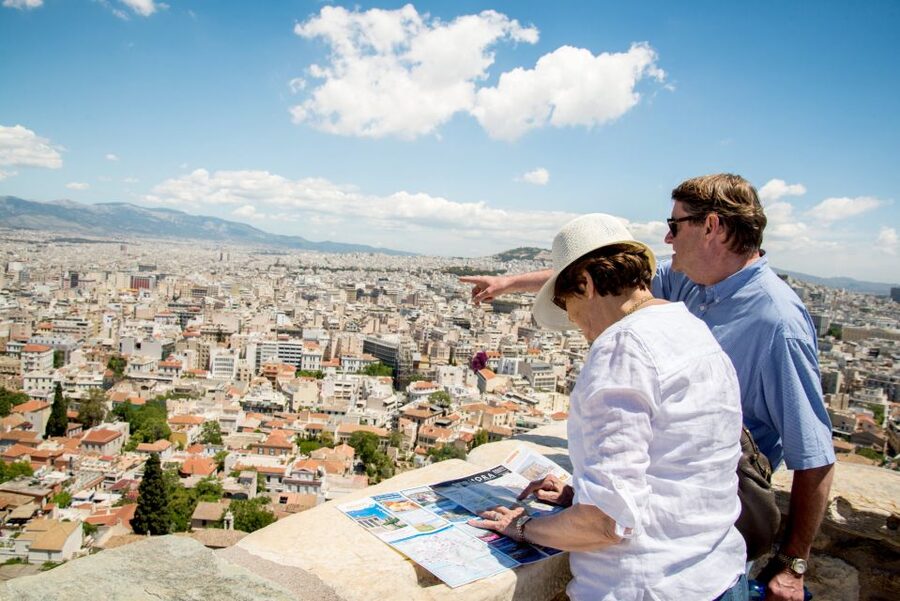
The tour also references the healing Temple of Asclepius. This is a smart inclusion because it breaks the common Acropolis pattern of only talking about politics and war. Asclepius is about health, cures, and how people sought help.
Then you leave with a more rounded picture of Athens. The Acropolis was not only a symbol. It had connections to daily needs and human hopes, even if those needs were expressed through temples and rituals rather than clinics.
This is where I think the value of a licensed guide becomes obvious. You can stand in front of stones and guess. A guide helps you understand what you are actually seeing and why ancient Athenians cared.
Acropolis Museum: where the sculptures start making sense
After the outdoor portion, you head to the Acropolis Museum, and this is one of the best reasons to book the combined experience. The museum is state-of-the-art, and the galleries are set up to explain and display relics in a way that makes the Acropolis feel readable.
Without the museum stop, the monuments can feel like a greatest-hits list. With it, you learn what the artworks are showing and how the collection connects to the buildings you just visited.
Here’s what I find especially useful: the museum helps you move from “wow” to “I get it.” The sculptures you saw up top start having context. You can see the styles, the themes, and the storytelling choices that would otherwise blur together.
On Mondays, there is a practical change: the museum closes at 16:00. On those days, your tour visits the Acropolis monuments and the Ancient Agora instead of going fully into the museum. It is not an extra stop to cram in. It is a schedule workaround that keeps the tour experience moving.
Timing, comfort, and what to bring so the half-day feels easy
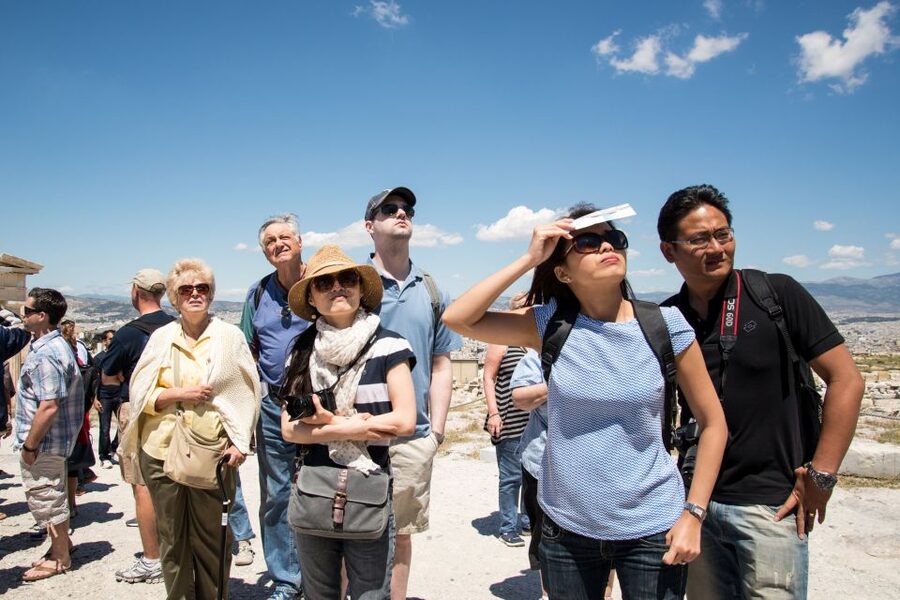
This experience runs about 2 to 4 hours, and the variation depends on the flow of the day and the group. Plan your day like it is a real activity, not a quick stroll.
Bring:
- Passport or ID card
- Comfortable shoes for steep, uneven surfaces
- Sunglasses
- Sun hat
- Sunscreen
And bring water. The tour guidance specifically encourages it.
Not allowed: pets, smoking, and luggage or large bags. If you are carrying a bag, travel light. It keeps the group moving and avoids awkward delays during checkpoints.
Also, the tour is not suitable for wheelchair users. If you or someone in your group needs accessibility support, confirm directly before booking.
Price and value: what $70 really buys (and what you pay extra)
The tour price is listed at $70 per person, and that covers the licensed guide. What is not included are entrance tickets: Acropolis tickets are 30€ per person, and Acropolis Museum tickets are 10€ to 20€ per person.
So is it worth it? For me, the math depends on what kind of visitor you are.
If you like context, you will likely feel the value quickly. The guide does real interpretation, and they help you look for the details that would be invisible on your own. Many people also pay for this because it turns the day into a story with stops that make sense, rather than a self-guided scramble.
If you are the kind of traveler who only needs the views and does not care about explanations, you might feel the extra cost. In that case, you could still enjoy the Acropolis independently, but you would be trading away the “why” behind the monuments.
The tour also includes skip-the-ticket-line help, which can matter a lot in hot weather and crowded conditions. Even when the guide portion is the main value, saving time at entry can turn a stressful day into a calm one.
Best fit: who will love this tour most
This is a great pick if you:
- Want the Parthenon and Acropolis Museum in one smooth sequence
- Appreciate myth and history tied to how buildings function
- Like a guide who pauses often so you can ask questions and take photos
It is also a strong option if you are traveling with people who get restless without structure. The route includes a mix of monumental views, sculpture details like the Caryatids, and cultural anchors like the Theatre of Dionysus. That variety helps keep different interests engaged.
Guides can make or break the experience, and the tour’s track record is strong. Past guides such as Elizabeth, Alina, Anna, Hermes, Sophia, and Maria have earned standout praise for clear storytelling, patient explanations, and good pacing on the steep sections. If you end up with a guide known for that style, you will feel the difference.
Should you book this Acropolis guided tour with museum stops?
If you want more than a photo stop, I’d book it. The combination of Acropolis monuments plus the Acropolis Museum is what turns the visit from impressive to understandable. You also get hearing devices, skip-the-line help, and a licensed guide who connects the dots between monuments, myths, and how classical Athens represented power, belief, and public life in stone.
I’d think twice if you:
- Hate walking on steep terrain
- Only want scenic viewpoints
- Are on a tight budget and plan to spend only the minimum on experiences
If you do book, do the homework that prevents headaches: wear comfortable shoes, bring sun protection, and plan your timing so you are not rushing from the museum back into the evening crush.
FAQ
What is included in the tour price?
The price includes a licensed tour guide. Entrance tickets for the Acropolis and the Acropolis Museum are not included.
Do I need tickets for the Acropolis and the Acropolis Museum?
Yes. Acropolis entrance tickets cost 30€ per person, and Acropolis Museum tickets cost about 10€ to 20€ per person. You are also advised to book Acropolis entrance tickets online at the official site prior to the tour.
Where do I meet the guide?
Meet at the Athens Walks office at Porinou 5, 11742. The guide will be waiting at 5 Porinou Street, in the ground floor office of Athens Walks. Arrive at least 15 minutes early.
How long is the guided experience?
It lasts about 2 to 4 hours. You can check starting times based on your travel date.
Is the tour available in multiple languages?
Yes. The live guide is available in English, Italian, German, French, and Spanish.
What happens on Mondays when the museum closes early?
On Mondays, the Acropolis Museum closes at 16:00. Instead of visiting the museum, your tour will visit the Acropolis monuments and the Ancient Agora.
Freshly listed near Athens
- Private Guided Tour: Athens, Acropolis and Acropolis Museum★ 4.9 · 62 reviews
- Private Athens Tour with a Local- Highlights & Hidden Gems★ 4.9 · 64 reviews
- Athens: Private Acropolis Tour with focus on Kids & Families★ 4.8 · 51 reviews
- Piraeus Port: Acropolis Museum and Parthenon Mythology Tour★ 3.7 · 29 reviews
- Poros Island: Full Day Trip From Athens with Swimming★ 4.8 · 33 reviews
- Athens: Ouzo Tasting at Brettos Plaka★ 4.3 · 32 reviews
- Athens Old Town: Greek Olive Oil & Herbs Tasting★ 4.2 · 41 reviews
- No Diet Club – Unique local Food Tour in Athens!★ 4.9 · 38 reviews
Acropolis Tickets & Guided Tours, compared.
Acropolis & up to 5 Archaeological Sites Combo Pass
Read our review →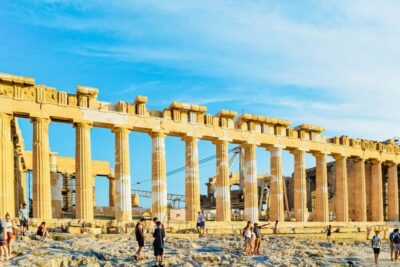
Acropolis Ticket with Optional Audio or Live Guide
Read our review →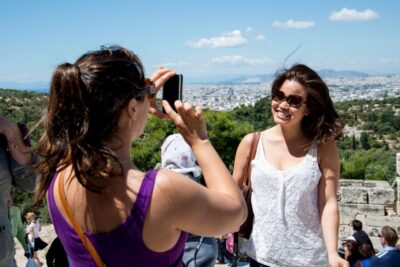
Acropolis, Parthenon & Acropolis Museum Guided Tour
Read our review →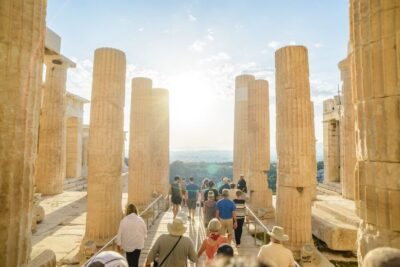
Acropolis: Premium Acropolis and Parthenon Guided Tour
Read our review →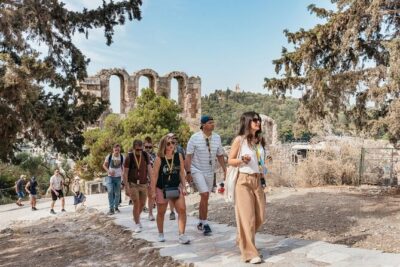


Athens Scenic Electric Bike Tour with optional Acropolis visit
Read our review →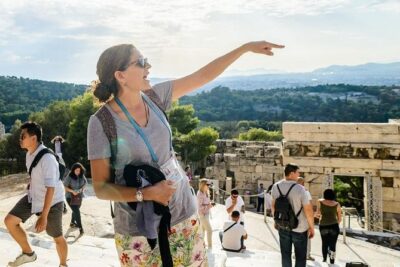
Acropolis monuments & Parthenon Walking Tour with Optional Acropolis Museum
Read our review →Browse the lists this tour appears in