
Reviewed · WALKING TOURS IN THESSALONIKI
Thessaloniki: Walking Tour
Thessaloniki feels like a time machine. In 3 hours, you start at the White Tower and walk straight through key layers of the city, from ancient Greek roots to Roman and Byzantine landmarks. It’s one of those tours where every few minutes you get another clue about how Thessaloniki became what it is today.
I especially like the stop choices because they connect big monuments to real-life city functions, like power, worship, and public life. I also like the way the tour is led by local guide Nikos, with crisp English and storytelling that helps the sites make sense, not just look impressive. The main thing to consider is that entrance fees are not included, so if any of the churches or monuments you want to see require paid entry, you will need to budget extra.
In This Review
- Key highlights at a glance
- Meeting by the White Tower, then walking into Thessaloniki’s layers
- White Tower of Thessaloniki: the city’s signature landmark
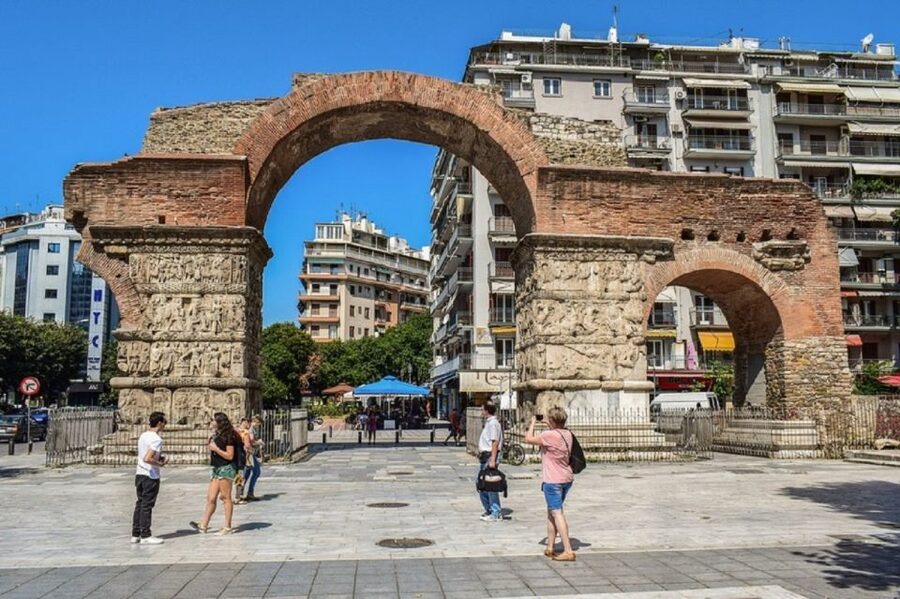
- Galerian Complex: Hippodrome, Arch, and the Rotunda of Galerius
- Temple of Archeiropoietos: mosaics in one of the city’s older churches
- Roman Forum streets: how money and administration shaped daily life
- St Demetrios: the patron-saint church that leaves an impression
- Price and value for a 3-hour city time-walk
- What kind of traveler should book this tour?
- Tips to make the most of every stop
- Should you book the Thessaloniki walking tour from the White Tower?
- FAQ
- Where does the tour start?
- How long is the walking tour?
- How much does the tour cost?
- What is included in the price?
- What is not included?
- Which major sights are visited?
- What language is the guide?
- What should I bring?
- Are there entrance fees for the sites?
- Is there free cancellation?
- Can I book without paying right away?
- Are small children allowed?
Key highlights at a glance
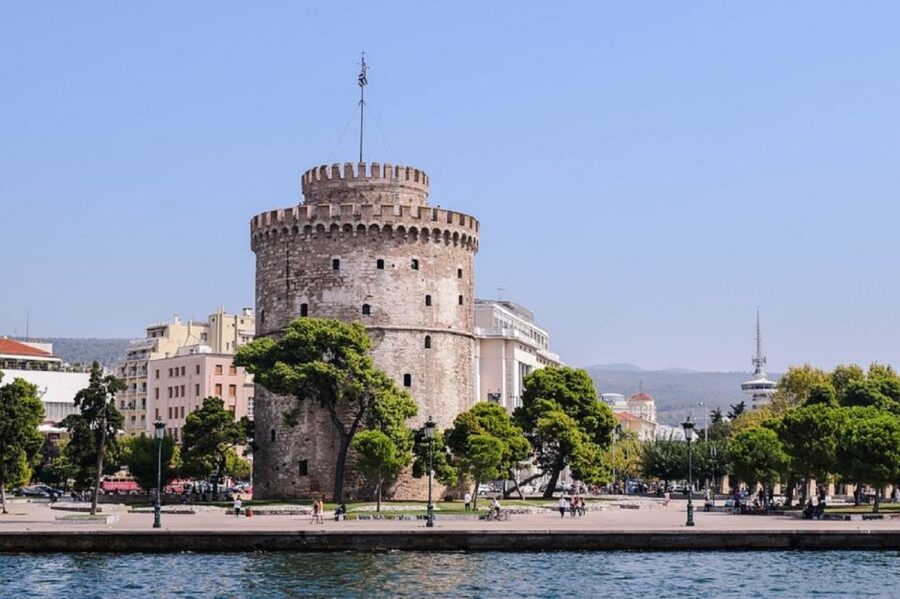
- White Tower start point next to the waterfront landmark that makes orientation easy
- Galerian Complex with the Hippodrome, the Arch, and the Rotunda built by Caesar Galerius
- Temple of Archeiropoietos as one of the oldest churches, with mosaics you can still appreciate
- Roman Forum to understand where financial and administrative life played out
- St Demetrios church, the city’s most famous patron-saint site
Meeting by the White Tower, then walking into Thessaloniki’s layers
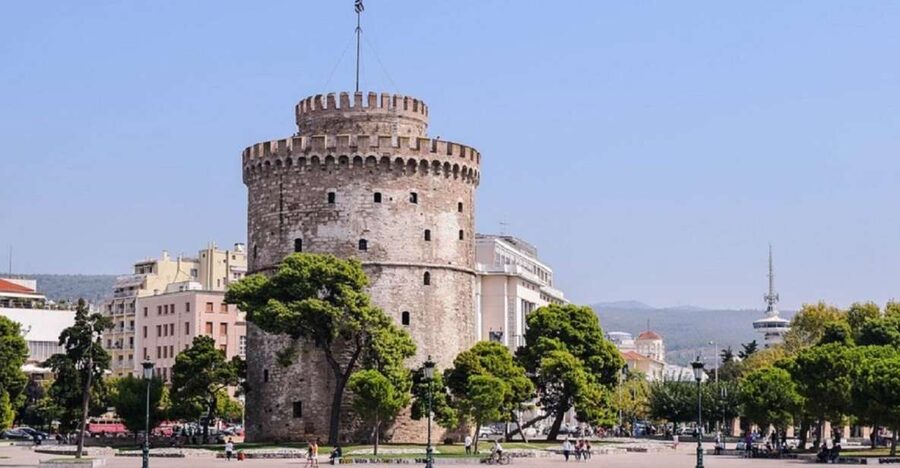
This is a focused 3-hour walking tour built for people who want clarity. You are not trying to do everything in a day, you are walking a tight route that jumps across time periods. The meeting point is right by the White Tower of Thessaloniki, so you get a clean start, and you can orient yourself before the stories begin.
You will want to come ready to move. Wear comfortable shoes and comfortable clothes, because the route runs through the historical center and you will spend a lot of that three hours on foot. If you get grumpy when you are wet or in crowds, treat this as a “pack for weather” situation, since Thessaloniki’s streets are outdoors for the whole tour.
The other big reason this works is the format. A good guide turns landmarks into context, and that is the heart of the experience here. You will hear how Thessaloniki developed across ancient Greek beginnings, the Roman era, Byzantine rule, Ottoman influence, and the city’s long Jewish presence. Even if you only remember a few story beats, you will feel like the city has a timeline, not just separate monuments.
More Walking Tours in Thessaloniki
- Thessaloniki: Private Walking Tour with a Local
★ 4.5 · 150 reviews - Thessaloniki: Walking Open Market Food Tour and Tasting
★ 5.0 · 75 reviews - Half Day Food and Walking Tour with Tastings in Thessaloniki
★ 5.0 · 41 reviews
White Tower of Thessaloniki: the city’s signature landmark
Starting at the White Tower is smart. It is Thessaloniki’s best-known visual marker, so you immediately know where you are. More importantly, it sets the theme of the tour: this city has been rebuilt, repurposed, and reinterpreted for centuries.
What you should do at the White Tower is simple. Look at it as a symbol first, then listen for the story your guide tells about why this kind of landmark matters in a port city. Thessaloniki has always been a place where travelers, armies, merchants, and ideas came through, and the White Tower becomes a convenient starting point for all of that.
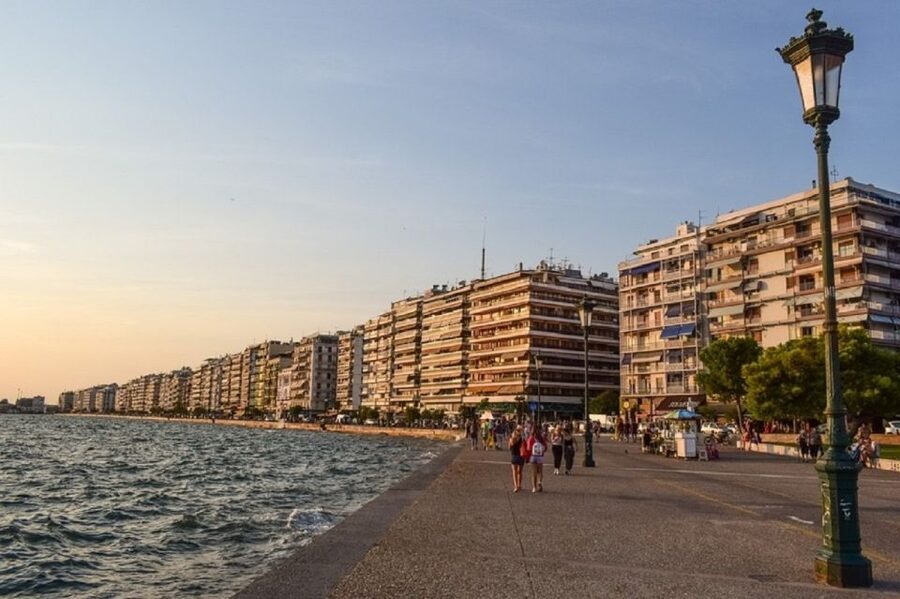
Photo-wise, you can usually get your best angles from nearby open spaces around the tower area. Go for compositions that show it in relation to the water and surrounding streets. That helps later, when you’re walking through older, more broken-up ruins and church structures, because you can keep the city’s geography in your head.
Galerian Complex: Hippodrome, Arch, and the Rotunda of Galerius
Next comes the Galerian Complex, one of the tour’s most satisfying stretches because the buildings feel like they belong to the same big story. You will see the Hippodrome, the Arch, and the Rotunda, all associated with Caesar Galerius. The key value here is that you are not just looking at “old Roman stuff.” You are seeing how Roman power expressed itself through architecture and public space.
The Hippodrome is where you can start thinking about entertainment and movement. A hippodrome wasn’t only about events, it was about spectators gathering, politics showing up, and people learning what authority looks like. Even if you cannot see every original detail, your guide can connect the site to the idea of large-scale Roman public life.
Then the Arch gives you a quick lesson in messaging. Roman triumph arches were designed to frame a victory or a ruler’s legitimacy in a way people could repeat, remember, and point to. When you stand there and listen, the city starts to feel like it was constantly telling stories.
Finally, the Rotunda is where the tour hits the “how one building can outlive an empire” feeling. Your guide’s narration helps you understand why structures like this matter even when the original context has changed. It’s also a strong moment for paying attention to how stone and form can carry meaning across time.
If you like architecture, this is the portion you will probably remember most. If you prefer religion and art, you’ll still get something useful from Galerius because Roman urban planning set the stage for what came after.
Temple of Archeiropoietos: mosaics in one of the city’s older churches
Then you shift into sacred space at the Temple of Archeiropoietos. The tour calls it one of the oldest churches in the city, and the standout detail is that it still preserves beautiful mosaics. That is exactly the kind of stop that benefits from a guide, because mosaics can look impressive but feel vague unless you know what you are looking at.
This is your moment to slow down a bit. Instead of treating it like another “check the box” photo stop, focus on the visual layers your guide points out. Mosaics are usually about more than decoration. They can signal beliefs, identity, and who mattered to the church community across generations.
You will also get the sense that Thessaloniki’s spiritual life did not just change overnight. It accumulated. Roman city planning shaped space, and later Byzantine culture shaped what filled that space. Then later influences added new ways of worship and community. The Archeiropoietos stop is where those layers start to feel tangible.
One practical note: entrance fees are not included in the tour price. So if the church requires a paid entry at the time you visit, plan for that cost separately. Your guide can help you understand what you will need, but you should still budget for possible entry charges.
Other ways to spend the day near Thessaloniki
- Thessaloniki Walking Tour: Explore Top Sights & Hidden Gems
★ 4.0 · 39 reviews - Thessaloniki: Self-Guided Audio Walking Tour & Narrative
★ 3.5 · 28 reviews - Thessaloniki: Food and Walking Tour with Tastings
★ 4.8 · 27 reviews - Acropolis and Parthenon Guided Walking Tour
★ 5.0 · 4,755 reviews
Roman Forum streets: how money and administration shaped daily life
After the churches and Roman monuments, you step into the mental world of civic life at the Roman Forum. The forum was the center of financial and administrative activity during Roman times. In other words, this wasn’t just where people wandered, it was where decisions got made and commerce moved.
What I love about a stop like this is how it changes your sense of scale. You start imagining queues, officials, paperwork, and the constant movement of goods and services. Even if you cannot see every original element clearly, the idea of a forum helps you picture the city as an engine, not a collection of ruins.
This is also one of the best parts of the tour for listeners who enjoy human stories. You will likely hear how the forum would have felt to ordinary residents. Thessaloniki kept moving through different empires, but the basic need for public administration and economic management never disappeared.
If you tend to get tired on walking tours, the Roman Forum portion is a good time to pay attention. It gives your brain a storyline, not just a checklist of buildings. That makes the later St Demetrios stop hit harder.
St Demetrios: the patron-saint church that leaves an impression
The tour finishes with one of Thessaloniki’s most important religious landmarks, the Temple of St Demetrios, where the city patron saint is worshiped. This is the kind of finale that works because the guide has already laid down the city’s major layers. Now you can connect those layers to a living tradition.
This stop is described as leaving you speechless, and even without expecting magic tricks, it makes sense. A city’s patron-saint church is usually where local identity crystallizes. It is not just a monument, it’s a focal point for community memory.
What to do here is again about listening. Let the guide explain what St Demetrios symbolizes for Thessaloniki, and how worship connects to the long timeline the tour covers. When the story clicks, you will see why locals care so much about this church.
It is also a smart way to end for practical reasons. You finish after seeing the major Roman and early-Christian anchor points, so St Demetrios doesn’t feel like an unrelated “random church.” It feels like the city’s spiritual identity coming to the front.
Price and value for a 3-hour city time-walk
The tour costs $70 per person for a 3-hour experience. On paper, that might sound like “just a walking tour,” but the value comes from what you get packed into the time window: multiple major landmarks and a professional local guide who ties them together.
The price includes an English-speaking guide and all taxes, which matters because it removes guesswork about what you are really paying for. The trade-off is that entrance fees are not included, and that can change your total spending depending on what you want to go into fully at each site.
For me, this is good value if you fall into one of these categories:
- You want a single route that covers Roman, early Christian, and later layers without jumping around on your own.
- You enjoy history, but you do not want to do the heavy research before you arrive.
- You want a guide who can explain architecture and religious sites in a way that sticks.
It’s also a solid choice if you only have a half day. Three hours is long enough to make the city feel coherent, short enough that you can still handle other plans afterward.
What kind of traveler should book this tour?
This tour fits best when you want “guided sense-making.” If you like standing in front of a monument and learning what it meant in its era, you will enjoy it. If you prefer independent exploration with lots of free time at each stop, you might feel rushed, because the structure is designed to cover a lot of key sites in a tight window.
It’s also a good match for groups and repeat visitors. The guide can adjust the flow to different interests, so you are not stuck with one rigid script. If someone in your group is more into churches while another person wants Roman ruins, the tour format gives you room to meet in the middle.
If you are traveling with kids, note that children under 2 can join for free. For older kids, bring patience and snacks, because you will spend a lot of time moving between stops.
Tips to make the most of every stop
- Bring comfortable shoes. You are walking through the historic center for about 3 hours.
- Wear comfortable clothes and plan for shifting weather. Thessaloniki’s street time is outdoors.
- Expect entrance fees not included. If you care about going inside specific areas, set aside a little extra budget.
- When you arrive at each stop, do one thing: look first, then listen. The guide’s explanations will land better if you already have visual anchors in your head.
And here is a practical mindset shift: try not to think of this as five separate monuments. Think of it as one long route through different versions of the same city.
Should you book the Thessaloniki walking tour from the White Tower?
Yes, you should book it if you want a smart, efficient way to understand Thessaloniki’s major layers. The best reason is the combination of landmark variety and guide-led storytelling, from the White Tower to the Galerian Complex, to the Temple of Archeiropoietos, then on to the Roman Forum and the church of St Demetrios. That sequence helps you build a timeline as you walk.
You might skip or choose another option if you dislike walking, hate time limits, or you plan to rely entirely on “no extra costs.” Because entrance fees are not included, your final day budget may be a little higher than the base price.
One more confidence check: this tour carries a very strong overall rating (4.9) with a solid number of reviews. That usually signals consistent guide quality and a tour route that people actually enjoy repeating in their own way.
If you have only a short window in Thessaloniki and you want your time to connect the dots, this is a booking I would feel good about.
FAQ
Where does the tour start?
The tour meets next to the White Tower of Thessaloniki in Thessaloniki, Greece.
How long is the walking tour?
The duration is 3 hours.
How much does the tour cost?
The price is $70 per person.
What is included in the price?
The tour includes an English-speaking guide and all taxes.
What is not included?
Entrance fees and coffee or any other beverage are not included, along with personal expenses.
Which major sights are visited?
You will visit the White Tower, the Galerian Complex (Hippodrome, Arch, Rotunda), the Temple of Archeiropoietos, the Roman Forum, and the church of St Demetrios.
What language is the guide?
The tour is offered in English.
What should I bring?
Bring comfortable shoes and comfortable clothes.
Are there entrance fees for the sites?
Entrance fees are not included, so you may need to pay separately if entry is required at any stop.
Is there free cancellation?
Yes, there is free cancellation up to 24 hours in advance for a full refund.
Can I book without paying right away?
Yes, you can use reserve now & pay later, meaning you can book your spot and pay nothing today.
Are small children allowed?
Yes, children under 2 years old can join for free.
Freshly listed near Thessaloniki
- Thessaloniki:Selfie Museum, a 60-minute immersive experience★ 4.8 · 53 reviews
- Thessaloniki: Aristotle’s Birthplace and Mt. Athos Cruise★ 4.4 · 52 reviews
- Thessaloniki: Vergina, Agios Nikolaos, and Edessa Full Day★ 4.7 · 37 reviews
- Thessaloniki: Small-Group Wine Tasting Tour with Appetizers★ 4.8 · 31 reviews
- Thessaloniki: Self-Guided Audio Walking Tour & Narrative★ 3.5 · 28 reviews
- Thessaloniki: Halkidiki/Sithonia Swim, Sunset & Olive Tour★ 4.8 · 165 reviews
- Thessaloniki: Kavala, Philippi, and Beach Full Day Trip★ 4.8 · 85 reviews
- Thessaloniki: City Sightseeing Hop-On Hop-Off Bus Tour★ 4.2 · 285 reviews
Walking Tours in Thessaloniki, compared.



Half Day Food and Walking Tour with Tastings in Thessaloniki
Read our review →
Browse the lists this tour appears in