
Reviewed · SHORE EXCURSIONS IN ATHENS
The Highlights of Athens Private Shore Excursion 8 Hours
Athens hits different when you have a plan. This private 8-hour day packs the Acropolis, the modern city center, and even a big-view stop from Lycabettus, all with round-trip pickup from Piraeus. I like how the schedule balances major monuments with a few calmer moments, and the Acropolis Museum is timed in a way that actually helps it all make sense.
Two things I especially like: first, you get an air-conditioned ride plus a guide who can explain what you are seeing as you go, and it stays flexible enough for real life. Second, you get genuine time in Plaka for lunch at your pace, not a rushed photo stop. One thing to consider, though: it is a lot of walking on stone, steps, and uneven surfaces around the Acropolis and key viewpoints, so comfortable shoes are not optional.
If you are on a cruise with limited time, this is one of the better ways to see Athens without the stress of figuring out transit, ticket lines, and meeting points on your own. You will still need to manage ticket entry timing, but the day is set up to keep it smooth.
In This Review
- Quick hits before you go
- Piraeus pickup and a coastal start you can actually enjoy
- The Acropolis run: Propylaea, Temple of Athena Nike, Parthenon, and Erechtheion
- Acropolis Museum: where the stones start speaking
- Plaka for lunch time, not just lunch photos
- Ancient Agora and Kallimarmaro: Athens as a working city
- Syntagma Square, the Hellenic Parliament, and the Changing of the Guards
- National Garden, neoclassical stops, and Lycabettus for the final viewpoint
- Price and value: what you are really paying for at about $407 per group
- Who should book this private Athens shore excursion, and who might not
- Should you book it? My call
Quick hits before you go
- Private-group format (up to 3) makes it easier to ask questions and adjust timing on the spot
- Acropolis plus Acropolis Museum helps you connect the ruins to real artifacts
- Plaka has real breathing room with free time for lunch in a neighborhood that feels like a village
- Guards ceremony at Syntagma Square is built into the flow around the Parliament and Tomb of the Unknown Soldier
- Lycabettus Hill gives you a high-energy finale with big views across Athens
Piraeus pickup and a coastal start you can actually enjoy
This tour begins where cruise travelers usually need help most: getting from your ship to the sights without wasting half the day on logistics. If you are docking at Piraeus, you walk outside the terminal exit door, and your driver meets you with a sign. From there, you head out along the coastal road of the Saronic Gulf, with the Athens riviera in view as the day gets going.
Why I like this start for you: it sets your bearings fast. You get the feeling of where Athens sits in relation to the sea, and it makes the later shifts from ancient stone to modern streets feel less like whiplash. It also matters that the group size is small. With up to 3 people, you are not competing with a crowd for the best photo angles or for the guide to answer your questions.
One practical note: the day is designed to move. You are not sitting around. Bring water and expect some stairs and walking before you even reach the main monuments.
More Shore Excursions in Athens
- Athens Shore Excursion: Athens and Piraeus Hop-On Hop-Off Bus Tour
★ 4.0 · 617 reviews - Essential Athens Full Day Private Tour – Best Shore Excursion
★ 5.0 · 168 reviews - Athens Shore Excursion: Acropolis Walking Tour
★ 4.5 · 131 reviews
The Acropolis run: Propylaea, Temple of Athena Nike, Parthenon, and Erechtheion
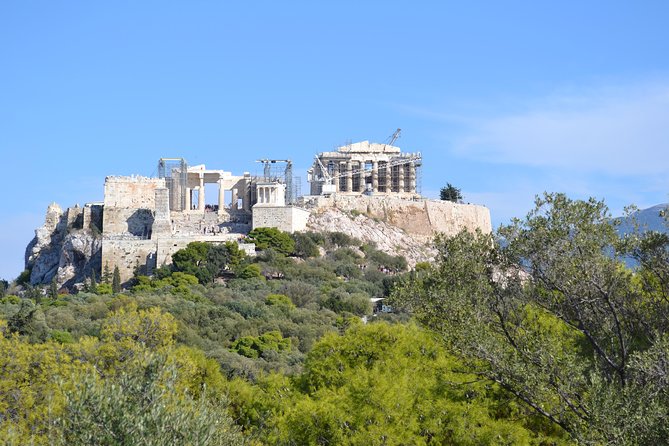
The heart of the day is the Acropolis, and the flow is smart. You start by moving through the gate area and key structures in a way that gives you a sense of procession, power, and how the spaces connect. Even if you have seen photos before, this is one of those places where the proportions and alignment hit you once you are standing close.
Here’s what you can look for as you pass each highlight:
Propylaea (the monumental gateway)
This is the grand entrance to the sacred area, built as part of the Periclean building program. The shape and framing of the marble around the entrance makes it feel like an intentional “stage set,” not just an archway. If you enjoy architecture, this stop gives you a quick win before you head into the heavier hitters.
Temple of Athena Nike (Wingless Victory)
This temple sits at the southeast edge of the sacred rock. The story that comes with it is memorable: the Victory goddess is described as wingless so she would never leave Athens. Look down at the bastion setting and imagine the older protective layers beneath the current structure.
Parthenon (the democracy-era masterpiece)
You get time here, and you should use it. The Parthenon was built between 447 and 438 BC as part of the larger Periclean project, and it is dedicated to Athena Parthenos. The guide can point out the design thinking that made it so different from earlier versions, including how it replaced earlier temple phases. If you have never visited before, focus on the overall geometry first, then let the details follow.
Erechtheion and the Karyatides porch
On the north side of the rock, the Erechtheion is where the Acropolis gets personal. The name ties to myth, and the building is linked to stories connected to Athens’ sacred precinct. Most people remember the Karyatides, the six female figures used like columns. A helpful way to experience this stop is to first notice how the figures carry the roof, then think about why that visual choice mattered in a civic monument.
A real-world consideration from past visitors: marble surfaces can be slick, and there can be steps. If you are traveling with a stroller, plan for the possibility that some parts of the Acropolis stops are not stroller-accessible, even if someone told you they might be. In one case, the Temple of Athena area was described as involving steps and slippery marble, which changed the plan on the day. If strollers are a must, you may want to coordinate with your guide early so you can keep everyone safe.
Acropolis Museum: where the stones start speaking
Right after the outdoor monuments, you head to the Acropolis Museum, and it is a big reason this day feels like more than a checklist. The museum focuses on what was found at the Acropolis site itself, from Greek Bronze Age through Roman and Byzantine periods.
A few facts that make it click when you are there:
- The museum was built to house artifacts from the rock and surrounding slopes.
- The competition that selected the design took place in 2000, with Bernard Tschumi and Greek collaborator Michael Photiades named in the project.
- The museum opened in 2009 and sits about 300 meters from the Acropolis.
In plain terms, this stop turns the Acropolis into a story you can follow. Out on the hill, you see the buildings. Inside, you see the surviving pieces of what those buildings meant and how people shaped identity through art and ritual.
One key planning point: entrance to the museum is not included. The company suggests pre-purchasing tickets in advance because availability can be tight. If you do not want to handle it yourself, they say they can buy tickets in advance for you under a small service fee.
Plaka for lunch time, not just lunch photos
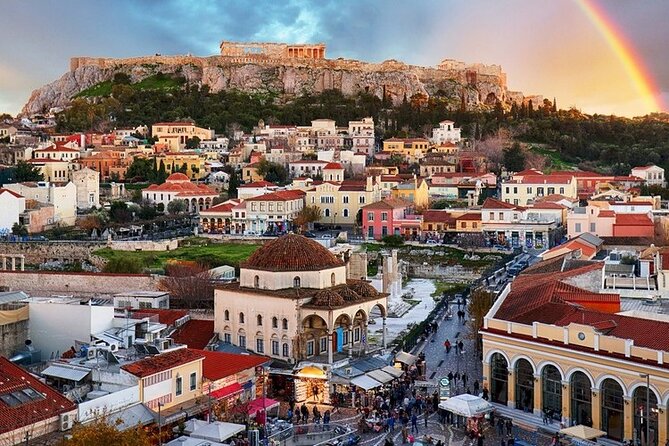
After the Acropolis, Athens relaxes a bit, and that matters on a long day. You get time in Plaka, a neighborhood that feels like a hillside village under the shadow of the ancient rock. Narrow cobblestone streets, small shops, and sidewalk tavernas make it an easy place to wander without feeling lost.
Plaka also includes Anafiotika nearby, with whitewashed homes that can feel like a Greek-island pocket dropped into Athens. The schedule gives you free time for lunch, so you can choose what fits your day rather than what fits a tour script.
If you want to do this well, I recommend choosing a lunch spot you can return to later for a snack or a slow coffee. This is also a good moment to cool down and regroup before the second half of the sightseeing.
Other ways to spend the day near Athens
- Athens: Acropolis & up to 5 Archaeological Sites Combo Pass
★ 4.2 · 13,904 reviews - Athens: Acropolis, Parthenon & Acropolis Museum Guided Tour
★ 4.8 · 9,316 reviews - The Acropolis, Parthenon & Acropolis Museum Guided Tour
★ 4.7 · 8,493 reviews - Athens: Cape Sounion & Poseidon Temple Sunset Half-Day Trip
★ 4.8 · 8,241 reviews
Ancient Agora and Kallimarmaro: Athens as a working city
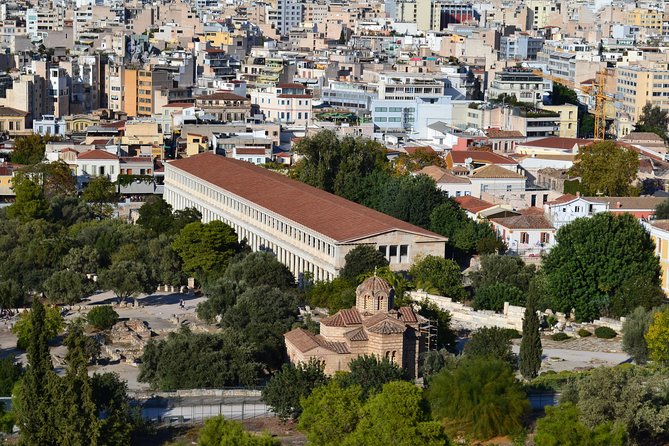
The tour doesn’t stop at temples. You also pass through the Ancient Agora of Athens, a place that functioned as both assembly space and marketplace. The area has layered history because it stayed in use for thousands of years, with excavations revealing changes from Archaic through Greco-Roman and Byzantine periods.
Think of it like a city center that kept being remade. You are not just looking at monuments. You are looking at a map of how public life evolved.
Then there’s the Kallimarmaro stadium, also known as the Panathenaic stadium. You get a short, focused visit, but it is a worthwhile one. It is made of marble, specifically Pentelic marble, and the marble is described as changing color with daylight, from cooler tones to bone gold in the afternoon. The stadium is famous for hosting the first modern Olympic games in 1896.
If you like a mix of ancient and modern symbolism, this stop is a satisfying bridge. You go from the old civic world to a modern moment built from the same material language.
Syntagma Square, the Hellenic Parliament, and the Changing of the Guards
This portion is pure Athens theater, in the best way. You spend time around the Hellenic Parliament, the Tomb of the Unknown Soldier, and the ceremony at the nearby guard posts in the Syntagma Square area.
Here’s what you can expect:
- The Parliament building has ties to the early monarchy era, originally serving as a palace for Kings Otto and George I, then later becoming the seat of modern Greek government.
- The Tomb of the Unknown Soldier is a war memorial guarded by the Evzones of the Presidential Guard.
- Changing of the Guards happens at the Presidential Mansion area and at the Tomb of the Unknown Soldier, with the ceremony described as occurring at the top of the hour, and Sunday at 11:00 in one schedule detail.
One of the most distinctive parts is the slow-motion quality of the guard’s movements. It is designed to allow troops to resume circulation after standing absolutely motionless, and it is exactly the sort of thing that makes the experience feel memorable instead of just something you watch for five minutes.
A practical tip: this is a popular spot, so bring patience. The upside is you get free, central sightseeing without paying another site fee. It is also a great place to set your phone down for a minute and just watch.
National Garden, neoclassical stops, and Lycabettus for the final viewpoint
Between the big ceremonies and the big sites, the tour also includes quick looks around a band of central Athens institutions. You visit places like the National Garden, Academy of Athens, National and Kapodistrian University of Athens, and the National Library of Greece. The point is not deep museum time here. It’s context: you see how Athens looks as a capital, not just as an ancient ruin park.
The National Garden is described as a green oasis behind Parliament and Syntagma Square, created as the royal gardens in 1839 and later renamed National Garden in 1923. It is a simple reset in the middle of a sightseeing day.
Finally, you head up to Mount Lycabettus (Lykavitos Hill), the highest point in central Athens at 277 meters. The view payoff is the whole reason people go up. Even if you just take photos and breathe for a bit, the panorama helps you understand Athens’ geography, including how the city stretches out toward the coastline.
The tour notes that Lycabettus is accessible on foot, by funicular railway, or by car. Your stop is timed so you can enjoy the view and then you are dropped off at the same spot where you were picked up for that segment.
Price and value: what you are really paying for at about $407 per group
At $407.41 per group (up to 3) for an approximately 8-hour private outing, the pricing makes sense if you value time and a guide who can keep things coherent.
Here is what you get that usually costs extra if you DIY:
- Transportation by air-conditioned vehicle appropriate for your group
- Round-trip pickup and drop-off in Athens, including Piraeus port pickup and drop-off
- An English-speaking driver with history and culture context through the day, including while you are headed toward the archaeological sites
What is not included:
- Entrance fees to the archaeological sites and museum
- Food and drinks
- A licensed English-speaking guide inside archaeological sites and museums is not included, though they say it can be arranged for an extra cost based on availability
That last point matters. The driver is described as having good knowledge and can guide you until you enter sites. Inside, you would need a licensed state tour guide if you want that extra layer. If you are okay with a general, big-picture explanation outside and do not mind reading interpretive signs inside, you might not feel the need. If you want deep, inside-the-room narration, budgeting the added guide time can be worth it.
In terms of value, this is also the kind of day where the small group size reduces friction. People like George, Christos, Peter, Yanni, Apostolis, Andreas, and Theodore come up as examples of guides who kept the day smooth, timed, and comfortable, including bringing guests to local lunch spots. You do not get that kind of personal pacing on standard bus tours.
Who should book this private Athens shore excursion, and who might not
This tour is a strong match if:
- You are short on time and want the big Athens hits in one day
- You want a private-group feel with a guide who can tailor the flow
- You care about context, not just monument selfies
- You are coming from Piraeus and want pickup that is built around cruise schedules
It may not be the best fit if:
- You need a fully stroller-friendly or step-free plan for the Acropolis areas, because marble steps and slippery footing can be an issue
- You want long, unhurried museum deep dives, because this is designed to cover a lot in a day
If you like structure with flexibility, you will probably feel happy with the pacing.
Should you book it? My call
I would book it if you are visiting Athens once, especially from Piraeus, and you want the Acropolis plus museum plus the modern-center highlights without the stress of transit and timing. The mix of Acropolis Museum with the hilltop stops gives you a better understanding than a classic ruins-only day.
I would think twice if your group has major mobility limits or if stroller access is a hard requirement for every Acropolis component. In that case, I’d ask very direct questions before you go about how your stroller or mobility needs will be handled at each monument stop.
If you are staying close to the main Athens sights or you are cruising into Piraeus, this is one of the more practical ways to see Athens in one long, focused day.
Freshly listed near Athens
- Private Guided Tour: Athens, Acropolis and Acropolis Museum★ 4.9 · 62 reviews
- Private Athens Tour with a Local- Highlights & Hidden Gems★ 4.9 · 64 reviews
- Athens: Private Acropolis Tour with focus on Kids & Families★ 4.8 · 51 reviews
- Poros Island: Full Day Trip From Athens with Swimming★ 4.8 · 33 reviews
- Piraeus Port: Acropolis Museum and Parthenon Mythology Tour★ 3.7 · 29 reviews
- Athens: Ouzo Tasting at Brettos Plaka★ 4.3 · 32 reviews
- Athens Old Town: Greek Olive Oil & Herbs Tasting★ 4.2 · 41 reviews
- No Diet Club – Unique local Food Tour in Athens!★ 4.9 · 38 reviews
Shore Excursions in Athens, compared.
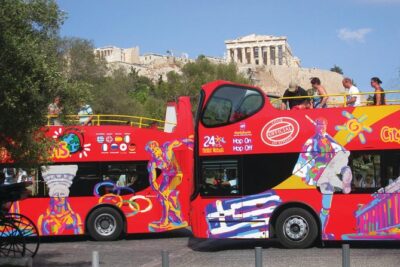
Athens Shore Excursion: Athens and Piraeus Hop-On Hop-Off Bus Tour
Read our review →
Essential Athens Full Day Private Tour – Best Shore Excursion
Read our review →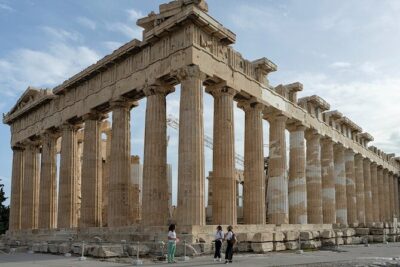
Athens Shore Excursion: Acropolis Walking Tour
Read our review →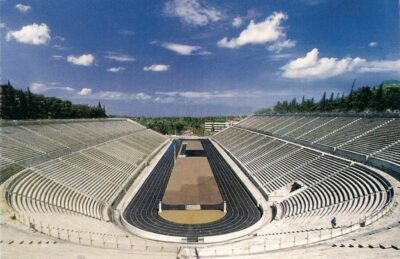
Browse the lists this tour appears in