
Reviewed · HISTORICAL TOURS
Small-Group Food and Cultural Tour in Corfu
Follow your appetite through Corfu Old Town. This 3-hour, small-group food and cultural walk is a smart way to see UNESCO-listed streets while tasting Corfiot pastitsada and other island favorites. I love how the route pairs iconic landmarks like the Old Fortress and St. Spyridon with real food stops, not random snacks. I also like that you finish with a seated lunch, so you are not just grazing your way through the town.
One thing to consider: it is a walking tour, and the operator notes good weather is needed. If it is raining, you will still be outside, so pack a light rain layer and plan for steady steps.
In This Review
- Key things to know before you go
- Why Corfu Old Town works so well for a food-and-culture walk
- Meeting by the Old Fortress and the Schulemburg statue
- Spianada and Liston: the square, the cafes, and the cricket detail
- The Palace of St. Michael and St. George, then a museum you might not expect
- St. Spyridon: the patron saint church stop that anchors the walk
- Old Town Hall and San Giacomo Theatre: Venetian opera to civic life
- The Evraiki Jewish quarter: narrow lanes, Venetian echoes, and WWII scars
- Food and drink stops: brunch bites, olive oil tasting, and pastitsada lunch
- Brunch start: pies, yogurt, ginger beer
- Snacks and spice lessons: olives, oils, and local flavors
- Lunch that feels like the finish line
- Pacing, group size, and what 3 hours feels like
- Price and value: what about $108.89 actually buys you
- Who should book this tour, and who might not love it
- Should you book this Corfu small-group food tour?
- FAQ
- How long is the Corfu small-group food and cultural tour?
- How much does it cost per person?
- What food is included during the tour?
- Is there an admission fee for the Holy Church of Saint Spyridon or the Old Town Hall?
- Where do I meet the guide?
- What group size should I expect?
- Are there different departure times?
- What language is the tour offered in?
- Is the tour dependent on weather?
- Is private transportation included?
Key things to know before you go
- Small-group feel with real guide time: Maximum eight with your guide (and the tour slot is capped at 20).
- UNESCO Old Town plus English-era Corfu: You see the Old Fortress area, then move into the British Lord High Commissioner period around the Palace of St. Michael and St. George.
- Church, theatre, and square stops with context: St. Spyridon is free to enter, and the San Giacomo Theatre area connects Venetian and later civic life.
- Food is the main event, not an add-on: Brunch bites, snacks, an olive oil tasting, and then a full sit-down lunch.
- Sweets and small tastings can come earlier: Expect a food order that may feel a bit backwards compared to a classic dinner flow.
Why Corfu Old Town works so well for a food-and-culture walk
Corfu Old Town is compact enough to explore on foot, but it still feels layered and international. You can see it in the architecture and the street patterns, then you can taste it in the food and flavors. This tour is built for that exact combo: walking through the places that shaped Corfu, while eating the dishes that reflect centuries of influence.
What makes it a good first-timer choice is how practical the pacing is. You are not trying to cram five days of museums into three hours. Instead, you get a guided hit of major sights, plus a full meal at the end, so your day has a natural rhythm.
Also, the guide is a big deal here. Guides connected to this tour have names like Nausica, Alice, Naustia, Vilia, Alkistis, Electra, and Valia. Across those different leads, the through-line is clear: they know how to connect each bite to the island story, and they keep the group moving without rushing.
Other ways to spend the day near Corfu
- Corfu Town: Guided Walking Tour and Local Food Tastings
★ 4.9 · 313 reviews - Taste Corfu: Private Corfu Food Walking Tour
★ 5.0 · 82 reviews - Symphony of Flavors – Olive Oil & Food Pairing at Corfu Town
★ 4.9 · 66 reviews
Meeting by the Old Fortress and the Schulemburg statue
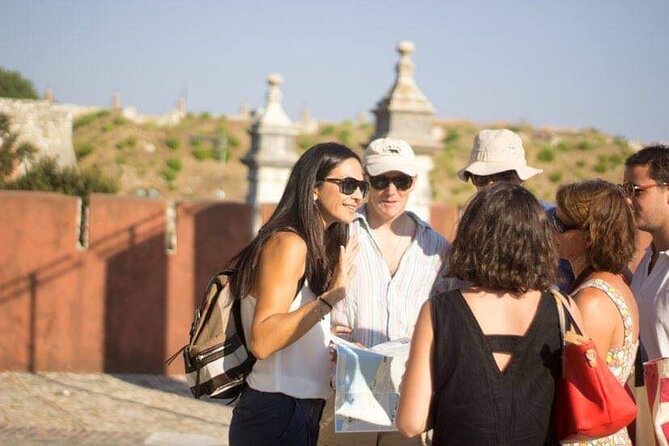
You start in the Old Town area, meeting in front of the Old Fortress at the statue of Schulemburg. From there, your guide sets the tone with a quick, outside introduction to the fortress and what it meant for the island’s defenses.
This opening matters more than it sounds. Corfu can look “pretty and calm” at street level, but the Old Fortress area helps you understand why the town is arranged the way it is, and why later neighborhoods have distinct personalities. Once that frame is in your head, the walk feels less like sightseeing and more like reading a map written in stone.
If you are arriving from a cruise port or bus stop, give yourself a little extra time to find the meeting point calmly. The start is specific, and once you are pointed in the right direction, the rest of the route flows on foot.
Spianada and Liston: the square, the cafes, and the cricket detail
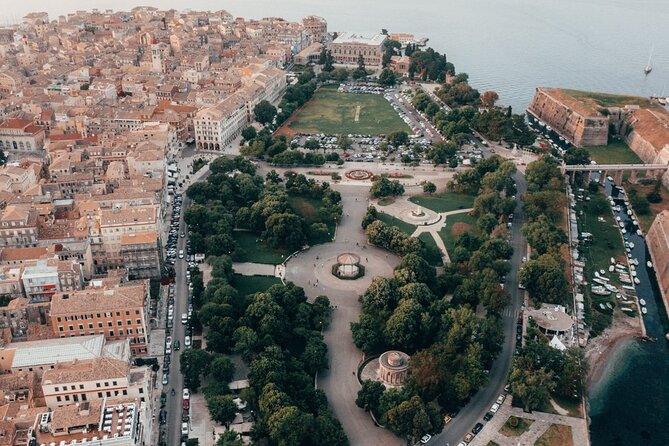
Your next major stop is Spianada, the central square. The name comes from a Venetian word for an open flat area, and it is described as one of the largest squares in the Balkans. This is the kind of place where Corfu’s mix of cultures becomes visible instantly: wide open space, grand facades, and a social pulse that fits the café culture.
A few specific details make this square more than a photo stop. Spianada was turned into a public square by the French. Before the nineteenth century, it was used as an open defensive lot. And yes, cricket matches are played on the Esplanade, noted as the only place in Greece where cricket is played.
Right alongside Spianada is Liston, with its elegant row of buildings and some of the finer cafes and restaurants in Corfu. You will walk through the area like you are strolling the edge of a history book, then you get your own chance to think about how public spaces become community living rooms.
The Palace of St. Michael and St. George, then a museum you might not expect
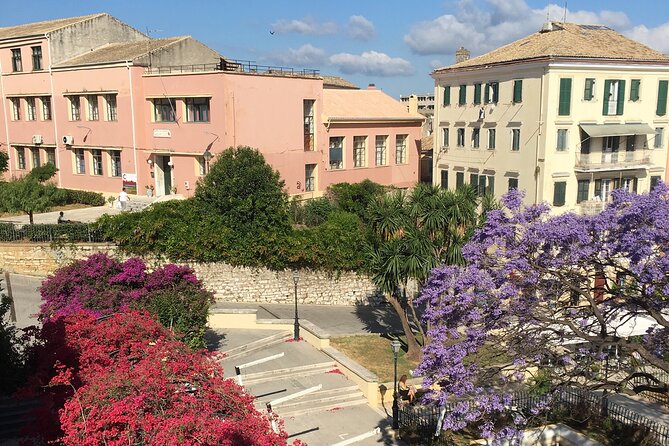
As you continue, you reach the Palace of St. Michael and St. George, located on the northern side of Corfu’s historical center square. This building is tied to the British rule that began in 1814 and ended in 1864, when the Ionian Islands were reunified with Greece.
The palace was built at the request of British Lord High Commissioner Sir Thomas Maitland as a luxurious residence plus the administrative headquarters. That “two jobs in one building” idea is a useful lens. It helps you understand why Corfu still carries distinct English-era fingerprints even when you are walking through streets that look Venetian at first glance.
Today, the palace houses the Corfu Museum of Asian Arts. It is presented as the only museum in Greece dedicated solely to art and antiquities from the Far East and India. The collection is described as about 15,000 works, founded in 1928, and it has international recognition, with rare items shown in exhibitions abroad.
You do not need to be a museum person to enjoy this. Even if you only get a snapshot, it adds a real twist to a food tour. You end up seeing how Corfu is not just a Greek island with Italian influence, it is also a place that has gathered global interests.
A short hop away, these too:
- From Corfu: Day Cruise to Paxos, Antipaxos, & the Blue Caves
★ 4.3 · 4,800 reviews - From Corfu Island: Antipaxos & Paxos Blue Caves Boat Cruise
★ 4.7 · 3,690 reviews - From Corfu: Day Cruise to Paxos, Antipaxos, and Blue Caves
★ 4.6 · 2,851 reviews - Full-Day Boat Tour of Paxos Antipaxos Blue Caves from Corfu
★ 4.5 · 1,567 reviews
St. Spyridon: the patron saint church stop that anchors the walk
One of the religious stops is the Holy Church of Saint Spyridon, the island’s patron saint and described as a miracle worker. The tour notes free admission, and you spend about 15 minutes there.
This stop works because it is not treated like a checklist. Stopping in a functioning sacred space adds emotional texture to the day. If you have ever felt that Old Town tours can be “all architecture and no feeling,” this is the part that tends to correct that.
Practical tip: bring your usual church-visit behavior, meaning quiet voice and respectful shoulders if you are asked. It is a short stop, but it is worth giving it attention.
Old Town Hall and San Giacomo Theatre: Venetian opera to civic life
As you walk through the narrow streets, you pass by Town Hall Square of Corfu, connected to the former Venetian neighborhood with an opera house and villas around it. The building you admire is tied to the area’s theatre history.
The sequence here is clear and helpful:
- it started as a club for noblemen,
- in 1720 it hosted the Noble Theatre of Saint Giacomo of Corfu,
- by 1903 it was turned into the Town Hall.
You get about 30 minutes for this stop area, with free admission noted. Even if you only know Corfu from the seaside, this gives you a stronger sense of how civic power and entertainment life used to mix. It also explains why the town streets can feel like they were designed for walking crowds, not just private estates.
The Evraiki Jewish quarter: narrow lanes, Venetian echoes, and WWII scars
Then you reach the Jewish quarter, known historically as the old Venetian ghetto, and still called Evraiki in Greek. The area is described as stretching across the southeast section near Venetian fortifications, with alleyways lined by faded, multistoried houses, like Venice.
It is moving to see this section in person, especially because the tour adds a blunt historical note: the ghetto lost its urban unity due to bombardments during World War II.
I like that this stop is included in a food-focused tour. It prevents the day from becoming only charming and decorative. You leave with a fuller picture of what Corfu endured, and you can connect that to why food traditions can be both everyday comfort and cultural memory.
Food and drink stops: brunch bites, olive oil tasting, and pastitsada lunch
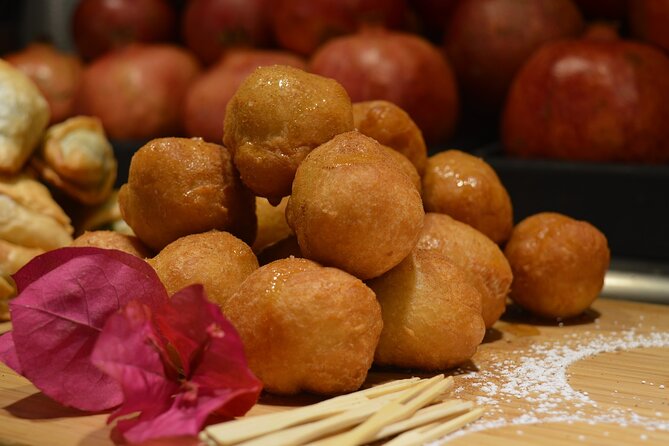
Food is the heart of this experience, and the flow is designed to keep you sampling while still ending full.
Brunch start: pies, yogurt, ginger beer
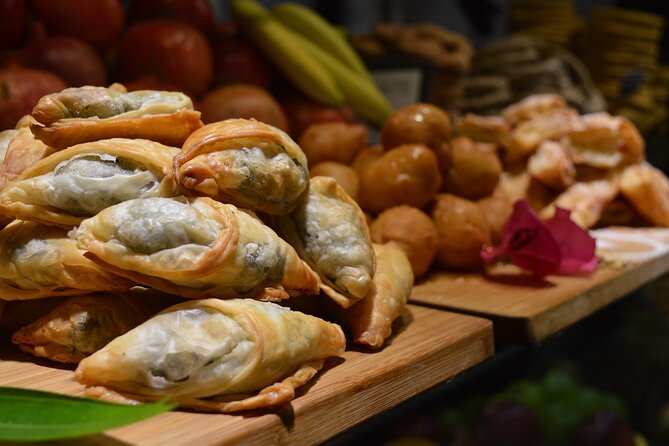
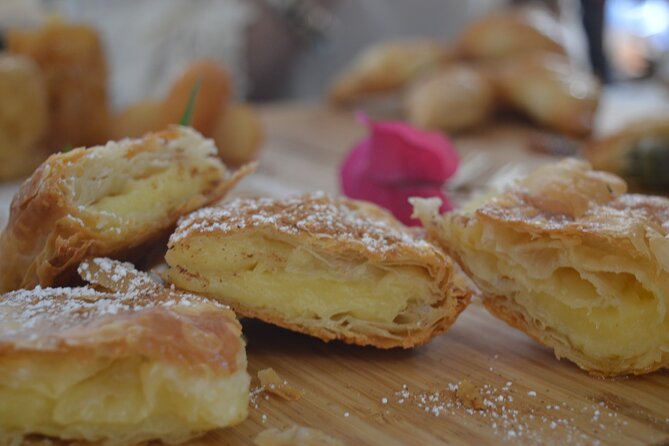
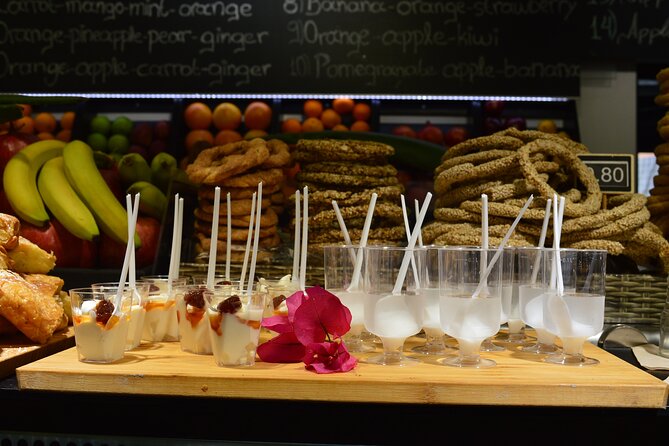
Your morning tour begins with Greek brunch items. The tour lists spinach pies and cheese pies, Greek yoghurt, and ginger beer. This gives you a good range right away: flaky savory bites, cooling dairy, and a drink that feels distinctly Corfiot rather than generic.
Snacks and spice lessons: olives, oils, and local flavors
Then you move into a stop centered on olive oil tasting. Your local vendor introduces spices and the history of olives. This is one of the best parts for taking something home mentally, not just physically. Once you understand how olives and spices show up in local cooking, it is easier to order with confidence later.
In at least some past runs, this olive oil tasting has been described as a fun highlight at a shop like Sweet and Spicy, where the focus is very much on tasting and learning. Even if your exact shop differs, expect a vendor-led experience where you are not just handed samples and dismissed.
Lunch that feels like the finish line
The tour ends at a restaurant for a seated lunch. The included meal includes pastitsada, Greek salad, and ouzo, plus you should get a proper sit-down break before you head back.
Pastitsada is specifically described as a stew of beef with tomatoes and spices like cinnamon, cloves, black pepper, and sweet and hot paprika, served with pasta. This is comfort food with a strong aroma profile, and it is the kind of dish that makes the whole tour feel worth it, because it is not just a snack. It is dinner-ish flavor in midday timing.
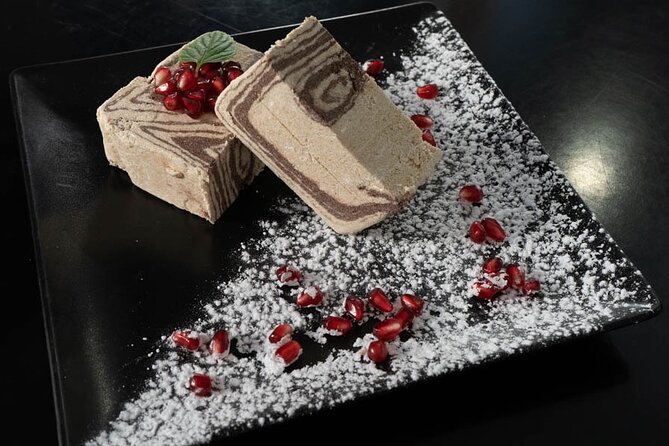
A note on food order: several guides appear to lean into sweets and small tastings earlier in the walk, so the day can feel a bit like dessert first, full meal last. If that sounds odd to you, do not worry. You end the tour with a serious lunch, not just a final bite.
Pacing, group size, and what 3 hours feels like
This is about 3 hours, and you can choose morning or early evening departures. That flexibility is practical if you are also dealing with ferry schedules, beach time, or cruise-port timing.
Your group is capped small. With a maximum of eight travelers per guide, you usually get enough time to ask questions without the guide having to shout over a crowd. The tour is also listed with a maximum of 20 travelers for the overall group size, so if you are arriving in a busier slot, you still get that small feel once you are with your guide.
The walk does not drag, but it is not a sit-and-stroll either. It is a “steady walking plus food stops” setup. On rainy days, people note you still do a lot of walking, and it can help to have a plan for umbrellas or ponchos.
The best way to match this pace is to eat lightly beforehand, then show up hungry. More than one past participant has said that is the secret to enjoying every stop.
Price and value: what about $108.89 actually buys you
At about $108.89 per person for an approximately 3-hour guided walk, you are paying for three things at once:
1) a guide to connect UNESCO Old Town and landmark history,
2) multiple tasting stops (brunch items, snacks, olive oil sampling),
3) a seated lunch with signature flavors like pastitsada plus ouzo.
If you tried to DIY this route, you would still spend money on food, and you would still need to figure out what you are looking at and why it matters. Here, the guide does that background work while you are already walking between key sights.
There is also value in the free entry stops included on the route, like St. Spyridon and the Old Town Hall area. You are not paying separate attraction fees for those pieces, and the tour time gets used efficiently.
Also, the tour uses a mobile ticket. That saves time on paper wrangling when you are navigating Old Town streets.
Who should book this tour, and who might not love it
This works best if you:
- want a first taste of Corfu Old Town that mixes architecture with food,
- like guided context, even if you do not want a full-day museum plan,
- enjoy walking but still want a seated finish,
- are happy sampling multiple bites and drinks rather than eating one long restaurant meal.
It might feel less ideal if you:
- prefer fully seated experiences with minimal walking,
- have trouble with outdoor walking in rain, since good weather is required by the operator,
- want deep time inside museums or long church visits, because the focus stays on the walk and tastings within a 3-hour window.
If you are traveling with someone who is more into sights than food, this tour is still a good bridge. The guide ties each place to daily life and to what ends up on Corfu tables.
Should you book this Corfu small-group food tour?
Yes, if you want a concentrated, local-feeling Corfu experience that uses the best of Old Town and the best of Corfiot eating in one go. I especially like it as an early part of your trip because it gives you context fast. After the tour, you tend to know what you are looking at when you wander on your own.
Book it if you care about the connection between place and flavor, like why Spianada became a public square under the French, or why the British-era Palace of St. Michael and St. George still matters. You are paying for that combination, and you end with enough food that you do not need to scramble for dinner right after.
If you are deciding between a pure walking tour and a pure food tour, this one sits in a useful middle. You get architecture and culture without turning the day into homework.
FAQ
How long is the Corfu small-group food and cultural tour?
The tour runs for about 3 hours.
How much does it cost per person?
The price is listed as $108.89 per person.
What food is included during the tour?
You get Greek brunch items at the start (spinach pies, cheese pies, Greek yoghurt, and ginger beer), plus snacks including an olive oil tasting and a local spices introduction. The tour also includes a seated lunch with pastitsada, Greek salad, and ouzo.
Is there an admission fee for the Holy Church of Saint Spyridon or the Old Town Hall?
The tour indicates free admission for the Holy Church of Saint Spyridon and free admission for the Old Town Hall of Corfu (San Giacomo Theatre).
Where do I meet the guide?
You start at Agoniston Politechniou, Kerkira 491 00, Greece, and the guide meets you in front of the Old Fortress at the statue of Schulemburg.
What group size should I expect?
The tour is described as a group of maximum eight with your guide, and it is also listed with a maximum of 20 travelers.
Are there different departure times?
Yes, the tour offers choice of morning or early evening departures.
What language is the tour offered in?
The tour is offered in English.
Is the tour dependent on weather?
Yes. The experience requires good weather, and if it is canceled due to poor weather, you will be offered a different date or a full refund.
Is private transportation included?
No, private transportation is not included.
More Historical Tours in Corfu
- Corfu: History and Culture Walking Tour
★ 4.9 · 55 reviews - Small-group Corfu Town Historical Walking Tour
★ 5.0 · 39 reviews - Corfu Town express tour: 90 minutes of History, Culture and Charm
★ 5.0 · 24 reviews - Tour in Corfu Town: Historic Buildings & Great Personalities
★ 5.0 · 24 reviews
Freshly listed near Corfu
- Cooking Classes and olive oil tasting.The real taste of Greece!★ 5.0 · 56 reviews
- Private Sunset Jeep Safari in North West Corfu with Dinner★ 5.0 · 28 reviews
- Elysium Transfer & Rental Services, Greece★ 5.0 · 48 reviews
- Private Airport Transfer Service in Corfu★ 5.0 · 33 reviews
- Visit Corfu Private Tour – The Best Way to Discover Corfu★ 4.5 · 51 reviews
- Stories of Food and Culture in the Old Town of Corfu★ 5.0 · 24 reviews
- The Amazing Glyfada Beach★ 4.0 · 43 reviews
- Leisurely Tour of Corfu★ 4.0 · 151 reviews
Historical Tours, compared.
Historical Delphi One Day Tour with Arachova Stop & Expert Guide
Read our review →
Historic Athens: Small Group Electric Bike Tour
Read our review →
Acropolis, Parthenon & Athens Old City Heritage Walking Tour
Read our review →
Half-Day Guided History and Culture Sightseeing Tour
Read our review →
Nydri: Sailing Through History. Daily Cruise with Beach BBQ
Read our review →
Browse the lists this tour appears in