Reviewed · ATHENS TOURS & ACTIVITIES
Philosophy and Democracy tour of Athens
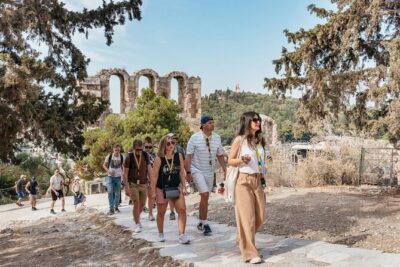
Democracy has a smell in Athens. This Philosophy and Democracy walking tour links ideas to the exact streets where they were debated, using major sites around the Acropolis area to show how democracy and philosophy shaped Western thought. You also get a practical local thread through Plaka and the markets so the tour feels like more than textbook landmarks.
I love how Panos turns big concepts into plain talk, then anchors them at each stop with stories that connect to today. I also love the small group size, so questions do not feel awkward and you get real back and forth instead of just listening.
One thing to consider: this is still a walk with uneven ground and a few uphill moments, especially as you reach Pnyx. If you dislike walking tours, you may want to save your energy for museum time instead.
In This Review
- Key highlights worth getting excited about
- Why this Athens philosophy tour feels different from the usual highlights
- Starting at the Statue of Theseus, Athens gets its storyline fast
- Kerameikos, the cemetery of Athens, and Pericles’ democracy speech
- The flea market walk, a low-pressure break that still fits the theme
- Hadrian’s Library and the Roman Agora, when the Acropolis spills into empire
- Tower of the Winds, Athens’ weather station and ancient timekeeping
- Plaka is more than a postcard, it’s the pause between ideas and food
- Ancient Agora, where the “dream team” of Athens actually argued
- Prison of Socrates, a quick tribute that changes the tone
- Pnyx Hill, the cradle of democracy, with the views to match
- The final Acropolis monument moment, where Athens goes big
- Price and value, what $50.81 really buys you
- What to pack and how to make the walk easier
- Who this tour is best for (and who might skip it)
- Should you book Philosophy and Democracy in Athens?
- FAQ
- How long is the Philosophy and Democracy tour of Athens?
- Where does the tour start and end?
- Is the tour in English?
- How big is the group?
- Do I need to buy admission tickets for the sites?
- Do I need good weather?
- Can I use a mobile ticket?
- Is free cancellation available?
- Are service animals allowed?
Key highlights worth getting excited about
- Panos connects philosophy to the places you’re standing in, not just names and dates
- A small group (max 15) makes it easier to ask questions and keep a steady pace
- Kerameikos and the Agora focus on everyday Athens, not only the postcard sites
- Tower of the Winds gets explained in a way that finally makes it click
- Pnyx Hill gives you both the “cradle of democracy” story and big Acropolis views
- Plaka stops help you switch from thinking mode to snack and stroll mode
Why this Athens philosophy tour feels different from the usual highlights
Athens is packed with ruins, but most tours skim the surface of why the place matters. What I like about this one is that it treats philosophy and democracy like living systems, not museum artifacts.
You start with sites tied to politics and public speech, then you move through the meeting places where people argued, voted, and influenced each other. Along the way, you are also comparing ancient democracy with modern ideas. That comparison matters, because it helps you see how concepts evolve instead of pretending the past is a carbon copy of now.
The pacing is also built for learning. More than once, the tour keeps a steady rhythm so you can absorb what you’re seeing without feeling rushed. And if you have ever tried to read explanations while tired and distracted, you’ll appreciate how the guide keeps things moving and clear.
Finally, the group vibe tends to be thoughtful. People are encouraged to engage, and the guide uses humor to keep the tone light when the topics get heavy.
Other ways to spend the day near Athens
- Athens: Acropolis & up to 5 Archaeological Sites Combo Pass
★ 4.2 · 13,904 reviews - Athens: Acropolis, Parthenon & Acropolis Museum Guided Tour
★ 4.8 · 9,316 reviews - The Acropolis, Parthenon & Acropolis Museum Guided Tour
★ 4.7 · 8,493 reviews
Starting at the Statue of Theseus, Athens gets its storyline fast
You meet at the Statue of Theseus in Athens, which is a smart way to begin because it immediately places you in the myth and identity layer of Greek culture. From there, the tour builds toward the political and philosophical Athens that most visitors only touch briefly.
The meeting point also puts you near public transportation, which is handy. It means you are less dependent on taxis for getting started, and you can plan your morning without stress. If you like to show up early and settle in, you’ll likely enjoy the short pre-walk moment.
This is a mobile ticket tour, so you do not need to worry about printing anything. Just have your phone ready and you’re set.
Kerameikos, the cemetery of Athens, and Pericles’ democracy speech
The tour begins (for most departures) at Kerameikos Archaeological Site, a place that feels under-visited even though it is hugely important. Kerameikos gets its name from ceramics, because the area was full of workshops. But it is equally known as a cemetery for many centuries.
That cemetery role changes how you read the space. You are not just looking at stones, you’re looking at a city’s memory. And then the tour makes the political connection: Pericles delivered his famous Epitaph speech here for early casualties of the Peloponnesian War, praising the virtues of democracy and the way Athenians lived.
The main drawback is also simple: because admission is not included here, you’ll need to budget for a ticket if you do not already have one. Plan to take a few minutes to handle that before you settle into the storytelling.
The flea market walk, a low-pressure break that still fits the theme

Next comes an easy-paced walk through a flea market. This stop works because it interrupts the heavy thinking mode without breaking the Athens vibe.
You get movement, local color, and a sense of how people use the city day to day. It is also a gentle breather before the next archaeological stretches. Admission is free for this part, so it does not add cost to your day.
Keep your expectations realistic. This is not a high-end shopping stop. Think of it more as a neighborhood scan, where you practice seeing Athens as a living place, not only a ruins map.
A short hop away, these too:
- Athens: Cape Sounion & Poseidon Temple Sunset Half-Day Trip
★ 4.8 · 8,241 reviews - Acropolis: Premium Acropolis and Parthenon Guided Tour
★ 4.8 · 5,208 reviews - Athens: Mythology of Delphi, Museum and Arachova Guided Tour
★ 4.7 · 5,102 reviews - All Day Cruise -3 Islands to Agistri,Moni, Aegina with lunch and drinks included
★ 5.0 · 4,958 reviews
Hadrian’s Library and the Roman Agora, when the Acropolis spills into empire

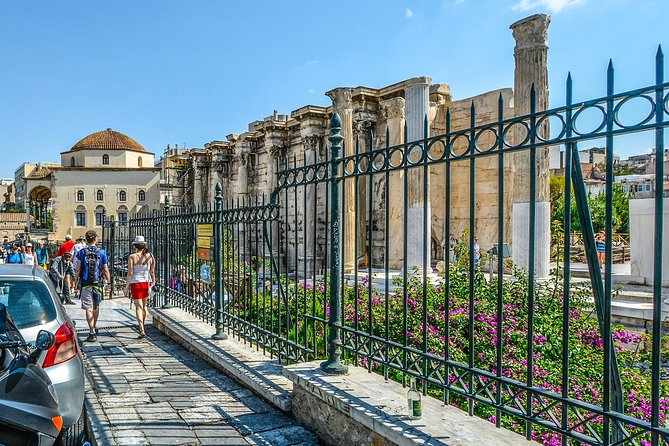
Then you shift into Roman Athens with Hadrian’s Library and the Roman Agora. Hadrian’s Library was built in AD 132 on the north side of the Acropolis. It helps you understand how later rulers kept feeding the city’s reputation as a center of learning and public life.
What makes the explanation useful is how it frames Greek ideas traveling through time. Even when the architecture changes, the city keeps reinventing what it means to gather people, display culture, and host public space.
As with Kerameikos, admission tickets are not included for these sites. So you’re paying for time in the archaeology, plus you’re paying once more for the guide’s time and the way he stitches the locations into a bigger story.
Tower of the Winds, Athens’ weather station and ancient timekeeping

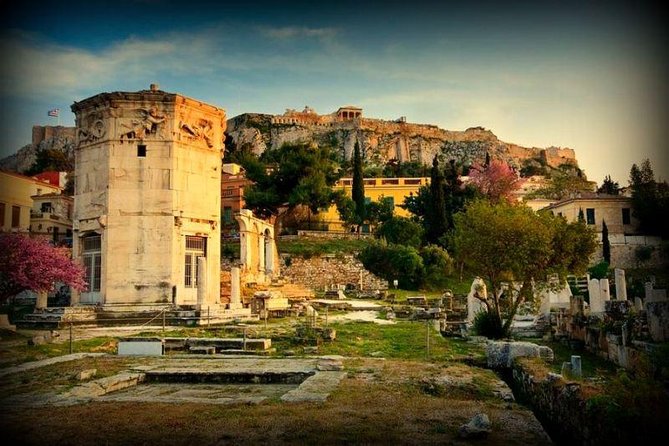
One of the stops I’d gladly do even if I were not in “history mode” is the Tower of the Winds. It is an octagonal structure linked to an astronomer, Andronicus of Kyrristos, and it served multiple purposes.
The explanation focuses on how it worked as both a wind indicator and a kind of clock. The idea of a solar clock makes sense, but the tour also brings in the extra mechanism used in cloudy days, which could produce an hourly sound through a hydraulic setup. That detail turns a pretty building into a real piece of practical technology.
Admission is not included at this stop, so again, your ticket budgeting matters. Still, even if you only get a short look, the story makes it worth it.
Plaka is more than a postcard, it’s the pause between ideas and food
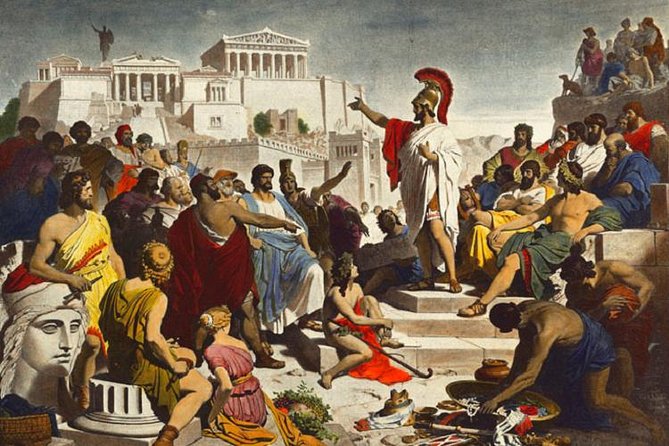
At some point during the walk, you also pass through Plaka, the scenic neighborhood with small houses and narrow streets. This part matters because it gives you a change of pace.
You are not trapped in ruins the whole time. You can slow down, look up at buildings, and start thinking about what you’ll do next. The tour also gives insider guidance on where to eat, drink, and explore, so you leave with ideas that fit the area you just walked through.
Even better, there is usually a refreshment break in the middle of the tour at a kiosk with facilities. One of the practical lessons I picked up from the timing is that you should treat the day like a real walk, bring water, and plan for stops.
Ancient Agora, where the “dream team” of Athens actually argued
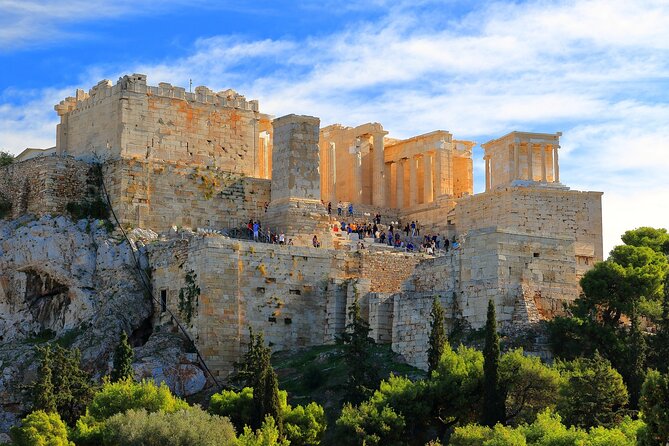
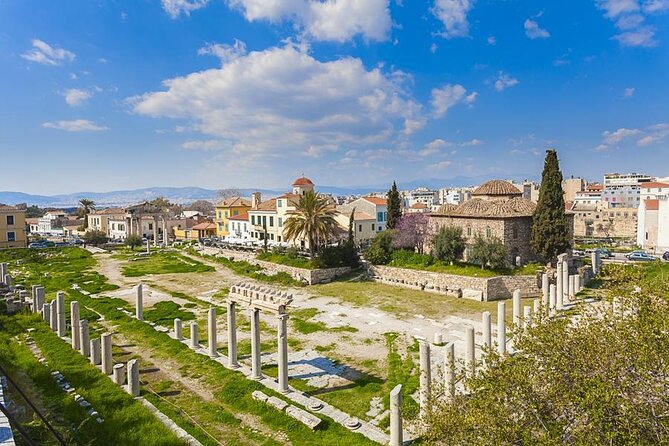
The core philosophical shift happens at the Ancient Agora of Athens, often described as the heart of the city. This is where the tour makes the democracy theme feel real.
You’re shown the idea that philosophers and politicians were not separated by time, class, or job description. You hear about major thinkers and public figures who walked and debated here, and you connect it to the idea of civic decision-making.
One of the reasons this stop hits is that it turns your mental model from statues to conversations. You start asking what kind of debates happened, why people disagreed, and what values were at stake.
Admission is not included here either. So budget for tickets, but also remember the tour is doing something extra: it is explaining how the spaces relate to philosophical and political life.
Prison of Socrates, a quick tribute that changes the tone
Next you visit the Prison of Socrates spot, which is offered as a tribute rather than a long stop. It’s brief, but it’s also a mood change.
Socrates represents questioning as a civic act. Hearing that placed near the Agora helps you see philosophy not as abstract theory, but as something with consequences. Even in a short visit, the story can make the earlier democracy talk feel heavier, in a good way.
Admission is free for this stop. So you get the meaning without added ticket cost.
Pnyx Hill, the cradle of democracy, with the views to match
The tour then reaches Pnyx Hill, described as the cradle of democracy because it was an early place where citizens made decisions for their future. The “cradle” idea is not just a catchy phrase. Here, the tour ties it to how public participation shaped real outcomes.
And then you get the view. Pnyx offers great looks back toward the Acropolis and across Athens. It helps you understand the physical logic of the city. When you see the terrain, you can better imagine how people gathered, how speeches would carry, and how the space supported participation.
This stop is also free. So it is one of the easiest wins in the schedule: meaning and scenery for no extra admission fees.
The final Acropolis monument moment, where Athens goes big
The tour ends with a visit to the grand monument that most people associate with Greece’s classic skyline. After all the political and philosophical talk, this stop works like a payoff.
You’re not just taking photos. You’re looking at the larger symbol of Athens, and you finally understand why ancient Athens is still used as shorthand for discussion, debate, and civic identity.
If you’re the kind of traveler who likes a closing moment to tie everything together, this ending tends to do that. It is the moment you can shift from questions to awe, while still remembering the earlier context.
Price and value, what $50.81 really buys you
The price is $50.81 per person, and the tour runs about 3 hours 30 minutes. That sounds simple until you break down what you get for it.
You are paying for a guided walking experience with multiple archaeological and historical stops, and the guide’s job is not just to describe places, but to connect them. That is the part that often costs extra in other cities, because it requires actual teaching skills and a narrator who can organize complex ideas into something you can follow on your feet.
Also, the group size is limited to 15, which matters for value. A smaller group usually means faster answers to questions and less time spent waiting for the whole line to catch up.
Keep in mind that admission tickets are not included for several sites. So your all-in cost will depend on which paid stops you enter. The good news is that at least a few key parts of the route are free, including the Prison of Socrates and Pnyx.
If you want this to fit your budget, you can plan ahead: set aside a little extra for admissions so you do not feel surprised halfway through.
What to pack and how to make the walk easier
This tour is doable for most people, but it is still a walking day. A few practical moves will make it more comfortable.
Bring a bottle of water. The route includes walking breaks and a mid-tour refreshment stop, but water on hand keeps your energy steady. Wear shoes with grip, because Athens sidewalks and archaeological paths can be uneven.
If you worry about hearing the guide, you can relax. The guide is known for speaking loudly and clearly, so you likely will not need earphones.
And one small but smart habit: keep questions for yourself, then ask them when the guide pauses. You’ll get better answers when you can steer the conversation.
Who this tour is best for (and who might skip it)
This is a great fit if you:
- want Athens to make sense beyond the Acropolis postcard
- care about philosophy, political history, or how ideas affect daily life
- like guided storytelling that compares ancient and modern democracies
- enjoy small-group tours where your questions matter
You might skip it if you:
- want a totally relaxed sightseeing day with minimal walking
- prefer only the most famous sites, because this tour gives time to less crowded places like Kerameikos
- dislike topic-heavy tours and would rather learn through museums and audio guides
Should you book Philosophy and Democracy in Athens?
I think you should book it if you want Athens with context. The best part is the way the tour connects famous names and big concepts to the actual places they came from. You get a mental map of how ideas moved through public life, and you leave with a clearer sense of why ancient Athens still shapes how people talk about democracy today.
Also, because the tour sells well, it’s smart to book in advance. The average booking window is about a month, and small-group tours tend to fill when people plan their days around a morning walk.
If you’re on the fence, consider this simple test: if you can enjoy a guided walk where you talk about politics and philosophy while standing in front of ruins, you’ll probably love this.
FAQ
How long is the Philosophy and Democracy tour of Athens?
It runs about 3 hours 30 minutes (approx.).
Where does the tour start and end?
It starts at the Statue of Theseus, Athens 105 55, Greece, and ends at Theorias 21, Athina 105 58, Greece.
Is the tour in English?
Yes, it is offered in English.
How big is the group?
The tour has a maximum of 15 travelers.
Do I need to buy admission tickets for the sites?
Some stops require admission tickets, including Kerameikos Archaeological Site, Hadrian’s Library, Roman Agora, Tower of the Winds, and Ancient Agora of Athens. Other stops are free, including the Flea Market, Prison of Socrates, and Pnyx.
Do I need good weather?
Yes. The experience requires good weather, and if it is canceled due to poor weather, you’ll be offered a different date or a full refund.
Can I use a mobile ticket?
Yes, the tour uses a mobile ticket.
Is free cancellation available?
Yes, you can cancel for a full refund up to 24 hours in advance. If you cancel less than 24 hours before the start time, the amount paid is not refunded.
Are service animals allowed?
Yes, service animals are allowed.
Freshly listed near Athens
- Athens: Premium Guided E-Scooter Tour in Acropolis Area★ 5.0 · 133 reviews
- Athens: Wine Workshop Create your Own Wine under the Acropolis★ 5.0 · 77 reviews
- Ceramic and Pottery Creative Workshop with Two Local Artists★ 4.0 · 57 reviews
- Private Tour and Tasting at Zeginis Winery★ 5.0 · 18 reviews
- Athens: Greek Wines Tasting with Sommelier and Acropolis Views★ 5.0 · 88 reviews
- Private Day Trip to Nafplio from Athens★ 5.0 · 20 reviews
- Athens Old City Private Photoshoot Tour / 2 hrs★ 5.0 · 109 reviews
- Greek food and wine tasting★ 5.0 · 18 reviews
Athens Tours & Activities, compared.
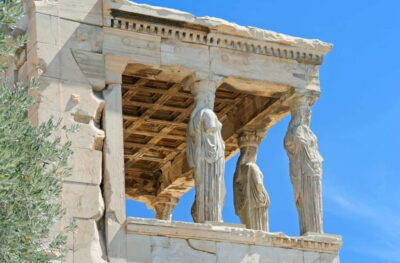
Acropolis & up to 5 Archaeological Sites Combo Pass
Read our review →
Acropolis, Parthenon & Acropolis Museum Guided Tour
Read our review →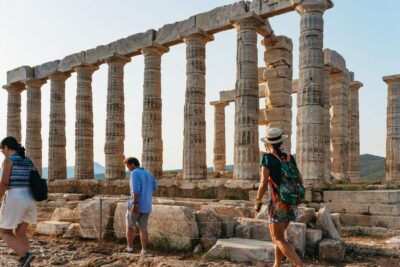
Cape Sounion & Poseidon Temple Sunset Half-Day Trip
Read our review →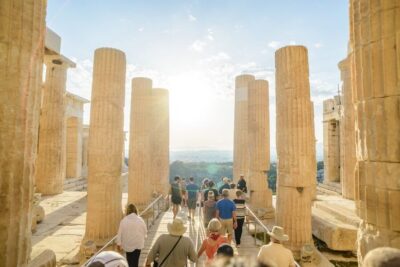
Acropolis: Premium Acropolis and Parthenon Guided Tour
Read our review →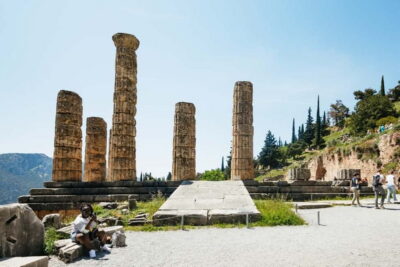
Mythology of Delphi, Museum and Arachova Guided Tour
Read our review →
All Day Cruise -3 Islands to Agistri,Moni, Aegina with lunch and drinks included
Read our review →
Athens, Piraeus, and Coastline: Blue Hop-On Hop-Off Bus
Read our review →