
Reviewed · MILOS TOURS & ACTIVITIES
Milos Island: Archaeology & Culture Tour
Milos has a talent for mixing ancient ruins with crazy coastline views. This 4-hour guided route strings together prehistory, standout geology, and real village life, so the island makes sense fast. You start at Papafragas, then move through Phylakopi and Sarakiniko before winding down through Plaka and a marble Roman stop.
Two things I really like are the focus on Milos connections, geology to people over time, and the way the day stays photo-friendly without feeling like a rush job. Sarakiniko is worth the effort on its own, and the small-group, English-guided vibe tends to make questions easy.
The one thing to watch is timing. You’ll do some walking on uneven ground, and entrance fees and food are not included, so plan for a bit of extra spend and keep your expectations realistic for a half-day schedule.
In This Review
- Key highlights you’ll feel in real life
- Why this Milos half-day archaeology tour works so well
- Papafragas volcanic pools, the perfect way to start
- Phylakopi: seeing prehistory instead of just guessing it
- Sarakiniko and the inlet walk where the photos come from
- Plaka’s cobbled lanes, and that sea-view veranda stop
- The marble Roman Amphitheatre: an unexpected chapter in the Milos story
- Price and value: what $103 gets you in practice
- How the guide changes the whole feel of Milos
- Group size, transport quality, and how the day flows
- Walking comfort and what to pack for Sarakiniko and beyond
- Who should book this Milos archaeology and culture tour
- Should you book it? My straight answer
- FAQ
- Where does the tour start?
- What is the duration of the tour?
- What’s included in the price?
- Are entrance fees included?
- Is lunch or snacks included?
- What should I bring?
- Is the tour in English?
- What if I need to cancel?
- Are children included?
Key highlights you’ll feel in real life
- Papafragas start at the volcanic swimming-pool spot, with clear turquoise water and a great first-impression moment
- Phylakopi stop explaining why this prehistoric settlement mattered in the Cyclades, active until 1000 BC
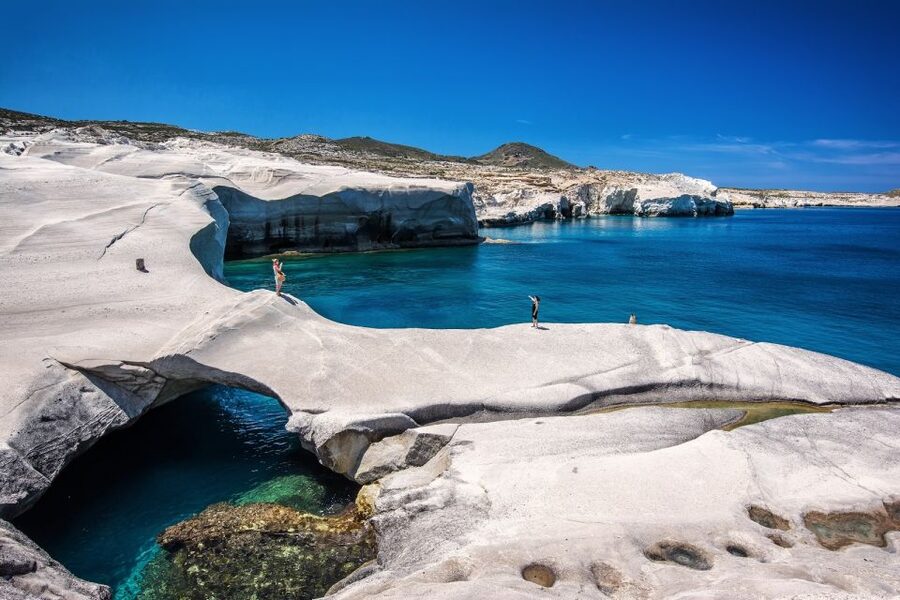
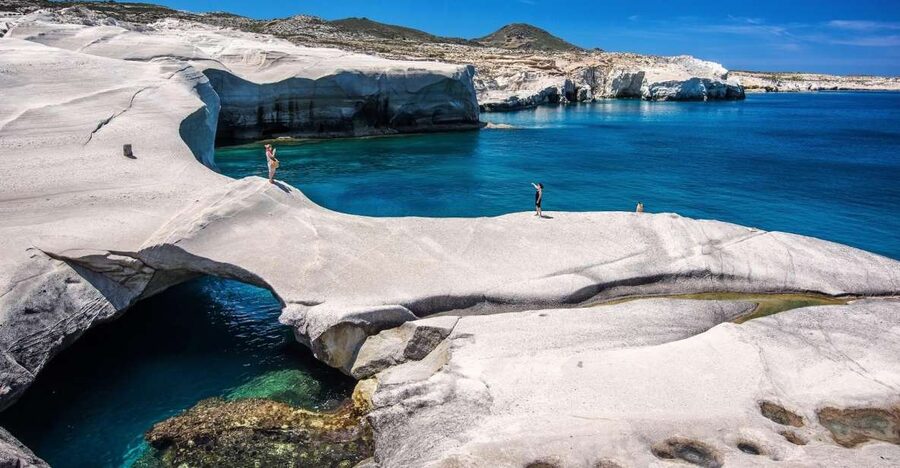
- Sarakiniko moonlike terrain plus time near the inlet for photos and a proper look down into the water
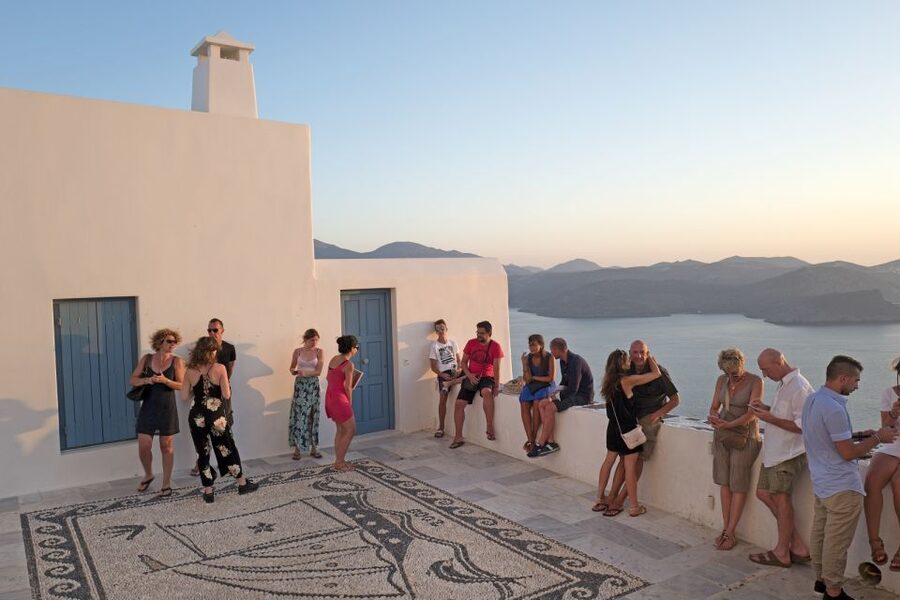
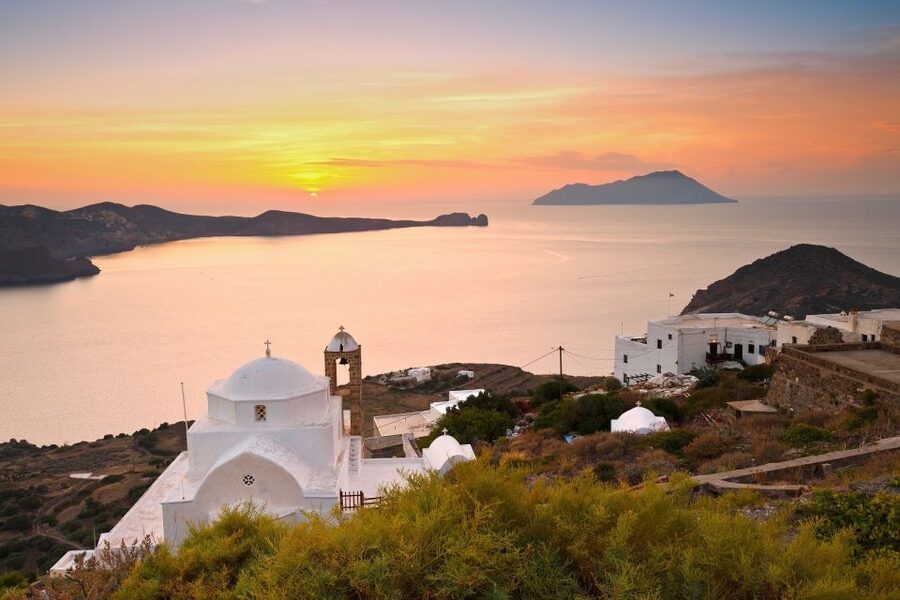
- Plaka cobbled streets and a sea-view veranda stop at Panagia Korfiatissa
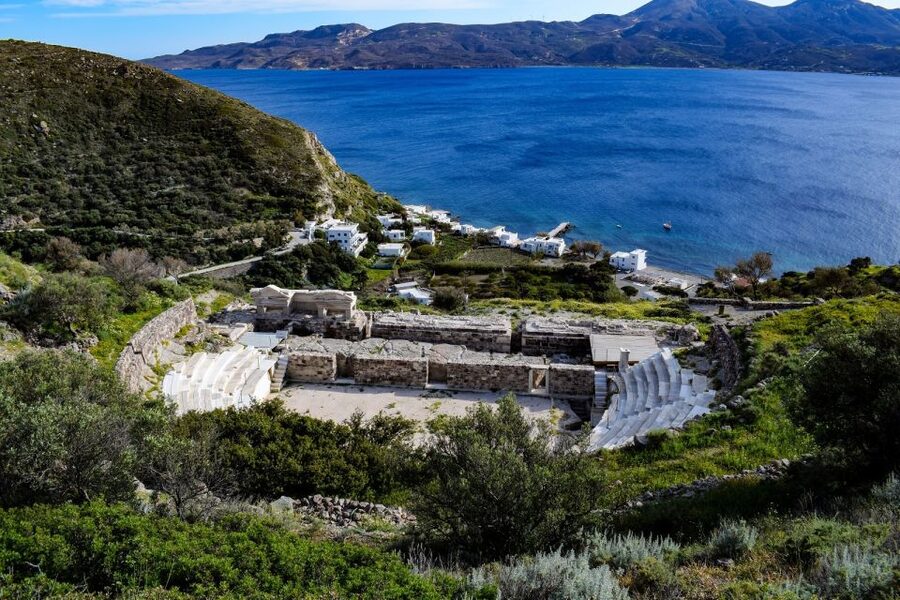
- Marble Roman Amphitheatre to round out the story, when Milos shifts from prehistory to classical era life
Why this Milos half-day archaeology tour works so well
A lot of Milos trips either go full beach day or full museum day. This one does a smarter combo in just 4 hours. You get the island’s “why” behind the views, not just the “what.”
The route is built around a simple idea: Milos is special because its geology helped shape where people settled, fished, and traded. When the guide explains how that plays out, the places stop feeling like disconnected postcards.
You’ll also appreciate the practical structure. Transportation is included, you get water, and the group stays moving between the island’s most recognizable sites.
Other ways to spend the day near Milos
- Adamas: Milos & Polyaigos Full-Day Sailboat Tour with Lunch
★ 4.9 · 1,646 reviews - Milos Small-Group Full-Day Cruise with Snorkelling and Lunch
★ 5.0 · 1,210 reviews - Adamas: Kleftiko Sailing Day Trip with Snorkeling and Lunch
★ 4.8 · 713 reviews
Papafragas volcanic pools, the perfect way to start
The tour begins at Papafragas, often described as the volcanic swimming pool. You’ll start by hanging around this striking cove, looking down into clear turquoise water and taking in the rock formations.
This first stop matters more than you might think. Milos can look like “just cliffs” from far away, but Papafragas shows the island’s volcanic personality up close. It sets the tone for the rest of the day, because the same geology that makes these inlets possible is part of why Milos mattered in antiquity.
One practical note: since you’re outdoors from the start, wear clothes you can move in and bring comfortable shoes. Even when you aren’t going for a long swim, you might want to get down to the viewpoints and edges for photos.
Phylakopi: seeing prehistory instead of just guessing it
Next comes Phylakopi, the prehistoric settlement on Milos that stayed active until 1000 BC. This is where the day turns from scenic to story-driven.
The value here is context. Without explanation, ruins can feel like random stone leftovers. With a guide, you understand why Phylakopi mattered for the Cyclades: it wasn’t a one-off camp, it was a functioning settlement for a long time.
I like that this stop doesn’t take over the whole day, which keeps the rest of the itinerary from feeling rushed. You get enough to connect the dots before the scenery takes over again at Sarakiniko.
Sarakiniko and the inlet walk where the photos come from

Then you head to Sarakiniko, famous for its moonlike terrain and the “most pictured” look across the Cyclades. If you’ve scrolled Milos photos before, you know the vibe. What you might not expect is how much texture you get up close, and how the shapes play with light.
You’ll take a walk down the inlet area, with time to experience the beach-like setting and take photos from angles you probably would not find alone. This is the part of the tour where your phone or camera will earn its keep.
A small caution: Sarakiniko’s surfaces can be uneven. That’s why the “comfortable shoes” instruction is not just generic advice. If you’re wearing slippery sandals, you’ll spend more energy watching your footing than enjoying the view.
A short hop away, these too:
- From Milos: Guided Day Cruise to Kleftiko With Lunch
★ 5.0 · 650 reviews - Milos: Half-Day Speedboat Cruise to Klefiko with Snorkeling
★ 4.9 · 572 reviews - Milos: Tsigrado and Gerakas Beach Kayaking Tour
★ 5.0 · 470 reviews - Best of Milos and Poliegos Catamaran snorkelling Cruise with BBQ
★ 5.0 · 460 reviews
Plaka’s cobbled lanes, and that sea-view veranda stop
From Sarakiniko, you travel along the northern coast toward Plaka, Milos’s capital area with its cobbled streets and narrow alleys. This section slows down the day on purpose. It’s less about geology now and more about human scale.
In Plaka, you get time to admire traditional architecture and you’ll stop for a sea view from the veranda of Panagia Korfiatissa. I like this because it gives you a break from sites that feel like they’re frozen in time. You get to see how Milos looks when people live there, not just when archaeologists do.
The pace here is often the “wander and breathe” portion. Even if you’ve only got a half day, it helps you reset your brain after Roman and prehistoric stops.
The marble Roman Amphitheatre: an unexpected chapter in the Milos story
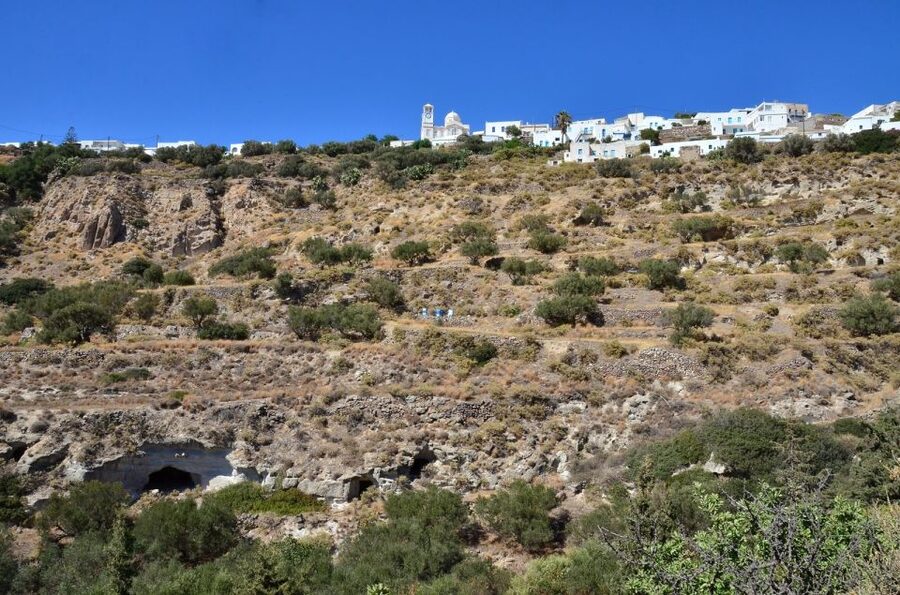
The final highlight is the marble Roman Amphitheatre. This stop can catch you off guard in a good way, because the earlier parts of the tour focus on volcanic coastlines and ancient prehistory. Then suddenly you’re looking at a classical-era structure.
That contrast is exactly why I like including it. Milos didn’t just have one era of importance. It kept changing roles as the centuries rolled forward, from prehistoric settlement life to later Mediterranean culture.
Also, because it’s a short tour, you’re not stuck for hours on one site. You see enough to appreciate the shift in time, then the day ends while you still feel energetic.
Price and value: what $103 gets you in practice
At $103 per person for 4 hours, the real value comes from what’s bundled and what’s not.
Included:
- Transportation
- English-speaking guide
- Map
- Water
Not included:
- Entrance fees
- Food or snacks
So here’s the practical way to think about it. You’re paying for a guide to connect the sites, plus a driver to get you between them without arranging your own transport. If you’re staying on Milos for a short window, that “save time and reduce stress” value can outweigh the cost difference versus self-driving.
You should also plan on a little extra money for entry fees and any meals you want. The tour isn’t trying to replace lunch. Some groups do stop for snacks or bakery items during the day, but don’t count on it as part of the price.
How the guide changes the whole feel of Milos
The biggest recurring theme is how much the guide matters to the experience. Many bookings mention guides who bring the island to life with a mix of stories, current-day details, and myth or folklore.
Names that show up in highly rated experiences include Marios, Giannis, Laura, Yannis, Janice, and Georgia. You’ll also see different styles, like a passionate deep focus on archaeology, or a more storytelling approach that connects Milos to the wider Aegean.
There’s one small human detail that I love because it shows how the day can feel personal: one guide-style is adding a local sweet stop, like a watermelon pie introduction. Even when you’re chasing famous sites, those touches help the day feel like a real day on Milos, not a checklist.
I also like the way guides handle pacing. Some bookings mention a pace that feels comfortable, plus occasional tailoring when time allows. If you have interests like geology or local life, it’s worth bringing them up at the start.
Group size, transport quality, and how the day flows
This tour is designed around easy movement between sites. Transportation is highly rated, with 93% of reviewers giving it a perfect score, and that matters because Milos roads can be twisty in places. A good driver also makes the journey feel less like “getting there” and more like part of the experience.
Group size can vary by season. In September, some people report a very small group that felt friendly and informal. Even when it’s not tiny, you’ll typically benefit from a guide who can answer questions without juggling a big crowd.
As for timing, the start time can shift, with one possible start at 13:30. If you’re juggling dinner plans that evening, keep your schedule flexible.
Walking comfort and what to pack for Sarakiniko and beyond
You’ll cover several different kinds of ground. Papafragas is a waterfront setting, Sarakiniko is rocky and uneven, Plaka has cobbles, and amphitheatre areas can include steps or irregular surfaces.
Bring:
- Comfortable shoes
- Comfortable clothes
And I’d add one personal tip based on how this itinerary “feels” in practice: plan on layers. Coastal wind can change quickly, and you’ll go from sunny coves to inland viewpoints. A light layer can save you.
Also, since food isn’t included, think about your energy. Water is provided, but you may want something small to tide you over, depending on whether your specific day includes a snack stop.
Who should book this Milos archaeology and culture tour
Book this if you want:
- A fast orientation to Milos highlights
- A guided explanation of how Phylakopi fits into Cycladic prehistory
- Iconic views without the stress of finding parking and juggling directions
- An all-in-one mix of geology, archaeology, and village streets
It’s also a great fit if you’re not planning to rent a car. Multiple bookings highlight how pickup and drop-off make it simple, especially if you’re staying in or near Plaka or along the coast.
Consider another format if you want:
- A very long beach day, because this is still a sightseeing route
- Only deep archaeology, because the itinerary is balanced and spread across several key stops
- Extra add-ons, because the 4-hour structure limits how many “extras” can fit
If you’re hoping for side stops like catacombs, one booking notes they were not included due to time. That’s a good reminder that this is a highlights route, not an everything-on-the-island route.
Should you book it? My straight answer
Yes, I’d book it if your goal is to understand Milos in a short window and see the places that define the island. The combination of Papafragas, Phylakopi, Sarakiniko, Plaka, and the marble Roman Amphitheatre creates a satisfying time-lapse of Milos life, from prehistoric settlement to later Mediterranean culture.
It’s also a solid value when you count the convenience: transportation, an English-speaking guide, water, and a map are included, and you don’t have to organize your own driving between dispersed sites.
Just go in with two expectations set: wear real shoes, and budget extra for entrance fees and food. If you do that, you’ll come away with both great photos and a clearer sense of what Milos is, beyond the postcard version.
FAQ
Where does the tour start?
The tour begins from Papafragas, described as the volcanic swimming pool. You will be told the exact pickup details by email.
What is the duration of the tour?
The tour lasts 4 hours.
What’s included in the price?
The price includes transportation, an English-speaking guide, a map, and water.
Are entrance fees included?
No. Entrance fees are not included.
Is lunch or snacks included?
No. Food or snacks are not included.
What should I bring?
Bring comfortable shoes and comfortable clothes.
Is the tour in English?
Yes. The tour guide speaks English.
What if I need to cancel?
You get free cancellation up to 24 hours in advance for a full refund.
Are children included?
Children under 2 can join for free.
Freshly listed near Milos
- ❖ Milos: Small Group Yacht Tour—Kleftiko Sarakiniko Poliegos★ 4.8 · 53 reviews
- Milos: Full-Day Kleftiko Poliegos Sailboat Tour with Lunch★ 4.8 · 111 reviews
- Milos: Self-Driving Boat Tour to Kleftiko★ 4.8 · 51 reviews
- Milos: Sea Kayaking Trip at Sunset with Snack★ 4.8 · 19 reviews
- Full Day Small-Group Cruise in Milos & Poliegos with Lunch★ 5.0 · 23 reviews
- Milos: Kleftiko Sunset Catamaran Cruise with Meal & Drinks★ 4.9 · 121 reviews
- Milos: Kleftiko Semi Private Sailing Cruise with Lunch★ 4.9 · 21 reviews
- Milos: Kleftiko Morning Catamaran Cruise with Lunch & Drinks★ 4.9 · 72 reviews
Milos Tours & Activities, compared.
Milos & Polyaigos Full-Day Sailboat Tour with Lunch
Read our review →
Milos Small-Group Full-Day Cruise with Snorkelling and Lunch
Read our review →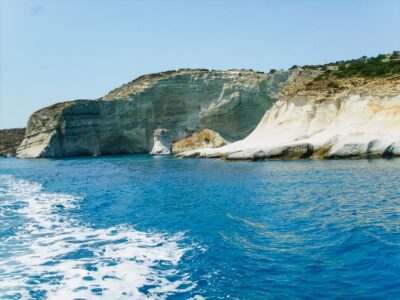
Kleftiko Sailing Day Trip with Snorkeling and Lunch
Read our review →
Half-Day Speedboat Cruise to Klefiko with Snorkeling
Read our review →
Best of Milos and Poliegos Catamaran snorkelling Cruise with BBQ
Read our review →
Browse the lists this tour appears in