
Reviewed · METEORA MONASTERY DAY TOURS
Meteora Tour: Monasteries, Lunch & Optional Athens Transfer
Meteora feels unreal, even from the van. I love the easy Kalambaka train-station pickup and drop-off, so you can use your time without wrestling with parking or driving. I also like the small-batch feel, with a max group size of 35, plus onboard comfort like air conditioning, Wi-Fi, and bottled water. The main drawback to plan for is that you pay monastery entrance fees on-site and you’ll climb stairs inside the sites, so comfortable clothing and shoes matter.
In This Review
- Key things I’d lock in before you go
- Kalabaka pickup and timing that actually works for a short stay
- The van ride: AC, Wi-Fi, and the comfort bonus you will notice
- First contact with Meteora: UNESCO cliffs, monasteries, and a different pace
- Great Meteoron Monastery: the big one that started a system
- Varlaam Monastery: a second anchor and a clearer view of the opposite rock
- Agia Triada and Saint Nicholas of Anapafsas: more steps, bigger payoff views
- Badovas hermit caves: where the quiet story continues
- Entrance fees, dress rules, and packing like you mean it
- Value for $36.28: what you’re paying for, and what you must budget too
- Who this Meteora tour suits best
- Should you book? My straight answer
- FAQ
- What time does the Meteora tour start and end?
- Where do I meet the guide and where do I get dropped off?
- How many monasteries do we visit inside?
- Are monastery entrance fees included in the price?
- What should I wear to enter the monasteries?
- Is food included, and is there bottled water?
Key things I’d lock in before you go
- Train-station convenience: the meeting point is right at Sidirodromikos Stathmos Kalampakas, with drop-off back there.
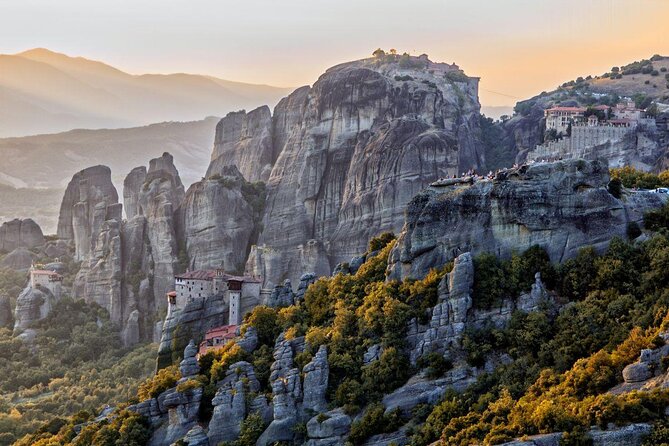
- Two monastery interiors plus caves: you’ll see major sites up on the rocks, and you’ll also visit the hermit caves of Badovas.
- Comfort while you travel: Mercedes Sprinter minivan, air conditioning, Wi-Fi, and bottled water are included.
- Time feels tight but fair: plan for about 45 minutes at each monastery stop, then a driving tour past other monasteries.
- Entrance fees are extra: Great Meteoron and Varlaam cost €5 each, plus €5 listed for Agios Stefanos.
Kalabaka pickup and timing that actually works for a short stay
Meteora is one of those places where “half-day” can sound too short until you see how much the setting demands. From Kalambaka, the rocks rise fast, roads wind, and the monasteries sit at the top of steep stairways. This tour is built for that reality, starting with pickup early afternoon and ending late afternoon, so you can still keep the rest of your day flexible.
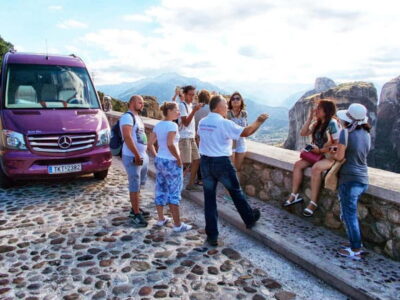
The biggest practical win is where the tour meets you. You’re not guessing at a hotel lobby. You go to the Kalampaka train station meeting point, and your guide and driver are waiting with a Mercedes Sprinter minivan. That reduces the stress factor a lot, especially if you’re arriving by train or you’re only spending one night in the area.
The schedule is roughly 5 hours total. Once you reach Meteora, you spend about 45 minutes at each monastery interior you enter, then you rejoin the van for an outside driving tour past other monasteries. If timing allows, the day may include a quick stop in Kalabaka town before the tour wraps.
If you’re trying to pack Meteora between trains or between a longer Greece itinerary day, this format is a strong fit.
More Meteora monastery days:
- Athens: Meteora Monasteries Day Trip with Caves and Lunch
★ 4.7 · 4,670 reviews - Thessaloniki: Full-Day Bus Trip to Meteora
★ 4.8 · 3,471 reviews - Athens to Meteora: Monasteries, Caves & Seaside Stopovers
★ 4.7 · 2,958 reviews
The van ride: AC, Wi-Fi, and the comfort bonus you will notice
This isn’t a cramped bus situation. The ride is in an air-conditioned Mercedes Sprinter minivan, and you get bottled water plus onboard Wi-Fi. For a place where you’ll be doing photos, stairs, and slow climbing, that small comfort matters. It keeps you from arriving hot and frazzled.
I also appreciate the operational polish. In at least one case, when air conditioning wasn’t working for someone, the provider swapped the vehicle quickly. That’s the kind of response that makes a tour feel trustworthy, even if weather or a vehicle issue shows up.
One more point: there’s a short viewpoint stop above Kalambaka on the way. It’s brief, but it helps you get oriented fast. Meteora is easier to understand once you’ve seen the rock formations from above before you start walking.
First contact with Meteora: UNESCO cliffs, monasteries, and a different pace
When you get to Meteora, the whole experience is less about museums and more about perspective. You’re stepping into UNESCO World Heritage territory where the culture is inseparable from the rock. The monasteries were built high on crags, so the environment is part of the story, not just a backdrop.
You’ll visit two monasteries up on the cliffs as part of the main stops. The guide explains how the monks used these remote, hard-to-reach spots for privacy and safety, and you’ll be able to tour the interiors rather than just viewing them from below. That matters because Meteora is visually dramatic from the road, but it becomes emotionally clearer when you see how people actually lived and prayed in these spaces.
Even if you’re not “religious,” the architecture, the stonework, and the way the day flows between viewing angles and stair climbs gives you a kind of calm focus. The whole place has a slow-motion feel. The tour plan respects that instead of rushing you like a checklist.
Great Meteoron Monastery: the big one that started a system
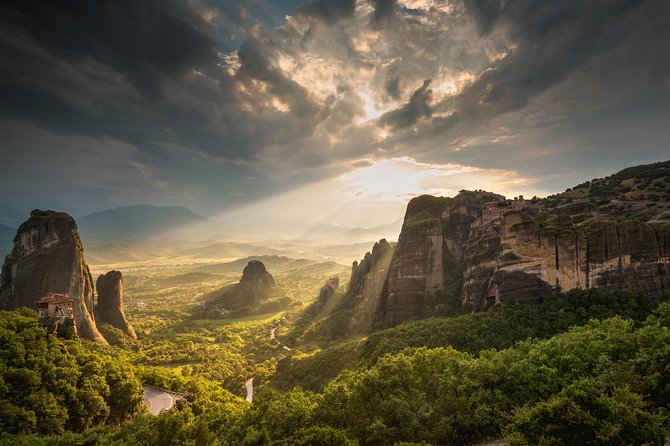
Great Meteoron is often the first name you hear for Meteora, and for good reason. It’s the biggest and oldest of the main monasteries, built on a gigantic rock formation that helped earn the area the name Meteoro, linked to the idea of something suspended in the air.
This stop is also a key “origin” moment. The monastery is associated with Saint Athanasios the Meteorite, described as the first founder and organizer of systematic monastic life in Holy Meteora. In other words, this isn’t just a pretty perch, it’s a cornerstone for how the tradition became structured.
Expect about one hour at Great Meteoron. That longer window versus a typical quick visit helps you absorb the inside details. You’ll still have to follow the route inside, and you should expect stairs and some uneven walking. If you like photography, aim to take a moment before you rush into interior viewing, because the lighting changes quickly with sun and cloud cover.
Entrance fee is not included for this monastery. It’s listed at €5 per person, paid on-site.
A short hop away, these too:
- Athens: Full-Day Meteora Tour with Local Guide & Greek Lunch
★ 4.8 · 2,101 reviews - Athens: Meteora Monasteries, Caves & Coastal Stopovers with Lunch
★ 4.5 · 1,432 reviews - Meteora Monasteries & Caves DayTrip from Athens with Greek Lunch
★ 4.5 · 879 reviews - From Athens: Delphi and Meteora 2-Day Guided Tour
★ 4.5 · 825 reviews
Varlaam Monastery: a second anchor and a clearer view of the opposite rock
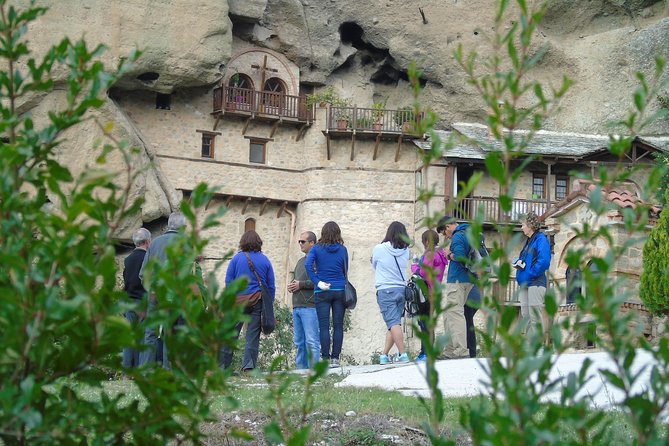
Varlaam is the monastery across from Great Meteoron, and that opposite arrangement is part of the magic. When you visit both, you start to understand Meteora as a conversation between rock platforms, not one isolated site.
Varlaam is described as the second biggest, founded in the mid 14th century by Hosios Varlaam. There’s also specific attention on the Catholicon, the main church, plus decorative programs. The tour information notes that the Catholicon honoring Agioi Pantes was built around 1541 to 1542, and the main church decorations were completed in 1548. You’ll also hear about a wall-painting attributed to a hagiographer from Thebes, Frago Catelano.
You’ll spend about 45 minutes here. That’s usually enough time to see the essentials, read along if you have the language skills, and still catch the scale of the interior. The key is to pace yourself. You’ve already climbed at least one set of stairs before you arrive, and you’ll be doing it again.
Entrance fee is not included for Varlaam either. It’s listed at €5 per person.
Agia Triada and Saint Nicholas of Anapafsas: more steps, bigger payoff views
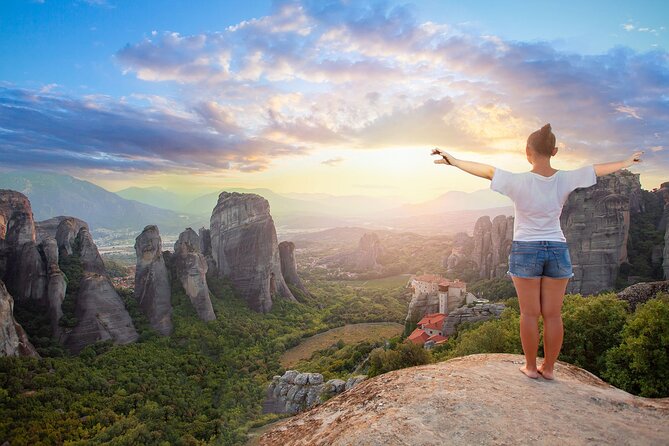
After the big anchor monasteries, the day shifts into a more climb-and-view rhythm. This is where you really earn those wide panoramic views.
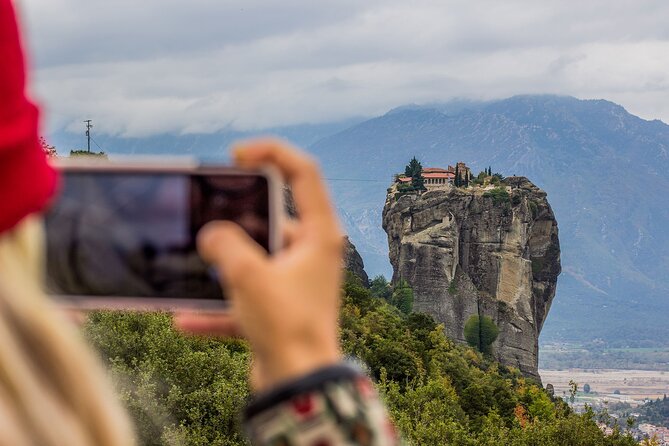
One stop is Holy Trinity Monastery (Agia Triada), described as one of the more difficult to reach. The approach involves a pathway up to the rock and then walking up about 140 steps. Once you’re there, the payoff is the surrounding view, which is part of why this stop sticks with people.
Agia Triada is mentioned as being organized as a monastery since 1362, referenced in a document by Symeon Uressis Palaeologos. Even if you don’t memorize dates, it helps to know you’re standing at a long-established site, not a quick viewing platform.
Another stop on the route is Holy Monastery of Saint Nicholas of Anapafsas. It’s described as the first monastery encountered on the way up, founded at the end of the 14th century. The name Anapafsas has multiple interpretations, including one idea that it came from a benefactor, and another idea that it served as a resting place for pilgrims who continued upward.
This section of the day is not about “more time.” It’s about the feeling. You get fewer minutes per stop than the flagship monasteries, but you gain variety and that strong sense of altitude.
A note on fees: the tour lists an entrance fee for Agios Stefanos at €5 per person. Since Agia Triada is described as close to Saint Stephen’s Nunnery, budget for possible on-site payment tied to that area, if you’re entering.
Badovas hermit caves: where the quiet story continues
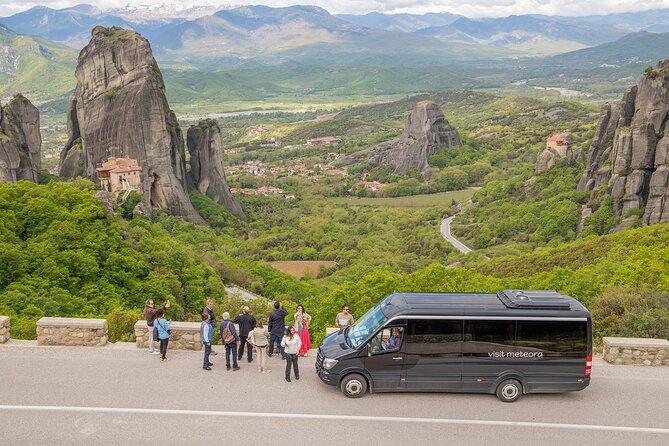
The tour also includes the hermit caves of Badovas. This part is easy to overlook when you’re dazzled by the monasteries. But it’s one of the best ways to understand why these rocks mattered so much.
Caves are a different type of spiritual geography. They highlight solitude and endurance, not community buildings. You’re still in the same rock world, but the scale and mood shift. Instead of ornate monastery interiors, you’re closer to the idea of life shaped by isolation.
Time here isn’t described with a specific minute count, but it is included as part of the overall experience alongside monastery visits. If you like a layered route, caves are a smart inclusion because they give your brain something new to picture.
Entrance fees, dress rules, and packing like you mean it
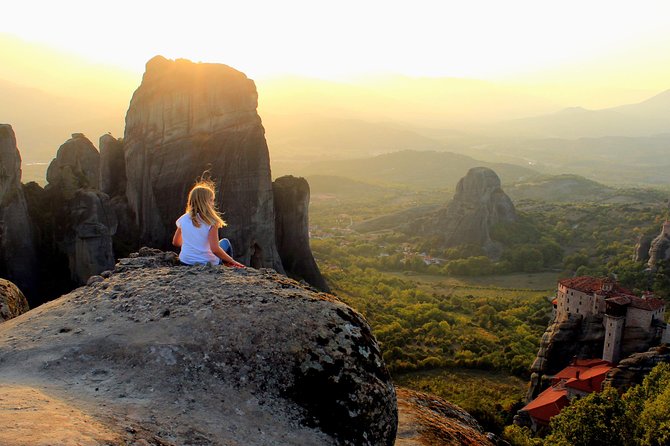
This is the part that can ruin a day if you ignore it. Monastery entrances have separate pricing, and the tour price is not all-in.
Included with the tour:
- Bottled water
- An English-speaking tour leader
- Wi-Fi on board
- Air-conditioned vehicle
- Visit inside 3 monasteries and the hermit caves
Not included:
- Train tickets
- Food and drinks unless specified
- Entrance fees: €5 for Great Meteoron, €5 for Varlaam, and €5 for Agios Stefanos (as listed)
So for money planning, add those on-site costs. If you’re doing math ahead of time, budget around €15 total based on the listed monastery fees. The exact amount could vary with what you enter that day, but it’s safer to plan for the listed fees.
Dress code is strict enough to matter:
- Ladies should not wear short skirts and must have long sleeves
- Men are not allowed to wear shorts
The good news is you can solve this fast with a light layer, a scarf, or a thin long-sleeve top. The practical takeaway is to pack for stairs and for respectful clothing at the same time.
Footwear matters too. Even if the tour is “just” a half-day, monasteries mean stairs. Bring shoes with grip. If your plan includes sandals, think again.
Also, bring a small amount of cash or card readiness for entrance fees, and keep your phone charged, because the viewpoint stops and cliff views will tempt you into constant picture-taking.
Value for $36.28: what you’re paying for, and what you must budget too
At about $36.28 per person, this tour sits in the “good deal for a structured day” zone. You’re paying for transport, guide interpretation, and a route that covers multiple major sites without needing a car.
Here’s where value shows up:
- You don’t drive: parking and road navigation around Meteora is not what you want to think about mid-trip.
- You get inside access: touring monastery interiors is where the experience gains depth.
- You get added context: the guide connects the monasteries to monastic organization and the rock-based setting.
Here’s what to budget that can change the final cost:
- Entrance fees for monasteries are extra
- Food is not included unless a specific option states it
- You might want extra snacks or a drink to keep energy up between stops, especially with stairs
For many people, the final experience will be well worth it. For others, the key friction point is dress rules and extra entrance fees. If you can handle stairs, and you’re okay paying a few euros on-site, the tour format is a strong use of time.
Who this Meteora tour suits best
This is a great match if you:
- Are using Kalambaka as your base and want Meteora without renting a car
- Have a short window, like a train schedule or one afternoon before heading onward
- Want a guided, organized route that still gives you time to look and photograph
- Like the combination of monasteries plus a quieter angle with hermit caves
It may be less ideal if you:
- Need a language other than English for the full tour. The tour is offered in English, and language mismatch can be frustrating if you expected something else.
- Have limited mobility or struggle with stairs. You’ll face steps inside monasteries and the Agia Triada stop includes an approach with about 140 steps.
If you’re flexible and prepared, this tour makes Meteora feel reachable.
Should you book? My straight answer
Yes, book it if you want a stress-free Meteora day that hits the major monasteries without wasting time figuring out logistics. The station pickup is easy, the van ride is comfortable, and you’ll see more than just cliff views. The included guide explanations and the hermit caves help the day feel rounded.
Don’t book it blindly if you’re not ready for entrance fees on-site, tight dress rules, and stair climbing. Read up on what you’ll need to wear, and plan your budget for those listed monastery entrances.
If you get the essentials right, this is one of the best ways to see Meteora in a short time, with comfort and a route that actually makes sense.
FAQ
What time does the Meteora tour start and end?
The tour starts in the early afternoon when you pick up at the Kalambaka train station and ends back at the same meeting point in the late afternoon, with a total duration of about 5 hours.
Where do I meet the guide and where do I get dropped off?
You meet at Sidirodromikos Stathmos Kalampakas, Kalabaka 422 00, Greece. The tour ends back at the same meeting point.
How many monasteries do we visit inside?
The tour includes visits inside 3 monasteries, plus the hermit caves of Badovas.
Are monastery entrance fees included in the price?
No. Entrance fees are listed as not included, including €5 for Great Meteoron Monastery, €5 for Varlaam Monastery, and €5 for Agios Stefanos.
What should I wear to enter the monasteries?
You need appropriate clothing. Ladies should not wear short skirts and must have long sleeves. Men are not allowed to wear shorts.
Is food included, and is there bottled water?
Bottled water is included. Food and drinks are not included unless specified.
Freshly listed near Meteora
- Majestic Sunset Meteora Tour with Local Guide★ 5.0 · 237 reviews
- Meteora: Morning Half Day Sightseeing and Monasteries Tour★ 5.0 · 165 reviews
- Secret Caves of Meteora – Sunset Hike★ 5.0 · 29 reviews
- Sunset Meteora Tour on E-Bike★ 5.0 · 46 reviews
- Private Tour: Meteora Tour with Transport from Kalambaka★ 5.0 · 50 reviews
- Sunset Meteora Private Photography Tour★ 5.0 · 20 reviews
- Sunset Meteora Photo Tour★ 5.0 · 19 reviews
- Meteora Rafting Day Trip with Pick up from Kastraki, Kalambaka, Trikala★ 5.0 · 22 reviews
Meteora Monastery Day Tours, compared.
Meteora Monasteries Day Trip with Caves and Lunch
Read our review →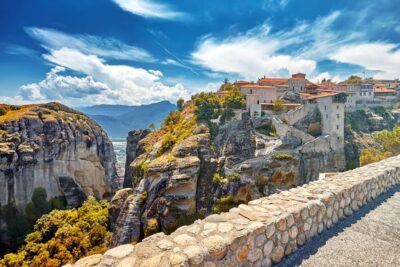
Athens to Meteora: Monasteries, Caves & Seaside Stopovers
Read our review →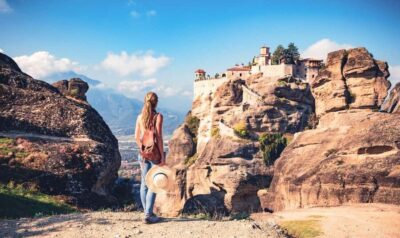
Full-Day Meteora Tour with Local Guide & Greek Lunch
Read our review →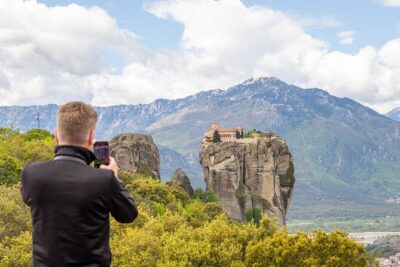
Meteora Monasteries, Caves & Coastal Stopovers with Lunch
Read our review →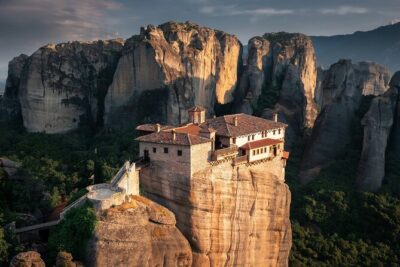
Meteora Monasteries & Caves DayTrip from Athens with Greek Lunch
Read our review →
4-Day Classical Greece Tour: Epidaurus, Mycenae, Olympia, Delphi, Meteora
Read our review →Browse the lists this tour appears in