
Reviewed · METEORA MONASTERY DAY TOURS
Meteora Monasteries Half-Day Small Group Tour with Transport
Meteora starts with a cliffside first impression. This half-day small-group tour in Meteora works like a smart shortcut: you get transport, photo viewpoints, and three UNESCO monasteries inside with an English-speaking guide to make the art and setting click fast.
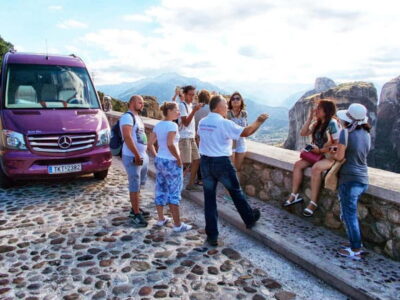
Two things I really like: the small group size (up to 18) keeps the pace human, and the route includes built-in photo stops along the way so you are not just hustling from door to door. I also appreciate that you’re not left guessing, the guide frames what you are seeing, while the driver handles getting you up and around the rock roads.
One consideration: the big, physical part is the stairs, and the visit includes entrance fees for the monasteries you go inside, so your final cost is more than the base $36.30. Also, the dress code is strict enough that you’ll want to plan what you wear.
In This Review
- Key highlights to know before you go
- Getting to Meteora without the headache
- The story begins before the monastery steps
- Roussanou Monastery: accessible, damaged, and still alive
- Varlaam Monastery: big scale and standout art
- Great Meteoron Monastery: the classic suspended-in-air feeling
- The monasteries you see outside: Agia Triada and Agios Stephanos
- How the guide turns stones into context (and how photo help fits in)
- Practical tips that keep the day smooth
- Price and logistics: is $36.30 a good deal?
- Should you book this Meteora half-day tour?
- FAQ
- How long is the Meteora Monasteries half-day tour?
- Do I get pickup and drop-off?
- Which monasteries are visited inside?
- Are entrance fees included in the price?
- What languages are available?
- What should I wear and bring?
Key highlights to know before you go
- A half-day plan that actually fits real life: about 4 hours, starting at 9:00 am, with hotel pickup in Kalambaka or Kastraki.
- Three interiors, with the rest from outside: you see multiple monasteries up close, but only go inside three.
- English local guide plus free audio for other languages: English is live, and additional languages are handled via smart audio.
- Photo-friendly pacing: stops are scheduled, and many people love having help with getting good shots.
- Cash matters for entrances: some monasteries do not accept credit cards, and fees are not included.
Getting to Meteora without the headache
If you are staying in Kalambaka or Kastraki, this tour makes the day feel easy. Pickup and drop-off are included, starting from hotels and Airbnbs in those villages, and you’ll be on the road shortly after the 9:00 am start time. That matters here because Meteora is not something you want to navigate on your own the first morning you’re in town.
The tour also keeps things comfortable in small but noticeable ways. You get bottled water, free WiFi on board, and an English local guide who handles the story while the driver focuses on getting everyone safely up the steep roads.
Why I like this setup: it lets you spend your energy on the rocks and the monasteries, not on logistics. Meteora is gorgeous, but it’s also vertical and full of stone steps. Anything that reduces friction makes the whole experience better.
More Meteora monastery days:
- Athens: Meteora Monasteries Day Trip with Caves and Lunch
★ 4.7 · 4,670 reviews - Thessaloniki: Full-Day Bus Trip to Meteora
★ 4.8 · 3,471 reviews - Athens to Meteora: Monasteries, Caves & Seaside Stopovers
★ 4.7 · 2,958 reviews
The story begins before the monastery steps
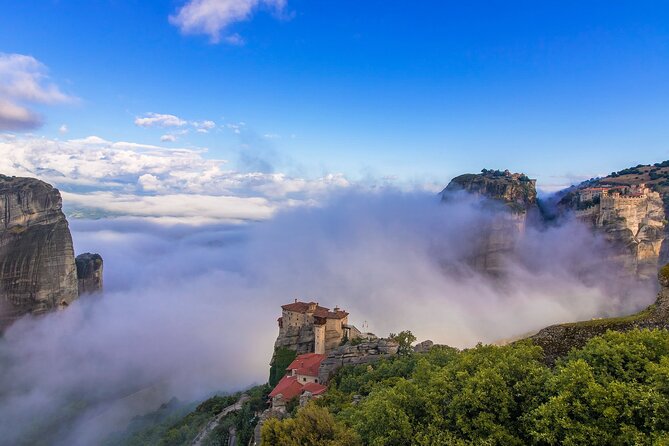
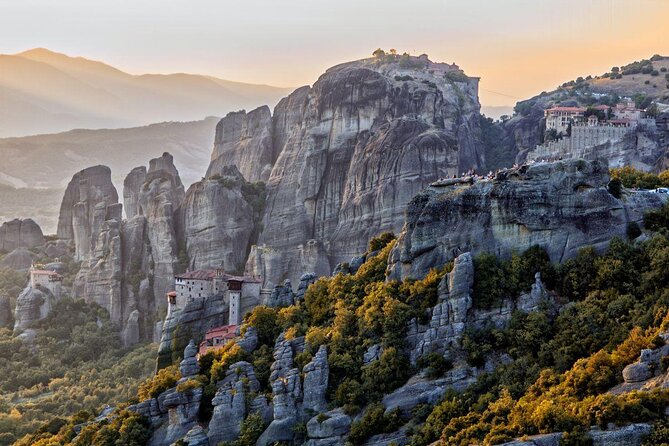
Your route starts with the classic Meteora feel, rocks first, monastery silhouettes second. You’ll learn how the monasteries took shape across the 14th to 16th centuries, when Orthodox monastic life flourished here and monasteries were established high above the plains. The area is officially recognized both as UNESCO World Heritage and as a Natura 2000 Ecological Zone, which adds an extra layer to what you see on the rocks.
One of the early stops on the way is the Holy Monastery of Saint Nicholas of Anapafsas. You’ll hear why its name is interpreted in a couple of ways, including the idea that it was the first monastery encountered on the route up, acting like a resting point for pilgrims and visitors continuing further.
This first section is also where the guide helps you start looking in the right direction. Instead of only admiring the views, you learn what to notice, rock formation, monastery placement, and why these locations made monastic life both safer and more isolated.
Roussanou Monastery: accessible, damaged, and still alive
Roussanou is one of the easier interiors on the route, and that accessibility changes the whole vibe. Compared to other sites, it sits on a rock with a lower elevation, so you spend less time feeling like you are climbing straight upward just to get a look.
Inside, the main cathedral dates to the late 1500s, and later decoration followed. The monastery’s story also includes a hard chapter, it suffered severe damage during World War II. Later, it became a convent in 1988, which gives you a sense that Meteora isn’t only a museum in the sky, it’s still part of living religious life.
Your time here is about 45 minutes, and that’s enough to take in the big visual moments without feeling rushed. The guide usually helps tie details together, so you come away understanding what makes Roussanou different rather than just ticking off another monastery.
Entrance note: the entrance fee for Roussanou is listed as €5.00 per booking, and it is not included in the base price.
Varlaam Monastery: big scale and standout art
If Roussanou is the “easier” climb, Varlaam is the one that feels grand. It is described as the second biggest monastery, and it sits opposite the Great Meteoron monastery. That positioning is a big clue for what makes Meteora so visually dramatic, several monasteries essentially face each other across the rock valleys.
The foundation traces to the mid-1300s, connected with Hosios Varlaam. What you’re really going to notice inside is the main church, the Catholicon, built in 1541-1542 and decorated later in 1548. The guide may point out that the wall-painting is attributed to Frago Catelano, a hagiographer linked to Thebes. Even if art details are not your thing, that sort of specific dating makes the place feel real and grounded.
Your visit time is again around 45 minutes. That’s enough to walk, look carefully, and also to remember to step back for views when the guide suggests it.
Entrance note: Varlaam’s entrance fee is listed as €5.00 per booking, also not included.
A short hop away, these too:
- Athens: Full-Day Meteora Tour with Local Guide & Greek Lunch
★ 4.8 · 2,101 reviews - Athens: Meteora Monasteries, Caves & Coastal Stopovers with Lunch
★ 4.5 · 1,432 reviews - Meteora Monasteries & Caves DayTrip from Athens with Greek Lunch
★ 4.5 · 879 reviews - From Athens: Delphi and Meteora 2-Day Guided Tour
★ 4.5 · 825 reviews
Great Meteoron Monastery: the classic suspended-in-air feeling
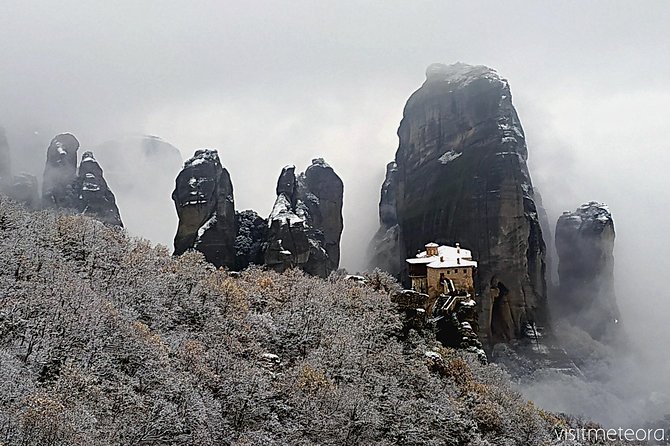
Great Meteoron is the star most people picture when they think of Meteora. It is the biggest and oldest monastery, and it’s called the one that was “suspended in the air,” because of how it sits on a towering rock formation.
You’ll hear the origin story too. The monastery is linked to Saint Athanasios the Meteorite, credited as the first founder and organizer of systematic koenovion, which is basically the structured monastic life model. In other words, this is not just a place for wandering pilgrims, it’s where organized monastic rhythm took hold in Meteora.
Your time here is longer than the other interiors, about 1 hour. That extra time helps because Great Meteoron has a lot to take in, inside architecture, religious space, and the sheer scale of the complex.
Entrance note: the entrance fee for Great Meteoron is listed as €5.00 per person, and it is not included in the base price.
The monasteries you see outside: Agia Triada and Agios Stephanos
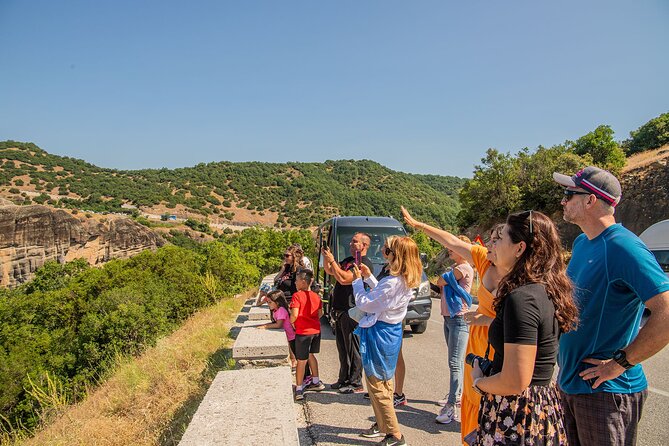
Not every monastery is an inside stop on this half-day tour, but you do get the key contrasts.
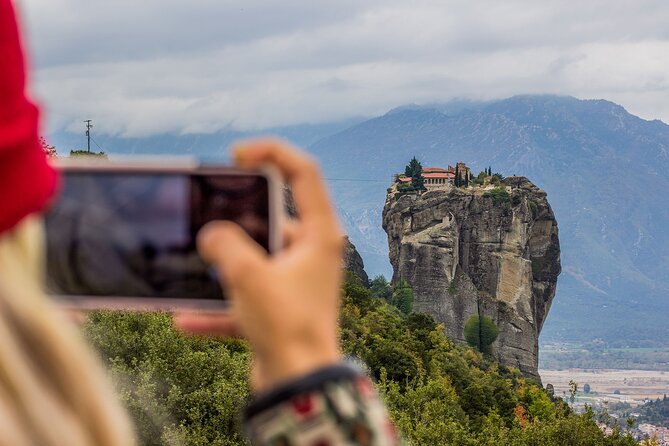
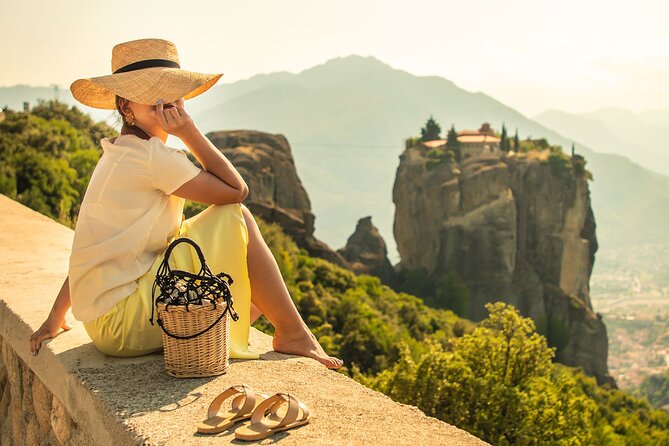
One exterior focus is the Holy Trinity Monastery, also called Agia Triada. It’s described as the most difficult to reach. Once you get to the top, the panoramic view is called captivating. The path involves a route that starts at the foot of the rock and then a steep climb of about 140 steps. Even if you’re not going inside here, it’s a strong reminder of what made Meteora both challenging and worth it to the monastic communities.
The other exterior focus is the Holy Monastery of Agios Stephanos, often considered the most accessible. The big difference is practical: you cross a small bridge to reach the entrance, instead of climbing steps right away. That can make a real difference for your comfort level, especially if you’re comparing Meteora options.
This outside portion is valuable because it widens your understanding. If you only visit inside three monasteries, Meteora can feel like a short list. Seeing the others from outside gives you the bigger map of the site and helps you understand why the rocks are studded with monasteries.
How the guide turns stones into context (and how photo help fits in)
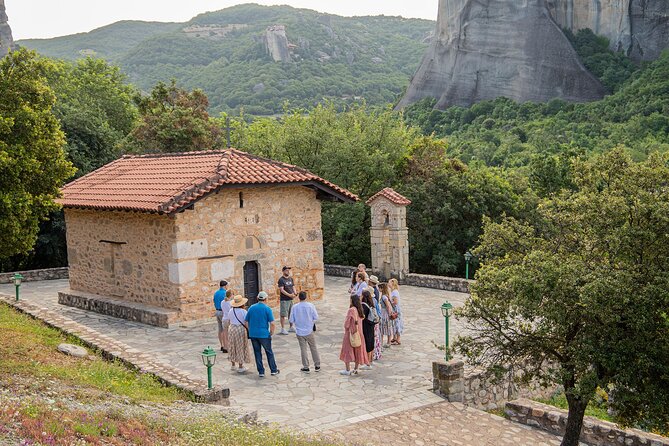
This is the kind of tour where the guide can make a noticeable difference, and the reviews make that clear with repeated praise for specific names and approaches. Apostolis is one guide people remember for being enthusiastic and for explaining what he loves about the area and the monasteries. Jim is another local guide who’s described as passionate and full of details. People also mention guides like Vasilis and Vaggelis for being friendly, humorous, and for sharing context tied to what you see.
Even when art isn’t your main interest, a good guide helps you interpret the monastery placement, the timeline of building and decoration, and the meaning of things like cathedrals, wall art, and manuscripts being preserved in museum spaces (where available).
There’s also a practical side. Several people note that the driver and guide help with photos, which matters if you’re traveling with just one person or you are trying to avoid awkward self-timer shots on uneven stone paths.
One more practical note: the tour is guided in English only. If you need another language, you’ll have access to a free smart audio guide in multiple languages.
Practical tips that keep the day smooth
Meteora has rules, and knowing them early saves you from last-minute stress.
First: dress code. Men must wear trousers and long sleeves. Women must wear a long skirt. If you show up in shorts, trousers and skirts are provided, so you are not stuck, but it’s still smart to plan ahead.
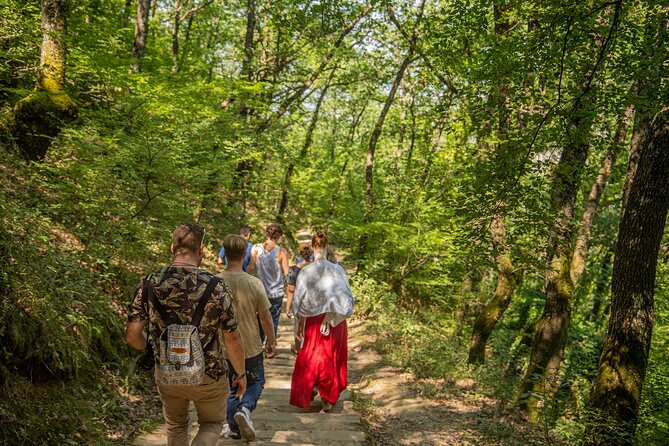
Second: comfortable shoes. The sites involve real walking and stairs. Even if you feel fit, the climb can be tiring in the sun. Bring shoes you trust on stone.
Third: cash for entrance fees. Entrance fees are not included, and the guidance also warns that some monasteries do not accept credit cards. The entrance fees listed are:
- Great Meteoron: €5.00 per person
- Roussanou: €5.00 per booking
- Varlaam: €5.00 per booking
Fourth: timing. This is a morning-start tour, and that can help you see Meteora earlier in the day. One recurring theme in feedback is that going in the morning reduces crowd pressure and gives you more breathing room for photos.
Finally: if you have mobility concerns, keep the route design in mind. Agios Stephanos is described as the most accessible because of the bridge approach, and one review also mentioned the company handling a mobility problem. If you are concerned, tell the operator ahead of time so they can set expectations.
Price and logistics: is $36.30 a good deal?
At $36.30 per person, the base price is mostly paying for the experience design: pickup and drop-off from Kalambaka or Kastraki, bottled water, WiFi, a local English guide, and transport to viewpoints and walking segments.
The part to budget for separately is entrances. Since you go inside three monasteries and the entrance fees are listed at €5.00 for each of those inside stops (Great Meteoron, Roussanou, Varlaam), you should plan on an extra total of €15.00 in entrance fees for those three interiors, plus any exchanges based on your currency and timing.
So is it worth it? For most people, yes, because you are not just paying for doors you walk through. You are paying for the guide to connect the art and architecture to the bigger Meteora story, and you are paying to avoid the hassle of getting between scattered viewpoints on your own.
Also, the small group size matters here. Up to 18 people is not huge, and the schedule still works like a half-day, not a full-day marathon.
Should you book this Meteora half-day tour?
I’d book this tour if you want the best first taste of Meteora in limited time. It’s built for people who want three interior monasteries, plus the wider picture from outside, without spending all day on stairs and transport.
I would think twice if you want a very slow, ultra-deep study of one single monastery, or if you have strict mobility limits and expect step-free access everywhere. This tour includes stairs and a strict dress code, and the route includes at least one exterior monastery reachable via a steep climb of about 140 steps.
If your goal is a balanced Meteora morning, with a local English guide, planned photo stops, and an efficient route that makes sense, this is a solid fit. Get your cash ready for entrances, wear shoes you trust, and let the guide help you see why these monasteries became a whole world of faith perched above Greece.
FAQ
How long is the Meteora Monasteries half-day tour?
It’s listed as about 4 hours.
Do I get pickup and drop-off?
Yes. Pickup and drop-off are included for hotels and Airbnbs located in Kalambaka or Kastraki.
Which monasteries are visited inside?
The tour includes visits inside 3 monasteries: Roussanou, Varlaam, and Great Meteoron.
Are entrance fees included in the price?
No. Entrance fees are not included. Great Meteoron is €5.00 per person, and Roussanou and Varlaam are €5.00 per booking.
What languages are available?
The tour is guided in English only. A free smart audio guide is also offered in multiple languages.
What should I wear and bring?
Wear comfortable shoes. The monasteries require men to wear long sleeves and trousers, and women to wear a long skirt (if you wear shorts or the wrong clothing, trousers or skirts are provided). Bring cash for entrance fees. Bottled water is included.
Freshly listed near Meteora
- Meteora: Morning Half Day Sightseeing and Monasteries Tour★ 5.0 · 165 reviews
- Majestic Sunset Meteora Tour with Local Guide★ 5.0 · 237 reviews
- Secret Caves of Meteora – Sunset Hike★ 5.0 · 29 reviews
- Sunset Meteora Tour on E-Bike★ 5.0 · 46 reviews
- Private Tour: Meteora Tour with Transport from Kalambaka★ 5.0 · 50 reviews
- Sunset Meteora Private Photography Tour★ 5.0 · 20 reviews
- Sunset Meteora Photo Tour★ 5.0 · 19 reviews
- Meteora Rafting Day Trip with Pick up from Kastraki, Kalambaka, Trikala★ 5.0 · 22 reviews
Meteora Monastery Day Tours, compared.
Meteora Monasteries Day Trip with Caves and Lunch
Read our review →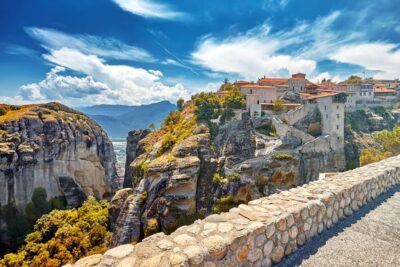
Athens to Meteora: Monasteries, Caves & Seaside Stopovers
Read our review →
Full-Day Meteora Tour with Local Guide & Greek Lunch
Read our review →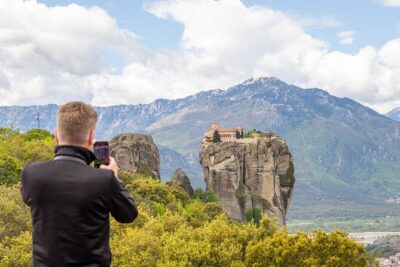
Meteora Monasteries, Caves & Coastal Stopovers with Lunch
Read our review →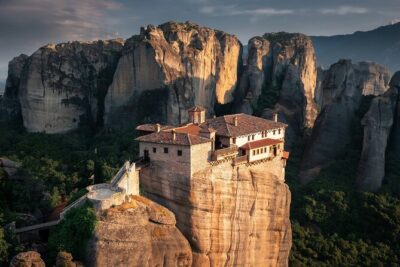
Meteora Monasteries & Caves DayTrip from Athens with Greek Lunch
Read our review →
4-Day Classical Greece Tour: Epidaurus, Mycenae, Olympia, Delphi, Meteora
Read our review →Browse the lists this tour appears in