
Reviewed · MYCENAE & EPIDAURUS DAY TRIPS
Full Day Biblical Ancient Corinth Canal Mycenae Epidauvro Nafplio
Roman bema, Mycenae walls, Nafplio steps.
This full-day route is interesting because it stitches together Bible-era Corinth and the Bronze Age power of Mycenae, then finishes with big views from Nafplio’s forts. I love the private, air-conditioned car pickup that makes the day feel efficient and comfortable, and I also like how the stops point you toward specific stories, not just random ruins. One drawback to plan for: entrance fees are not included, and Palamidi’s climb is real, with locals joking about 999 steps.
You’ll spend a long day moving through standout ancient sites, museums, and fortress viewpoints, with an expert English-speaking driver handling the historical storytelling from the vehicle and at each stop. The overall pace is designed so you can see a lot without feeling like you’re sprinting the whole time, but you’ll still want good walking shoes.
In This Review
- Key Things I’d Prioritize Before You Go
- Price and Logistics: A Long Day, Done in Comfort
- Corinth Canal: The Shortcut That Finally Happened
- Kenchreai and the Bible Port of Paul’s Second Journey
- Ancient Corinth: The Bema, Gallio, and a City That Worked
- Temple of Apollo and Acrocorinth: The Views and the Power Position
- Mycenae: Cyclopean Walls, Lion Gate, and the Tomb of Agamemnon
- Nafplio’s Palamidi Steps and the Venetian Fortress Finale
- Bourtzi, Acronauplia, and the Lion of the Bavarians
- Time on the Road: How the Car Makes or Breaks a Day
- Should You Book This Private Peloponnese Tour?
- FAQ
- How long is the tour?
- Where does the tour start and end?
- What languages are offered?
- Is transportation included?
- Is it a private tour?
- Are entrance fees included?
- Do I need a licensed guide inside the archaeological sites?
- Is lunch included?
- Do you offer pickup from hotels and the port?
- What if the weather is bad?
Key Things I’d Prioritize Before You Go
- Corinth Canal as a quick reality check on why this shortcut mattered for ships for 2,000 years
- Kenchreai and Paul context at a Bible-connected port site (including the hair-cut vow detail)
- Bema and Gallio focus so Ancient Corinth connects to familiar names
- Acrocorinth for “from up high” perspective over the isthmus and the Peloponnese
- Mycenae’s visual hits: Cyclopean walls, Lion Gate, and the Treasury of Atreus
- Nafplio’s fort-and-island finale with Palamidi views plus Bourtzi by boat
Price and Logistics: A Long Day, Done in Comfort
At $277.09 per person for a 9 to 10 hour day, this tour sits in the mid-to-upper range for Athens departures. The value isn’t just the driving, it’s that you get a full-day structure across multiple regions without the stress of buses, changing timetables, and figuring out how to chain stops yourself.
The ride is part of the deal: you’ll be in a modern, first-class private vehicle with WiFi, A/C, and bottled water. Group size matters too. If you’re 1 to 3 people, you’ll ride in a sedan. If you’re 4 to 7, it’s a comfortable mini van. Either way, the day feels built around your comfort because you’re not sharing logistics with strangers.
Entrance fees are not included, and that’s the one cost surprise to budget for ahead of time. Also, a licensed guide to accompany you inside archaeological sites is not included, so your driver provides the history, but you should expect some areas to be mostly self-guided once you’re inside.
If you’re truly picky about privacy, read the fine print carefully and confirm the exact setup before departure. One review raised a concern about strict “private” expectations. Most reviews praise the service, but it’s worth clarifying so you start the day relaxed.
Other ways to spend the day near Athens
- From Athens: Ancient Corinth Day Trip with Canal & VR Guide
★ 4.6 · 1,073 reviews - Private Biblical Tour Ancient Corinth & Isthmus Canal from Athens
★ 5.0 · 762 reviews - Athens: Ancient Corinth & Nafplio Full Day Trip with Swim
★ 4.8 · 531 reviews
Corinth Canal: The Shortcut That Finally Happened
Your day begins at the Corinth Canal, a narrow waterway linking the Gulf of Corinth to the Saronic Gulf. This is one of those stops that feels small on the map but huge in its consequences.
The canal separates mainland Greece from the Peloponnese, which turns it into a shortcut for ships. Before the canal existed, vessels had to circle the Peloponnese, adding about 185 nautical miles to the journey. That’s not trivia. It’s the reason this waterway mattered across centuries of trade and travel.
You’ll also hear the longer backstory, including the idea that Periander, tyrant of Corinth (around 602 BC), imagined cutting through the isthmus. Because the tools of the era weren’t enough for a canal, he built the diolkos, a stone road that let ships be hauled on wheeled platforms. Standing here, you can almost see how engineering dreams take a very long time.
Plan for a quick stop rather than a long wander. The canal is best as a photo, a few minutes to orient yourself, then you move on while the day is fresh.
Kenchreai and the Bible Port of Paul’s Second Journey
Next up is the Corinthia Region, specifically Kechries, a village named for the ancient port town Kenchreai (Cenchreae). This stop is short, but it’s a useful one if you want the Bible locations to feel grounded in real geography.
Why it matters: the Bible mentions Paul stopping here during his second missionary journey. In Acts 18:18, he has his hair cut to fulfill a vow, often discussed in connection with a Nazirite-style vow. If you’re the type who likes to connect scripture to places you can point at, this is your moment.
Since the itinerary lists it as free admission, this is also an easy win cost-wise. The tradeoff is time. With only about 15 minutes, you won’t turn this into a deep study. You’ll get the context, see the spot, and keep going.
If you want to remember it later, take one slow look around first, then let the driver’s explanation do the heavy lifting.
Ancient Corinth: The Bema, Gallio, and a City That Worked
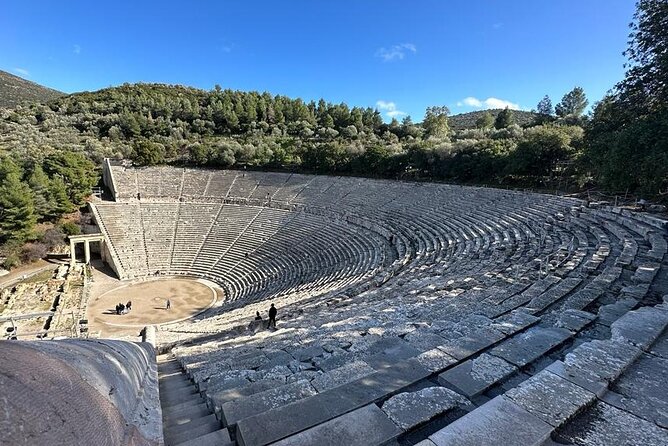
Ancient Corinth is where the tour starts feeling like a story, not just a list of ruins.
You’ll spend time near the Roman Forum area where the Bema is traditionally identified as the place connected to Paul’s trial before the proconsul Gallio (Lucius Junius Gallio Annaeanus). The tradition says Gallio refused to judge what he considered a religious dispute among Jews. Even if you treat tradition cautiously, the point for your visit is clear: this spot is tied to a specific set of names and events.
The itinerary then connects that idea to the Agora and Roman civic space. The Agora is described as a rectangular area with central shops, smaller temples, and an altar setting, with the famous Bema podium. This helps you understand how public life and religion blended in Roman Corinth.
You’ll also visit the Archaeological Museum of Corinth (time is short). The museum exists to present findings from nearby excavations. It’s not a full-day museum stop, so use it like a visual primer. Look for anything that matches what you’ll see outside, because that makes the ruins click.
What to watch: some stops list entrances as not included and time blocks are tight. Go in with the mindset of getting the big picture. If you want extra time inside buildings, ask your driver whether you can adjust the order.
A short hop away, these too:
- Athens: Acropolis & up to 5 Archaeological Sites Combo Pass
★ 4.2 · 13,904 reviews - Athens: Acropolis, Parthenon & Acropolis Museum Guided Tour
★ 4.8 · 9,316 reviews - The Acropolis, Parthenon & Acropolis Museum Guided Tour
★ 4.7 · 8,493 reviews - Athens: Cape Sounion & Poseidon Temple Sunset Half-Day Trip
★ 4.8 · 8,241 reviews
Temple of Apollo and Acrocorinth: The Views and the Power Position
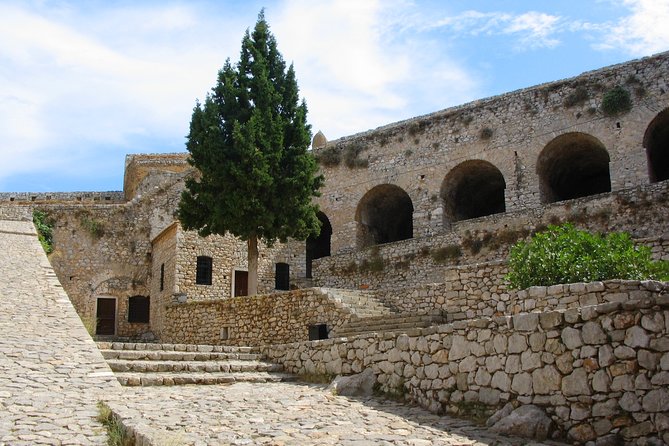
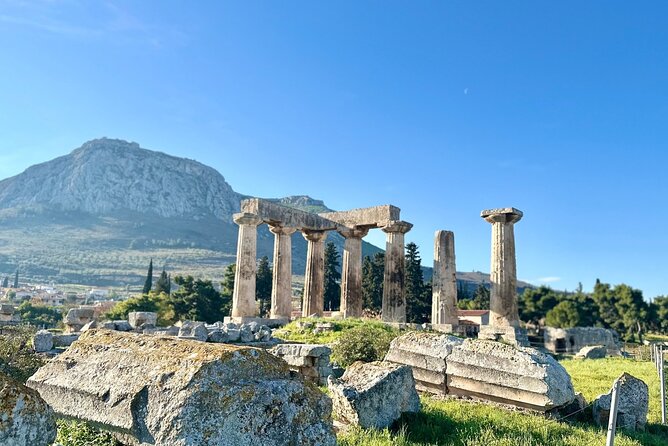
The Temple of Apollo in Corinth is one of the early Doric temples in the region, built in the 6th century BC. You won’t get long here, but even a quick stop helps you place Ancient Corinth in the wider Greek world of temples and civic identity.
Then you’ll head to Acrocorinth, the hilltop acropolis overlooking the city and the isthmus. Acrocorinth feels like Corinth’s final boss. It’s a monolithic rock with fortifications, repeatedly used as a last-line defense because it controlled movement into the Peloponnese.
This is the kind of stop that changes how you see everything else. From up here, you can connect ancient geography to real strategy. The isthmus isn’t just a strip of land anymore. It becomes a chokepoint.
Even if you’re not climbing relentlessly, you’ll want time to scan the horizon and orient yourself. Wear sun protection, and keep water in mind even though bottled water is provided in the car.
Mycenae: Cyclopean Walls, Lion Gate, and the Tomb of Agamemnon
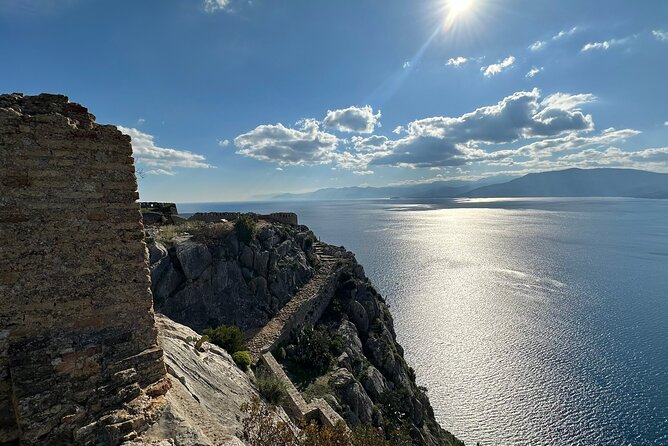
Mycenae is the most visually dramatic part of the day, and it gets an hour-plus to do it justice.
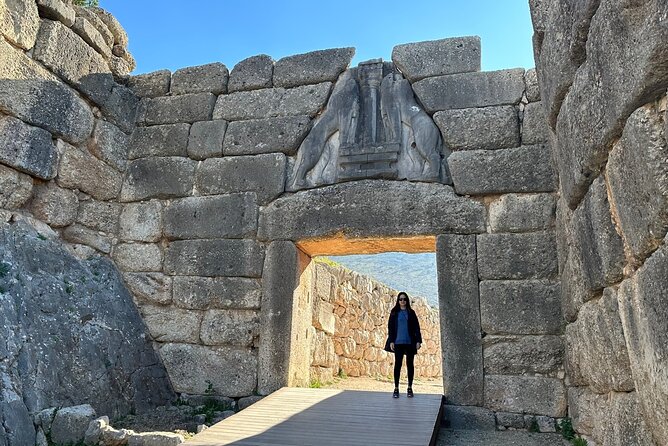
You’ll visit the fortified citadel, seat of the legendary King Agamemnon, plus famous landmarks such as the Tomb of Clytemnestra, the Cyclopean walls, and the Lion Gate. This is Bronze Age Greece in stone form, with massive walls that give you instant scale.
What I like about the way Mycenae is handled here is that it’s not just “look at rocks.” The itinerary frames the site as the center of the Mycenaean civilization, a major power in the second millennium BC, with a peak population cited around 1350 BC. That context helps you understand why the architecture is built to last.
Next comes the Lion Gate, the main entrance with the relief of lionesses above the opening. The itinerary notes it as the sole surviving monumental piece of Mycenaean sculpture, and also the biggest prehistory Aegean relief that remained visible.
Then you’ll spend time at the Archaeological Museum of Ancient Mycenae, which supports what you’re seeing outside. Use this as a way to decode the site while it’s fresh.
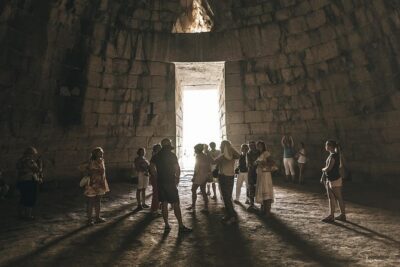
The big finale at Mycenae is the Citadel and Treasury of Atreus, also known as the Tomb of Agamemnon. It’s a beehive-shaped tholos tomb on Panagitsa Hill, with a legendary lintel weight cited at about 120 tons. Even if you only get a short look, the sheer engineering idea lands fast.
Nafplio’s Palamidi Steps and the Venetian Fortress Finale
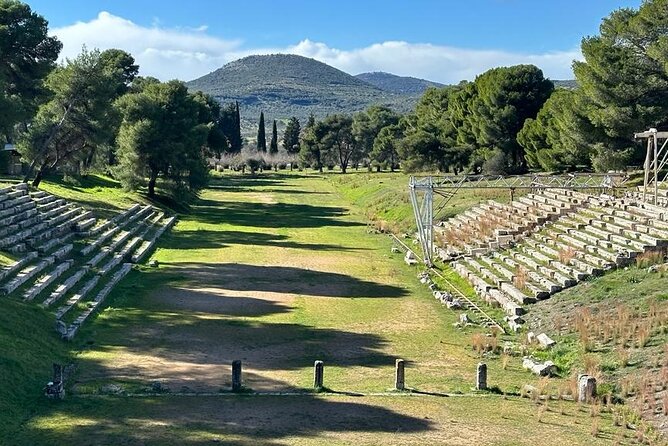
After Mycenae, the day shifts from Bronze Age power to Venetian-era strength and modern-day charm.
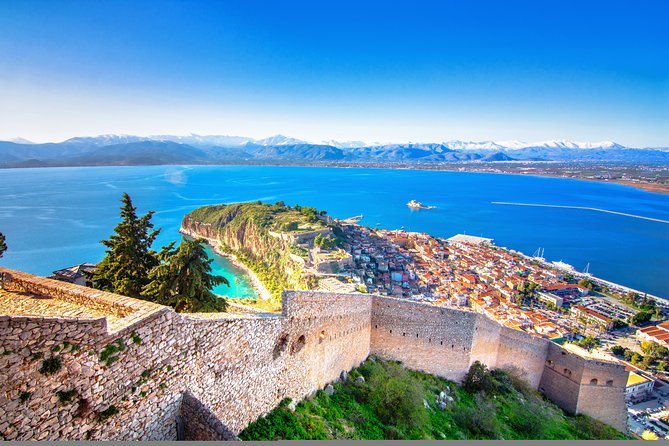
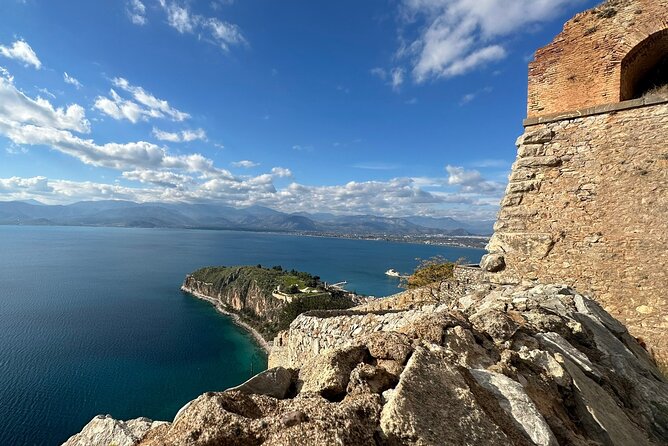
Palamidi Castle is a fortress above Nafplio, built by the Venetians during their second occupation (1686 to 1715). The reason you’re there is the view and the walk. The route up includes 913 steps from town, with locals joking about 999 steps to the top.
You’ll get a reasonable window to reach viewpoints and take photos, but don’t treat this as a casual stroll. Wear shoes with grip, and go steady. If you need breaks, ask your driver and they can help you pace it.
Then comes Nafplio itself, with a stop in the Old Town. This is where the day becomes more human: cobbled streets, doll-like mansions, flowered balconies, and constant reminders that the city once served as the capital of Greece until 1834. The itinerary notes a lunch stop at a traditional tavern by the sea, with lunch cost not included, so plan to pay for your own meal.
If you want a quick win in Nafplio, Syntagma Square is your mental anchor. It’s described as the center of the old town and the starting point for your wander.
Bourtzi, Acronauplia, and the Lion of the Bavarians
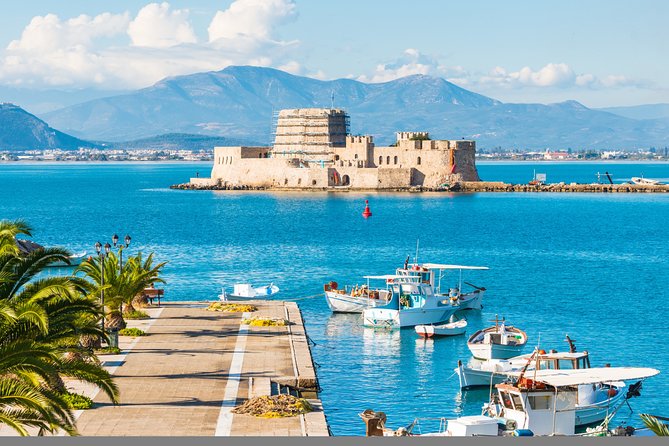
Bourtzi is the postcard fortress on a small islet, built by the Venetians in 1473 and later used as a prison. Today it’s a setting people associate with sunset photos. The itinerary notes you reach it in under 10 minutes by boat, and you’ll have about an hour for this stop.
From there, you move to Acronauplia Fortress, the oldest part of Nafplio. It’s transformed by Venetians and Franks into part of the fortifications, and later used as a prison before tourism-focused development. Even with limited time, you’ll get a sense of how Nafplio’s defenses shaped the city layout.
You’ll also visit the Lion of the Bavarians, a huge carved lion above Michael Iatrou Street. It’s tied to Bavarian soldiers who died in Nafplio in 1833 of a typhoid epidemic, commissioned as a memorial. Locals have their own unofficial nickname for the monument, connected to how people explain what caused the deaths.
This is a good example of why you might choose this tour. You’re not just looking at old stones. You’re hearing local meaning attached to those stones.
Time on the Road: How the Car Makes or Breaks a Day
A day like this lives and dies by logistics. Since you’re leaving Athens and hopping between the Corinth area, Mycenae, and Nafplio, having a private driver matters.
The vehicle is described with WiFi, A/C, and bottled water. Those are not luxury details when you’re spending hours on the road. They keep you comfortable so you can stay focused once you step outside.
The itinerary is built with short stop lengths in many places, which means your driver’s role is important. In the reviews, drivers like Gianny, Chris, Yiannes, Ioannis, Costas, Costas, Michael, and Dimitrios are praised for making history make sense and for being flexible with timing and pacing.
Still, note the practical limits: many archaeological sites are not designed for long lingering. So the best strategy is to prioritize what you personally care about most, then use the driver to help you see it in context.
Should You Book This Private Peloponnese Tour?
Book it if you want a single day that hits Ancient Corinth, Mycenae, and Nafplio with a private driver and clear historical storytelling. It’s especially good for Bible-and-ancient-history fans who like tying names to real places, and for couples or small groups who want comfort without juggling transit.
Consider passing or at least managing expectations if you:
- expect entrance fees to be included, they are not
- want a licensed museum or site guide walking you inside every stop, that is not included
- are extremely sensitive to strict privacy, since one review flagged a dispute about what private meant
One last practical note: this experience needs good weather. If weather is questionable, you might get a different date or a full refund.
If that matches your style, this is a strong way to turn a day outside Athens into a proper sequence of ancient Greece, with a rewarding view-based finish.
FAQ
How long is the tour?
It runs about 9 to 10 hours.
Where does the tour start and end?
It picks you up in Athens (hotel, Airbnb, or port) and ends back at the meeting point.
What languages are offered?
The tour is offered in English.
Is transportation included?
Yes. You get private transportation in a modern vehicle with WiFi, A/C, and bottled water.
Is it a private tour?
Yes, it is described as a private tour where only your group participates.
Are entrance fees included?
No. Entrance fees for the attractions are not included.
Do I need a licensed guide inside the archaeological sites?
A licensed guide to accompany you into archaeological sites is not included.
Is lunch included?
Meal costs are not included. Lunch stops are scheduled, but you pay for your own meal.
Do you offer pickup from hotels and the port?
Yes. Pickup is offered from Athens hotels, Airbnb residences, or the port, with the driver meeting you at the lobby or gate as described.
What if the weather is bad?
This experience requires good weather. If canceled due to poor weather, you will be offered a different date or a full refund.
More Mycenae & Epidaurus Day Trips in Athens
- From Athens: Small-Group Mycenae, Epidaurus & Nafplio Trip
★ 4.8 · 2,805 reviews - From Athens: Mycenae, Epidaurus & Nafplio Full-Day Tour
★ 4.5 · 2,530 reviews - Mycenae, Epidaurus and Nafplio Tour from Athens
★ 4.6 · 2,201 reviews - 4-Day Classical Greece Tour: Epidaurus, Mycenae, Olympia, Delphi, Meteora
★ 4.5 · 732 reviews
Freshly listed near Athens
- Athens: Premium Guided E-Scooter Tour in Acropolis Area★ 5.0 · 133 reviews
- Athens: Wine Workshop Create your Own Wine under the Acropolis★ 5.0 · 77 reviews
- Ceramic and Pottery Creative Workshop with Two Local Artists★ 4.0 · 57 reviews
- Private Tour and Tasting at Zeginis Winery★ 5.0 · 18 reviews
- Athens: Greek Wines Tasting with Sommelier and Acropolis Views★ 5.0 · 88 reviews
- Private Day Trip to Nafplio from Athens★ 5.0 · 20 reviews
- Athens Old City Private Photoshoot Tour / 2 hrs★ 5.0 · 109 reviews
- Greek food and wine tasting★ 5.0 · 18 reviews
Mycenae & Epidaurus Day Trips, compared.
Small-Group Mycenae, Epidaurus & Nafplio Trip
Read our review →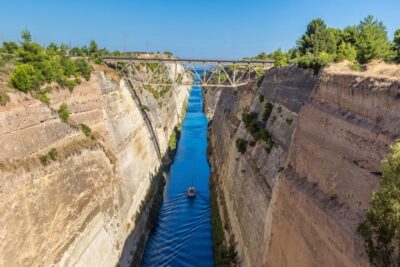
Mycenae, Epidaurus and Nafplio Tour from Athens
Read our review →
4-Day Classical Greece Tour: Epidaurus, Mycenae, Olympia, Delphi, Meteora
Read our review →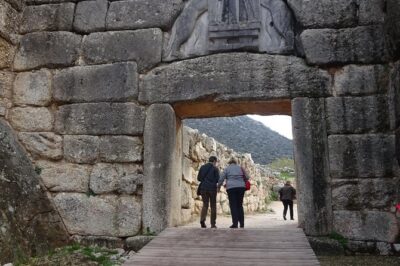
Mycenae and Nafplion Day Trip from Athens with Official guide
Read our review →
3-Day Classical Greece Tour: Epidaurus, Mycenae, Nafplion, Olympia, Delphi
Read our review →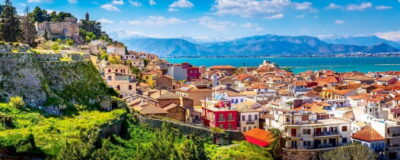
Corinth Canal, Mycenae & Nafplio Premium Guided Tour
Read our review →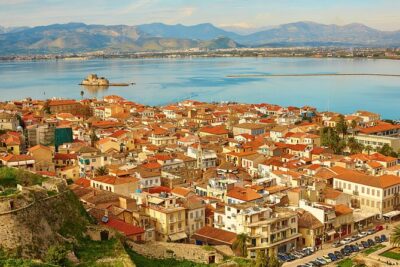
Mycenae, Epidaurus & Nafplio Full-Day V.R audio guided Tour
Read our review →Browse the lists this tour appears in