Reviewed · ATHENS TOURS & ACTIVITIES
Biblical Tour Letters ToThe Corinthians St Paul’s Footsteps 6Hour
Corinth feels close to Paul’s letters. This half-day plus trip is a practical way to connect Corinth and Acts with the real ground you read about, without turning your day into a logistics puzzle. I like that you ride in an air-conditioned private minivan with Wi-Fi and bottled water, and I also like how the route links spiritual moments to specific stops, from Mars Hill area preaching to the Corinth bema.
One thing to plan for: not all site entry is included, and Greek rules mean the driver can explain outside most archaeological areas but may not accompany you inside. So budget a little extra time and money for entrances like Ancient Corinth and Isthmia, and consider adding a licensed guide if you want someone inside the museums and sites.
In This Review
- Key highlights worth your attention
- Why Corinthia fits a 6-hour Paul tour
- Pickup, private minivan comfort, and real-life convenience
- Areopagus Hill and the Unknown God moment
- Daphni Monastery: Byzantine mosaics with ancient layers underneath
- Corinth Canal: the shipping shortcut dream made real
- Isthmia, the museum stop, and what the games would have felt like
- Corinth’s Agora and the bema where Paul addressed people
- Kechreai (Kenchreai) and how Phoebe enters the picture
- St. Paul’s Church in Corinth, plus Apollo’s Temple stop
- Entrance fees and optional licensed guides, so you do not get surprised
- Best fit for your travel style, and when another plan might work better
- Should you book this Footsteps of Paul tour?
- FAQ
- How long is the tour?
- Where does the tour pick up and drop off?
- What’s included in the price?
- What entrance fees should I expect to pay separately?
- Can the driver go inside archaeological sites with me?
- Is there an option to add a licensed guide inside the sites?
- Are meals included?
- Is this tour good for cruise passengers?
- What happens if weather is bad?
Key highlights worth your attention
- Small-group feel (2 to 6 people) in a luxury minivan, with pickup and drop-off at your exact starting point
- Paul-centered storytelling built around the Unknown God moment and the bema connection in Corinth
- Comfort upgrades on the road like A/C, bottled water, and onboard Wi-Fi, plus help with luggage storage
- Daphni Monastery visit, tied to Byzantine art and mosaics near an ancient temple footprint
- Isthmia and the games world at the Temple of Poseidon complex, stadium area, and surrounding sanctuary spaces
- Cruise-friendly timing, with a plan that prioritizes getting you back to your ship
Why Corinthia fits a 6-hour Paul tour
This is the kind of outing that works because it’s focused. You’re not trying to cover every ruin in Greece. You’re doing the part that matters for the New Testament story: Paul’s route, the places that show up in Acts and the letters, and the archaeology that explains how people lived around the Mediterranean 2,000 years ago.
I like the pacing because it respects what most people need on a day trip. You get comfortable travel time in a private vehicle, then short visits to major anchors where the guide can set context fast. After that, you still get moments to look around on your own, which is the difference between collecting photos and actually feeling the place.
If you want Athens proper museums and broad city wandering, this is not that. If you want Paul’s world to snap into focus, this is a strong match.
Other ways to spend the day near Athens
- Athens: Acropolis & up to 5 Archaeological Sites Combo Pass
★ 4.2 · 13,904 reviews - Athens: Acropolis, Parthenon & Acropolis Museum Guided Tour
★ 4.8 · 9,316 reviews - The Acropolis, Parthenon & Acropolis Museum Guided Tour
★ 4.7 · 8,493 reviews
Pickup, private minivan comfort, and real-life convenience
You start with hotel, Airbnb, or cruise port pickup, then you end back where you started. That sounds basic, but it matters a lot in Athens when traffic and distance can eat your schedule. This tour is built around not losing time to transfers and station-hopping.
The vehicle is a premium minivan with A/C, and it comes with Wi-Fi plus bottled water. Luggage storage is also mentioned, so you are not juggling bags while you’re trying to enjoy stops. For cruise passengers especially, the tour emphasizes timely return to the ship.
Group size is kept small. The description points to an intimate setup, with only your group participating. That means your driver can answer questions and adjust pacing when the day gets tight.
Areopagus Hill and the Unknown God moment
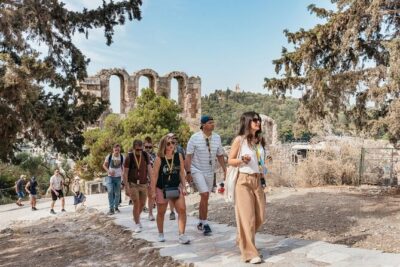
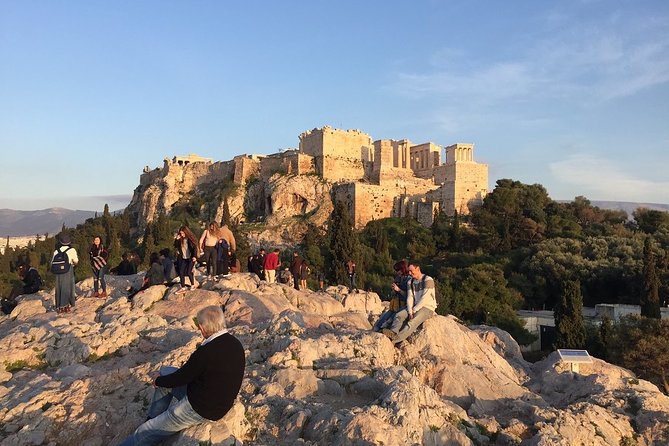
Areopagus Hill is where your Paul story gets its dramatic setup. This stop focuses on the Holy Rock of the Acropolis area, specifically Aeropagus Hill, where Paul delivered one of his most famous speeches to Athenians about the Unknown God.
Even if you’ve read that passage a dozen times, this is one of the parts of Greece where you start to feel the contrast between a philosophical city and a Christian message. You’re looking at a setting that helps explain why Paul’s speech could connect with people thinking in categories like gods, meaning, and worship.
Practical note: this stop is short, about 15 minutes. The value here is not long wandering. The value is hearing the context and then seeing the view area and nearby context with the guide’s framing in your head.
Admission for this stop is included, so you avoid one more line item.
Daphni Monastery: Byzantine mosaics with ancient layers underneath
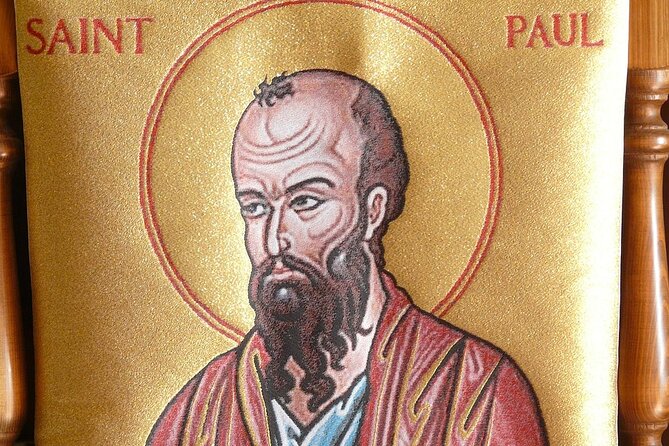
Next comes the Monastery of Daphni on the slopes of Mount Aigaleo. This is a major Byzantine monument, and the interesting part is the layering. The site is described as built on the footprint of an Ancient Temple of Apollo, with likely connections to the sanctuary area of Daphneion Apollo.
You also get the story of how the complex shifted over centuries, from use by Cistercian monks during the Frankish period to Orthodox control after the Ottoman conquest. Damage from earthquakes is part of the history, along with major restoration efforts that preserve its artistic and spiritual legacy, especially mosaics.
This stop is about 20 minutes. That’s enough to appreciate what makes Daphni different from a quick viewpoint, without turning the day into a slow museum crawl.
Admission is included here too, which is helpful because you’ll likely pay elsewhere later.
A short hop away, these too:
- Athens: Cape Sounion & Poseidon Temple Sunset Half-Day Trip
★ 4.8 · 8,241 reviews - Acropolis: Premium Acropolis and Parthenon Guided Tour
★ 4.8 · 5,208 reviews - Athens: Mythology of Delphi, Museum and Arachova Guided Tour
★ 4.7 · 5,102 reviews - All Day Cruise -3 Islands to Agistri,Moni, Aegina with lunch and drinks included
★ 5.0 · 4,958 reviews
Corinth Canal: the shipping shortcut dream made real
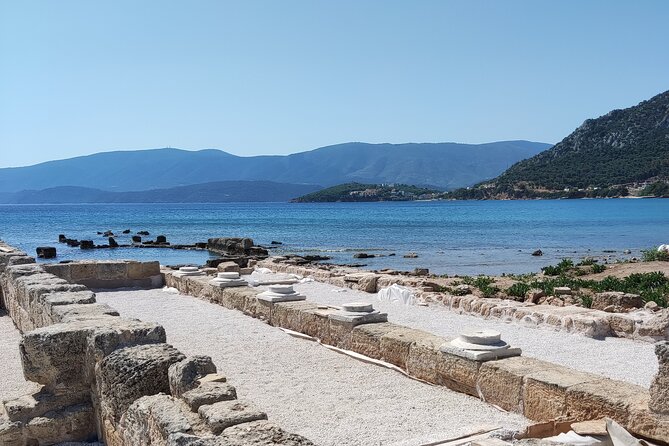
Then you hit Corinth Canal, a waterway that slices across the narrow isthmus to link the Gulf of Corinth to the Saronic Gulf. In plain terms, it separates mainland Greece from the Peloponnese like an island, and it explains why ancient shipping mattered so much.
What I like about this stop for a Paul tour is the way it connects the ancient geography to human ambition. The idea of cutting through here is described as a 2,000-year dream. Before the canal, ships had to circle the Peloponnese, adding a long detour.
It even includes the backstory about Periander and the diolkos, a stone road where ships were transferred on wheeled platforms. You’re not just looking at a modern feature, you’re seeing the result of problems ancient people tried to solve.
Admission is free for this stop, and the visit time is about 20 minutes. Treat it as a quick reset, stretch stop, and photo moment before the heavier archaeology begins.
Isthmia, the museum stop, and what the games would have felt like
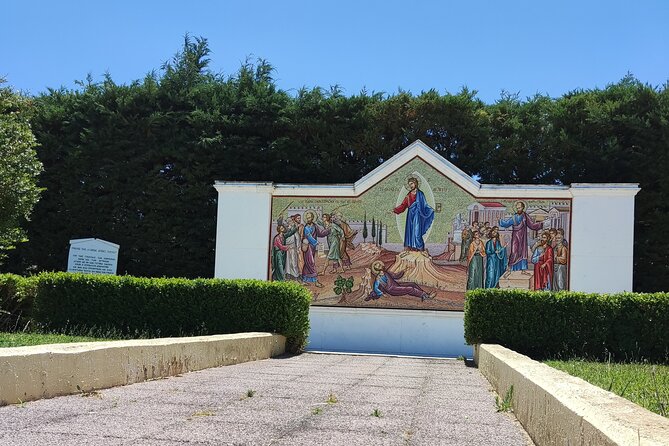
The tour spends time around the Isthmia area, where the ancient games world lived. Isthmia is described as a major technical and cultural site, with the Isthmians competitions among the most important in the ancient world after the Olympics.
Paul’s connection is highlighted here, and it matters because it’s the first official presence of a Christian at these games, according to the way the story is explained during the tour. The guide frames Paul working as a tent maker for visitors and athletes, so you’re not only seeing architecture, you’re visualizing how people arrived, stayed, watched, and talked.
There’s also a separate stop at the Archaeological Museum of Isthmia, about 20 minutes. That matters if you want object-level detail. The information you’re given includes items like colored glass sections from Kechreon, an Imperial statue type of Zeus, a musical portrait stele, and votive offerings like a golden bull. Admission for this museum is not included, so plan on that cost if you want to go in rather than just look around the outside areas.
For the big site viewing, you’ll also see major parts of Isthmia like the Temple of Poseidon and Amphitrite area, the stadium, and the Sanctuary of Palaimon. A theater stop is included too, with notes about mosaics involving sea imagery like an octopus and Nereis on a Triton.
Some of these pieces of information are very specific and very visual. That’s exactly what makes this section hit. If you like archaeology, you’ll enjoy how the tour turns the remains into a coherent “what happened here” story.
Entrance fees for the Isthmia archaeological area are mentioned as €5 per person, while some museum components are not included, so check what you’ll enter.
Corinth’s Agora and the bema where Paul addressed people
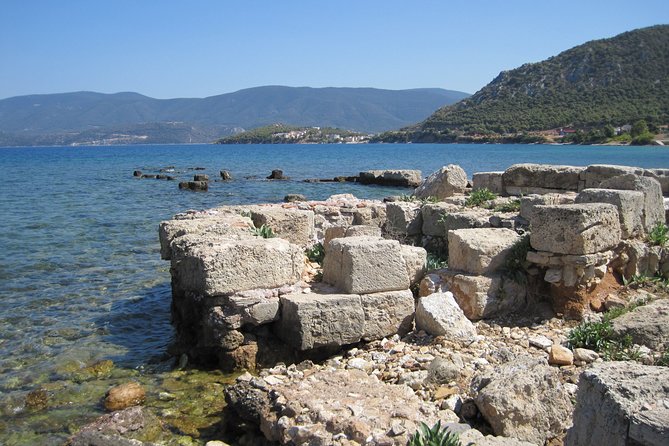
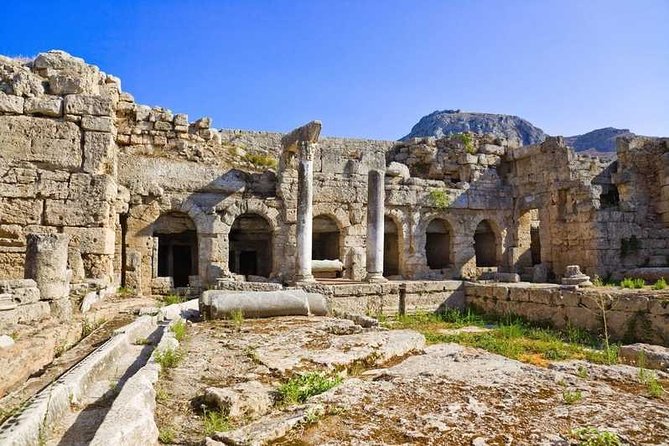
This is the heart of a Paul tour for most people: the Agora area and the bema. The stop is described as the rectangular Agora construction with shops and temples, plus the bema, the elevated podium where Apostle Paul addressed the Corinthians in 52 AD.
Even without seeing every stone up close, the bema concept gives your brain a reference point. It’s easier to imagine what Paul’s message sounded like when you understand that he was standing at a public rostrum-like location, not speaking in private.
The tour pairs this with a wider Ancient Corinth visit. Ancient Corinth is described as a city-state on the Isthmus, between Athens and Sparta. For Christians, Corinth is known from 1 and 2 Corinthians and Paul’s missionary travels in Acts.
The site history is also covered: Romans demolished Corinth in 146 BC, later rebuilding in 44 BC and turning it into a provincial capital. That Roman sequence and the size of the city in the ancient world help explain why Corinth could be both a commercial hub and a religious hot spot.
Important practical point: Ancient Corinth admission is not included, listed at €15 per person. If you want the full effect, budget for this before you go.
Kechreai (Kenchreai) and how Phoebe enters the picture
Kechries, also linked to the ancient port town Kenchreai or Cenchreae, is a smart stop because it shows Paul’s journey wasn’t only preaching in city centers. This place is connected to Acts 18:18, where Paul stops at Cenchreae, has his hair cut to fulfill a vow, and then sails onward.
It also brings in a more personal layer through the mention of Phoebe in the local assembly, tied to Romans. That matters if you want the letters to feel human, not just abstract theology.
The stop time is about 30 minutes and admission is free. This is an easy place to slow down a touch and think about Paul’s network of people, places, and practical decisions. Ports are where news travels. They’re where communities form.
St. Paul’s Church in Corinth, plus Apollo’s Temple stop
Near the end, the tour includes the church of St Paul in Corinth, Apostolou Pavlou Church. It’s described as widely known from Acts and the two Corinthians letters. The tour notes Paul’s stay lasted about one and a half years around 51 to 52 AD and that he founded the metropolitan church there.
This stop is short at about 20 minutes and is free. It’s more reflective than archaeological, so it works well after hours of stone and mosaics.
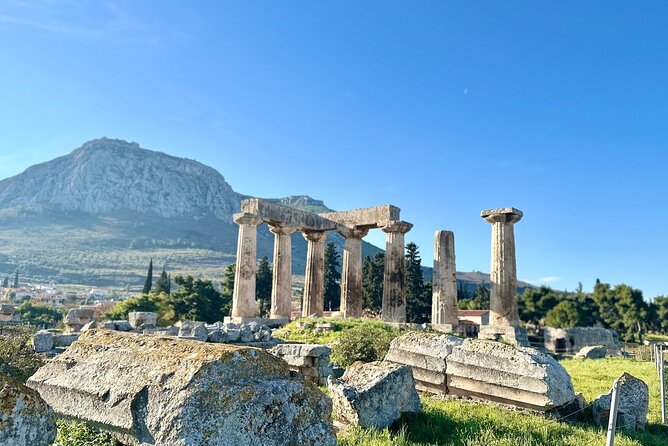
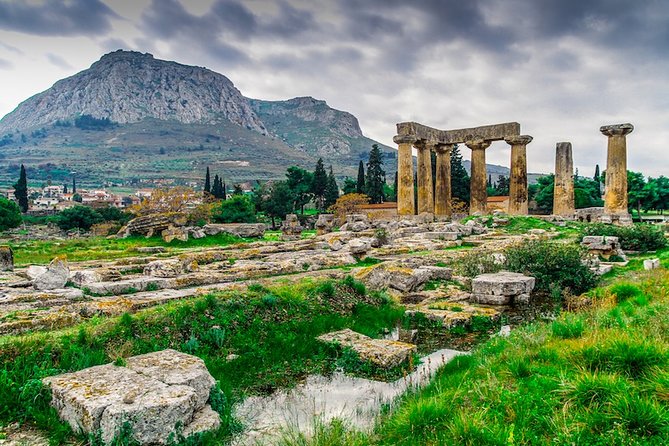
There’s also a Temple of Apollo stop at Ancient Corinth with a short 10-minute visit time. The information given mentions construction around 550 BC and notes it as one of the earliest Doric temples in the Peloponnese and Greek mainland, with monolithic columns. Admission for this temple stop is not included.
If you want to see Apollo’s space without paying extra for every single interior element, you might still enjoy this as a brief photo and context moment. If you want more time, you may need to prioritize within your schedule since the day is timed.
Entrance fees and optional licensed guides, so you do not get surprised
Here’s the straightforward cost picture and what it means for your planning.
Included:
- Transportation in an A/C private vehicle with Wi-Fi and bottled water
- Pickup and drop-off (hotel, Airbnb, or cruise port)
- Mobile ticket
- Several entry fees are included at specific stops like Areopagus Hill and Daphni Monastery
Not included:
- Entrance fees for Ancient Corinth are listed at €15 per person
- Entrance fee for the Archaeological Site of Isthmia is listed at €5 per person
- Archaeological Museum of Isthmia is listed as not included
- Temple of Apollo is not included
Optional:
- A licensed guide inside archaeological sites can be arranged on request, at an additional €160. This is especially relevant because Greek legislation restricts who can accompany you inside sites. The driver can still explain from outside, and your driver is set up to provide context either way, but if you want an inside guide, this is the add-on.
My practical suggestion: decide before the day whether you want the inside guide. If you love inscriptions, museum objects, or you learn best with someone literally at your side inside the sites, paying for a licensed guide can be worth it. If you’re fine with outside explanations and focused time in key areas, you may be happy without the extra cost.
Food:
- Lunch stops exist, but meal costs are not included. Build in time to eat somewhere simple on the way back or during the scheduled breaks, and keep water handy even if bottled water is provided during the ride.
Best fit for your travel style, and when another plan might work better
This tour is a strong choice if you want:
- A relaxed day with pickup and drop-off handled
- A Paul-and-Corinth focus rather than a general Athens sightseeing marathon
- Small group interaction, with your driver answering questions and tailoring pacing
It also makes a lot of sense for cruise passengers. The tour is designed for limited time and emphasizes getting you back to the ship on schedule.
You might want a different tour if:
- You need a long, unhurried museum-style day with lots of time in a single major site
- You are strict about paying only included fees and do not want to add entrance costs
- You want a fully guided inside experience at every site. In that case, the optional licensed guide is the lever to pull.
Should you book this Footsteps of Paul tour?
I think it’s worth booking if your goal is to connect the Bible to real place, without the stress of arranging trains, buses, or multiple taxis across Athens and the Corinth region. The comfort factor helps too. Private A/C travel plus Wi-Fi and bottled water makes the day feel manageable, even when the itinerary is packed with meaning.
Book it especially if you care about Paul’s story arc. The route includes the Athens speech setting at Areopagus Hill, the Byzantine Daphni Monastery stop, then the games and sanctuary spaces at Isthmia, and finally the Corinth bema and Agora connection. That combination gives you the best chance of walking away with a clear mental map of Paul’s world.
FAQ
How long is the tour?
The duration is about 6 hours 15 minutes, approximately.
Where does the tour pick up and drop off?
Pickup and drop-off are offered at Athens hotel, Airbnb residence, or the cruise port. After the tour ends, you are returned to the same place.
What’s included in the price?
You get A/C private transportation, Wi-Fi, bottled water, and pickup and drop-off. Some site admissions are included, including Areopagus Hill and Daphni Monastery.
What entrance fees should I expect to pay separately?
Entrance fees for Ancient Corinth are €15 per person and the Archaeological Site of Isthmia is €5 per person. The Archaeological Museum of Isthmia and the Temple of Apollo are listed as not included.
Can the driver go inside archaeological sites with me?
Only officially licensed tour guides are permitted inside archaeological sites, so the driver cannot act as your personal guide inside the sites. The driver can still explain from outside.
Is there an option to add a licensed guide inside the sites?
Yes. A licensed guide can be arranged upon request, subject to availability, for an additional €160 per booking.
Are meals included?
Lunch stops are scheduled, but meal costs are not included.
Is this tour good for cruise passengers?
Yes. It is specially designed for cruise passengers with limited time and includes a plan intended to get you back to the ship on time.
What happens if weather is bad?
This experience requires good weather. If it is canceled due to poor weather, you will be offered a different date or a full refund.
Freshly listed near Athens
- Private Guided Tour: Athens, Acropolis and Acropolis Museum★ 4.9 · 62 reviews
- Private Athens Tour with a Local- Highlights & Hidden Gems★ 4.9 · 64 reviews
- Athens: Private Acropolis Tour with focus on Kids & Families★ 4.8 · 51 reviews
- Piraeus Port: Acropolis Museum and Parthenon Mythology Tour★ 3.7 · 29 reviews
- Poros Island: Full Day Trip From Athens with Swimming★ 4.8 · 33 reviews
- Athens: Ouzo Tasting at Brettos Plaka★ 4.3 · 32 reviews
- Athens Old Town: Greek Olive Oil & Herbs Tasting★ 4.2 · 41 reviews
- No Diet Club – Unique local Food Tour in Athens!★ 4.9 · 38 reviews
Athens Tours & Activities, compared.
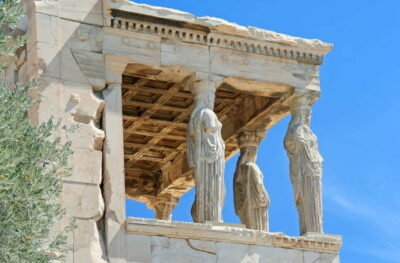
Acropolis & up to 5 Archaeological Sites Combo Pass
Read our review →
Acropolis, Parthenon & Acropolis Museum Guided Tour
Read our review →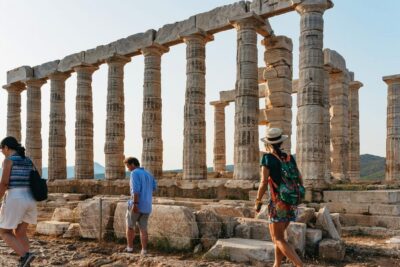
Cape Sounion & Poseidon Temple Sunset Half-Day Trip
Read our review →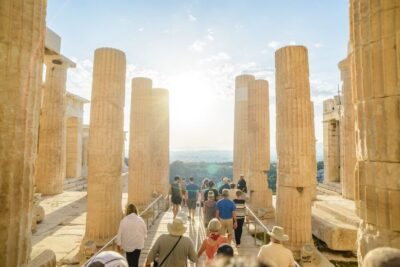
Acropolis: Premium Acropolis and Parthenon Guided Tour
Read our review →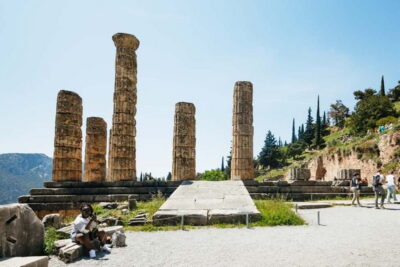
Mythology of Delphi, Museum and Arachova Guided Tour
Read our review →
All Day Cruise -3 Islands to Agistri,Moni, Aegina with lunch and drinks included
Read our review →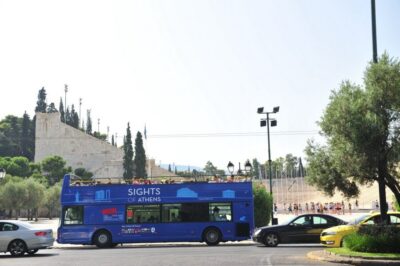
Athens, Piraeus, and Coastline: Blue Hop-On Hop-Off Bus
Read our review →