
Reviewed · MYCENAE & EPIDAURUS DAY TRIPS
Biblical Ancient Corinth Canal Epidaurus Nafplio Private Tour
One day, three ancient worlds. This private route links Corinth Canal, Ancient Corinth, and the Epidaurus sanctuary with a classic afternoon in Nafplio.
I like the air-conditioned private vehicle for long stretches of driving, and I like the way the day can flex when you have specific interests. One thing to consider: you are packing a lot into 8.5 hours, so if you hate crowds or stairs, you’ll want to plan for slower pacing and breaks.
In This Review
- Key things I found most useful
- A Private Peloponnese Day: Corinth to Epidaurus, then Nafplio
- Corinth Canal: The 2000-Year Shipping Dream
- Ancient Corinth (Archaia Korinthos): Paul, Romans, and City Layers
- Corinth’s Archaeology Museum and the Apollo Stop: Quick Culture Fix
- Akrokorinthos: Upper Corinth and the Fortress View
- Epidaurus: Medicine Legend Meets Greek Theatre Perfection
- Epidaurus schedule at a glance
- Nafplio: Lunch Break, the Lion of Bavarians, and Palamidi’s Views
- What the Private Driver Experience Really Means on This Route
- Price and Value: Is $240.93 Worth It?
- Should You Book This Corinth and Epidaurus Private Tour?
- FAQ
- Is this tour really private?
- What entrance fees should I budget for?
- Does the tour include a licensed guide inside archaeological sites?
- Where does pickup and drop-off happen?
- How long is the tour, and is the transport comfortable?
- Is free cancellation available?
Key things I found most useful
A/C + WiFi transport keeps the day comfortable, even in hot weather
You hit major sites fast, without the stress of buses and transfers
Nafplio is built into the itinerary, so you get views and real time for lunch and coffee
Budget entrance fees, since several key sites are not included
Driver-guided history in motion, plus the option to add licensed guides inside sites
Guides like Giannis, Themos, and Chris are praised for care, pacing, and flexibility
A Private Peloponnese Day: Corinth to Epidaurus, then Nafplio
This is a full-day private tour from Athens that focuses on the Peloponnese highlights around Corinth and Epidaurus, then finishes in Nafplio, a seaside town with medieval-to-modern character. The tour is positioned as a Corinth, Mycenae, and Nafplio overview, so when you book, confirm how Mycenae is handled in your specific day plan since the listed stops here center on Corinth, Epidaurus, and Nafplio.
The value is in the format. You’re not just buying entry tickets, you’re buying time, comfort, and a driver who talks history as you travel. The vehicle comes with WiFi and bottled water, and it has A/C, which matters a lot on this route. You also get pickup and drop-off, so you are not wasting half your day trying to figure out meeting points.
The downside of a compressed, site-heavy day is simple: you will be moving. Even with stops built in, you might feel rushed at the places you want to linger. The good news is that private tours tend to work better when you speak up early. One of the strongest themes from real-world feedback is that guides will slow down, add small extras, or adjust the flow when asked, as long as you keep an eye on timing.
Other ways to spend the day near Athens
- From Athens: Ancient Corinth Day Trip with Canal & VR Guide
★ 4.6 · 1,073 reviews - Private Biblical Tour Ancient Corinth & Isthmus Canal from Athens
★ 5.0 · 762 reviews - Athens: Ancient Corinth & Nafplio Full Day Trip with Swim
★ 4.8 · 531 reviews
Corinth Canal: The 2000-Year Shipping Dream
Your first stop is the Corinth Canal, a narrow waterway cutting across the isthmus of Corinth. It links the Gulf of Corinth to the Saronic Gulf, so it effectively separates the Greek mainland from the Peloponnese. Even if you only view it from the roadside, it helps you understand why the location mattered so much for shipping for centuries.
Here’s the story worth knowing before you arrive: the idea of connecting the seas isn’t new. It was a 2000-year dream. Ships wanting to reach the Adriatic, or to anchor in Corinth, used to have to sail around the Peloponnese, adding about 185 nautical miles. In other words, a “simple canal” was actually a major shortcut and a big economic lever.
You’ll also hear the older background behind the modern engineering. Periander, the tyrant of Corinth around 602 BC, is believed to have conceived the idea. Because tech wasn’t there yet, the earlier solution was the diolkos, a stone track where ships could be transferred on wheeled platforms. It’s a great first stop because it sets the stage for the day: trade routes, geography, and power all connect.
This stop is short, around 20 minutes, and admission is listed as free. That’s smart, because it keeps the day moving without wasting time.
Ancient Corinth (Archaia Korinthos): Paul, Romans, and City Layers
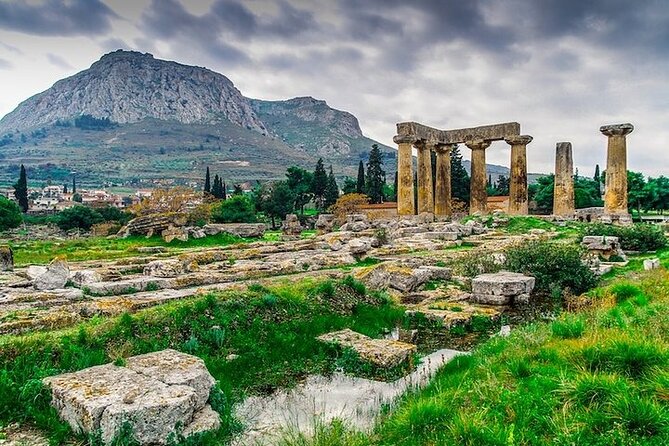
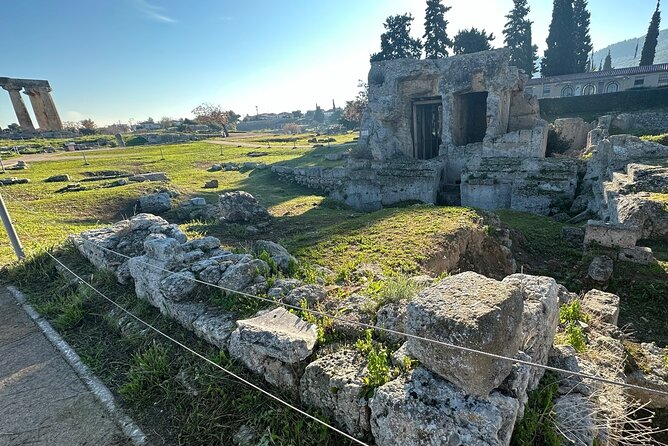
Next comes Ancient Corinth, and this is where the day starts turning from geography to people. Corinth was a city-state on the Isthmus of Corinth, roughly halfway between Athens and Sparta. The modern city sits a few kilometers away, so you’re driving to the ancient footprint.
For Christians, Corinth is well known from Saint Paul’s First and Second Corinthians and also from Acts of the Apostles as part of Paul’s missionary travels. Corinth also appears in Pausanias’ Description of Greece, giving you a paper trail of how people later imagined the site.
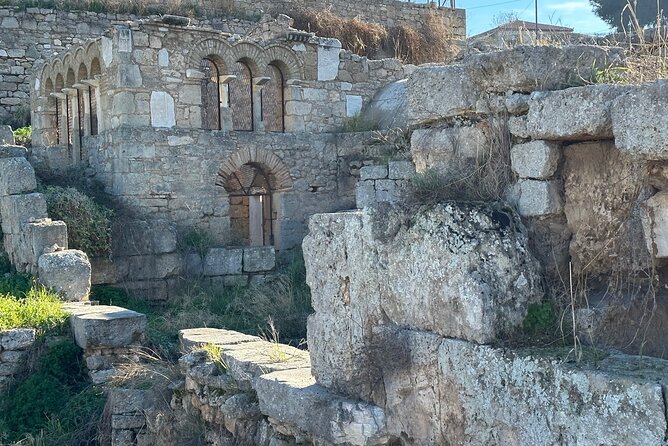
The “size and importance” angle is useful too. Corinth was one of Greece’s biggest cities, with an estimated population of 90,000 around 400 BC. Then the Romans destroyed Corinth in 146 BC, and a new city rose in 44 BC. Later it became a provincial capital. That layered history helps you read the ruins with less guesswork, because you can imagine how much changed over time.
You’ll spend about 1 hour 30 minutes here. Admission to Ancient Corinth is not included in the tour price, and the entry fee listed is €15 per person. If you care about context more than sightseeing alone, consider adding a licensed guide on-site for the longer monuments, because the driver experience is great for the big picture, while site guides can point out details you might otherwise miss.
Corinth’s Archaeology Museum and the Apollo Stop: Quick Culture Fix
After Ancient Corinth, you move to the Archaeological Museum of Corinth, located within the ancient site area. The museum was built in 1931 and 1932 with the goal of presenting finds from excavations. It sits under the jurisdiction of the Greek Archaeological Service, which is a reassuring detail if you like to know the institutional side of what you’re seeing.
Expect the museum to focus on key parts of the Corinth archaeological zone, including areas like the Fountain of Peirene, the Lechaion Road, the Agora and Stoa, and various temples. You’re there for about 40 minutes. Admission is not included, so you may want to mentally budget for museum time.
Then you step to the Temple of Apollo. The stop is brief, about 10 minutes, but it’s historically loaded. The temple dates to around 550 BC and is described as among the earliest Doric temples in the Peloponnese and Greek mainland. There’s also a note about monolithic columns being rare in the ancient world.
These two stops are a good balance: museum time to make sense of objects and sites, then a quick architectural read outside. If you skip these, you’d still get “ruins,” but you’d lose a layer of explanation that makes Corinth easier to understand.
A short hop away, these too:
- Athens: Acropolis & up to 5 Archaeological Sites Combo Pass
★ 4.2 · 13,904 reviews - Athens: Acropolis, Parthenon & Acropolis Museum Guided Tour
★ 4.8 · 9,316 reviews - The Acropolis, Parthenon & Acropolis Museum Guided Tour
★ 4.7 · 8,493 reviews - Athens: Cape Sounion & Poseidon Temple Sunset Half-Day Trip
★ 4.8 · 8,241 reviews
Akrokorinthos: Upper Corinth and the Fortress View
The next highlight is Akrokorinthos, also called Acrocorinth, the acropolis of ancient Corinth. The description is accurate and dramatic: it’s a monolithic rock overseeing the ancient city. Because of that vantage and a secure water supply, the fortress became a repeated last line of defense for southern Greece.
This stop is allotted around 30 minutes, with no admission included. Even if you don’t climb much, you get the main payoff: scale and control. You can see why this site mattered to armies. You can also see why it stayed useful for many eras.
Practical note: acropolis-style sites often involve uneven ground and stairs. If you have mobility issues, tell the driver at the start of the day. Private tours are best when you communicate your limits early, not at the last stop.
Epidaurus: Medicine Legend Meets Greek Theatre Perfection
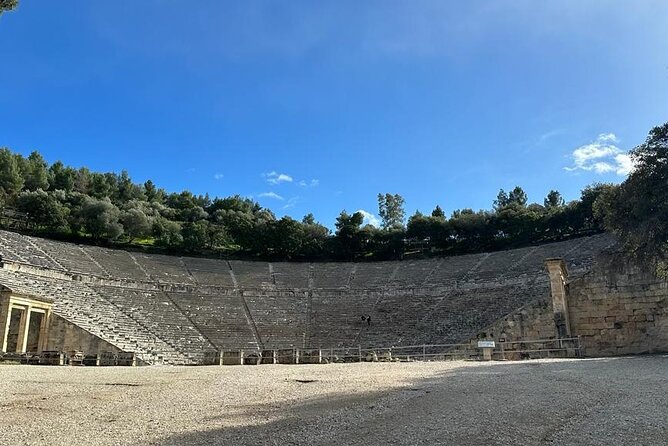
Now the route makes its biggest emotional pivot. Epidaurus is where the day turns from “cities and forts” to “sanctuary and performance.”
At the Epidaurus amphitheatre, the classic selling point is acoustics. The amphitheatre is known for Greek construction and the way sound travels so well. The itinerary points you to the theatrical side of the site, tied to names like Euripides, Sophocles, Aristophanes, and Aeschylus. There’s also a playful idea to remember: sound can carry even if you sit far back.
You’ll also have time at the Epidaurus Archaeological Museum later, but the first hit is the sanctuary atmosphere around Asclepius. The day includes the Asclepius sanctuary, dedicated to the ancient Greek demi-god of medicine. It’s described as the main holy site of Asclepius, and as a major cult rival to places like Olympia and Delphi.
The time markers are helpful. The temple is described as early 4th century BC, and there’s a note that if pagan worship were still active in the 4th century AD, the sanctuary would have faced closure during the persecutions of late Roman times, when Christian emperors issued edicts against non-Christian worship. That context helps you understand why a “medical retreat” became a place with long-lived cultural importance.
Epidaurus schedule at a glance
You have about 1 hour at the amphitheatre and related area (listed admission free), then about 30 minutes at the Epidaurus Archaeological Museum (not included), then about 15 minutes at the Sanctuary of Asclepius (admission free), then about 45 minutes for the Ancient Theatre of Epidaurus (also not included entry). The museum and theatre tickets are not included, and the archaeological site admission fee listed for Epidaurus is €20 per person.
This is also where pacing matters most. If you only want one “big moment,” put your attention on the theatre space and the sanctuary symbolism. You don’t need to sprint through everything to get it.
Nafplio: Lunch Break, the Lion of Bavarians, and Palamidi’s Views
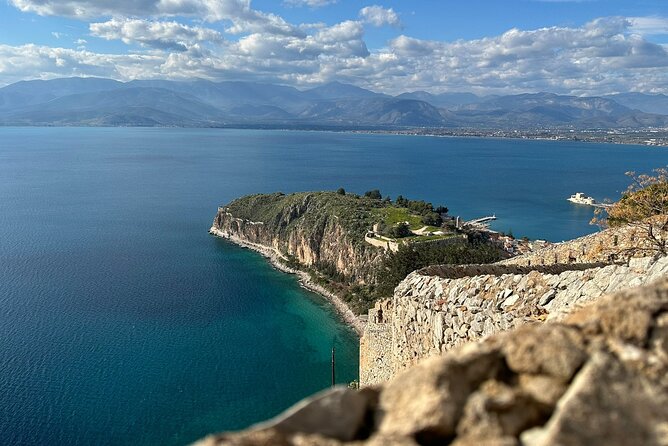
After Epidaurus, you arrive in Nafplio, a port town spread across hills near the Argolic Gulf. The day builds breathing room here. The itinerary includes free time for lunch, coffee, and shopping, and that is a smart reset after hours of stone and shade.
Nafplio’s story runs through medieval and early modern eras. It was the capital of the First Hellenic republic and later of the Kingdom of Greece from the start of the Greek Revolution. That’s a lot of weight for a town that also feels relaxed and walkable.
One of the most specific stops is the Lion of the Bavarians. It’s described as huge and carved into rock above Michael Iatrou Street, with a small park underneath. The monument honors Bavarian soldiers tied to King Louis and Otto’s dynasty, who died in Nafplio in 1833 of a typhoid epidemic. There’s also a local nickname story that connects the deaths to bitter food. It’s the kind of detail a driver can pass along in a minute, and it makes the statue feel like a living part of the town, not just a photo spot.
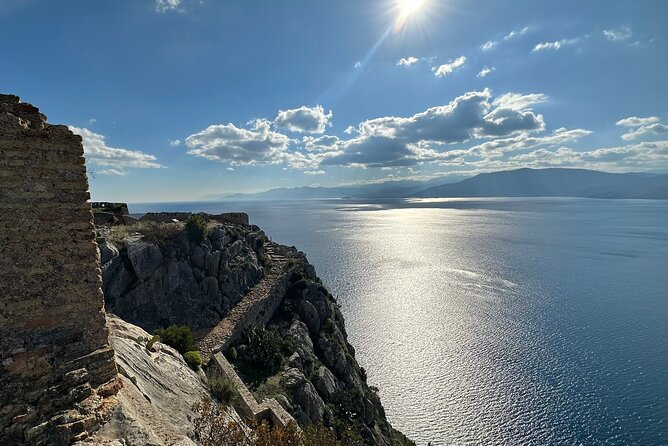
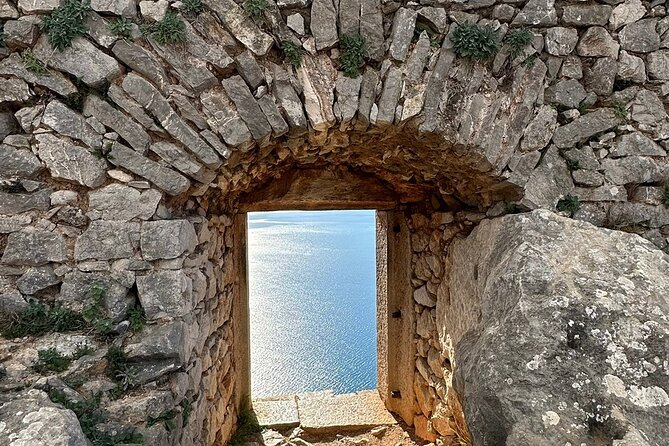
Then comes Palamidi Castle, one of the well-preserved fortresses in Greece, built by Venetians during their second occupation from 1686 to 1715. It sits on a hill about 216 meters high and offers major views over the Argolic Gulf and the city. The practical detail that matters: there are about 913 steps from town to the fortress, and locals say it’s over 1000 steps or 999 steps depending on how you count.
Entry to Palamidi is listed as not included, with a €20 fee per person. Even if you don’t love climbing, it’s the best place on this itinerary to justify the “big view” payoff.
The itinerary also references the Akronauplia area as the oldest part of Nafplio, transformed by Venetians and Franks into part of its fortifications, and used as a prison until the government recognized the tourism value of the location’s views.
Finally, there’s a quick photo moment at Bourtzi, the Venetian castle sitting in the harbor. You get about 10 minutes, and it’s enough time to grab water-facing views.
What the Private Driver Experience Really Means on This Route
This tour wins a lot of points because it’s private and flexible. You’re transported in a modern private vehicle with WiFi and bottled water, and you can customize the program according to your needs.
The names that stand out in real feedback are Giannis, Themos, and Chris. Each one is praised in a slightly different way, but the themes match what you should care about:
- Giannis is credited with flexibility and helping find a great lunch spot in Nafplio.
- Themos is praised for careful driving and adding extra stops beyond the planned ones.
- Chris is praised for working well across a wide range of ages and abilities, keeping people comfortable with shade breaks and café options, and not rushing the group.
That last point is worth repeating. When a day is hot and packed, what you need is pacing. A driver who does not rush you gives you a better chance to actually enjoy each site instead of checking it off.
One more practical tip: the tour does not include a licensed guide to accompany you inside archaeological sites. That means your driver can give strong context during driving and at the main viewpoints, but for extra detail on the ground inside monuments, you might choose to hire a licensed guide for the sites you care about most, like Ancient Corinth or Epidaurus.
Price and Value: Is $240.93 Worth It?
At $240.93 per person for an 8 hours 30 minutes private day, you are paying for a lot more than entry tickets. The price is tied to transportation, pickup and drop-off, comfort, and a driver who provides historical knowledge throughout the day.
Here’s the value math you should do:
- You are covering multiple sites in one day, including Corinth Canal, Ancient Corinth, a Corinth museum stop, Acrocorinth viewpoints, Epidaurus amphitheatre and theatre, Epidaurus sanctuary areas, plus Nafplio sightseeing and Palamidi.
- Several key admissions are not included: Ancient Corinth (€15), Palamidi Castle (€20), Archaeological Site of Epidaurus (€20). Museum and some site fees are also not included, but specific museum pricing beyond those listed is not provided here.
- You do get A/C, WiFi, bottled water, and fuel and tolls included, which removes costs and hassle you’d otherwise handle yourself.
If you’re traveling as a small group, especially with 1 to 3 people, the sedan option is a big comfort boost. If you’re a bit larger, the tour shifts to a mini van for 4 to 7 people. In either case, the private setup often ends up cheaper than paying for separate transfers and losing time, especially if you want to keep the schedule tight but comfortable.
Should You Book This Corinth and Epidaurus Private Tour?
I think you should book if you want a one-day sampler that still feels organized, with real breathing room in Nafplio and the comfort of A/C in between. It’s a solid pick for couples, families with mixed ages, and anyone who wants history with less logistical stress than public transport.
I would hesitate if you know you dislike stairs or if you want long, slow museum time. Palamidi’s steps and the amount of moving in the day can be a lot. Also remember that site entry fees for Ancient Corinth, Epidaurus, and Palamidi are not included in the base price.
My decision rule: if your top goal is to see Corinth and Epidaurus without spending your day figuring out buses, and you’ll appreciate a driver who can explain what you’re seeing, this is a good use of your time. If you want only one or two sites with deep, guided indoor time, you may be better off building a smaller plan.
FAQ
Is this tour really private?
Yes. It is a private tour, meaning only your group participates.
What entrance fees should I budget for?
Ancient Corinth is listed at €15 per person. Palamidi Castle is listed at €20 per person. The Archaeological Site of Epidaurus is listed at €20 per person. Several other stops are marked as admission free, while some museums and sites are not included.
Does the tour include a licensed guide inside archaeological sites?
No. A licensed guide to accompany you into archaeological sites is not included. Your tour driver provides historical information, but entry-site guiding is not part of the package.
Where does pickup and drop-off happen?
Pickup is offered in Athens, including hotel lobby pickups, Airbnb entrance pickups, and port gate pickups. The driver returns you to the same place or to your preferred point.
How long is the tour, and is the transport comfortable?
It runs about 8 hours 30 minutes. Transportation is in a modern private vehicle with WiFi, A/C, and bottled water.
Is free cancellation available?
Yes. You can cancel for a full refund up to 24 hours in advance of the experience start time.
Freshly listed near Athens
- Athens: Premium Guided E-Scooter Tour in Acropolis Area★ 5.0 · 133 reviews
- Athens: Wine Workshop Create your Own Wine under the Acropolis★ 5.0 · 77 reviews
- Ceramic and Pottery Creative Workshop with Two Local Artists★ 4.0 · 57 reviews
- Private Tour and Tasting at Zeginis Winery★ 5.0 · 18 reviews
- Athens: Greek Wines Tasting with Sommelier and Acropolis Views★ 5.0 · 88 reviews
- Private Day Trip to Nafplio from Athens★ 5.0 · 20 reviews
- Athens Old City Private Photoshoot Tour / 2 hrs★ 5.0 · 109 reviews
- Greek food and wine tasting★ 5.0 · 18 reviews
Mycenae & Epidaurus Day Trips, compared.
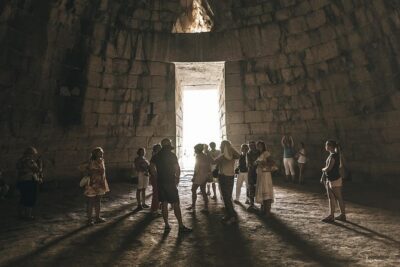
Small-Group Mycenae, Epidaurus & Nafplio Trip
Read our review →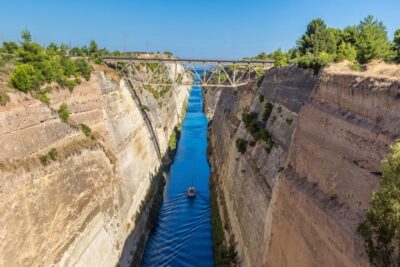
Mycenae, Epidaurus and Nafplio Tour from Athens
Read our review →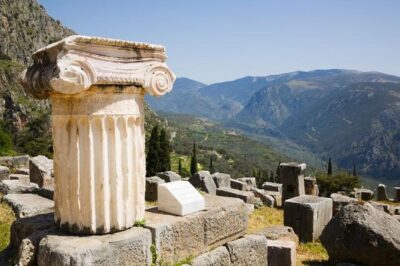
4-Day Classical Greece Tour: Epidaurus, Mycenae, Olympia, Delphi, Meteora
Read our review →
Mycenae and Nafplion Day Trip from Athens with Official guide
Read our review →
3-Day Classical Greece Tour: Epidaurus, Mycenae, Nafplion, Olympia, Delphi
Read our review →
Corinth Canal, Mycenae & Nafplio Premium Guided Tour
Read our review →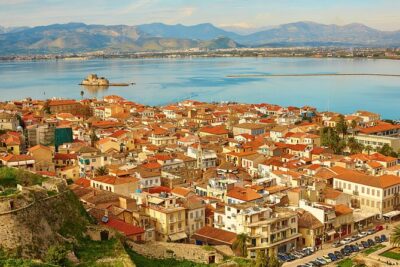
Mycenae, Epidaurus & Nafplio Full-Day V.R audio guided Tour
Read our review →Browse the lists this tour appears in