
Reviewed · ACROPOLIS TICKETS & GUIDED TOURS
Best of Athens & Acropolis Full Day Private Guided City Tour
Your next best Athens day is built on the Acropolis and street life. This private guided route stacks major classical sights with modern-city stops, and it’s designed so you can actually understand what you’re seeing, stone by stone. I also like that the core archaeology admissions are included, so you spend less time hunting tickets and more time listening.
The one thing to plan around is the pace and walking. You’ll climb and stand on protected, sometimes slippery marble, so grippy shoes matter, and the full day is not a sit-back-and-go plan.
In This Review
- Key takeaways before you go
- Acropolis Climb: Where the City Shrinks and the Marble Takes Over
- Parthenon Proportions: Seeing the Trick Behind the Symmetry
- Propylaea and the Arrival Frame: Architecture That Directs Your Feet
- Temple of Athena Nike: A Small Stop With Big Symbol Power
- Erechtheion: Myths Built Into an Asymmetrical Plan
- Ancient Agora: Where Democracy, Commerce, and Gossip Actually Happened
- Temple of Hephaistos (Often Referred to Here as the Temple of Aries): A Panoramic Pause
- Syntagma to the Monument to the Unknown Soldier: Modern Athens With Ceremony in Control
- Neoclassical Athens Stops: Academy, University, and Library for the Public Face of Learning
- Panathenaic Stadium and the 1896 Restart: Marble Track Time Travel
- Olympeion Ruins and Hadrian’s Arch Glimpse: Roman Scale Without the Long Wait
- Plaka and Anafiotika: Athens as a Neighborhood, Not a Theme Park
- Monastiraki Market Square: Old and New Overlapping in One View
- Price and Value for a Private 5 to 7 Hour Day Plan
- Should You Book This Acropolis to Plaka Private Day?
- FAQ
- What is the duration of this Athens private guided tour?
- Does the tour include pickup?
- What language is the guide?
- Is a mobile ticket used?
- Are admissions included for the main sites?
- Which places are free on this route?
- How do I coordinate the pickup spot?
- What is the price?
- What happens if weather is poor?
Key takeaways before you go
- Admissions included for the Acropolis core plus the Ancient Agora and key temple stops
- Private format means your group controls the questions, photo stops, and regrouping
- Pickup coordination is handled by WhatsApp or Apple iMessage, which makes the day feel smoother
- Marble details that you can spot like optical refinements on the Parthenon and the Caryatids context
- A day that moves across eras, from classical Athens to Syntagma ceremony to Plaka and Monastiraki
Acropolis Climb: Where the City Shrinks and the Marble Takes Over
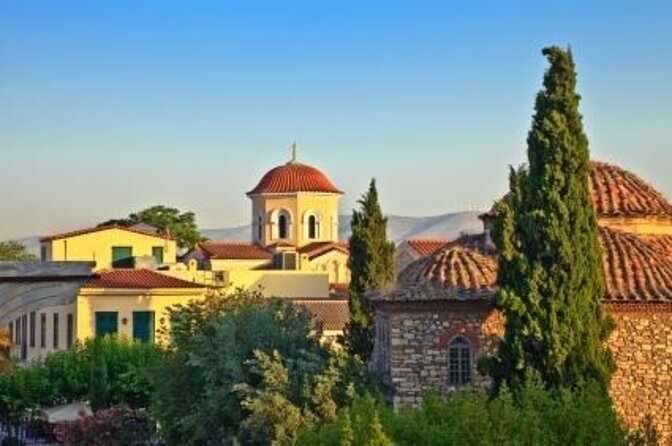
The day really starts with the sacred rock, and it’s not just a viewpoint stop. You climb along pedestrian pathways that make the ascent feel manageable, then the city falls away and the temples start lining up against the skyline. Your guide frames what you’re looking at, tying together Pericles-era ambition, sacred ritual, and the long afterlife of Athens as a symbol for Western art, politics, and philosophy.
Two practical details make a big difference here. First, surfaces can be smooth marble, so wear shoes with real grip. Second, it helps to look for small, honest signs of time: quarry marks in bedrock, carved drainage channels, and reused marble blocks that hint at repairs and restorations over centuries.
If you want one photo moment, pause midway up the slope for a dramatic frame of the Parthenon with the Saronic Gulf in the background. It’s the kind of shot that shows scale, not just scenery.
More Acropolis entries and guided walks:
- Athens: Acropolis & up to 5 Archaeological Sites Combo Pass
★ 4.2 · 13,904 reviews - Athens: Acropolis, Parthenon & Acropolis Museum Guided Tour
★ 4.8 · 9,316 reviews - The Acropolis, Parthenon & Acropolis Museum Guided Tour
★ 4.7 · 8,493 reviews
Parthenon Proportions: Seeing the Trick Behind the Symmetry

At the Parthenon, the story shifts from history to what happens to your eyes. You’ll learn how optical refinements create the illusion of perfect symmetry, including subtle curvature and columns that are slightly tilted so everything reads as balanced from below. It’s a fun reminder that ancient builders were running experiments with perception, not just carving stone.
Then there are the details you might otherwise miss. Your guide points out corner-column choices designed to counter optical thinning, and you may get cues to look for traces of pigment on sheltered stones. Also, this is a protected archaeology site, so you’ll follow barriers and rules that keep the surviving material safe.
For photos, shoot along the colonnade to capture the rhythm of columns and the sense of scale. The Parthenon is also one of those places where a quick stop can feel shallow, but a short, focused visit with context gives the whole structure more meaning.
Propylaea and the Arrival Frame: Architecture That Directs Your Feet
The Propylaea gateway is the moment Athens tells you where to stand. This monumental entrance orchestrates the flow into the sacred precinct, acting like a fortress and a flourish at the same time. You’ll see Doric columns and Pentelic marble elements that guide your eye, then your guide explains how the design adapts to terrain and nearby shrines.
One thing I like about this stop is how it teaches you to read the building as a system. The gateway isn’t just impressive, it’s purposeful, steering traffic and framing arrival. If you want a photo that feels like you’re holding a window open, step just inside, turn back, and frame the city through the columns.
Temple of Athena Nike: A Small Stop With Big Symbol Power

This temple is compact, but the symbolism is not. It’s an Ionic jewel perched above the gate, dedicated to victory with both military and civic meaning. The guide helps connect it to the idea of Nikes, winged victories, and you’ll be guided to motifs like the famous Nike adjusting her sandal.
If you’re thinking about replicas and originals, here’s the useful angle: you’ll see a replica of that motif on-site, while the originals are preserved in a museum. That helps you make sense of why what you see here is faithful, but not the final, ultimate artifact.
The photo trick is to capture the bastion and the temple together so you feel the cliff-edge drama. The viewpoint context is what makes this stop more than a postcard.
Other ways to spend the day near Athens
- Athens: Cape Sounion & Poseidon Temple Sunset Half-Day Trip
★ 4.8 · 8,241 reviews - Acropolis: Premium Acropolis and Parthenon Guided Tour
★ 4.8 · 5,208 reviews - Athens: Mythology of Delphi, Museum and Arachova Guided Tour
★ 4.7 · 5,102 reviews - All Day Cruise -3 Islands to Agistri,Moni, Aegina with lunch and drinks included
★ 5.0 · 4,958 reviews
Erechtheion: Myths Built Into an Asymmetrical Plan
The Erechtheion feels mysterious for a reason. It’s tied to layered myths and sacred spots, so the plan doesn’t follow simple symmetry. You’ll learn about the olive tree tied to Athena’s gift, the salt spring associated with Poseidon, and memories of legendary kings. Those stories connect the weird shape you see to the holy locations inside.
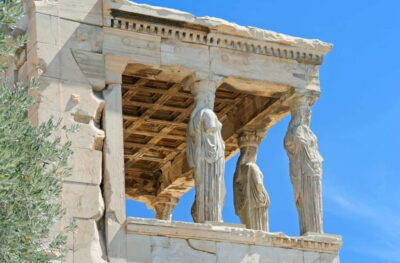
Another highlight is the Caryatids, the maiden statues that carry the roof like living columns. Your guide will point out that the figures you see are faithful casts, while originals are preserved in museums. That matters because it changes how you look: you can admire the craftsmanship and layout while understanding what you’re viewing on-site.
For a strong photo, frame two Caryatids with the Parthenon blurred behind for depth. That layering makes the building feel like part of the larger Acropolis scene, not an isolated stop.
Ancient Agora: Where Democracy, Commerce, and Gossip Actually Happened

After the Acropolis, the day moves into Athens as a lived-in city. The Ancient Agora is the civic heart where democracy, philosophy, commerce, and daily talk overlapped. Instead of only grand monuments, you get colonnades and spaces where real routines played out, which helps the classical story feel less like a textbook.
Your guide often anchors the setting around major groups and institutions, then you shift into specifics like stoas and law-court spaces. A particularly useful stop inside is the Stoa of Attalos, which functions like a museum display of everyday life with artifacts such as coins, weights, and inscriptions. That’s the best antidote to the big-idea blur, because it ties philosophy to the practical world of trade and measurement.
When it comes to walking comfort, I like this portion of the day because you often get shady porticoes and covered spaces. It’s a good mid-day reprieve without breaking momentum.
Temple of Hephaistos (Often Referred to Here as the Temple of Aries): A Panoramic Pause

The next temple stop gives you something Athens does well: a combination of preservation and viewpoint. This is described as the best-preserved Doric temple in Greece, and your guide ties it to craftsmanship and work, with dedications related to Hephaistos and Athena Ergane. It also overlooks workshops of ancient metalworkers, which makes the site feel connected to industry instead of only religion.
You’ll be guided toward intact metopes with myths of Heracles and Theseus, plus original roofing elements you can look for. Then there’s the simple payoff, it’s elevated, so you get a panoramic view back across the Agora. Even if you’re not a detail hunter, this is where the geography clicks.
For photos, try the three-quarters view from the southeast corner for strong column rhythm. It looks architectural without needing heavy editing.
Syntagma to the Monument to the Unknown Soldier: Modern Athens With Ceremony in Control

After temples, you step into a different kind of Athens: the city’s present-day civic living room. Syntagma area is where buses and boulevards converge from polished terraces, and locals and visitors gather near fountains and flowerbeds. Beneath your feet are layers of the city, including classical remains uncovered during metro construction, and you may see archaeological displays visible from concourse areas.
This is also a regrouping point. The stop is short, but it gives you a reset before the next emotional anchor: the Monument to the Unknown Soldier and the Evzones ceremony.
The Evzones are famous for precision drills and distinctive uniforms, including the fustanella pleats and pom-pom tsarouhia. The changing of the guard is worth timing, because it adds a quiet dignity that contrasts with the rush of the city streets.
Photo tip: stand side-on to catch synchronized steps without blocking other spectators. And keep your distance, there are clear lines for a reason, follow them and avoid touching or obstructing the guards.
Neoclassical Athens Stops: Academy, University, and Library for the Public Face of Learning
One of the best surprises on this day is how much the route pays attention to Athens as a cultural capital, not just an ancient museum. The Academy of Athens offers a temple-like façade with statues of Athena and Apollo, plus Socrates and Plato seated at the fore. It’s a deliberate dialogue between ancient ideas and modern identity.
The National and Kapodistrian University continues the theme with 19th-century classicism and a symmetrical plan. Your guide will likely direct your eyes to allegorical figures and elegant ironwork, which makes the architecture feel like it has a message, not just a style.
Then comes the National Library of Greece, where the façade signals knowledge as a public good. It features twin curving staircases and Doric columns, and the building’s symbolism shows through in the façade layout. Your route also notes that modern library facilities operate elsewhere at the Stavros Niarchos Foundation Cultural Center, which is useful context if you see any references during your trip.
For photos, symmetry is your friend here. Center yourself for balanced framing, especially with steps, columns, and stair curves.
Panathenaic Stadium and the 1896 Restart: Marble Track Time Travel
The Panathenaic Stadium, also called Kallimarmaro, is made entirely from white marble and hosted the first modern Olympic Games in 1896. The footprint connects to an ancient Panathenaic festival stadium, so you’re literally standing in a place where the Olympics story began again.
You can stand on the track and look at the steep horseshoe stands and the finish line marking. There are also plaques to 1896 champions, which makes the site feel anchored to people, not just events.
If you want more than the outside viewpoint, there’s optional paid entry to climb higher and visit a small exhibit, but it’s not included. From upper tiers, you can shoot down the lanes for a sweeping amphitheater effect.
Olympeion Ruins and Hadrian’s Arch Glimpse: Roman Scale Without the Long Wait
Later in the day you get a sense of Roman imperial ambition at the Olympeion. This temple took centuries to complete, and even in ruins, towering Corinthian columns convey scale. Hadrian’s influence comes into the story, and the fallen solitary column includes fluted drum segments that show how the construction worked.
The practical part: this is described as a quick capture through the coach window if traffic allows. So think of it as a fast “I’m here” moment, not a full deep-stop visit. If you need a long look, you might find yourself wishing for more time, but the rest of the day is already packed.
Plaka and Anafiotika: Athens as a Neighborhood, Not a Theme Park
Plaka is the part of Athens that feels like a village under the rock. You’ll walk through neoclassical lanes with flower-draped balconies and tiny chapels, and cafes spill out onto the street. The area also connects to Anafiotika, whitewashed Cycladic-style houses clinging to the Acropolis slope, built by island craftsmen.
This is your relaxed wander. It’s the ideal time for ice cream, a slower photo pace, or browsing artisan shops. Just remember, this area has cobblestones and stairs, so go slow and don’t expect smooth stroller-style walking.
Photo tip: early afternoon light reflecting off pale walls can make colors look extra alive. Even if you’re tired, the atmosphere here is a good way to land the day.
Monastiraki Market Square: Old and New Overlapping in One View
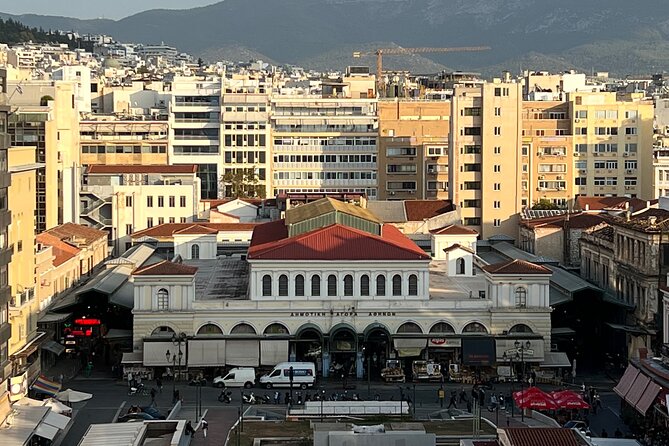
Monastiraki is where eras overlap in the most practical way possible: you see them while walking and shopping. The square mixes a mosque, a church, Roman Agora remnants, and the market street energy of stalls selling everything from leather sandals to antiques.
You’ll likely get Acropolis views from the square, plus the Hadrian’s Library ruins are steps away. It’s a good last stop for snacks and for grabbing small souvenirs without turning it into a formal shopping hour.
For photos, golden hour in the square is a strong time because the Parthenon can glow above the city. Keep small valuables zipped in crowded areas, since there’s plenty of foot traffic and you want to enjoy it without distractions.
Price and Value for a Private 5 to 7 Hour Day Plan
At $600.12 per person, this tour is not cheap, and you should judge it based on what’s included and how you travel. The big value signals here are the private format, English guiding, pickup offered, and admissions included at many of the top sites. That combination matters because private time reduces waiting and keeps your day moving with context, not just ticket lines.
Also consider how admissions change the math on Athens trips. Having ticket coverage for the Acropolis core and Ancient Agora stops can save both money and stress. The free stops later in the route add extra variety without extra ticket costs.
The trade-off is capacity and flexibility. A five to seven hour plan means you need to be comfortable walking and standing, and you’ll get the most out of it if you like guided interpretation. If you want a long, slow museum day, this route might feel too structured.
One more plus is how the provider handles coordination. In real-world transfer experiences linked to this company, pickup timing and communication via WhatsApp have been praised, including prompt help with luggage and support from drivers such as Nikos and Stefanos. That kind of reliability makes a full-day tour feel less stressful, especially if your schedule changes.
Should You Book This Acropolis to Plaka Private Day?
Yes, if your priority is a single guided day that connects Athens across eras, from the Acropolis core to neighborhoods like Plaka and Monastiraki. It’s a strong choice when you want context at the Parthenon and Erechtheion, then you want the payoff of street-level Athens by the end of the day.
I’d skip it or rethink if you hate walking on ancient stone surfaces or you want total freedom to linger in one site for hours. This is built for movement, and it leans into the idea of learning while you go.
If you’re the type who likes seeing the small stuff, like optical refinements, pigment traces, or Caryatid symbolism, you’ll get more out of the day than a basic sightseeing loop. Also, if weather is an issue where you’re traveling, note that this experience requires good weather, so have a backup plan in your calendar.
FAQ
What is the duration of this Athens private guided tour?
The tour runs about 5 to 7 hours.
Does the tour include pickup?
Yes, pickup is offered.
What language is the guide?
The tour is offered in English.
Is a mobile ticket used?
Yes, a mobile ticket is provided.
Are admissions included for the main sites?
Admissions are included for the Acropolis and several key stops such as the Parthenon area, Ancient Agora, and Temple of Athena Nike and others listed with admission included. Panathenaic Stadium optional entry is not included.
Which places are free on this route?
Syntagma, the Monument to the Unknown Soldier, the Academy of Athens, the National and Kapodistrian University, the National Library of Greece, Plaka, and Monastiraki are listed as admission free stops.
How do I coordinate the pickup spot?
You need WhatsApp or Apple iMessage to coordinate the exact pickup spot.
What is the price?
The price is listed as $600.12 per person.
What happens if weather is poor?
This experience requires good weather. If it’s canceled due to poor weather, you’ll be offered a different date or a full refund.
Freshly listed near Athens
- Athens: Premium Guided E-Scooter Tour in Acropolis Area★ 5.0 · 133 reviews
- Athens: Wine Workshop Create your Own Wine under the Acropolis★ 5.0 · 77 reviews
- Ceramic and Pottery Creative Workshop with Two Local Artists★ 4.0 · 57 reviews
- Private Tour and Tasting at Zeginis Winery★ 5.0 · 18 reviews
- Athens: Greek Wines Tasting with Sommelier and Acropolis Views★ 5.0 · 88 reviews
- Private Day Trip to Nafplio from Athens★ 5.0 · 20 reviews
- Athens Old City Private Photoshoot Tour / 2 hrs★ 5.0 · 109 reviews
- Greek food and wine tasting★ 5.0 · 18 reviews
Acropolis Tickets & Guided Tours, compared.
Acropolis & up to 5 Archaeological Sites Combo Pass
Read our review →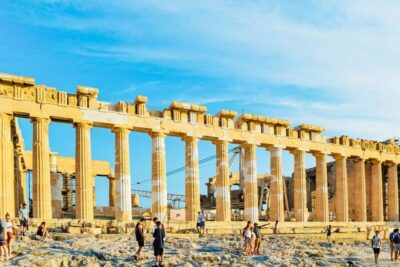
Acropolis Ticket with Optional Audio or Live Guide
Read our review →
Acropolis, Parthenon & Acropolis Museum Guided Tour
Read our review →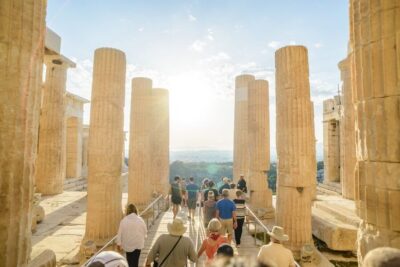
Acropolis: Premium Acropolis and Parthenon Guided Tour
Read our review →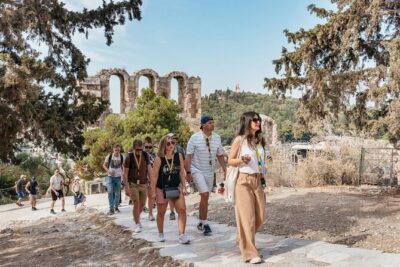


Athens Scenic Electric Bike Tour with optional Acropolis visit
Read our review →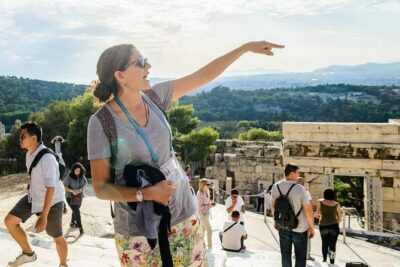
Acropolis monuments & Parthenon Walking Tour with Optional Acropolis Museum
Read our review →Browse the lists this tour appears in