
Reviewed · ACROPOLIS TICKETS & GUIDED TOURS
Athens:Acropolis – Historical Center Walking Tour in Spanish
Early Athens feels personal. This Acropolis and Plaka tour gets you inside Greece’s most important ruins early, then strings together the stories that make the Parthenon click instead of just impressing. I love the early, side-door entry route that helps you avoid the worst crowd squeeze, and I love the small-group vibe with a Spanish guide who keeps explanations clear and practical.
The walking is real, but it is also paced with good photo breaks and time to look up. If you do not already have your Acropolis entrance ticket set for the 08:00-09:00 window, that is the one snag to plan for, since the tour does not include admission.
After the heights, you drop back into Athens life in Plaka, then you finish with two standouts most people rush past: the Tower of the Winds and the Mitropolis of Athens.
In This Review
- Key things that make this tour worth your time
- Entering the Acropolis through the south slope, not the main stampede
- Teatro de Dionisio, Athena vs Poseidon, and the stories behind the stones
- Parthenon time: why it was built 2,500 years ago
- Temple of Athena Nike and the Caryatids you will not forget
- Views from the top: Hadrian, Zeus, Herod Atticus, and the surrounding hills
- Plaka and Old Town: outside the Ancient Agora, then back into Athens
- Tower of the Winds and the Mitropolis, where the day closes strong
- Spanish guide quality, small groups, and why headphones matter
- Price and value for a 4-hour Acropolis and Plaka walk
- When this tour is a great fit, and when to skip it
- Should you book this Acropolis and Plaka Spanish tour?
- FAQ
- Is the Acropolis entrance ticket included in the tour price?
- What time slot should my Acropolis ticket be for?
- Where do I meet the guide?
- How long is the walking tour?
- What language is the tour guide?
- Does the tour include hotel pickup and drop-off?
- Are food and drinks included?
- What should I bring?
- Is the tour suitable for mobility impairments?
- Can I pay later or cancel for free?
Key things that make this tour worth your time
- Early south-slope entry reduces crowd stress and gets you moving toward the Teatro de Dionisio area.
- Parthenon context you can repeat later, including why it was built about 2,500 years ago and what “harmony” means in practice.
- City views with names you will remember, from the Arch of Hadrian to Odeon of Herod the Attic and the hills around Athens.
- Plaka stroll with real photogenic angles, not just a quick pass-through.
- Two bonus stops with big meaning, Tower of the Winds and the Mitropolis church tied to the royal marriage of Queen Sofia and Juan Carlos.
- Headphones for a smoother experience, especially when the group is moving uphill and around crowds.
Entering the Acropolis through the south slope, not the main stampede

This tour starts early on purpose. You meet at the lower gate of the Acropolis, a few meters from the Acropolis Museum, and your guide will be holding a sign with the office logo. The smart part is how you enter the enclosure: through the side door on the south slope. That approach is designed to help you see older, less hectic corners first, including the Teatro de Dionisio.
Why I like this setup: Athens ruins can be visually overwhelming. When you arrive before the biggest crush, you get to orient your brain. You start to understand where you are standing and what direction you are facing. That makes every later stop easier, including the climb toward the Parthenon.
Plan for the basics. You need comfortable shoes, and you should expect walking on uneven stone. Baby carriages and electric wheelchairs are not allowed, and the tour is not suitable for people with mobility impairments. If that affects you, you will want a different format.
More walking tours around Athens:
- Acropolis and Parthenon Guided Walking Tour
★ 5.0 · 4,755 reviews - Greek Food Walking Tour in Athens
★ 5.0 · 4,740 reviews - Athens: Guided Greek Food Walking Tour with Tastings
★ 4.9 · 2,859 reviews
Teatro de Dionisio, Athena vs Poseidon, and the stories behind the stones
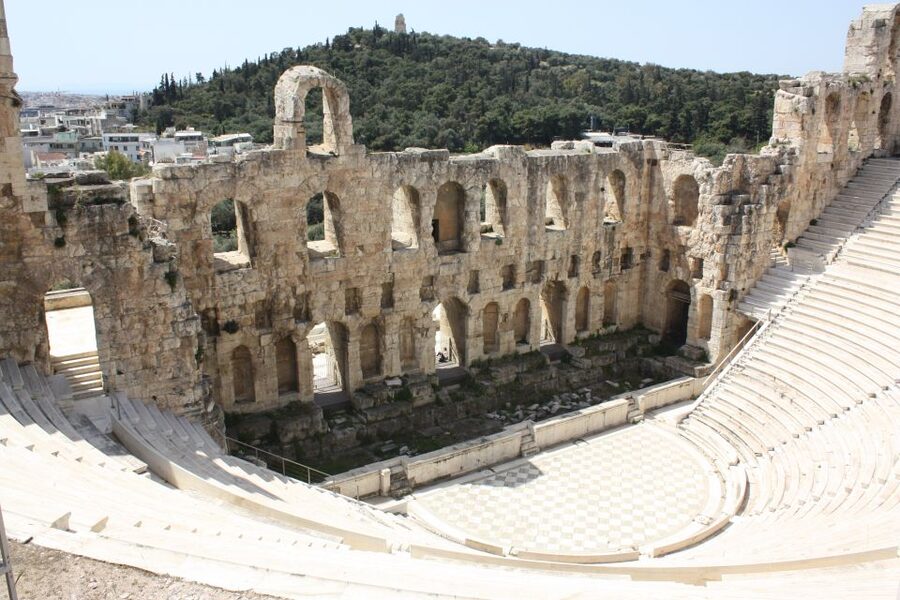
Once you are inside, the guide frames the visit like a timeline you can walk through. You begin by approaching the area tied to Teatro de Dionisio, often described as one of the oldest theaters in the world. Even if you only catch parts of it during the route, it sets the tone: Athens was not just temples and marble, it was performance, debate, and public life.
Then you head toward the higher symbolism of the Acropolis. Your guide connects the myth of Athena and Poseidon to what you see at the top. You are not just hearing a myth for fun. You are being shown how Athene becomes the patron of the city after that legendary dispute. When someone explains it well, it stops feeling like school mythology and starts feeling like city identity.
This is also where the Propylaea comes in. You go through this monumental entrance that functioned as a funnel against enemies and helped prepare people emotionally before reaching the Parthenon. That matters because the Acropolis is designed like a sequence. The architecture is not random. It pushes you from approach to awe.
Parthenon time: why it was built 2,500 years ago
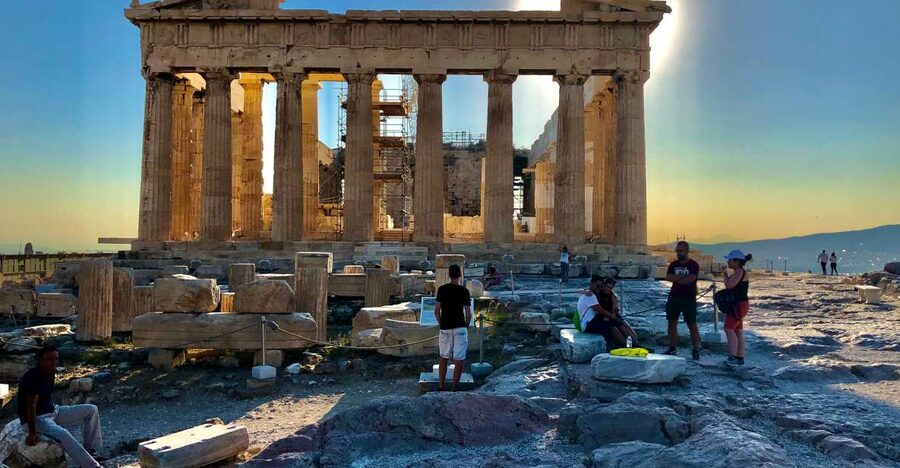
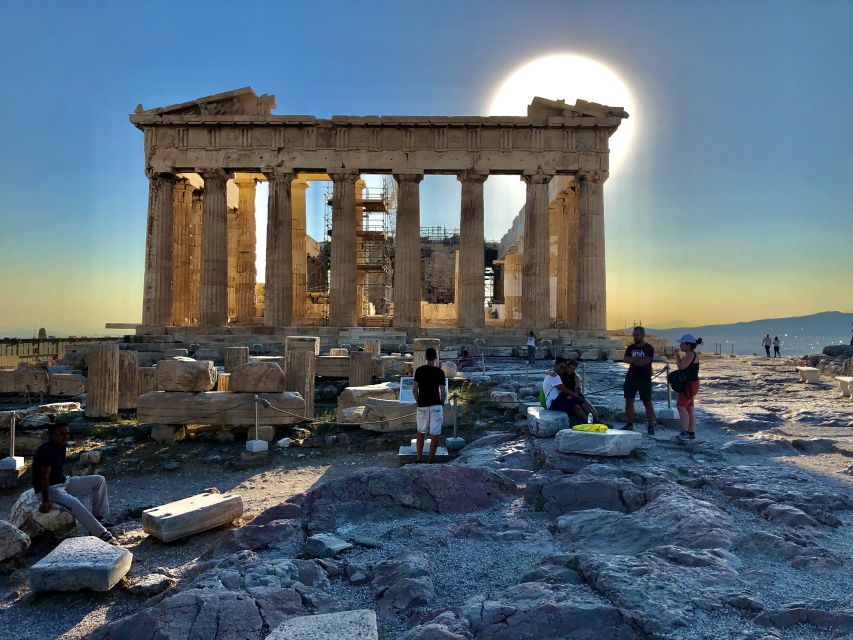
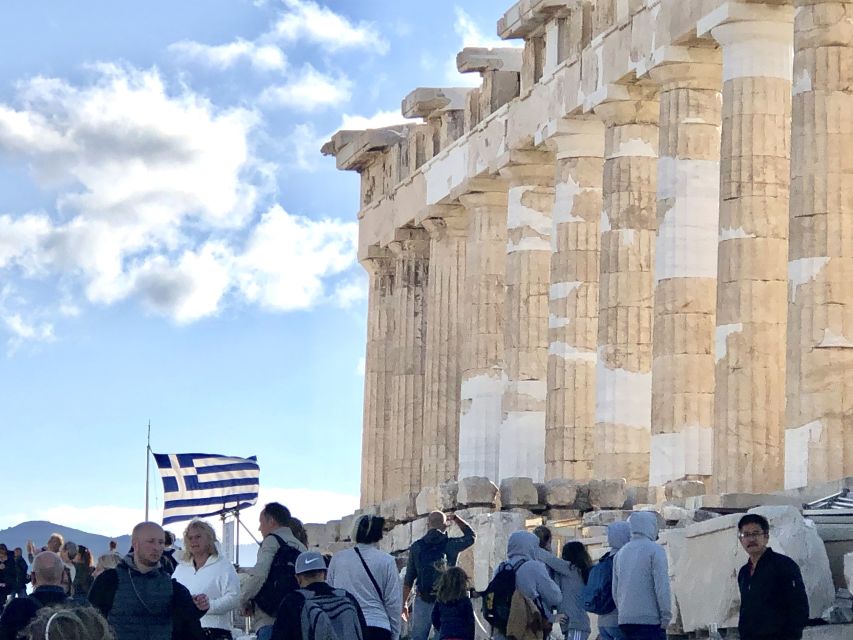
You will stop right in front of the Parthenon. This is the moment most people expect. What makes this tour different is the explanation you get in that exact spot.
You learn the real reasons the Parthenon was built about 2,500 years ago, and you get a clearer handle on why it is famous for harmony and architecture. Harmony can sound like vague praise. Here, it is tied to how the building works visually and how the design supports the purpose of the monument.
This is where I pay attention to guide quality, because the Parthenon is so iconic it is easy to get generic facts. The best guides keep it grounded. Notes from Spanish-guided experiences in this company’s orbit suggest they do a good job with context, pacing, and keeping you from feeling rushed while still moving efficiently.
One practical tip: bring a moment to just look. If your guide points out specific details, you will want to switch from “listening mode” to “observing mode” quickly. The stop is short enough that you should not waste it scanning your phone.
Temple of Athena Nike and the Caryatids you will not forget
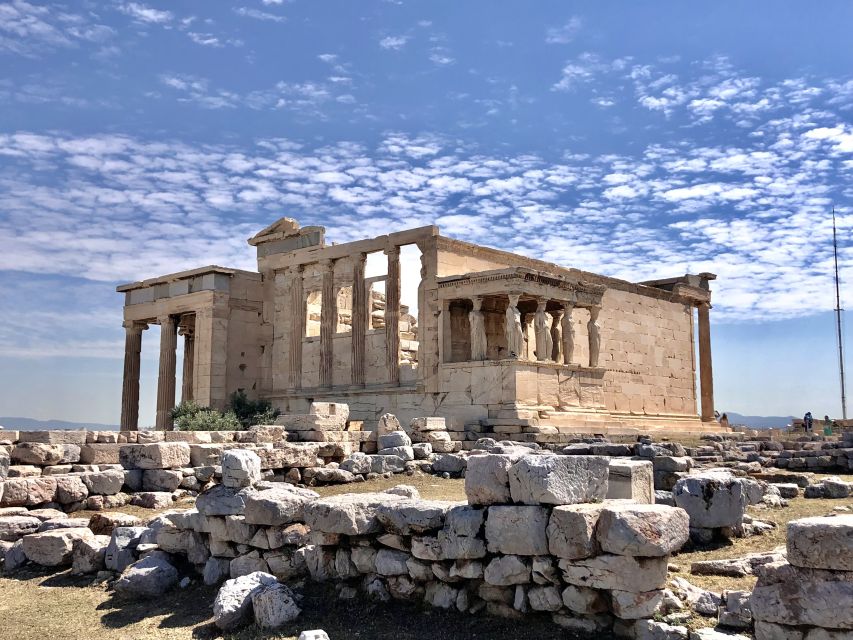
Before the big summit wrap-up, you pass the Temple of Athena Nike and see the Caryatids, the famous draped female columns. This is a good mid-route reset. The Acropolis can feel like one long climb of the same palette. Here, your eyes get a change of texture and scale.
The guide treats these stops as more than postcard points. You learn what to notice and why certain elements are celebrated. If you are the type who usually skips smaller ruins because you think they are “less important,” this portion is a reminder that the details are what make Athens feel like an actual culture, not an outdoor museum.
Headphones help here. When you are close to other groups, audio can get messy. With headphones included, you can keep hearing the guide even when the walkway gets busy.
More Acropolis entries and guided walks:
- Athens: Acropolis & up to 5 Archaeological Sites Combo Pass
★ 4.2 · 13,904 reviews - Athens: Acropolis, Parthenon & Acropolis Museum Guided Tour
★ 4.8 · 9,316 reviews - The Acropolis, Parthenon & Acropolis Museum Guided Tour
★ 4.7 · 8,493 reviews - Acropolis: Premium Acropolis and Parthenon Guided Tour
★ 4.8 · 5,208 reviews
Views from the top: Hadrian, Zeus, Herod Atticus, and the surrounding hills
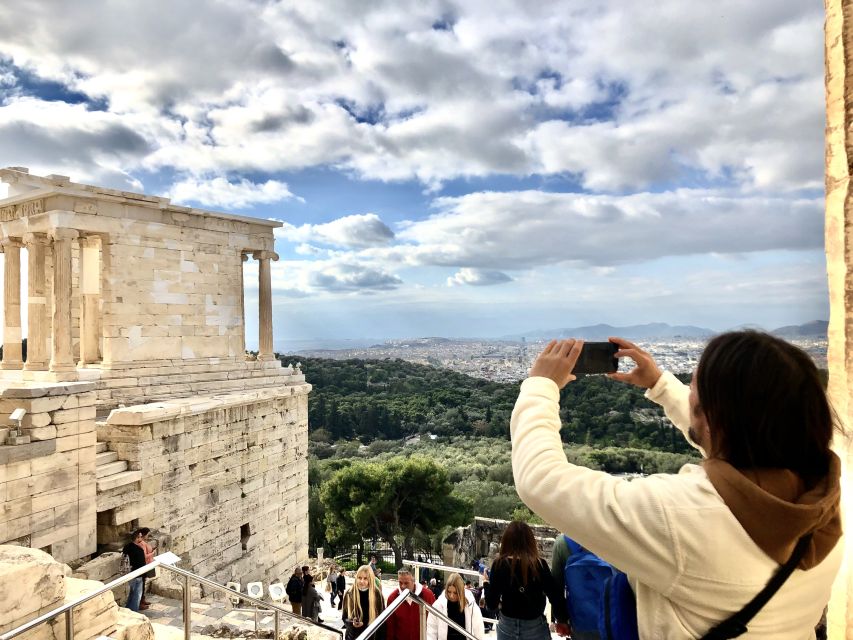
From the top of the Acropolis, the tour becomes a city view lesson. This part is valuable because it gives you a map in your head. You will contemplate major landmarks and the layers of Athens beyond the ancient core.
You are shown:
- the Arch of Hadrian
- the Temple of Zeus
- the Odeon of Herod the Attic, the building where the Athens festival is held today
- the National Observatory
- the hills of Lycabetus and Philopappos
- Areopagus
This is the kind of information that helps later when you are walking without a guide. You can look at a hill and know what it is called. You can identify the kind of venue you are seeing in real life, not just in a guidebook.
You also get a short photo break. It is not just time to take pictures. It is time to switch back into tourist mode. That break keeps the tour from turning into a nonstop lecture marathon.
Plaka and Old Town: outside the Ancient Agora, then back into Athens

After the Acropolis, you move into the Old Town and the Plaka neighborhood. This is where Athens becomes human scale. Plaka is photogenic for a reason, and the tour helps you walk through the right pockets without turning it into a self-guided maze.
As you pass outside the Ancient Agora, you see the best preserved temple in Athens. The tour also connects the Agora to philosophy and public thought, describing the spaces where Socrates, Plato, and Aristotle left their footprints. That framing matters. It turns a set of ruins into an idea about how cities work, how people gather, argue, and build systems of thought.
This is also a good moment to adjust your expectations. The Agora area is not the Acropolis. It is more spread out and less dramatic in one single view. If you want one giant “wow” shot, you may feel the energy dip. But if you like Athens as a walkable, lived-in city, the Agora stop plus Plaka does a nice job balancing awe with atmosphere.
Tower of the Winds and the Mitropolis, where the day closes strong
The last stretch stands out because it pulls you out of the ancient-only tunnel.
You visit the Tower of the Winds, considered the oldest meteorological observatory in the world. Even if you do not go deep into the science on the spot, the idea is cool: these were practical people measuring the sky long before modern tech made it routine. It is a different kind of ancient achievement, and it breaks up the pattern of “temple, temple, temple.”
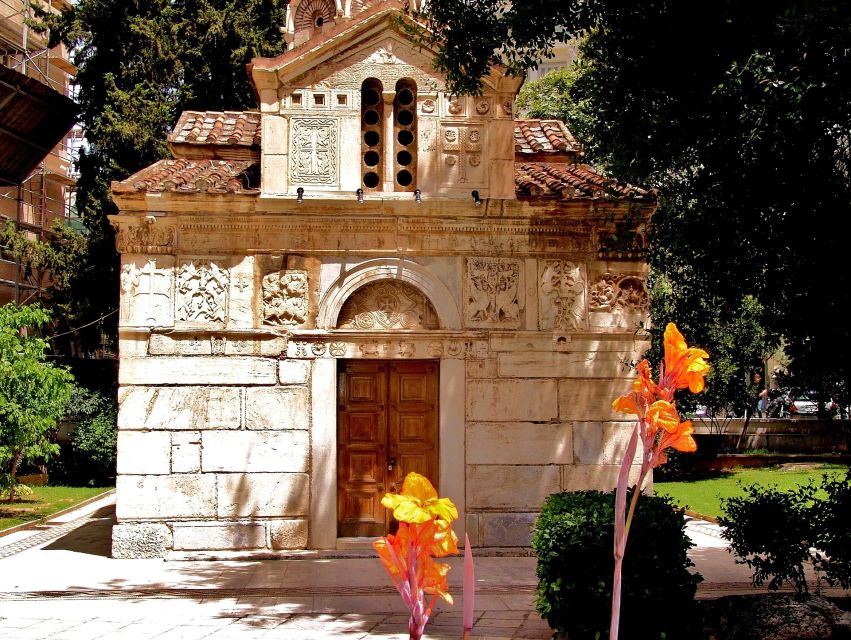
Then comes the Mitropolis of Athens, a church where the marriage of Queen Sofia with Juan Carlos took place. You also get a chance to learn about the Orthodox religion that predominates in the country. This adds a real-world layer to what you have been seeing all morning. Athens is still religious, still ceremonial, still part of someone’s daily identity.
If your brain is tired by this point, it still works. You are not forced into a heavy lecture. You are given meaningful context as a capstone.
Spanish guide quality, small groups, and why headphones matter
This tour is led in Spanish, and the guide is licensed. In experiences tied to this style of tour, the guides show up as the main reason people rate it so high. Names like Efi, Andrea, and Pablos come up in feedback, and what they have in common is clarity and an ability to keep the day moving without losing the story.
One detail I really like from those kinds of experiences is the support before arrival. You can get your location instructions quickly and get help fast if you have questions. That matters because Acropolis mornings can be confusing if you show up late or you cannot find your entrance.
The other standout: the group is typically small. That tends to make the walk more personal. You get a better chance to hear the guide, ask questions, and take photos without feeling like you are stuck behind a crowd wall.
Headphones are included. That seems like a minor perk until you are walking uphill around other tour groups and wind is carrying voices away. It keeps your attention on the guide and the monuments instead of on trying to catch every word.
Price and value for a 4-hour Acropolis and Plaka walk
At $57 per person for about 4 hours, this tour sits in a sensible midrange for Athens guided experiences. You get a licensed Spanish guide and headphones included, plus you get the structure that makes the Acropolis make sense: early entry, a planned route, and context at each stop.
The one cost you have to handle is the Acropolis admission. Entrance fees are not included. You need your Acropolis entrance ticket for the time slot 08:00-09:00, and you get guided help with managing tickets at official cost if you do not have them after booking.
Value-wise, I think the price works best if:
- you want expert explanations in Spanish
- you want to reduce crowd stress with the side-door route
- you care about the “why” behind monuments, not only the photos
If you already have your Acropolis timing solved and you are fine walking on your own, the guide is what you are really paying for. In this case, the guide portion is exactly what seems to deliver.
When this tour is a great fit, and when to skip it
This is a strong choice if you:
- are visiting Athens for the first time and want a guided framework fast
- like structured stops with context at each monument
- want to finish with a genuine neighborhood walk in Plaka
- prefer small-group energy over big-bus chaos
It may not be ideal if:
- you have mobility limitations, since it is not suitable for mobility impairments and it excludes baby carriages and electric wheelchairs
- you dislike early starts and long stone walking segments
- you prefer very short, tight explanations. One note from past experience suggests that for some people, the guide may run a bit long. If you like crisp bullet points only, you might want to focus on the moments that matter most to you and let the rest wash by.
Should you book this Acropolis and Plaka Spanish tour?
If your priority is to see the Acropolis and still understand what you are looking at, I would book this. The early, south-slope entry helps your day feel smoother. The guide-led storytelling, plus the stops like the Caryatids, Tower of the Winds, and Mitropolis, make the route feel more rounded than a pure monument checklist.
Make your decision easier with this checklist:
- Do you have a plan for the Acropolis ticket time window (08:00-09:00)? If not, factor in time to get it.
- Are comfortable shoes in your bag? You will need them.
- Are you okay with a walking day that includes uneven terrain and stairs?
If those answers are yes, this is the kind of half-day that leaves you with both photos and a mental map of Athens.
FAQ
Is the Acropolis entrance ticket included in the tour price?
No. Entrance fees to the Acropolis are not included. You must obtain an Acropolis entrance ticket for the 08:00-09:00 time slot.
What time slot should my Acropolis ticket be for?
The required time slot is 08:00-09:00.
Where do I meet the guide?
You meet at the lower gate of the Acropolis, a few meters from the Acropolis Museum. The guide holds a sign with the office logo.
How long is the walking tour?
The duration is 4 hours.
What language is the tour guide?
The guide is Spanish, and headphones are included.
Does the tour include hotel pickup and drop-off?
No. Hotel pickup and drop-off are not included.
Are food and drinks included?
No. Food and drinks are not included.
What should I bring?
Bring comfortable shoes.
Is the tour suitable for mobility impairments?
No. The tour is not suitable for people with mobility impairments, and baby carriages and electric wheelchairs are not allowed.
Can I pay later or cancel for free?
Yes. You can reserve now and pay later. Free cancellation is available up to 24 hours in advance for a full refund.
More Historical Tours in Athens
- Historical Delphi One Day Tour with Arachova Stop & Expert Guide
★ 4.5 · 1,247 reviews - Historic Athens: Small Group Electric Bike Tour
★ 4.9 · 966 reviews - Acropolis, Parthenon & Athens Old City Heritage Walking Tour
★ 4.5 · 876 reviews - Athens: Small Group E-Bike Tour of Historic Highlights
★ 4.9 · 154 reviews
Freshly listed near Athens
- Private Guided Tour: Athens, Acropolis and Acropolis Museum★ 4.9 · 62 reviews
- Private Athens Tour with a Local- Highlights & Hidden Gems★ 4.9 · 64 reviews
- Athens: Private Acropolis Tour with focus on Kids & Families★ 4.8 · 51 reviews
- Poros Island: Full Day Trip From Athens with Swimming★ 4.8 · 33 reviews
- Piraeus Port: Acropolis Museum and Parthenon Mythology Tour★ 3.7 · 29 reviews
- Athens: Ouzo Tasting at Brettos Plaka★ 4.3 · 32 reviews
- Athens Old Town: Greek Olive Oil & Herbs Tasting★ 4.2 · 41 reviews
- No Diet Club – Unique local Food Tour in Athens!★ 4.9 · 38 reviews
Acropolis Tickets & Guided Tours, compared.
Acropolis & up to 5 Archaeological Sites Combo Pass
Read our review →
Acropolis Ticket with Optional Audio or Live Guide
Read our review →
Acropolis, Parthenon & Acropolis Museum Guided Tour
Read our review →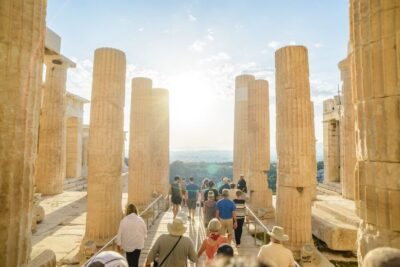
Acropolis: Premium Acropolis and Parthenon Guided Tour
Read our review →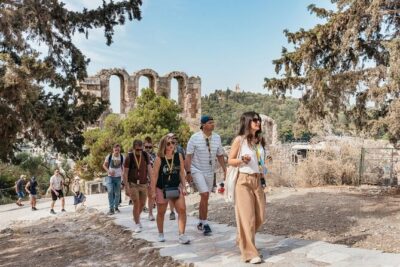


Athens Scenic Electric Bike Tour with optional Acropolis visit
Read our review →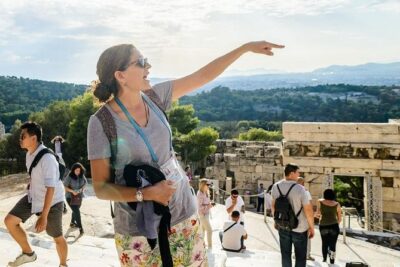
Acropolis monuments & Parthenon Walking Tour with Optional Acropolis Museum
Read our review →Browse the lists this tour appears in