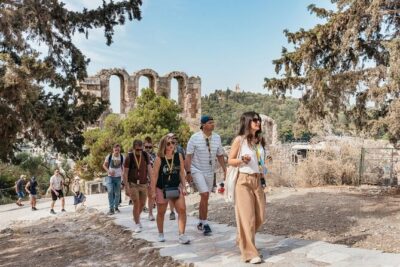
Reviewed · ATHENS TOURS & ACTIVITIES
Athens: Women in Ancient Greece
Women in ancient Greece changes everything.
This is a guided city walk that turns Athens’ famous stones into stories about real women, not footnotes. I especially love the female perspective on major landmarks like the Agora and the Acropolis area, and I like how the tour connects myth and daily life through goddesses and legends you can actually picture on these streets.
What I like most is how the tour doesn’t treat women as one single type. You’ll hear about roles shaped by Greek mythology, then meet surprising figures who pushed limits, including Sappho, Aspasia, and Agnodice. You also get a wider Greek picture, with references beyond Athens, like Sparta and Thebes, so the city feels less like a bubble.
One thing to consider: this is a walking tour with steps, so it may not work well if you have mobility limits or heart issues, and it is not wheelchair-friendly.
In This Review
- Key things you’ll notice on this walk
- Why the Women-First Lens Makes Athens Feel New
- The Big Theme: Myth, Goddesses, and Social Rules
- Two Hours, Lots of Walking, and How to Prepare
- Starting at Monastiraki and Getting Oriented Fast
- Hadrian’s Library: A Stop That Feels Like a Clue
- Plaka and the Gate of Athena: Myth as Architecture
- A Secret Stop You Should Expect to Love
- Ancient Agora Through Women’s Eyes, Not Just Big Names
- Pnyx and Democracy: Seeing What Was Missing
- Filopappou Hill Finish: A Calm View Before You Continue
- What the Guide Brings (and Why It Matters)
- Price and Value: Is $88 Worth Two Hours?
- Who Should Book This Tour, and Who Should Skip It
- Should You Book Athens: Women in Ancient Greece?
- FAQ
- How long is the Athens Women in Ancient Greece walking tour?
- Where do I meet the guide?
- What languages is the tour offered in?
- Is this tour private?
- Are archaeological site tickets included?
- Is food or drink included?
- What should I bring?
- Is the tour suitable for people with mobility impairments?
Key things you’ll notice on this walk
- A women-first route through central Athens, with big sites explained from a different angle
- Myth used as a map, linking Athena, Penelope, Demeter, and Pandora to social expectations
- Standout stories of boundary-breakers, including Sappho, Aspasia, and Agnodice
- Agora and Pnyx viewpoints, with the feeling of democracy and the reality of who was excluded
- Small-group energy, with time for questions and a conversational tone
- Filopappou Hill finish, for a breezy end and a great view angle before you move on
Why the Women-First Lens Makes Athens Feel New
Athens is famous for democracy, philosophy, temples, and statues. But the city also carries an uncomfortable truth: most “official” history was written by and for men. This tour makes you walk through the same classical landmarks, but with the missing half in focus, so the ruins start to explain social life, not just politics.
I love that the stories aren’t only about famous names. The tour frames women as they were in everyday routines, household roles, work, religious life, and social constraints, then shows how mythology shaped the expectations around them. That means you’re not just learning facts. You’re learning a mindset.
And yes, you still get the famous sights. It’s just that the stories change what those sights mean.
Other ways to spend the day near Athens
- Athens: Acropolis & up to 5 Archaeological Sites Combo Pass
★ 4.2 · 13,904 reviews - Athens: Acropolis, Parthenon & Acropolis Museum Guided Tour
★ 4.8 · 9,316 reviews - The Acropolis, Parthenon & Acropolis Museum Guided Tour
★ 4.7 · 8,493 reviews
The Big Theme: Myth, Goddesses, and Social Rules

Greek mythology isn’t only bedtime storytelling here. It is a social code. The tour uses familiar figures like Athena, Penelope, Demeter, and Pandora to show how myths helped define behavior, virtue, and status for women in different settings.
You’ll also hear about how religion and festival life could steer public roles. One of the intriguing elements in the tour description is talk of a mysterious women’s festival in Athens. Even if you only catch the outline, it gives you a clue: women’s lives were not separate from the public world, but their presence was often shaped through specific rituals and norms.
Expect the guide to keep flipping between legend and the street-level reality that would surround it. That is why the tour feels thought-provoking without becoming heavy.
Two Hours, Lots of Walking, and How to Prepare
This experience is built as a tight 2-hour walking tour in central Athens. That timing matters because it keeps the pace brisk, like a great museum conversation that moves fast and then lands with a final big idea.
You’ll want to come ready for sun and stairs. Bring a sun hat, sunscreen, and water. The route includes steps, and it is not suitable for wheelchair users. If you have mobility impairments or heart problems, skip this one and choose a more accessible format.
A small practical note: the tour does not include archaeological site tickets, so you should plan on exterior viewing for the main monuments rather than extended interior time.
Starting at Monastiraki and Getting Oriented Fast

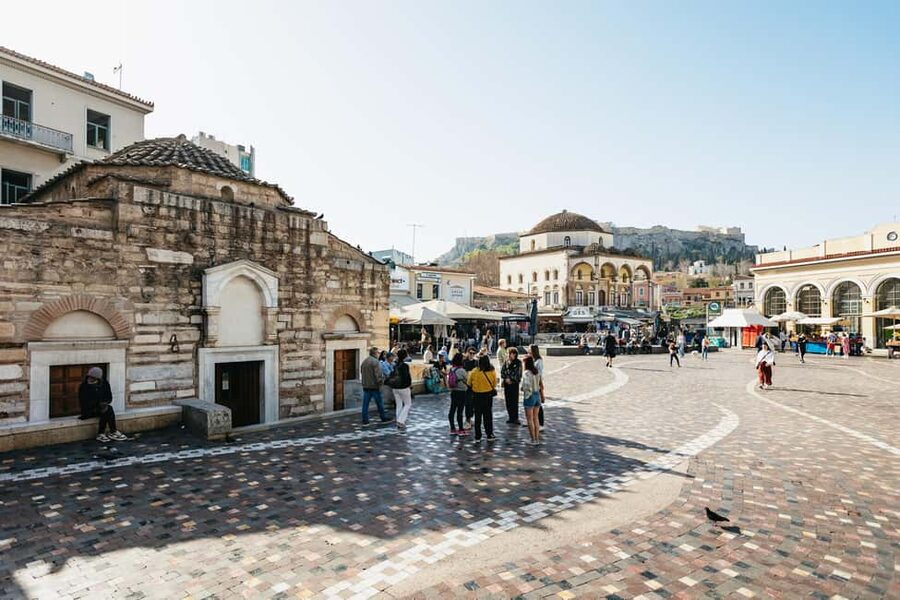
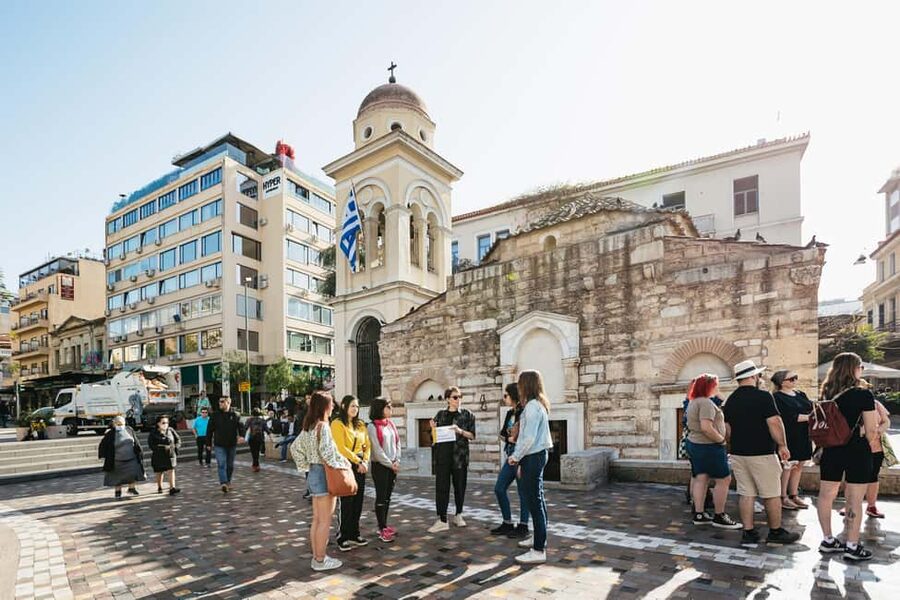
You meet in Monastiraki, at the Holy Church of the Virgin Mary Pantanassa. It’s a convenient launch point because Monastiraki is already a “first-time Athens” neighborhood, full of energy and easy to reach. You’ll recognize the meeting moment because the guide holds a sign that reads Women in Ancient Greece.
This opening matters. Before you even hit the big classical stops, the guide frames the walk around day to day life. That early framing helps you notice things later, like how city spaces functioned socially, where crowds formed, and how women’s lives would have intersected with public life.
If it’s your first day in Athens, this is a smart way to get your bearings.
A short hop away, these too:
- Athens: Cape Sounion & Poseidon Temple Sunset Half-Day Trip
★ 4.8 · 8,241 reviews - Acropolis: Premium Acropolis and Parthenon Guided Tour
★ 4.8 · 5,208 reviews - Athens: Mythology of Delphi, Museum and Arachova Guided Tour
★ 4.7 · 5,102 reviews - All Day Cruise -3 Islands to Agistri,Moni, Aegina with lunch and drinks included
★ 5.0 · 4,958 reviews
Hadrian’s Library: A Stop That Feels Like a Clue
One of the first major stops is Hadrian’s Library. Even when you can’t go inside, it’s still a powerful scene-setter. This part of the walk helps you connect Athens’ imperial-era grandeur with the earlier classical roots the tour keeps referencing.
What makes this stop feel worth your time is how it feeds the tour’s theme. The guide doesn’t just say what the building is. They use it as context for how cultural life, education, and public spaces related to who had access and who did not.
You’ll also get a sense of how Athens layers centuries in the same small area. That makes later classical sites hit harder, because you’re not treating them like isolated objects.
Plaka and the Gate of Athena: Myth as Architecture
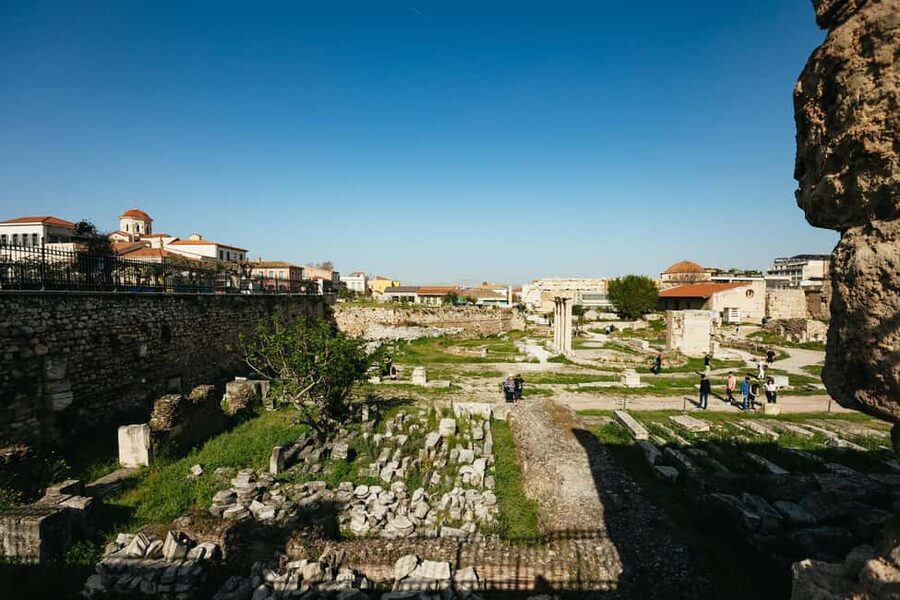
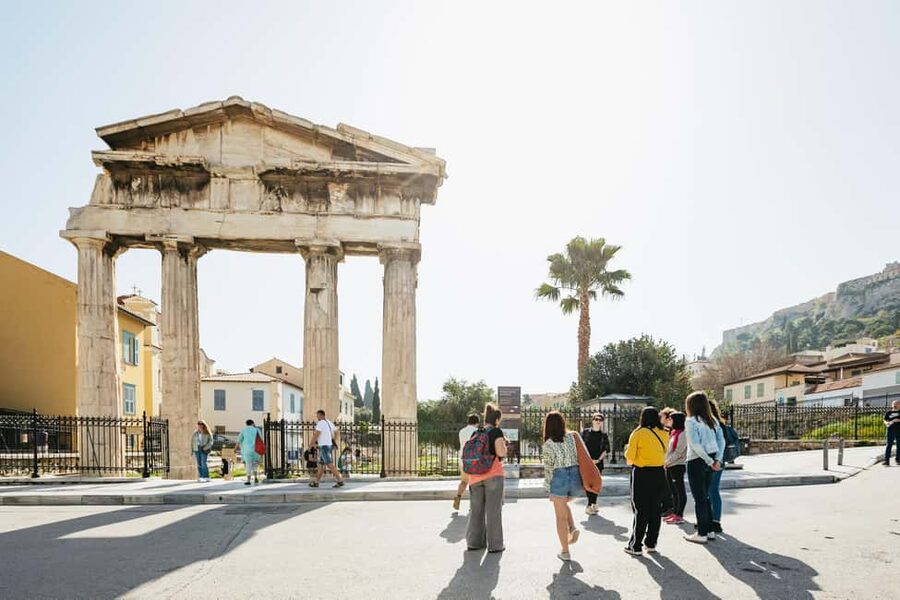
After Monastiraki, you move through Plaka and then toward the Gate of Athena Archegetis. This is one of those stretches where the city’s layout becomes part of the lesson.
Plaka gives you the feel of older Athens living on top of the ancient world. The Gate of Athena gives you the theme in physical form: Athena as a symbol, not just a goddess with a story. You’re seeing how mythology and public identity can be built into a city’s bones.
The tour’s angle here is useful because it turns symbolism into expectations. Athena isn’t just a figure in a tale. She represents idealized qualities that people could point to as models or justifications. That helps you understand why women’s roles were shaped by myth, even when daily life did not match the ideal.
A Secret Stop You Should Expect to Love
There’s also a secret stop on the route. The exact location isn’t detailed in the tour description, so treat it as a guided detour designed to keep the walk surprising.
In practice, this kind of stop is often where you get the “how did we miss this?” moment. One of the consistent themes in the guided experience is discovering lesser-known angles of Athens, especially ones tied to women’s lives.
So if you like tours that don’t just march from one headline ruin to the next, you’re likely to enjoy this part. It also helps keep the tour from turning into a straight line through obvious photo spots.
Ancient Agora Through Women’s Eyes, Not Just Big Names
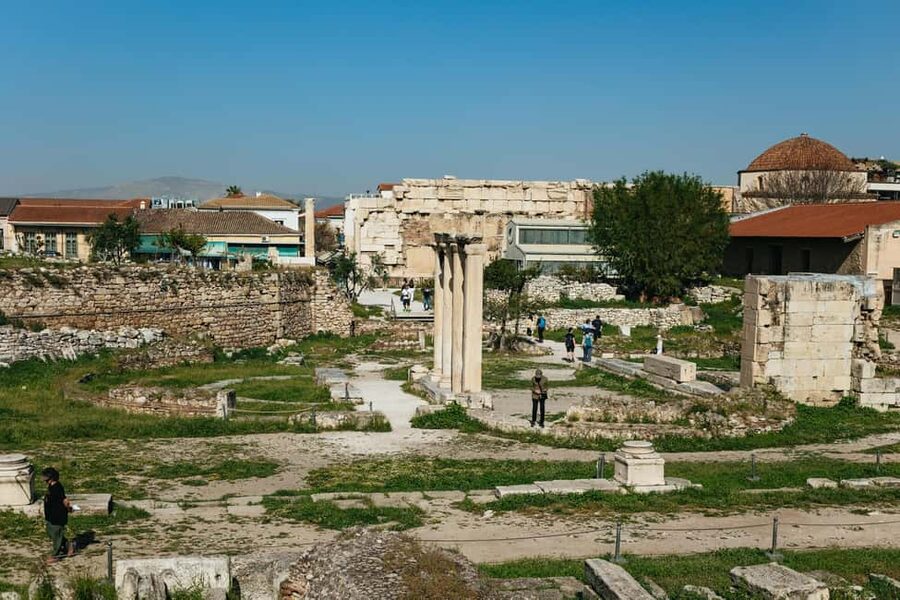
The Ancient Agora of Athens is the heart of the city’s public life. Here, the tour’s women-first approach does real work. You’re not just absorbing architecture and famous history. You’re hearing about social roles and how public space functioned for different groups.
This is also where the tour’s mix of legend and reality helps. Mythology may explain expectations, but the Agora explains the mismatch between ideals and lived experience. The guide connects those dots so you can feel the tension.
One practical plus: the Agora is a major anchor for your Athens day. Even if you later add Acropolis time, you’ll have better context. You’ll understand what kind of civic life existed, and what kinds of participation women were denied.
Pnyx and Democracy: Seeing What Was Missing

Next up is Pnyx, with a guided focus that includes the area associated with early democratic votes. Pnyx is dramatic and it’s central to the story of Athens as a political model.
But the tour’s emphasis makes Pnyx hit differently. The big takeaway is not only that democracy existed. It is also the reminder of who voted, who spoke, and who did not get counted in the same way.
That is why this stop is one of the strongest on the route for many people. You’re standing in a civic space, and the guide is nudging you to compare ancient institutions to modern ideas of inclusion. It’s not a guilt trip. It’s a reality check that makes the ruins feel present.
If you care about feminism, history education, or just learning to read cities differently, this is where the tour turns from informative to memorable.
Filopappou Hill Finish: A Calm View Before You Continue

The tour ends at Filopappou Hill, after a short scenic viewpoint moment along the way. The route gives you a satisfying transition: you go from civic spaces and myth-coded gateways to a more open feeling with a view.
This ending helps because it gives your brain a place to breathe. Two hours of heavy context can make your head spin a bit. A hilltop viewpoint is the perfect reset, especially when you can see how Athens spreads out.
You also get a sense of how ancient routes connected. Even without walking every ancient path, the city’s slopes and sightlines give you an intuitive understanding of why locations mattered.
What the Guide Brings (and Why It Matters)
The experience lives or dies by the guide. Here, the standout pattern is conversational energy. People consistently praise the guide for making the stories feel alive, not like a lecture.
You’ll hear about women from different social classes, not only the most famous names. You’ll also get examples of women who defied expectations, such as Sappho (poetry and voice), Aspasia (influence and intellect), and Agnodice (medicine and professional boundary-breaking). Even when you only know a couple of these names, the guide puts them into a broader social picture.
Another detail worth noting is how the guide handles questions. Several group comments highlight that time is spent engaging with what you want to know, and that the guide answers general Athens questions too. That is a big deal because it turns your walking tour into a real planning tool for the rest of the trip.
And there is a small gift included at the end. One traveler noted postcards connected to the women discussed, which is a nice souvenir you can actually read later.
Price and Value: Is $88 Worth Two Hours?
At $88 per person for a 2-hour walking tour, the value comes down to focus and payoff.
This isn’t a generic “Top 10 Athens ruins” walk. It has a narrow, specific theme: women in ancient Greece. That means you spend your time on stories you won’t pick up as easily on standard tours, especially the social realities and the myth-to-everyday-life connections.
You also get a private group option, and the included guide does the heavy lifting of storytelling and context. Since tickets and food are not included, you should treat the $88 as paying for the guided experience, the walking route, and the interpretation of major sites from a new angle.
If you want a tour that feels like a guided lesson but still feels human, this price can make sense. If you want maximum ruins time, you might pair it with a longer, ticket-heavy Acropolis day afterward.
Who Should Book This Tour, and Who Should Skip It
This tour is a great match if you want Athens to feel personal and specific. It works well for:
- First-time Athens visitors who want context before bigger ticket sites
- Anyone interested in women’s history and how institutions shaped daily life
- People who like myth, but want myth tied to social reality
- Small groups who want conversation, not just headsets and speed-walking
Skip it if:
- You need wheelchair access
- You have mobility limitations that make steps difficult
- You have heart problems that make walking an issue
Also, if you’re the type who wants museum-style access inside buildings, remember tickets are not included, so most key structures are viewed from the outside.
Should You Book Athens: Women in Ancient Greece?
I think it’s an easy yes if you’re looking for an Athens tour that does something different with the same famous places. The women-first lens changes how the Agora, Pnyx, and the Acropolis viewpoints land in your mind. And the guide’s approach, especially the mix of mythology, everyday life, and boundary-breaking figures, makes it feel educational without becoming dry.
Book it if you want stories you can carry into the rest of your trip. It’s also a strong pick if you’re traveling with a partner or friend who usually finds classical history repetitive. The theme gives everyone a new entry point.
If you have mobility concerns or need interior ticket time, plan a different Athens day and keep this one for when you can comfortably handle the walk.
FAQ
How long is the Athens Women in Ancient Greece walking tour?
The tour lasts 2 hours.
Where do I meet the guide?
Meet your guide at Monastiraki Square, in front of the Church Pantanassa (the Holy Church of the Virgin Mary Pantanassa).
What languages is the tour offered in?
The live guide offers English and French.
Is this tour private?
Yes, it is a private group experience.
Are archaeological site tickets included?
No. Tickets to archaeological sites are not included, and the tour provides exterior views only.
Is food or drink included?
Food and drink are not included.
What should I bring?
Bring a sun hat, sunscreen, and water.
Is the tour suitable for people with mobility impairments?
No. The tour includes steps and may not be suitable for people with health or mobility difficulties. It is not suitable for wheelchair users.
Freshly listed near Athens
- Private Guided Tour: Athens, Acropolis and Acropolis Museum★ 4.9 · 62 reviews
- Private Athens Tour with a Local- Highlights & Hidden Gems★ 4.9 · 64 reviews
- Athens: Private Acropolis Tour with focus on Kids & Families★ 4.8 · 51 reviews
- Piraeus Port: Acropolis Museum and Parthenon Mythology Tour★ 3.7 · 29 reviews
- Poros Island: Full Day Trip From Athens with Swimming★ 4.8 · 33 reviews
- Athens: Ouzo Tasting at Brettos Plaka★ 4.3 · 32 reviews
- Athens Old Town: Greek Olive Oil & Herbs Tasting★ 4.2 · 41 reviews
- No Diet Club – Unique local Food Tour in Athens!★ 4.9 · 38 reviews
Athens Tours & Activities, compared.
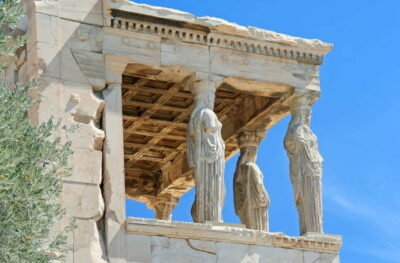
Acropolis & up to 5 Archaeological Sites Combo Pass
Read our review →
Acropolis, Parthenon & Acropolis Museum Guided Tour
Read our review →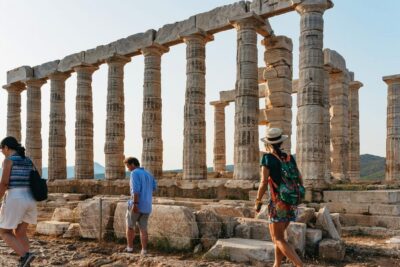
Cape Sounion & Poseidon Temple Sunset Half-Day Trip
Read our review →
Acropolis: Premium Acropolis and Parthenon Guided Tour
Read our review →
Mythology of Delphi, Museum and Arachova Guided Tour
Read our review →
All Day Cruise -3 Islands to Agistri,Moni, Aegina with lunch and drinks included
Read our review →
Athens, Piraeus, and Coastline: Blue Hop-On Hop-Off Bus
Read our review →