

Reviewed · ATHENS GUIDED WALKING TOURS
Athens Social and Political Walk
Political Athens turns sidewalks into a lesson. This 2.5-hour small-group walk connects Greece’s top institutions to the big ideas shaping everyday life, with a political scientist guide who encourages questions about history and current events. I like the focused pace, and I like that you’re not just watching buildings, you’re learning the logic behind power. One possible drawback is that this is a niche tour, so if you want classic postcard sightseeing, you might prefer a more general route.
The best part is the way Isaac ties places together with real context, from Greece’s earlier struggles through the Junta period to modern democratic reform. You’ll hear comparisons that help concepts click, especially if Greek politics feels complicated at first glance. The tone stays balanced and nuanced, even when the topics are sensitive, and that makes it easier to ask follow-up questions without feeling rushed.
You’ll walk between the official seats of the Prime Minister and the President, then on to Parliament, the Old Parliament House, and finally the Athens Polytechnic area at the National Technical University of Athens. The tour has a moderate physical fitness requirement, and with a maximum of 15 people, you get more attention than on bigger group tours.
In This Review
- Key things to know before you go
- Political Athens works better on foot than in a classroom
- Meet Isaac: turning history and today’s news into a shared storyline
- The walk through power: Prime Minister, President, and Parliament
- Old Parliament House: where reform stories show up on the street
- November 17, 1973 at Athens Polytechnic: a turning point you can stand beside
- Route, meeting point, and timing for a smooth 2.5-hour walk
- Price and value: what $47.92 buys you
- Weather, pace, and who this tour fits best
- Should you book the Athens Social and Political Walk?
- FAQ
- How long is the Athens Social and Political Walk?
- What does the tour cover, and where does it end?
- Is this tour in English, and do I get a mobile ticket?
- How big is the group?
- What fitness level do I need?
- What happens if the weather is bad or I need to cancel?
Key things to know before you go

- Small-group format (max 15): more Q&A time, not just passive listening
- Political scientist guide named Isaac: connections between past events and today’s debates
- Five major stop points: Prime Minister, President, Parliament, Old Parliament House, Athens Polytechnic
- November 17, 1973 focus: the Athens Polytechnic uprising anchored at the end point
- English language experience: mobile ticket included for an easy check-in
- Moderate walking level: plan for a steady 2.5-hour stroll in good weather
Political Athens works better on foot than in a classroom

There are lots of ways to learn politics. I like this one because it uses geography as the teaching tool. Instead of abstract names and dates, you move between the actual seats and spaces where authority is expressed and debated.
The payoff is speed with clarity. You start to see how institutions, public pressure, and political identity can all show up in the same city, even if your first impression of Athens is mostly ruins and museums. This walk helps you get your bearings fast in a less touristy way.
More walking tours around Athens:
- Acropolis and Parthenon Guided Walking Tour
★ 5.0 · 4,755 reviews - Greek Food Walking Tour in Athens
★ 5.0 · 4,740 reviews - Athens: Guided Greek Food Walking Tour with Tastings
★ 4.9 · 2,859 reviews
Meet Isaac: turning history and today’s news into a shared storyline
What makes the experience work is the guide, Isaac. His style, based on the feedback people loved, is very much about explanation plus discussion. You’re guided through big chapters, then invited to test what you’re hearing with questions, which helps you build your own understanding instead of just memorizing talking points.
One detail I especially appreciate from the tone of the reviews is how Isaac uses comparisons to make ideas easier to grasp. That matters if you come from a different political culture, because Greece’s system can feel full of unfamiliar terms until someone gives you mental hooks.
People also praised that his perspective is balanced and nuanced. Even when he links stories across decades, the framing does not come off as one-note. That’s a big deal in a topic like polarization, where you can easily end up with a lecture that feels like it already picked a side.
The walk through power: Prime Minister, President, and Parliament
You’ll start with the official seat of the Prime Minister of Greece. This isn’t presented as trivia. The idea is to connect the physical place to the political role, so you understand why the location matters and how it fits into the broader story of how decisions are made.
Next comes the official residence of the President of the Hellenic Republic. The value here is seeing how the tour treats leadership as a structure, not a personality. It helps you think about how political legitimacy, symbols, and institutions can shape public trust, even when the press and the streets are loud.
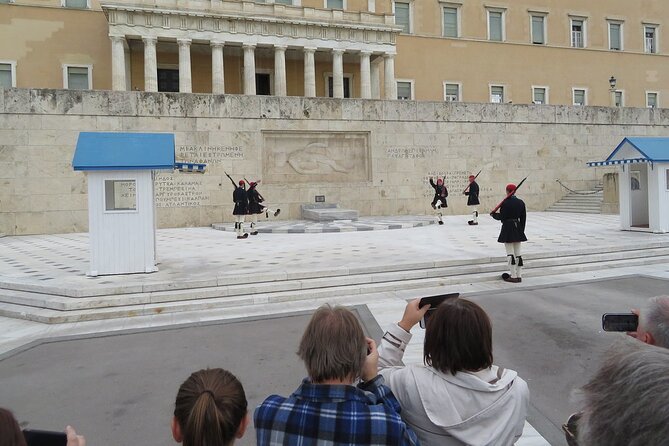
Then you move to the Parliament of Greece. This stop is where discussion tends to click for a lot of people because Parliament sits at the center of how disagreement turns into votes, laws, and policy. The tour’s format gives you time to ask questions, so you can connect what you’re seeing to what you might be reading in the news back home.
A practical note: government-area walking can feel more direct and less scenic than a neighborhood stroll. That’s not a flaw, it’s the point. You’re trading pretty views for sharper context, and that trade tends to be worth it if you enjoy understanding how systems work.
Old Parliament House: where reform stories show up on the street

After Parliament, you’ll visit the Old Parliament House. This is a key moment because it shifts the focus from what power looks like today to how it changed over time.
In the feedback, people liked that the guide connects major periods, including democratic reform after the Junta era, and that it ties those shifts to what Greece debates now. When you stand in the place associated with earlier governance, those transitions feel less like a timeline on a page and more like something that still influences the present.
If you’re the type who likes to understand cause and effect, this stop is where the walk starts to feel like a political map. You can look at today’s institutions and then remember that earlier versions of the same idea existed, and that they did not evolve in a straight line.
The only caution I’d give is mental, not physical. If you want politics presented as clean and simple, you may find the subject matter complicated. That’s not a problem with the tour, it’s the nature of the topic.
Other ways to spend the day near Athens
- Acropolis monuments & Parthenon Walking Tour with Optional Acropolis Museum
★ 5.0 · 2,678 reviews - Athens Acropolis and Parthenon Walking Tour
★ 4.5 · 1,355 reviews - Acropolis, Parthenon & Athens Old City Heritage Walking Tour
★ 4.5 · 876 reviews - Athens Authentic Greek Food Walking Tour (Small Group)
★ 5.0 · 809 reviews
November 17, 1973 at Athens Polytechnic: a turning point you can stand beside

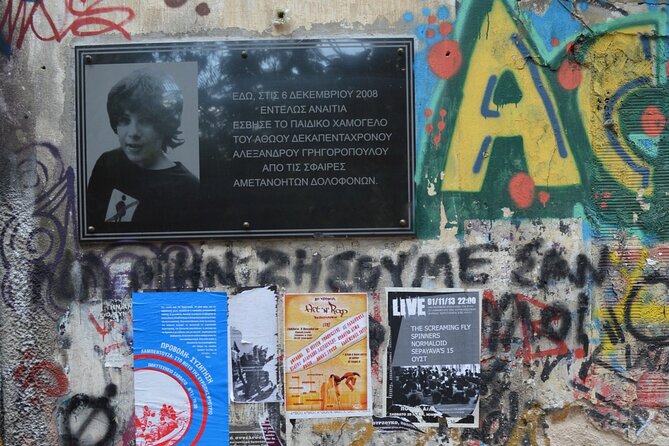
The final stop is the National Technical University of Athens, often referred to as Athens Polytechnic because of its role in the Athens Polytechnic uprising on November 17, 1973. This is the emotional anchor of the walk. It gives the political story stakes, not just structure.
What I like about ending here is that it turns everything you heard earlier into something you can feel. Prime Minister, President, Parliament, and the Old Parliament House become parts of a broader question: what happens when citizens reject the status quo and demand change?
From the reviews, people appreciated that Isaac spans from earlier struggles through the Junta period and into the modern era, then brings in relevant anecdotes tied to recent events. That approach makes the uprising part of a longer arc, not a one-time tragedy stuck in the past.
This is also where asking questions can be especially useful. If there’s a headline you saw before your trip, you’ll likely be able to connect it to the themes discussed throughout the walk.
Route, meeting point, and timing for a smooth 2.5-hour walk
The tour is about 2 hours 30 minutes, and it’s designed as a steady walking route through major government locations. With a moderate physical fitness level required, plan to stay comfortable through continuous movement. You do not need to be a marathon person, but you should be able to walk at a city pace.
You start at Leof. Vasilissis Sofias 2-4, Athina 106 74, Greece. The end point is the main entrance of the National Technical University of Athens, on Patision Avenue. If you like finishing your day with a clear destination, ending at a specific entrance helps a lot.
The experience is near public transportation. That matters because Athens is big and busy, and you want the option to take the edge off your schedule before or after the walk.
Also, the tour runs in English and uses a mobile ticket. That tends to make the start easier if you’re juggling multiple plans on the same day.
Finally, the tour has a maximum group size of 15 travelers, which is a major reason this kind of political walk can feel like a conversation instead of a performance.
Price and value: what $47.92 buys you

At $47.92 per person for about 2.5 hours, the headline value is not any one building or photo stop. You’re paying for a specialist guide and the small-group format that supports real questions.
This is the kind of tour where the guide’s job is to interpret, connect, and explain. If you’ve ever walked around Athens reading plaques that basically say what you already guessed, this feels different. You’re spending your time on meaning, not just surface details.
You also get value through structure. The route is built around clear institutions and one major historical event, so your learning has shape. Instead of a random collection of stops, you get a thread that starts with power and ends with a moment of civic resistance.
If your travel style leans toward history-by-way-of-people, this price tends to make sense. If you prefer scenic walking and skip anything political, you might feel the cost is aimed at a specific interest.
Weather, pace, and who this tour fits best
This experience requires good weather. If Athens is acting up, you’ll likely be rescheduled or offered a full refund, so it’s worth checking plans close to departure.
The pace is built for a moderate fitness level. Think “steady and focused,” not “stops every two minutes.” If you know you get tired easily on long city walks, you may want to plan this for a day when your energy is high.
This walk is best for you if:
- You enjoy history that connects to modern news
- You want a political scientist perspective, not just a storyteller
- You like asking questions and getting answers tailored to what you’re thinking
It may be less satisfying if:
- You want a standard Athens sightseeing checklist
- You’re not interested in politics or prefer lighter conversation
- You want lots of free time to browse on your own
Should you book the Athens Social and Political Walk?
I think you should book this if you want Athens to make sense beyond ruins and views. The small-group size, the guide named Isaac, and the focus on how institutions and events shape Greece today are exactly what make this tour feel like a shortcut to understanding.
If your goal is standard sightseeing, you might not love the more policy-heavy emphasis. But if you enjoy learning how a country argues with itself and how that shows up in key places, this is a strong choice.
In short, book it when you want a sharper lens. Skip it when you want a relaxed, purely scenic stroll.
FAQ
How long is the Athens Social and Political Walk?
It lasts about 2 hours 30 minutes.
What does the tour cover, and where does it end?
You visit the official seat of the Prime Minister, the official residence of the President, Parliament of Greece, the Old Parliament House, and then finish at the National Technical University of Athens, sometimes called Athens Polytechnic.
Is this tour in English, and do I get a mobile ticket?
Yes, the tour is offered in English and you get a mobile ticket.
How big is the group?
The maximum group size is 15 people.
What fitness level do I need?
You should have a moderate physical fitness level.
What happens if the weather is bad or I need to cancel?
The experience requires good weather, and if it is canceled due to poor weather, you will be offered a different date or a full refund. Cancellation is free if you cancel up to 24 hours in advance for a full refund.
Freshly listed near Athens
- Athens: Premium Guided E-Scooter Tour in Acropolis Area★ 5.0 · 133 reviews
- Athens: Wine Workshop Create your Own Wine under the Acropolis★ 5.0 · 77 reviews
- Ceramic and Pottery Creative Workshop with Two Local Artists★ 4.0 · 57 reviews
- Athens: Greek Wines Tasting with Sommelier and Acropolis Views★ 5.0 · 88 reviews
- Private Tour and Tasting at Zeginis Winery★ 5.0 · 18 reviews
- Private Day Trip to Nafplio from Athens★ 5.0 · 20 reviews
- Athens Old City Private Photoshoot Tour / 2 hrs★ 5.0 · 109 reviews
- Greek food and wine tasting★ 5.0 · 18 reviews
Athens Guided Walking Tours, compared.



Acropolis monuments & Parthenon Walking Tour with Optional Acropolis Museum
Read our review →
Acropolis, Parthenon & Athens Old City Heritage Walking Tour
Read our review →
Athens Authentic Greek Food Walking Tour (Small Group)
Read our review →
Browse the lists this tour appears in