
Reviewed · ACROPOLIS TICKETS & GUIDED TOURS
Athens Private Tour Acropolis and Highlights & Athenian Riviera
Acropolis time without the usual squeeze.
This private day strings together Athens classics, plus a few spots you usually only reach with a local car. You get the big-ticket sights, like the Parthenon, and you also get the smaller moments, like the view swing from Lycabettus Hill, and the photo stops by Vouliagmeni.
Two things I really liked: the English-speaking guide approach, and the way the drive-and-stop rhythm keeps you moving without feeling rushed. Konstantinos, in particular, brings a real passion for architecture and city culture, and he’s happy to steer you onto lanes a bus route would never touch. One consideration: entrance fees add cost, and some stops require extra logistics like pre-booking your Acropolis tickets.
In This Review
- Key highlights worth knowing
- A private car makes Athens feel like your city
- Victory of Athena Nike: the Acropolis warm-up
- Entering the Parthenon with the right mental checklist
- Practical tip
- Temple of Olympian Zeus: the “before and after” temple
- Hephestus and Athena Pronoia: the working temple stop
- Plaka: the old streets moment
- Changing of the Guard: the world-famous ceremony
- Hadrian’s Arch and the “two towns” idea
- Panathenaic Stadium: marble sport and Olympic DNA
- Stoa of Attalos: a practical marketplace memory
- Ancient Agora: Temple of Theseus and the library legend
- Lycabettus Hill: your Athens viewpoint payoff
- Vouliagmeni Lake and the Athens Riviera drive
- Price and what can cost extra
- Who this tour fits best
- Should you book this private Athens highlights tour?
- FAQ
- How long is the Athens Private Tour Acropolis and Highlights & Athenian Riviera?
- What is the price for this private tour?
- Are entrance fees included?
- Do I need to pre-book Acropolis tickets?
- Is pickup included, and how does it work?
- Is the tour private?
- Does the tour include an airport pickup?
- What languages are available?
- What is the cancellation policy?
Key highlights worth knowing
- Private, name-signed pickup keeps the start easy, even if you are staying in a quieter area
- Konstantinos-style guiding focuses on what you are seeing, not just dates and names
- Acropolis plus city-side classics means you do more than one “icon” in a single 6-hour window
- A mix of free sights and paid sites helps you plan your budget before you arrive
- Riviera finish at Vouliagmeni gives you that end-of-day scenery change of pace
- Photo-ready viewpoints like Lycabettus Hill help you get Athens in one frame
A private car makes Athens feel like your city

Athens can be a traffic puzzle. This tour’s biggest advantage is the private transportation setup, which lets you bounce between monuments without losing half your time waiting in lines or crossing from one end of town to another.
You also get a driver-guide who works in English, plus WiFi on board. That sounds like a small perk, but it helps if you want to check your next stop, confirm your tickets, or map your timing when the day gets tight.
And yes, the experience can be truly tailored to your group. One guide detail that mattered on real days: Konstantinos picked people up at a remote hotel and showed up with a comfortable Mercedes, then adjusted the route so you could see more of the city’s “everyday Athens,” not just the postcard angles.
More Acropolis entries and guided walks:
- Athens: Acropolis & up to 5 Archaeological Sites Combo Pass
★ 4.2 · 13,904 reviews - Athens: Acropolis, Parthenon & Acropolis Museum Guided Tour
★ 4.8 · 9,316 reviews - The Acropolis, Parthenon & Acropolis Museum Guided Tour
★ 4.7 · 8,493 reviews
Victory of Athena Nike: the Acropolis warm-up
The day kicks off at the Victory of Nike, a marble temple tied to the idea of Athena’s protection and Athens’ hope for staying victorious. Even if you only have a short window, this first stop helps you understand what the Acropolis is, beyond being a single hill.
Look for how the setting frames the story. The point is not just to see marble, it is to understand why the Athenians built these monuments where they did. If you like symbolism, you will enjoy the way victory, sacrifice, and city identity are built into the space.
Time is limited here, so you will want to use the first few minutes well. Take a breath, orient yourself, then start watching for architectural cues that you will see again at the Parthenon.
Entering the Parthenon with the right mental checklist
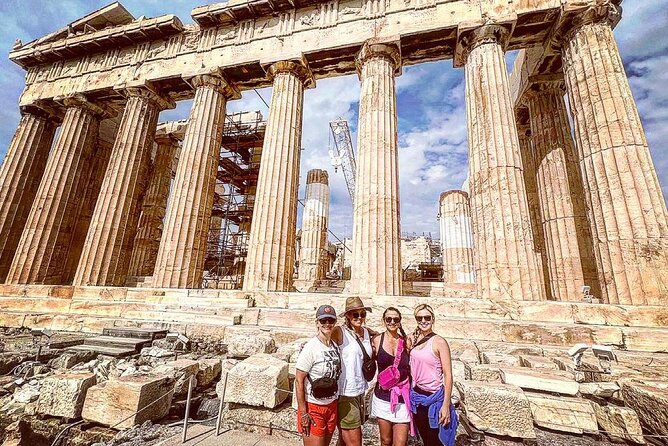
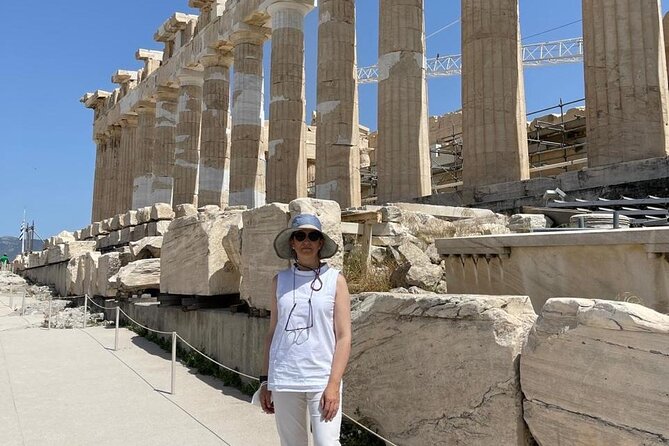
The Parthenon is the star, built starting in 447 BC and finished about 9 years later. You will hear the names behind the work, including sculptor Pheidias and architects Iktinos and Kalikratis. That matters because it turns the building from a photo into a project with real people and real design choices.
Here is what I think makes a guided stop at the Parthenon worth it:
- You get a quick sense of what changed over time, including how much of the original sculptural and structural work still survives.
- You learn what the “birthplace of democracy” idea refers to, including a useful fact: there were 97 columns originally, with 65 still standing today.
- You connect the theme to Athena, the goddess of wisdom and city protection.
The tour schedules about an hour at this stop. That is enough to do two things well: read the building’s main lines and then circle for perspective. The drawback, as with most Acropolis visits, is that the experience depends on ticket timing. Plan ahead and pre-book your Acropolis tickets, because this is called out as a must.
Practical tip
If you have any mobility limits, tell your guide early. Even if the tour is private and paced, the Acropolis involves uneven ground and stairs.
Other ways to spend the day near Athens
- Athens: Cape Sounion & Poseidon Temple Sunset Half-Day Trip
★ 4.8 · 8,241 reviews - Acropolis: Premium Acropolis and Parthenon Guided Tour
★ 4.8 · 5,208 reviews - Athens: Mythology of Delphi, Museum and Arachova Guided Tour
★ 4.7 · 5,102 reviews - All Day Cruise -3 Islands to Agistri,Moni, Aegina with lunch and drinks included
★ 5.0 · 4,958 reviews
Temple of Olympian Zeus: the “before and after” temple
Next up is the Temple of Olympian Zeus, connected to the second century and the Roman king Adrian. The tour frames it in a way that connects Zeus to the Olympic idea you associate with Greece today, plus the Panathinaia Games, which were dedicated to Athena.
The contrast here is what sells it. There were 104 columns originally, and you will see only 15 left. That ratio turns the site into a lesson in scale and loss. Even if you do not care about every historical layer, the size is what you will feel right away.
The time at this stop is shorter, around 30 minutes, so you will want to choose your “look angles” fast. Stand where the columns line up, then move a step to catch how the remaining stones sit against the sky. It is a good place to practice slow looking in a short time.
Hephestus and Athena Pronoia: the working temple stop
The itinerary includes a dedicated temple stop linked to Hephestus, the god of weapons, and Athena Pronoia. This is presented as a practical spot the Athenians used for buying weapons and smaller statues honoring Athena.
Even without getting lost in the details, I like this pause because it shifts the day from monument-only sightseeing into a more “Athens-as-a-city” feeling. You start to see how religious spaces and daily needs overlapped.
Because the information provided here focuses on meaning more than entry logistics, I’d treat this stop as a storytelling anchor. If you want to go inside specific sites, double-check which locations require tickets on your day.
Plaka: the old streets moment
Plaka gets about 20 minutes and is described as the ancient city area dating to the 7th century BC, built out of marble. Whether the dates and materials are exactly what you memorize, you will appreciate Plaka for the way it slows the day down.
This is where the tour turns from monument viewing into atmosphere. You drive through or stop briefly, then get enough time for a mini wander, photos, and a quick reset before the next ceremony.
If you are the type who likes to browse, Plaka works best when you keep it light. The tour is not built for a long café linger here, but it does give you the feel of old Athens without eating your whole afternoon.
Changing of the Guard: the world-famous ceremony
The Changing of the Guard at the Tomb of the Unknown Soldier is scheduled for about 20 minutes and is described as the most known ceremony worldwide, with the Evzones. The tour also shares the meaning of the word Evzone as armed soldier, which helps you understand why the uniforms and steps are so specific.
This stop is especially valuable because it is one of the rare moments in Athens that is easy to understand even if you know nothing about Greek history. You do not need context to appreciate the precision.
The key drawback is that timing matters. If you hit late or miss the exact start, you might feel like you got a partial show. A private guide helps you avoid that stress, but you still want to pay attention to the hour and build in some buffer.
Hadrian’s Arch and the “two towns” idea
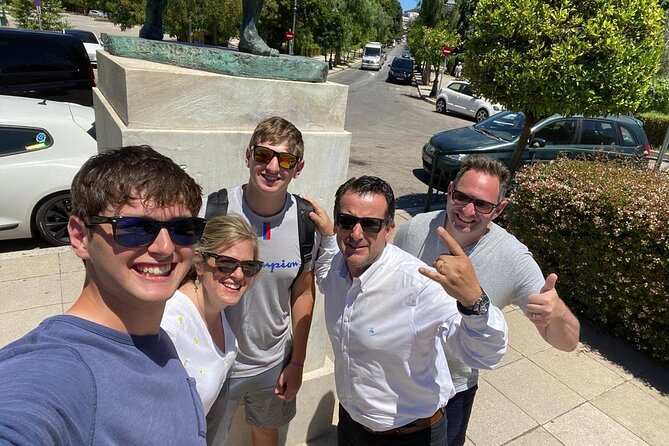
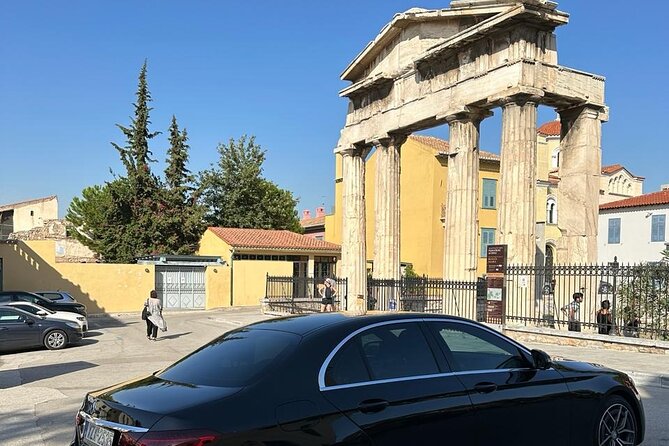
The tour includes an arch dedicated to Adrianos, connected to the finishing of the Temple of Zeus and the story of 1000 slaves. It also references the town of Theseus and the town of Adrian, which is a handy framing device.
What I like about this stop is the way it turns geography into explanation. Arches can look like decoration until someone tells you what they were trying to mark in the city’s identity. Once you understand the “two towns” concept, the architecture becomes a map.
Time here seems short, so keep your expectations realistic. You are not doing a long museum visit. You are learning the logic of the streets and monuments as you pass.
Panathenaic Stadium: marble sport and Olympic DNA
Panathenaic Stadium gets about 30 minutes, and it is one of those places that feels alive even when you are standing still. The tour shares that it started being built in 335 BC, then connects it to the first Marathon ending there. That is a big claim, and regardless of how deeply you care about the early Marathon timeline, the stadium is still clearly tied to Athens’ idea of organized athletic identity.
You will hear the number 65,000 for capacity, and that it is made out of marble. Then it jumps forward to the Panathinaia Games and the modern Olympic Games in 1896 AD, started from George Averoff and Baron Pierre de Coubertin.
This is a powerful stop for two reasons:
1) It is a living bridge between ancient and modern Athens.
2) It is easier to picture the crowds, because the scale is so visible.
If you want great photos, go for perspective first. Look from the stands down the course, then walk to a spot where the curve looks symmetrical.
Stoa of Attalos: a practical marketplace memory
The tour includes the Stoa of Attalos, described as a dedication by King Attalos of Pergamos for the Athenians and tied to a fleet market, plus 10 statues of heroes.
In the scheme of Athens, this stop often gets less attention than it deserves. You get a sense of public life: where people gathered, how commerce mixed with culture, and how public buildings shaped daily movement.
Time is brief, about 20 minutes, and tickets are listed as not included here. I’d use the stop to focus on layout and scale, and then move on. This is the kind of sight where a guide can point out what you would otherwise miss.
Ancient Agora: Temple of Theseus and the library legend
The Ancient Agora stop is scheduled for about 30 minutes. The itinerary references the Temple of Theseus and the Library of Andrian, described as the second largest library in the world after Alexander the Great’s.
Whether you treat that as a “fact to repeat” or a “fun way to understand importance,” the real value is that you get a place where philosophical life and civic life intersected. The guide framing that Greek philosophers walked there helps you imagine more than stones.
Time is short, so this is not the day for slow, deep wandering. It is a taste-and-orient stop: you should leave with a mental map of where important civic pieces were, not with a full research project.
Also note that tickets are listed as not included at this point in the day. Entrance fees can stack up, so keep your ticket budget in mind.
Lycabettus Hill: your Athens viewpoint payoff
Lycabettus Hill is about 20 minutes on the itinerary and is described as the highest point in Athens with an amazing view. It also includes Saint George Church.
If the day has been monument-heavy, this stop is your decompression. Even if you only take a few photos, the viewpoint helps you understand Athens as a wide city, not just a tight cluster of landmarks.
I especially like this part as a finishing move before the Riviera drive. It shifts your brain from “buildings and details” to “pattern and distance.”
Vouliagmeni Lake and the Athens Riviera drive
The last major segment is Vouliagmeni, a natural lake described as formed about 2,000 years ago, with time for fantastic photos driving from the Athens Riviera to the lake.
This is a smart way to end the day. After temples and ceremonies, you get water, light, and scenery change. The tour gives about 20 minutes, and because it is mostly photo and viewpoint style, you can adapt easily if the group is tired.
The only consideration here is that the best photos depend on timing and weather. If clouds roll in, the day still works, but you will notice how much the “wow” moment relies on visibility.
Price and what can cost extra
The price is listed at $223.50 per group, up to 2, for about 6 hours. That is a private-car setup price, so the value depends on how you plan your day.
Here is the part to budget carefully:
- Entrance fees for archaeological sites and museums are listed at around €30.00 per person.
- A licensed tour guide to accompany you into archaeological sites is listed as not included.
- Gratuities and tips are kindly up to the customer.
You are getting bottled water, WiFi on board, air-conditioned vehicle, private transportation, and an English-speaking driver-guide. You are also getting a mobile ticket, and pickup is offered.
One more practical note: since not every stop is charged, you can control costs a bit by deciding which entries you want to maximize. But the tour is built around the major sights, so expect at least some paid entry time.
If you want the easiest planning route, ask your guide what is included in the on-site entry experience for your specific day, because the “licensed guide” note can affect how you experience certain sites.
Who this tour fits best
This tour is a strong fit if you:
- Want a private, car-based format that keeps you from spending your day crossing town.
- Like guided context, especially around architecture and what each monument was meant to do.
- Appreciate a guide who can adjust and keep the day thoughtful, not rigid.
It is also a good choice if you have limited time in Athens. Six hours can feel short, but the itinerary hits major anchors from Acropolis to Agora, then closes with a view and Riviera vibe.
If you hate ticket planning or you want long, slow museum time, you might find the schedule tight. This is more of a highlight loop than a deep research day.
Should you book this private Athens highlights tour?
If you want Athens, not just the Acropolis, this is an easy yes. The best selling point is the combination of major monuments with city life moments like Plaka and the Evzones ceremony, then a scenery finish that prevents the day from feeling like one long archaeological checklist.
Book it if you like structure with flexibility, and if having Konstantinos-style guiding and efficient pickup matters to you. The only real reason to hesitate is budget and ticket timing, especially the instruction to pre-book your Acropolis tickets and the expectation of entrance fees.
Go in with that mindset, and you will leave with a clear picture of Athens, plus the kind of views that make you want another visit.
FAQ
How long is the Athens Private Tour Acropolis and Highlights & Athenian Riviera?
It is approximately 6 hours.
What is the price for this private tour?
The price is $223.50 per group for up to 2 people.
Are entrance fees included?
No. Entrance fees for archeological sites or museums are listed as €30.00 per person, and some key stops are shown as not included.
Do I need to pre-book Acropolis tickets?
Yes, the tour notes that you should pre-book your Acropolis tickets.
Is pickup included, and how does it work?
Pickup is offered. The guide picks up travelers with a sign showing their name.
Is the tour private?
Yes. It is private, so only your group participates.
Does the tour include an airport pickup?
Airport pickup is available for an additional cost of €50.00 per booking.
What languages are available?
It is offered in English, and the driver-guide speaks English.
What is the cancellation policy?
You can cancel for free up to 24 hours in advance for a full refund. If you cancel less than 24 hours before the start time, the amount paid is not refunded.
Freshly listed near Athens
- Athens: Premium Guided E-Scooter Tour in Acropolis Area★ 5.0 · 133 reviews
- Athens: Wine Workshop Create your Own Wine under the Acropolis★ 5.0 · 77 reviews
- Ceramic and Pottery Creative Workshop with Two Local Artists★ 4.0 · 57 reviews
- Private Tour and Tasting at Zeginis Winery★ 5.0 · 18 reviews
- Athens: Greek Wines Tasting with Sommelier and Acropolis Views★ 5.0 · 88 reviews
- Private Day Trip to Nafplio from Athens★ 5.0 · 20 reviews
- Athens Old City Private Photoshoot Tour / 2 hrs★ 5.0 · 109 reviews
- Greek food and wine tasting★ 5.0 · 18 reviews
Acropolis Tickets & Guided Tours, compared.
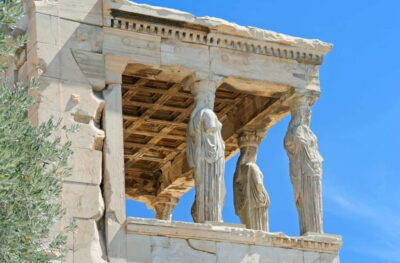
Acropolis & up to 5 Archaeological Sites Combo Pass
Read our review →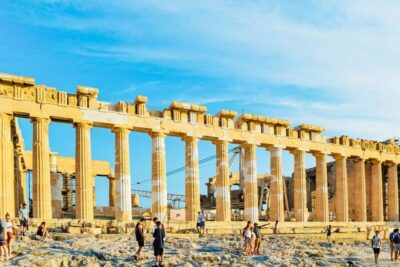
Acropolis Ticket with Optional Audio or Live Guide
Read our review →
Acropolis, Parthenon & Acropolis Museum Guided Tour
Read our review →
Acropolis: Premium Acropolis and Parthenon Guided Tour
Read our review →


Athens Scenic Electric Bike Tour with optional Acropolis visit
Read our review →
Acropolis monuments & Parthenon Walking Tour with Optional Acropolis Museum
Read our review →Browse the lists this tour appears in