

Reviewed · ATHENS GUIDED WALKING TOURS
Athens Highlights: Myths & Philosophers Walking Tour
Greek ideas walk right alongside you. This private walking tour strings together Athens myths and ancient philosophy into one steady story, with a guide who invites questions as you go. You start near the Academy area, then move through big civic landmarks like the Hellenic Parliament, along garden paths, and up to the Areopagus for a final myth-filled look over the Acropolis.
What I like most is how the guide turns thought into something you can actually talk about, not just read about. Guides such as Bianca (and on other days, John, Gianni, or Effrosyni) are praised for pacing, warmth, and storytelling that makes Plato, Socrates, and even pre-Socratics like Thales of Miletus feel present. The main catch is simple: it is about four hours on foot, and you end on a hill, so comfortable shoes matter.
In This Review
- Key highlights I’d circle on your Athens map
- How the Myths-and-Philosophy Tour Actually Feels
- Meeting the Academy of Athens, then jumping into Greek ideas
- The Hellenic Parliament and the Presidential Guard tradition
- National Garden: where ethics, physics, and astronomy get human
- Ermou Street and Hermes: myths in plain sight
- A named square and the Church of Pantanassa detail
- Ancient Agora: Stoic philosophy by the Poikile Stoa
- Tower of the Winds and Aiolos, keeper of the winds
- Anafiotika for Cynics, then Areopagus for myth and views
- Price and value: why this costs what it costs
- Timing, pace, and what to do with all those questions
- Who this tour is best for
- Should you book it?
- FAQ
- How long is the Athens Highlights: Myths & Philosophers Walking Tour?
- What does the tour cost?
- Is this a private tour?
- What language is the tour offered in?
- Is admission included for all stops?
- What is included in the price?
- Where does the tour start and where does it end?
- Does the tour run in any weather?
- What is the cancellation policy?
Key highlights I’d circle on your Athens map
- Private format with room for questions so the tour can match your curiosity
- A philosopher timeline in real places from early thinkers to Stoics and Cynics
- Civic Athens stops like the Hellenic Parliament and the National Garden
- Myth meets everyday streets via Hermes stories on Ermou Street
- Great conversation spots where the guide can pause, explain, and talk
- Some entrances are not included at key ancient sites
How the Myths-and-Philosophy Tour Actually Feels
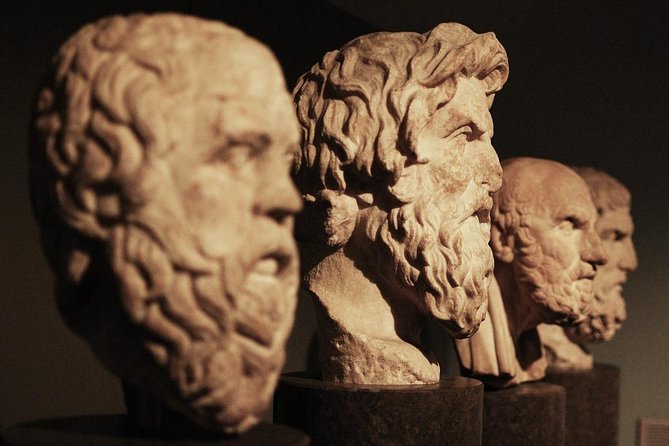
This tour is built like a thinking walk. You are not only moving between monuments, you are moving between ideas, with the guide using myths and philosophical questions to connect what you see. That is why it works even if you are not a classic-text person. You start getting the bigger pattern, then the details click.
The private setup matters. You can ask why Socrates argued the way he did, or how Plato’s ideals differed from earlier thinkers, right while you are standing near a place the stories shaped. In other words, you do not wait until the end for the interesting part.
Also, the guides are consistently described as warm and engaging, not teacher-mode. Bianca in particular gets strong praise for adapting to her group and keeping pace comfortable, including for younger listeners who can get restless on long sightseeing days.
More walking tours around Athens:
- Acropolis and Parthenon Guided Walking Tour
★ 5.0 · 4,755 reviews - Greek Food Walking Tour in Athens
★ 5.0 · 4,740 reviews - Athens: Guided Greek Food Walking Tour with Tastings
★ 4.9 · 2,859 reviews
Meeting the Academy of Athens, then jumping into Greek ideas
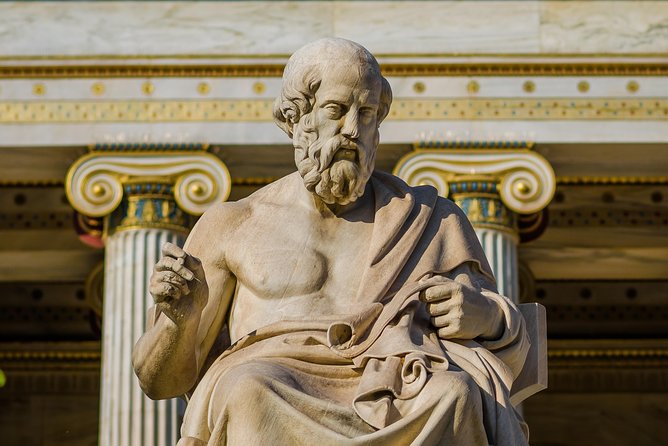
Your morning begins near Panepistimio and the Academy of Athens area. This is a smart first move because it frames ancient philosophy as something institutional and public, not only abstract. You get the Trilogy of Athens setting and a quick time-jump through Greek intellectual movements.
Then there is an extra stop component here that many people will appreciate: a museum space known for one of the world’s major collections of coins, ancient and modern. Coins sound random until you remember what they represent, trade, power, cultural exchange, and the practical life around ideas. It is a good reminder that philosophy lived in the same cities where people bartered, voted, and argued.
One practical note: the Academy area includes an item listed as an admission ticket not included. So if you want to fully cover every part you may need to budget for entry on that portion.
The Hellenic Parliament and the Presidential Guard tradition
Next up is the Hellenic Parliament. Standing outside the Parliament gives you a quick reality check: modern Athens runs on civic traditions, and many of them have deep roots. The highlight here is the Changing of the Presidential Guard, which the tour is timed to witness.
Even if you have seen uniforms before, this moment tends to land because it is both ceremony and storytelling. You are not just looking at a building, you are watching a tradition that locals treat as part of national identity. It is a nice contrast to the philosophy focus, and it helps you keep the day varied.
This stop lists admission as free, so it is low-risk and easy to fit into your schedule. Just keep your expectations realistic: ceremonies follow schedules, so build in some patience when you arrive.
National Garden: where ethics, physics, and astronomy get human
After the Parliament, the walk shifts into the National Garden. This is not just a break from traffic and crowds. It is where the tour connects Greek philosophy to practical questions people still ask today: how to live well, how to understand the universe, and how knowledge connects to everyday ethics.
The tour description specifically calls out democracy plus applied sciences tied to Greek philosophical thinking, like physics and astronomy. That is a big deal because it counters the common assumption that ancient philosophy is only wordplay. Here, the guide frames it as a tool for thinking about nature and society.
Admission here is listed as free. That makes it a strong value stop, especially when you compare it to days where everything costs extra.
Other ways to spend the day near Athens
- Acropolis monuments & Parthenon Walking Tour with Optional Acropolis Museum
★ 5.0 · 2,678 reviews - Athens Acropolis and Parthenon Walking Tour
★ 4.5 · 1,355 reviews - Acropolis, Parthenon & Athens Old City Heritage Walking Tour
★ 4.5 · 876 reviews - Athens Authentic Greek Food Walking Tour (Small Group)
★ 5.0 · 809 reviews
Ermou Street and Hermes: myths in plain sight

Then you move into central Athens with Ermou Street. The focus shifts to Hermes, the mischievous god, which is a fun way to keep the myth thread going without feeling like you are reading a textbook. Hermes stories naturally connect to movement, communication, trade, and clever tricks, all things that fit the feel of a busy old city street.
This is also one of those stops where a good guide changes the whole experience. Instead of saying a god name and moving on, the explanation makes you notice details you would otherwise ignore. You start seeing the city as something layered, modern life stacked on myth.
This stop is listed as free, so you spend your money on the parts that need tickets and save the rest for conversation and atmosphere.
A named square and the Church of Pantanassa detail

The itinerary includes another stop tied to a church inside a square, the Church of the Pantanassa. That kind of small detail can feel minor until you remember how much Athens is organized through faith landmarks, neighborhood names, and daily routines.
A pause here is useful because it gives the guide a moment to connect myth and philosophy to the way people organize their communities. This is where the tour’s “story walk” style becomes more than a gimmick.
Ancient Agora: Stoic philosophy by the Poikile Stoa
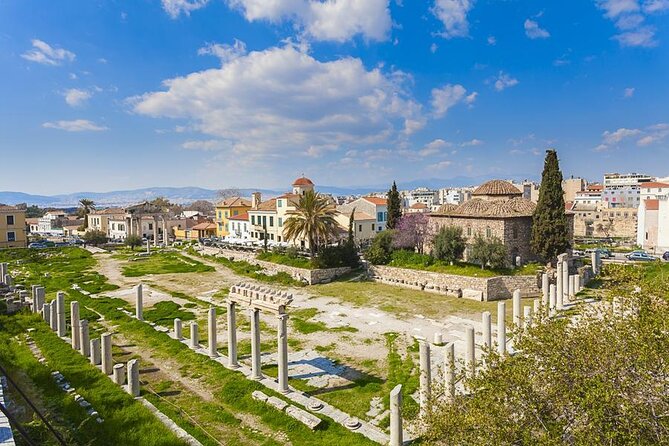
Now you get into one of the day’s most rewarding zones: the Ancient Agora of Athens. This is where the tour points you to a very specific philosophical origin, Stoic philosophy being born in the Poikile Stoa.
That specificity is what makes this stop work. If you only visited the Agora, you might wander and take photos. With a guide, you learn where ideas were argued and practiced, and why the Stoics mattered. The Stoics emphasized self-control, logic, and ethics, and those themes naturally fit the Agora setting where people met, debated, and lived in public.
Admission here is listed as not included. That is worth planning for, especially because this is one of the most ticket-relevant parts of the tour.
Tower of the Winds and Aiolos, keeper of the winds
The tour then moves to the Tower of the Winds, a site that looks like a leftover from a different world. The guide’s angle is myth tied to science: the Aiolos story as the keeper of the winds, linked to the tower’s function and symbolism.
This is a great stop for anyone who likes the bridge between ancient explanation and real observation. The winds are not only poetry. They are weather, travel, sailing, and daily comfort. Standing by the tower, you get why Greeks would explain the sky through gods while still paying attention to how the world actually behaves.
Admission is listed as not included here too, so expect an extra cost at the site if you want the full experience.
Anafiotika for Cynics, then Areopagus for myth and views
In Anafiotika, on the foot of the Acropolis near Plaka, the tour shifts again. You learn about the Cynic philosophers, and that topic pairs surprisingly well with Anafiotika’s charm. The area’s small lanes and quiet feel make it easier to imagine philosophers doing weird, boundary-pushing things in everyday life.
This stop is listed as free, and it is a good place to reset your energy before the final climb.
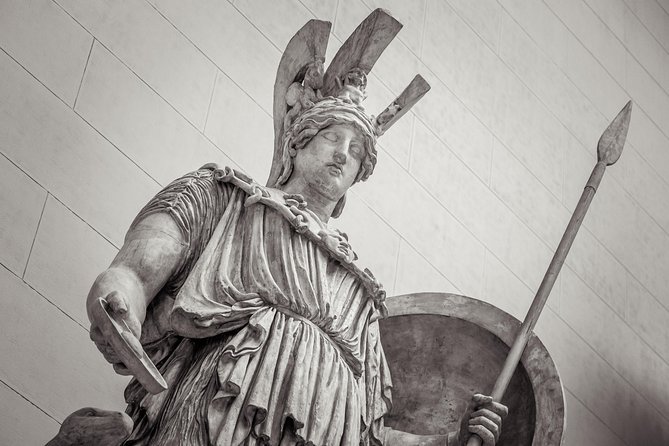
Then you finish on Areopago. The promise here is twofold: a view of the Acropolis and myth stories about the Olympian gods. The hilltop finish makes sense because it lands the theme. Philosophy in Athens was not only in lecture halls, it was in the city’s landmarks and shared imagination.
This final stretch is also where the four-hour walking reality shows up. If you have mobility limits, you should think about how you handle uphill terrain. The tour says most travelers can participate, but Areopagus is still a hill.
Price and value: why this costs what it costs
At $102.80 per person for about four hours, the price may look steep if you are comparing it to a standard group hop-on hop-off day. But this is a private walking tour with a guided question style and a tight theme. You are paying for interpretation, not just movement.
You also get a couple of concrete inclusions: coffee and/or tea plus bottled water. Those small comforts matter on a walking tour, and they help you keep the day comfortable without constantly paying for snacks and drinks.
It is also worth factoring in that some stops have admission not included. So your real total depends on how many ticketed sections you choose to enter fully. If you are a “see everything inside” type, budget a bit extra. If you are mainly there for the story and the outdoor views, you may spend less than you fear.
Finally, the tour offers group discounts and a mobile ticket. Those details are small, but they can make planning easier when you are traveling as a couple, a small family, or a group of friends.
Timing, pace, and what to do with all those questions
One thing I really like about this style of tour is how it gives you structure without shutting down curiosity. The guide encourages you to ask questions along the way, and that changes how you experience Athens. Instead of collecting facts, you start testing ideas: How did these thinkers explain virtue? What did citizens value? Why do myths keep resurfacing in the city’s identity?
The reviews highlight that guides adjust pace and go deeper when you ask, including with different levels of interest, from total beginners to people who studied classical texts. That is a good sign for you because it means you will not get treated like a walking encyclopedia, and you also will not feel like you are talking to a wall if you want more depth.
Practical tips to keep it smooth:
- Wear shoes you can walk in for four hours, with some incline near the end.
- Bring a light layer, Athens weather can shift, and good weather is required for the experience to run.
- If you care about specific names, decide before you start who you want to understand best, like Socrates versus Thales of Miletus, so you can ask focused questions.
Who this tour is best for
This is a great fit if you want Athens to feel like a living idea system, not just a photo list. If you enjoy philosophy, mythology, or you like learning through story, you will get a lot from the format.
It also works for families, especially when you have teens who are old enough to ask why questions but may not want another museum marathon. The guide style described here is interactive, and that helps keep younger minds engaged.
If you want a silent, self-paced sightseeing day, this may feel too talk-heavy. But if you like conversation, it is one of the more rewarding ways to see Athens in a half-day window.
Should you book it?
I think you should book this tour if you want Athens with a point of view. The strong theme plus the private, question-friendly approach makes it a smarter choice than a generic walking tour, especially if you care about philosophy or myth.
I would hesitate only if four hours of walking uphill terrain sounds tough for you, or if you prefer tours that keep conversation minimal. Also consider ticketed sites, because a portion of the experience lists admission not included, so check what matters most to you.
If you are the type who remembers ideas better than buildings, this is exactly the kind of half-day that can change how you see the city.
FAQ
How long is the Athens Highlights: Myths & Philosophers Walking Tour?
It lasts about 4 hours.
What does the tour cost?
The price is $102.80 per person.
Is this a private tour?
Yes. It is a private tour, so only your group participates.
What language is the tour offered in?
The tour is offered in English.
Is admission included for all stops?
No. Some stops list admission ticket not included, while others are free.
What is included in the price?
Coffee and/or tea, plus bottled water are included.
Where does the tour start and where does it end?
It starts at Panepistimio Athens 106 79, Greece, and ends at Areopagus Hill, Theorias 21, Athina 105 55.
Does the tour run in any weather?
The experience requires good weather. If it is canceled due to poor weather, you will be offered a different date or a full refund.
What is the cancellation policy?
You can cancel for free up to 24 hours in advance for a full refund.
Freshly listed near Athens
- Athens: Premium Guided E-Scooter Tour in Acropolis Area★ 5.0 · 133 reviews
- Athens: Wine Workshop Create your Own Wine under the Acropolis★ 5.0 · 77 reviews
- Ceramic and Pottery Creative Workshop with Two Local Artists★ 4.0 · 57 reviews
- Private Tour and Tasting at Zeginis Winery★ 5.0 · 18 reviews
- Athens: Greek Wines Tasting with Sommelier and Acropolis Views★ 5.0 · 88 reviews
- Private Day Trip to Nafplio from Athens★ 5.0 · 20 reviews
- Athens Old City Private Photoshoot Tour / 2 hrs★ 5.0 · 109 reviews
- Greek food and wine tasting★ 5.0 · 18 reviews
Athens Guided Walking Tours, compared.
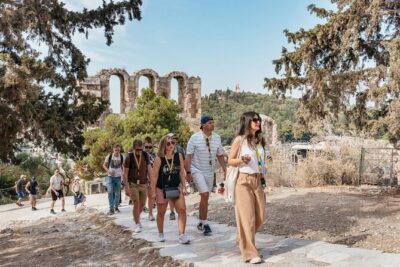


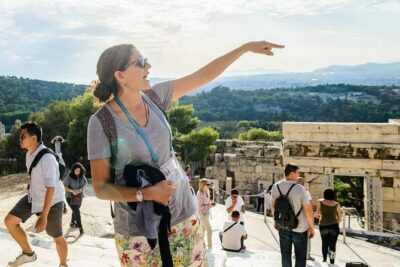
Acropolis monuments & Parthenon Walking Tour with Optional Acropolis Museum
Read our review →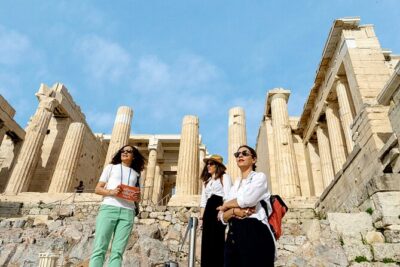
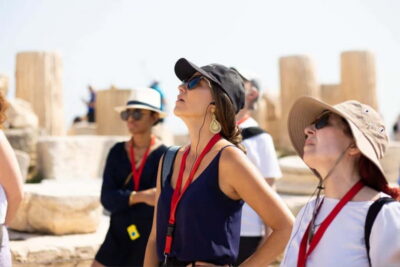
Acropolis, Parthenon & Athens Old City Heritage Walking Tour
Read our review →
Athens Authentic Greek Food Walking Tour (Small Group)
Read our review →
Browse the lists this tour appears in