
Reviewed · ATHENS GUIDED WALKING TOURS
Athens Highlights: Myths & Philosophers Private Walking Tour
Athens gets philosophical fast. This private Athens philosophy walk connects Socrates and Plato to real corners of the city, from Hansen’s architecture to the myths you’ll keep hearing about as you climb. You’re not just sightseeing, you’re learning how people used ideas to live, argue, and make choices 2,500 years ago.
I love how the guide keeps it human, with stops that lead into conversation, not just facts. Two standout moments for me are the Greek coffee break in Thissio for talking Pre-Socratic thinkers, and the way the route uses iconic places to make philosophy feel practical, not dusty.
One thing to consider: this is a walking tour with lots of steps, and it’s not suitable for people with mobility impairments, so comfortable shoes are not optional.
In This Review
- Key highlights at a glance
- Walking Athens with philosophers, not textbooks
- Panepistimio start and Hansen’s Trilogy: myths plus Plato and Socrates
- Hellenic Parliament and the National Gardens: Epicurus’ Garden philosophy in the open air
- Ermou Street, Kapnikarea, and Thissio: Hermes, an 11th-century temple, and a real coffee chat
- Ancient Agora and Poikile Stoa: where Stoicism took root
- Plaka and Anafiotika at the foot of the Acropolis: Cynics, Tower of Winds, and Aiolos
- Areopagus Hill finale: Acropolis views plus one last layer of Olympian myths
- Price, pace, and who this tour fits best
- Should you book this Athens myths and philosophers tour?
- FAQ
- Where does the tour start?
- Is the tour private?
- How long is the tour?
- How much does it cost?
- What is included in the price?
- Are entrance fees included?
- What is the tour language?
- Is the tour good for people with mobility issues?
- What should I bring?
- Is there free cancellation?
Key highlights at a glance
- Trilogy of Athens by Theofilus Hansen, plus statues by famous 19th-century sculptors
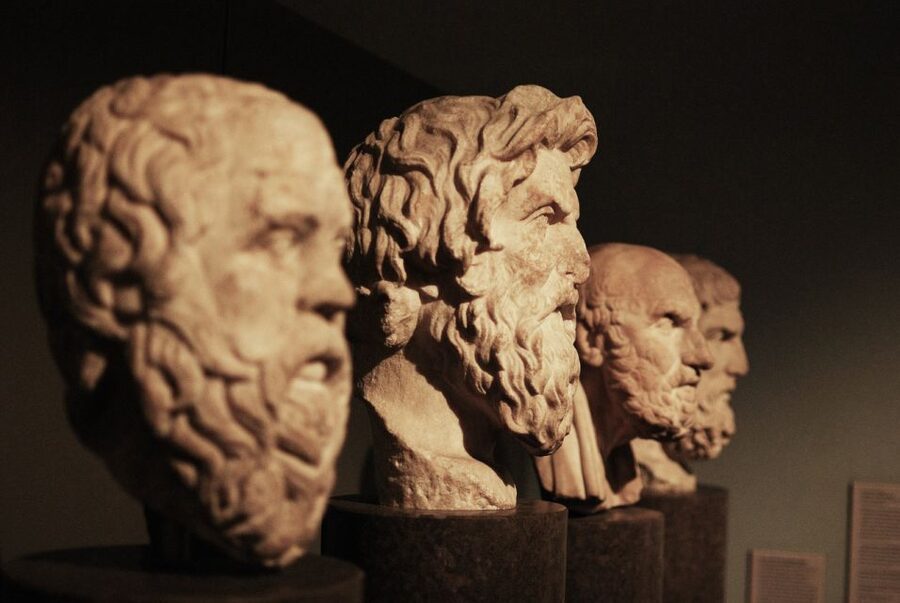
- Socrates, Plato, Apollo, and Athena tied directly to specific landmarks you’ll see
- Epicurus and the Garden at the Greek Parliament and National Gardens area
- Ermou Street and Hermes, then Kapnikarea, an 11th-century temple
- Stoics at the Poikile Stoa, right by the Ancient Agora
- Tower of Winds and Aiolos, ending at Areopagus Hill for Acropolis views
Walking Athens with philosophers, not textbooks
This tour is built like a guided argument you can take for a walk. In four hours, you move through central Athens and hear how Greek mythology and philosophy shaped everyday thinking, long before universities and modern textbooks.
It also helps that the group stays private, so you can ask questions and follow your own interests. Some guides for this experience have a real background in philosophy and education, so the conversation tends to stay sharp and clear, not vague.
Price is $100 per person for a 4-hour private walk. What makes it feel like value is what’s included: an expert guide, and one Greek coffee or other traditional refreshment per person. Entrance fees are not included, so you should treat this as a high-quality storytelling tour, where the landmarks themselves do the work.
You will cover a lot of ground. Bring sunglasses and sunscreen, and wear shoes you trust for uneven sidewalks.
More walking tours around Athens:
- Acropolis and Parthenon Guided Walking Tour
★ 5.0 · 4,755 reviews - Greek Food Walking Tour in Athens
★ 5.0 · 4,740 reviews - Athens: Guided Greek Food Walking Tour with Tastings
★ 4.9 · 2,859 reviews
Panepistimio start and Hansen’s Trilogy: myths plus Plato and Socrates
You meet outside Panepistimio Metro Station (the exact pick-up can vary depending on which start option you book). From there, the first stretch is about getting your bearings in Athens while the guide sets the theme: Greek thought and Greek belief are braided together.
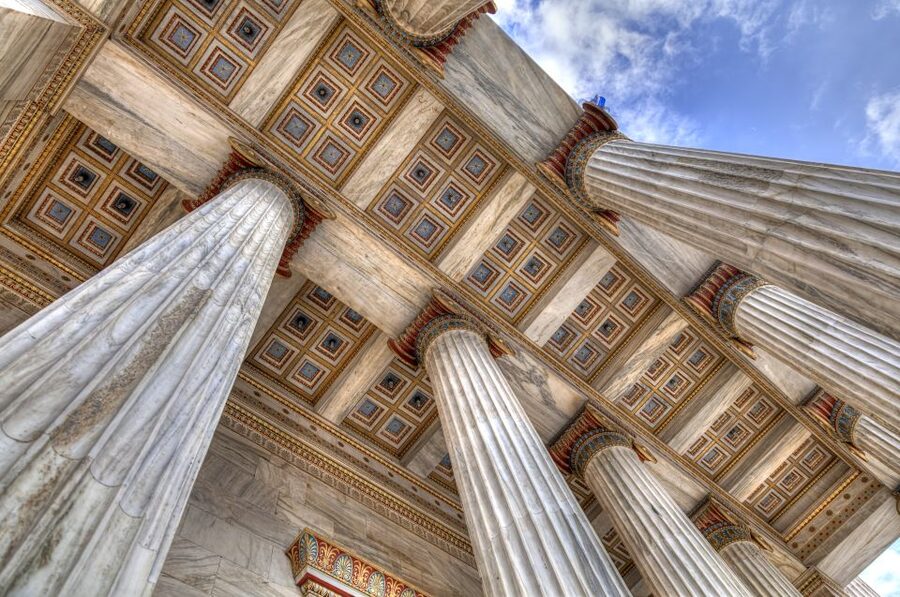
One of the first big visual stops is the Trilogy of Athens by Theofilus Hansen. This is a classic kind of 19th-century “statement building” that still dominates the skyline. As you look at the architecture and the impressive sculptural details by well-known sculptors, the guide shifts the focus to what ideas these places represented to Athenians and to later observers who loved Greek themes.
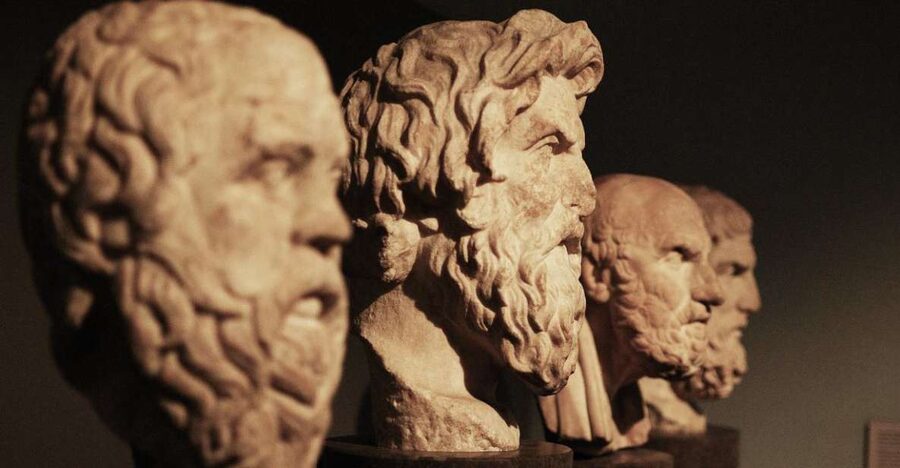
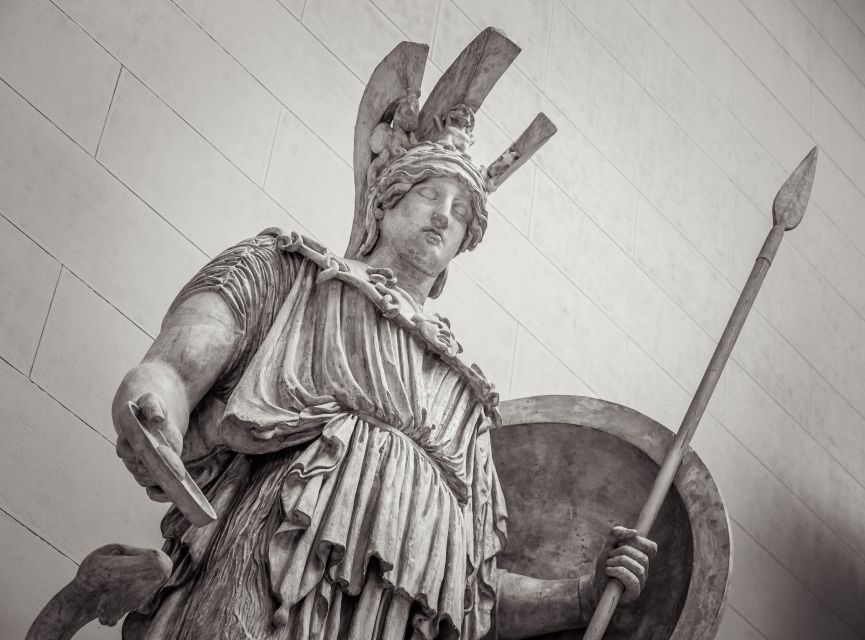
Then the myths and philosophy start talking to each other in your ear. You’ll work through Socrates and Plato as the guide connects their thinking to how Athenians viewed truth, argument, and the gods. Apollo and Athena come up too, and the cool point is that they are not the same kind of deity. They have different personalities, but you’ll see how they share surprising common threads, especially when you start thinking about wisdom, order, and human behavior.
If you like tours where the guide uses locations as memory anchors, this first segment does that well. It’s not random. Each building and statue becomes a clue.
Hellenic Parliament and the National Gardens: Epicurus’ Garden philosophy in the open air

Next comes the area around the Greek Parliament and the National Gardens. This part matters because it changes the tone. You move from the big, formal city imagery into a calmer space where the idea of “the good life” starts to feel more grounded.
Here, the guide brings in Epicurus and his philosophical school, known as the Garden. The concept is less about speeches and more about how to live with thought. In practical terms, you’ll hear about how people used philosophy to reduce fear, handle desire, and find peace in daily routines.
This is also a good point for you to pay attention to how the guide tells stories. Several times in this kind of tour format, the best moments happen when the guide turns an abstract idea into something you can imagine doing. Epicurus is especially suited to that. He’s easy to relate to because the goal is not theoretical winning. The goal is living better with yourself.
One small caution: since you’re outdoors for parts of this stretch, plan around heat and sunlight. Sunglasses and sunscreen are worth the space in your bag.
Ermou Street, Kapnikarea, and Thissio: Hermes, an 11th-century temple, and a real coffee chat
After the Garden stops, you head toward Ermou Street, one of Athens’ most commercial streets. The name matters because it’s tied to Hermes, the god associated with merchants and movement. As you walk, it’s a neat way to watch myth meet reality. Athens is still a city of trade and talk, and Hermes is basically the patron saint of daily hustle.
Then you get a quick, meaningful detour to Kapnikarea, an 11th-century temple. This stop adds a layer that you can miss if you only chase the Acropolis. It shows you how the religious landscape changed across centuries, and how old sacred ideas kept getting reinterpreted.
Now the tour hits one of my favorite formats: the break that actually feeds the lesson. You’ll stop in the Thissio area for an included Greek coffee at a cozy cafe. This is your chance to slow down without losing momentum.
What you talk about here can vary depending on your guide and interests, but the guiding theme is Pre-Socratic philosophers. This is a great moment for you to ask questions like:
- What were they trying to explain, before Plato?
- How did they think the world works?
- Where does mythology fit, if you’re also trying to reason things out?
You’ll come away with better context for how Greek philosophy started, not just where it ended up.
Other ways to spend the day near Athens
- Acropolis monuments & Parthenon Walking Tour with Optional Acropolis Museum
★ 5.0 · 2,678 reviews - Athens Acropolis and Parthenon Walking Tour
★ 4.5 · 1,355 reviews - Acropolis, Parthenon & Athens Old City Heritage Walking Tour
★ 4.5 · 876 reviews - Athens Authentic Greek Food Walking Tour (Small Group)
★ 5.0 · 809 reviews
Ancient Agora and Poikile Stoa: where Stoicism took root
Next you get close to the Ancient Agora, and specifically to the Poikile Stoa, where Stoic philosophy is said to have been born.
This is one of those stops that feels extra powerful because it’s tied to a specific location, not just a name. The Poikile Stoa is a “thinking-in-public” kind of place. You can almost picture people learning by listening, debating, and testing ideas as they move through everyday life.
Stoicism is often summarized in modern sound bites, but this kind of on-foot tour can help you see the starting point: the Stoics cared about how to respond to what life throws at you. It’s less about controlling events and more about how you handle uncertainty, fear, and anger.
If you’re the kind of traveler who likes to connect ideas to behavior, you’ll appreciate how this segment frames Stoicism as a tool. Not a vibe. A tool.
Drawback to keep in mind here: this is still walking and still in the city, so expect noise, crowds nearby, and some uneven pavement.
Plaka and Anafiotika at the foot of the Acropolis: Cynics, Tower of Winds, and Aiolos
Now the tour brings you into the Plaka area and Anafiotika, right at the foot of the Acropolis. These neighborhoods are perfect for this theme because they feel like lived-in layers of Athens, not museum calm.
The guide shifts toward the Cynic philosophers, described as being close by. Cynicism is a fun counterweight in a tour like this, because it challenges the idea that wisdom always looks polished. The Cynics were more interested in honesty, plain living, and calling out hypocrisy, which fits surprisingly well in a neighborhood where the city’s daily life is very visible.
Then comes the Tower of Winds, where you’ll learn about Aiolos, the keeper of the winds. This is a myth stop that works because it’s tied to a specific structure you can actually point at while the story is happening. You’ll likely connect the practical purpose of wind awareness with the ancient habit of explaining nature through gods.
This segment is especially good for you if you like mythology that isn’t just names. You want myths that explain how people watched the world.
Areopagus Hill finale: Acropolis views plus one last layer of Olympian myths
The tour concludes on Areopagus Hill, with a breathtaking view of the Acropolis and more stories about the Olympian gods.
Areopagus works as a finale for two reasons. First, it gives you a wide-angle view, so your brain finally stitches together what you saw earlier. Second, it’s the right kind of place for myths. You can feel the way ancient Athens used elevation and visibility for meaning.
The guide uses this last stretch to tie things back together, and that’s where the whole experience starts to click. You’ll remember places you visited earlier, and you’ll be able to connect which philosopher fit which mood: Socratic questioning up front, Epicurus for peace, Stoicism for endurance, Cynics for honesty.
If you’re a first-time Athens visitor, this ending is an easy win. If you’ve been before, it still helps because the route is about thinking, not repeat photos.
Price, pace, and who this tour fits best
At $100 per person for 4 hours, this is a premium walking tour price. Whether it’s worth it depends on what you came to Athens for.
Choose it if:
- You like philosophy and myths and want them connected to specific places
- You learn best by talking and walking, not by reading at a desk
- You want a guided way to understand Athens in one focused half-day
- You appreciate a private group format where the guide can respond to your questions
Consider skipping or switching to something else if:
- You need accessibility-friendly routes, because it’s not suitable for mobility impairments
- You don’t enjoy walking for a full afternoon
- You’re only interested in entrance-ticket sightseeing, since entrances are not included
The included Greek coffee or traditional refreshment is a small but smart value add. It gives you a natural break and forces the tour to slow down at a moment when discussion helps.
Also, because entrance fees are not included, you might spend less time waiting and more time listening. That’s a quiet benefit for a 4-hour experience.
Should you book this Athens myths and philosophers tour?
If you want Athens to make sense beyond ruins and statues, I’d book it. The strongest reason is the structure: the guide doesn’t treat philosophy as a lecture. They use architecture, temples, and key neighborhood streets to explain how ideas shaped how people lived and argued.
The second reason is control. It’s private, it’s English-led, and it’s built for conversation. If you have even a small interest in Socrates, Plato, Epicurus, the Stoics, or the Cynics, the tour gives you a way to remember those names because you connect them to real streets and landmarks.
Just be honest with yourself about walking. Comfortable shoes and sun protection will keep this tour fun instead of stressful. If that sounds like you, this is one of the most satisfying ways to start Athens on the right mental footing.
FAQ
Where does the tour start?
The meeting point may vary depending on the option booked. One stated meeting location is outside Panepistimio Metro Station.
Is the tour private?
Yes. It’s a private group tour.
How long is the tour?
The duration is 4 hours.
How much does it cost?
The price is $100 per person.
What is included in the price?
You get an expert tour guide, and one Greek coffee or other traditional refreshment per person, plus all taxes and fees.
Are entrance fees included?
No. Entrance fees to any point of interest are not included.
What is the tour language?
The tour is in English.
Is the tour good for people with mobility issues?
No. It is not suitable for people with mobility impairments.
What should I bring?
Bring comfortable shoes, sunglasses, and sunscreen.
Is there free cancellation?
Yes, you can cancel up to 24 hours in advance for a full refund.
Freshly listed near Athens
- Private Guided Tour: Athens, Acropolis and Acropolis Museum★ 4.9 · 62 reviews
- Private Athens Tour with a Local- Highlights & Hidden Gems★ 4.9 · 64 reviews
- Athens: Private Acropolis Tour with focus on Kids & Families★ 4.8 · 51 reviews
- Piraeus Port: Acropolis Museum and Parthenon Mythology Tour★ 3.7 · 29 reviews
- Poros Island: Full Day Trip From Athens with Swimming★ 4.8 · 33 reviews
- Athens: Ouzo Tasting at Brettos Plaka★ 4.3 · 32 reviews
- Athens Old Town: Greek Olive Oil & Herbs Tasting★ 4.2 · 41 reviews
- No Diet Club – Unique local Food Tour in Athens!★ 4.9 · 38 reviews
Athens Guided Walking Tours, compared.
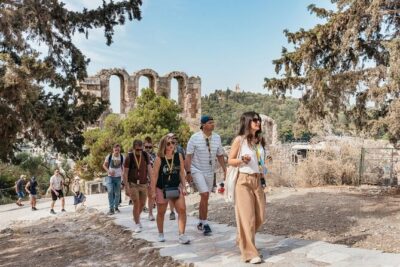


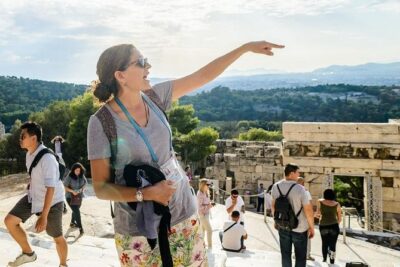
Acropolis monuments & Parthenon Walking Tour with Optional Acropolis Museum
Read our review →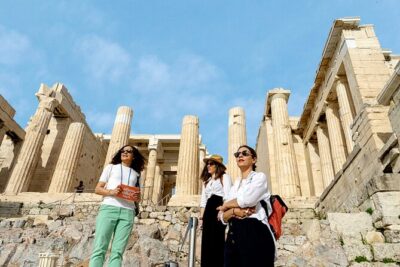
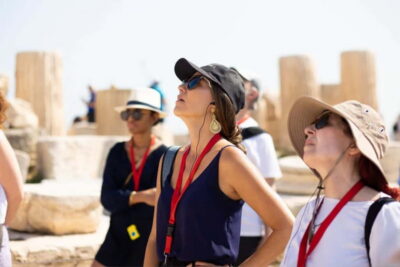
Acropolis, Parthenon & Athens Old City Heritage Walking Tour
Read our review →
Athens Authentic Greek Food Walking Tour (Small Group)
Read our review →
Browse the lists this tour appears in