
Reviewed · CITY TOURS
Athens: City of Rebellion
Rebellion in Athens is not a museum story. This 150-minute walk connects Ottoman-era resistance to today’s protest culture, starting in Monastiraki and ending in Exarchia. It’s built around people, pressure, and the choices Athenians made when freedom came at a cost.
What I liked most is how the tour links big turning points to real street corners you can actually stand on. I also loved the balance between history and present-day social justice, especially once you reach Exarchia with its activist community energy.
One heads-up: this is a walking and standing tour, and it is not suitable for people with mobility impairments. If you want a mostly sit-down experience, you might feel it more than you expect.
In This Review
- Key highlights you will feel in your feet
- Monastiraki to Syntagma: rebellion starts where tourists begin
- Ottoman-era resistance: the story behind the Greek Revolution
- Syntagma Square and the Hellenic Parliament: where protests meet power
- Kolonaki and the Academy of Athens: institutions, education, and tension
- Exarchia: the neighborhood where social justice is lived, not spoken
- The surprise stops and Exarchion Square finish: lessons keep moving
- Price and timing: is $88 worth 150 minutes?
- Practical tips to make the tour easier and better
- Should you book Athens: City of Rebellion?
- FAQ
- How long is the Athens: City of Rebellion tour?
- Where do I meet the guide?
- What languages are available?
- Is this a private tour?
- What should I bring?
- Is the tour suitable for people with mobility impairments?
Key highlights you will feel in your feet

- From Ottoman rule to the Greek Revolution: you start with the pressure that shaped the fight for freedom.
- Syntagma Square, the protest heart: you connect modern demonstrations to what came before.
- Hellenic Parliament and the Tomb of the Unknown Soldier: national identity shows up in civic space.
- Exarchia as a living resistance neighborhood: anarchists, refugees, the LGBT+ community, and artists are part of the story.
- Maelle’s interactive, question-based guiding: you are encouraged to think, not just listen.
Monastiraki to Syntagma: rebellion starts where tourists begin
Your tour meets in Monastiraki Square, in front of Pantanassa Church, at Pl. Monastirakiou 2. You will look for your guide with the sign that says Athens City of Rebellion. It is a simple start, but the point is clever: you begin where most people only grab photos, then you shift the lens to dissent and resistance.
From Monastiraki, you get transported back to when Athens was still under Ottoman rule. The walk sets up a chain of cause and effect: hardship, control, and the organizing that grew into the Greek Revolution about 200 years ago. The tone stays grounded. Instead of drowning you in dates, you focus on why individuals became legends and how popular movements formed when the stakes were personal.
Then the route bends toward Syntagma, the center of modern Athens public life. If you have watched Greek news clips about rallies and demonstrations, this is where you learn the physical geography behind them. It feels like the city itself is telling you what it remembers and what it refuses to forget.
Why it matters for you: you will leave with a new way to read Athens. Streets that look “just urban” become political. Squares that feel like landmarks start to feel like stages.
Other ways to spend the day near Athens
- Athens: Acropolis & up to 5 Archaeological Sites Combo Pass
★ 4.2 · 13,904 reviews - Athens: Acropolis, Parthenon & Acropolis Museum Guided Tour
★ 4.8 · 9,316 reviews - The Acropolis, Parthenon & Acropolis Museum Guided Tour
★ 4.7 · 8,493 reviews
Ottoman-era resistance: the story behind the Greek Revolution
One reason this tour stands out is that it does not treat rebellion as an abstract theme. It frames resistance as something Athenians learned to do, again and again, under different kinds of pressure.
As you walk, you are guided through the idea that oppression does not just create anger. It creates networks, courage, and tactics. You hear how resistance stories helped spark the Greek Revolution, and you also get the sense that ordinary people were part of the momentum, not just famous leaders.
You will also pass key landmarks along the way, including the Metropolitan Church of Athens. This matters because the city’s religious and civic spaces are part of its social structure. Even when your main focus is political history, you are still reading Athens as a living society, not a set of stone artifacts.
Practical note: This portion works best if you are comfortable asking questions. Maelle’s approach, as people describe it, is not a one-way lecture. The tour style keeps you thinking, especially when the topic turns to how resistance evolves over time.
Syntagma Square and the Hellenic Parliament: where protests meet power
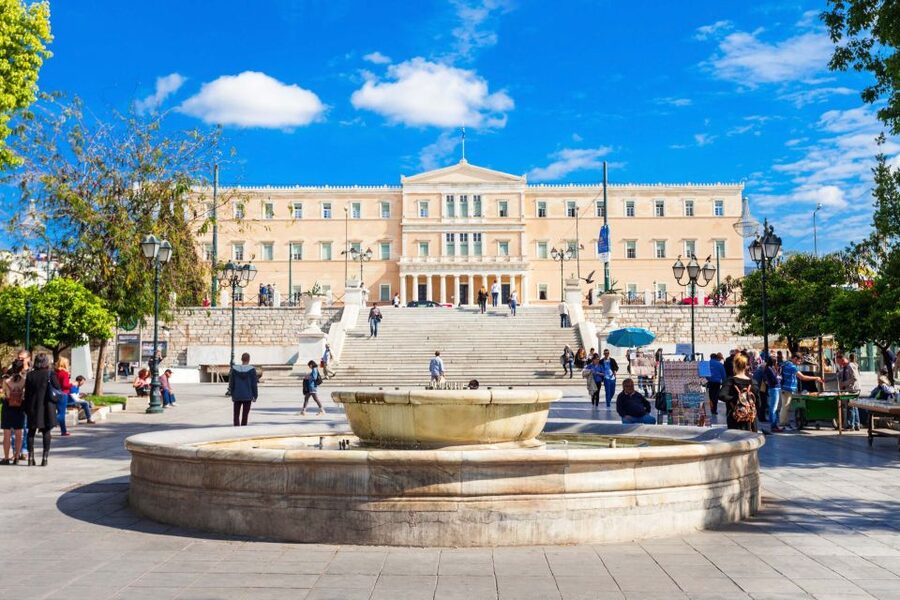
Syntagma Square is where modern Athens performs its most visible civic arguments. During this tour, you do not just stand and look. You learn why this space became the kind of place where crowds gather, why institutions face the public here, and how political life became public-facing.
From Syntagma, you also visit the Hellenic Parliament area. This is where the history of state building meets the reality of street-level pressure. If you are wondering how democracy and resistance can share the same city block, this stop gives you that answer in physical form.
You also stop by the Tomb of the Unknown Soldier. This is one of those places where the atmosphere shifts. It is not only about war memory. It is about how a nation teaches itself what sacrifice means. In a tour about rebellion, that contrast is powerful: you see how the state honors certain stories, while resistance activists often challenge who gets to write the rest.
What to watch for: pay attention to symbolism. Flags, civic architecture, and ceremonial spaces all send messages, even when nobody is marching. This tour helps you notice those messages.
Kolonaki and the Academy of Athens: institutions, education, and tension

After Syntagma, the tour carries you toward Kolonaki, passing through the part of central Athens that often looks polished and secure. That contrast is intentional. You are meant to see how the city contains different “Athenas” at once: one that feels comfortable, and one that feels contested.
Kolonaki is a passing stop rather than a deep dive, but it helps set context. You get the sense of social geography, how money and influence sit next to streets where activism finds its voice.
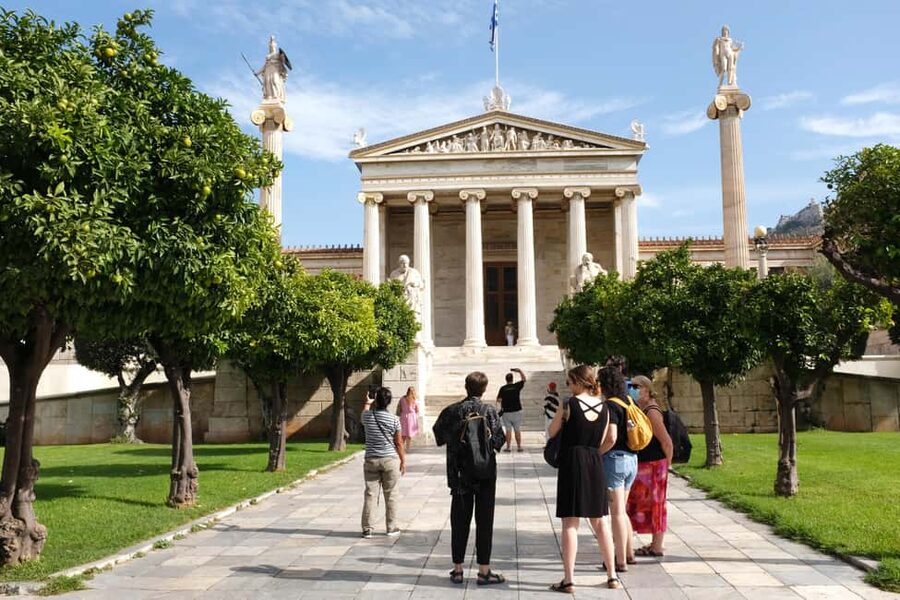
Then you reach the Academy of Athens. This is a guided stop, and it helps broaden the rebellion theme beyond street protests. Education, culture, and institutions are part of how societies define what they believe. In Athens, that includes the lingering tension between official narratives and the stories that circulate in neighborhoods.
Why this segment is valuable: it keeps the tour from becoming only about dramatic events. Resistance is also about ideas, legitimacy, and who shapes the public understanding of history.
A short hop away, these too:
- Athens: Cape Sounion & Poseidon Temple Sunset Half-Day Trip
★ 4.8 · 8,241 reviews - Acropolis: Premium Acropolis and Parthenon Guided Tour
★ 4.8 · 5,208 reviews - Athens: Mythology of Delphi, Museum and Arachova Guided Tour
★ 4.7 · 5,102 reviews - All Day Cruise -3 Islands to Agistri,Moni, Aegina with lunch and drinks included
★ 5.0 · 4,958 reviews
Exarchia: the neighborhood where social justice is lived, not spoken

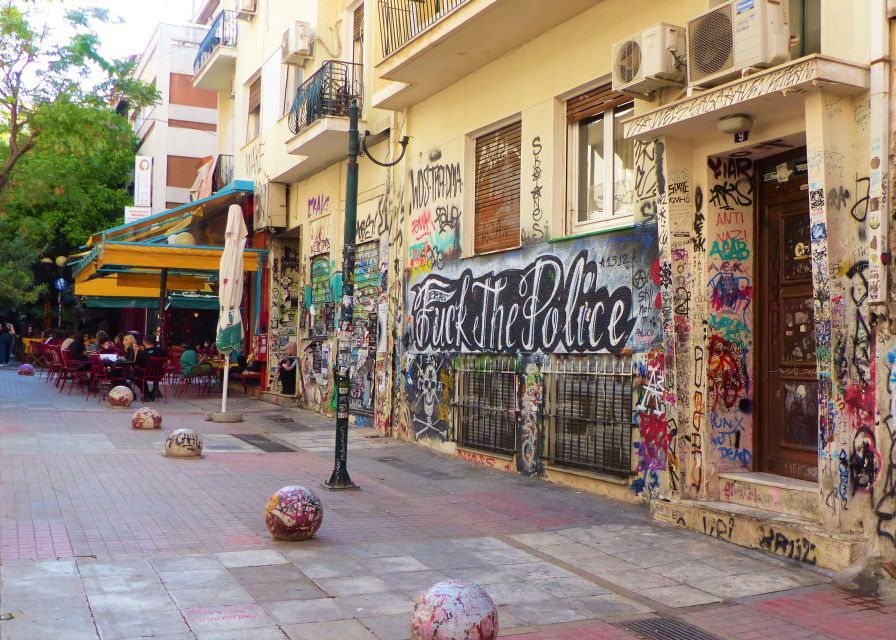
The highlight for many people is Exarchia, described as a hotbed of resistance and activism. This is not the “tourist neighborhood” kind of visit. You are walking into a community space shaped by anarchist politics, but also by refugees, the LGBT+ community, and artists. You get a sense of what collective life looks like when people see themselves as responsible for each other.
Maelle’s guiding here comes through as respectful and cautious. One detail that people appreciated is how she avoids turning daily life into a spectacle, including being mindful about not entering a neighborhood park as if it were just another attraction. That kind of care matters. It signals that you are there to understand, not to consume.
You also learn how Exarchia fits into the larger story of Athens. The tour connects past resistance to present struggles, including conflicts around police repression and gentrification. Those topics can sound heavy on paper, but walking the area helps you understand why people fight for space, safety, and cultural continuity.
In addition, the tour includes discussion of street art, such as graffiti connected with street artist WD. It is a reminder that rebellion is not only speeches and marches. It shows up on walls, in public messages, and in daily expressions that mark belonging.
Who will love this most: travelers who want Athens beyond antiquities. If you enjoy social history, politics, or just want the real texture of modern Greek life, Exarchia is the portion that makes the whole tour click.
The surprise stops and Exarchion Square finish: lessons keep moving
You end with additional guided stops, including a secret stop and another lesser-known spot, before finishing at Plateia Exarcheion. The “surprises” are where the tour often feels most human. You get the sense that Athens still has layers you cannot learn from a standard route.
This last stretch is also where the meaning starts to land. The tour does not push you toward a single political conclusion. Instead, it pushes you to notice patterns: when people feel unheard, where they gather, and how activism changes shape as governments, institutions, and public moods shift.
You also get time to ask questions as you walk. That matters because the topics can be personal. Some people are fascinated by the Ottoman-era origins of resistance. Others focus on the present day, like how communities protect themselves from outside pressure.
When you reach Exarchion Square, it feels like more than just an end point. You get a final view of the neighborhood identity from the ground level. And you leave with things to think about after your shoes come off.
Price and timing: is $88 worth 150 minutes?
The price is $88 per person for a 150-minute private experience with a live guide. On paper, that can look “only walking.” In practice, it is good value because you get a guided political and social context that most classic Athens tours skip.
What makes it feel worth it:
- It is private, so you are not trapped in a crowded group and forced to miss the conversation.
- It is focused, with a clear arc from Ottoman-era resistance to today’s Exarchia activism.
- You get adaptation, with guides described as willing to accommodate physical needs and interests.
One consideration is the walking time. Reviews mention you should expect standing and walking for about 2 to 3 hours. Bring what the tour suggests, and you will enjoy it much more: comfortable shoes, a water bottle, sunscreen, and a sun hat.
Also, this is not suitable for mobility impairments. If stairs and uneven sidewalks are an issue for you, you may want to choose a different format.
Practical tips to make the tour easier and better
If you want the best experience, do a little prep. Bring water, wear shoes you can trust, and plan for sun exposure. Central Athens can heat up fast, especially when you are stopping and talking while standing.
Think about what kind of Athens you want after the ancient sites. If you only have a short window and you already feel “museum overload,” this tour is a strong reset. It connects the city you are seeing today to the rebellions that shaped how modern Greece talks about freedom.
One more smart move is to ask your guide what you should notice in the neighborhood spaces. People found Maelle’s style question-driven and conversation-friendly. If you ask good questions, you will get better answers, like how resistance movements form and why certain places become symbols.
Finally, keep it respectful in Exarchia. This is a community with real life, real tensions, and real boundaries. The tour’s approach, as described by visitors, is careful about not turning everyday space into a tourist display.
Should you book Athens: City of Rebellion?
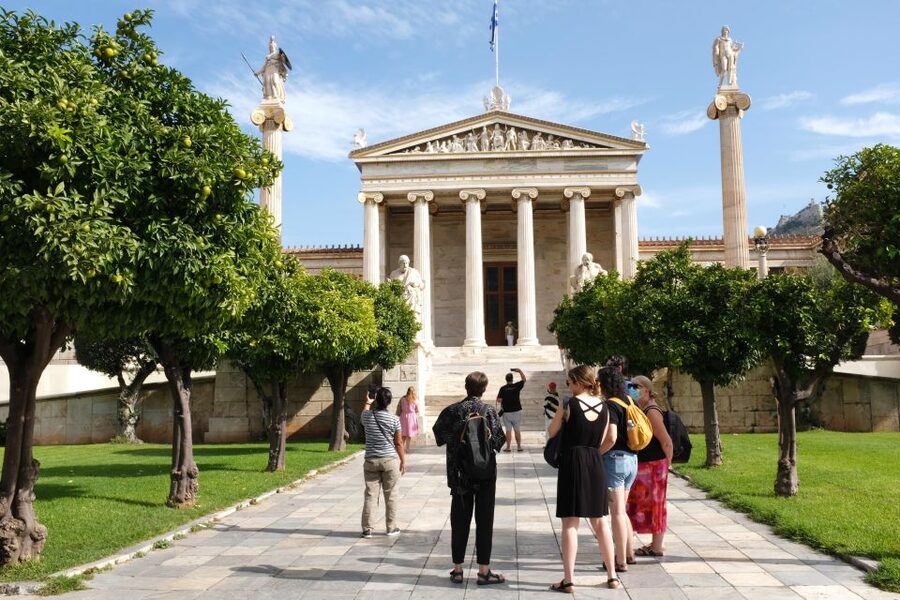
Book this if you want Athens beyond the postcard route. You should especially consider it if you like social and political history, if you are curious about why Syntagma is such a magnet for protest, or if you want to understand Exarchia as an active neighborhood rather than a stereotype.
Skip it if you want mostly ancient monuments, or if you need a low-walking, low-standing experience. And be honest with yourself about the subject matter. This tour touches fascism, violence, oppression, police repression, and gentrification. If that feels too intense for your trip vibe, choose a calmer day.
If you do book, you will come away with a more human Athens. Not just where things happened, but how the city keeps arguing with itself about freedom, belonging, and who gets to shape the future.
FAQ
How long is the Athens: City of Rebellion tour?
It lasts 150 minutes (about 2.5 hours).
Where do I meet the guide?
Meet in Monastiraki Square in front of Pantanassa Church. Your guide will have a sign that says Athens City of Rebellion.
What languages are available?
The live tour guide is available in English and French.
Is this a private tour?
Yes, it is a private group experience with a guide.
What should I bring?
Bring comfortable shoes, a sun hat, sunscreen, and water.
Is the tour suitable for people with mobility impairments?
No, it is not suitable for people with mobility impairments.
Freshly listed near Athens
- Private Guided Tour: Athens, Acropolis and Acropolis Museum★ 4.9 · 62 reviews
- Private Athens Tour with a Local- Highlights & Hidden Gems★ 4.9 · 64 reviews
- Athens: Private Acropolis Tour with focus on Kids & Families★ 4.8 · 51 reviews
- Piraeus Port: Acropolis Museum and Parthenon Mythology Tour★ 3.7 · 29 reviews
- Poros Island: Full Day Trip From Athens with Swimming★ 4.8 · 33 reviews
- Athens: Ouzo Tasting at Brettos Plaka★ 4.3 · 32 reviews
- Athens Old Town: Greek Olive Oil & Herbs Tasting★ 4.2 · 41 reviews
- No Diet Club – Unique local Food Tour in Athens!★ 4.9 · 38 reviews
City Tours, compared.
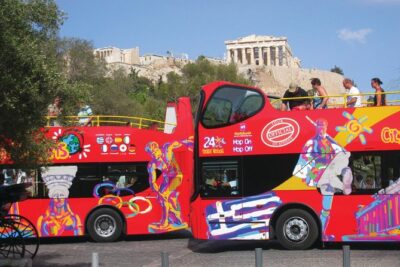
City Sightseeing Athens, Piraeus & Beach Riviera Hop-On Hop-Off Bus Tours
Read our review →
City Electric Bike Tour with Acropolis Visit Option
Read our review →
Acropolis, Parthenon & Athens Old City Heritage Walking Tour
Read our review →
City Pass with Acropolis, Museums, HoHo & Transport
Read our review →
The Acropolis, Athens Walking City Tour and Acropolis Museum
Read our review →Browse the lists this tour appears in