
Reviewed · MYCENAE & EPIDAURUS DAY TRIPS
Ancient Corinth, Mycenae, Epidaurus, Nafplio Full Day Private Tour From Athens
Peloponnese big hitters, in one day. This private tour links three UNESCO sites, plus Nafplio, with easy pickup from Athens and a driver who explains what you are seeing as you go. I especially like the hassle-free logistics and the fact you check off Ancient Corinth, Mycenae, and Epidaurus without juggling buses or taxis.
I also like the private-vehicle comfort for a 9 to 10 hour day, which makes it realistic to enjoy each stop instead of sprinting between them. The main thing to consider is that site admissions are not included, so you should budget extra euros for Corinth, Mycenae, and Epidaurus.
In This Review
- Key points before you go
- A one-day UNESCO Peloponnese loop from Athens
- Pickup, timing, and the rhythm of a 9 to 10 hour day
- Corinth Canal: the quick viewpoint stop that adds context
- Ancient Corinth and the Museum of Ancient Corinth
- Mycenae: fortified power, Lion Gate vibes, and big tomb energy
- Treasury of Atreus: a short stop with a huge stone story
- Epidaurus: the theatre that makes ancient design feel alive
- Sanctuary of Asklepios: why this place mattered for healing
- Nafplio: lunch, Venetian charm, harbour photos, and slow time
- Palamidi Castle and Acronauplia: the payoff is at the top
- Tickets, admissions, and how to budget this day correctly
- What you are actually paying for: private transport plus on-the-road facts
- A note on comfort, conversation style, and staying in control
- Who this tour fits best
- Should you book this Athens to Corinth, Mycenae, Epidaurus, and Nafplio tour?
Key points before you go
- Three UNESCO World Heritage sites covered in one tight day plan
- Private car for just your group, with driver storytelling on the road
- Time-saver itinerary for dispersed highlights around the Peloponnese
- Corinth Canal photos from a high viewpoint, plus quick ruin strolls
- Epidaurus theatre stop built for wow-factor acoustics and design
- Nafplio break for lunch, harbour time, and a classic uphill option (Palamidi)
A one-day UNESCO Peloponnese loop from Athens
If Athens is your base, seeing the Peloponnese can feel like a puzzle. This tour turns it into a straight line of “big places first,” with the comfort of being driven the whole time. You are trading freedom to roam for efficiency, but the payoff is major: Ancient Corinth, Mycenae, and Epidaurus are the kind of stops that normally take more planning to combine.
This is not a showy bus tour. It is private transport with a luxury car or minivan, and the driver shares facts as you travel. You still get time on your own at the sites, which matters because ruins and museums reward wandering at your own pace.
Other ways to spend the day near Athens
- From Athens: Ancient Corinth Day Trip with Canal & VR Guide
★ 4.6 · 1,073 reviews - Private Biblical Tour Ancient Corinth & Isthmus Canal from Athens
★ 5.0 · 762 reviews - Athens: Ancient Corinth & Nafplio Full Day Trip with Swim
★ 4.8 · 531 reviews
Pickup, timing, and the rhythm of a 9 to 10 hour day
The day starts at 8:00 am with pickup from your accommodation in Athens (extra charge only for airport areas). Expect roughly 9 to 10 hours total. That is long, but it is a smart length for this route because you have a real chunk of time at each major stop, rather than micro-visits.
Practical tip: treat the day like a hike plus museums combo. The plan includes early departures, some walking on uneven ground, and stairs later at Palamidi. If you like your travel days chill and effortless, wear shoes you can trust and bring sunglasses and sunscreen.
Corinth Canal: the quick viewpoint stop that adds context
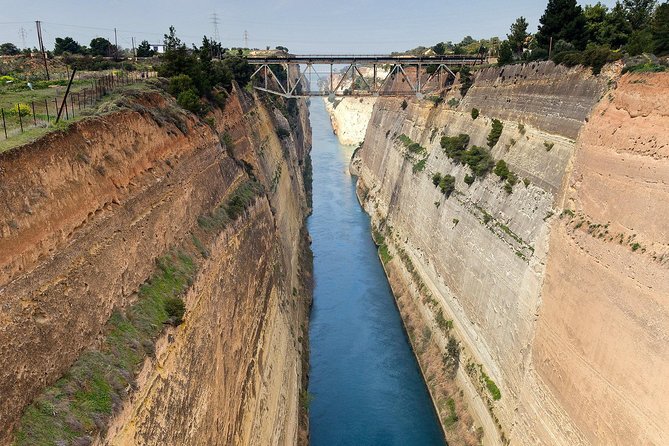
The first stop is the Corinth Canal, a cut through the narrow Isthmus of Corinth that separates the Peloponnese from mainland Greece. You get about 10 minutes, and this is exactly the right amount of time if your goal is perspective without turning the morning into a long detour.
From higher ground, you can see the steep limestone walls and the vessels moving below. What I like about this stop is how it helps you “map” the rest of the day. Once you understand where the Peloponnese sits, the later sites make more sense geographically, not just historically. Also, the canal has no locks, and it is only 21.4 metres wide at the base, which is why many modern ships cannot pass through.
Ancient Corinth and the Museum of Ancient Corinth
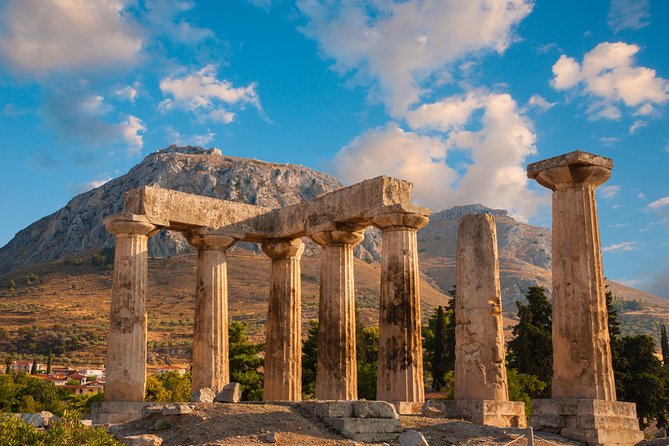
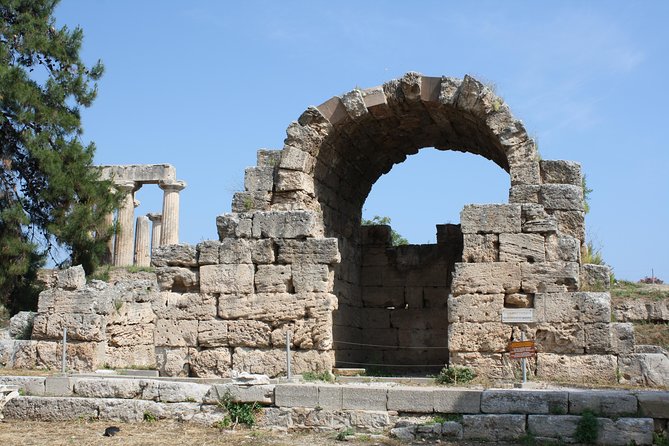
Next up is Ancient Corinth, one of Greece’s best-known ancient city-states. You get about 1 hour at the site, and the ruins are meaningful even if you have not memorized names. This is also where your trip gets a very human connection: Corinth is linked to Saint Paul’s letters in the New Testament and his missionary travels in the Acts of the Apostles.
You also stop at the Archaeological Museum of Ancient Corinth for around 30 minutes. This museum was built in 1931 to 1932 to display archaeological finds from recent excavations. The value here is simple: the ruins can feel like scattered stones until you see artifacts and context. Even half an hour helps you connect what you noticed outside with what the museum explains.
One consideration: admissions for Corinth are not included, so you may want to keep some cash or be ready with your card for the €15 site fee.
A short hop away, these too:
- Athens: Acropolis & up to 5 Archaeological Sites Combo Pass
★ 4.2 · 13,904 reviews - Athens: Acropolis, Parthenon & Acropolis Museum Guided Tour
★ 4.8 · 9,316 reviews - The Acropolis, Parthenon & Acropolis Museum Guided Tour
★ 4.7 · 8,493 reviews - Athens: Cape Sounion & Poseidon Temple Sunset Half-Day Trip
★ 4.8 · 8,241 reviews
Mycenae: fortified power, Lion Gate vibes, and big tomb energy
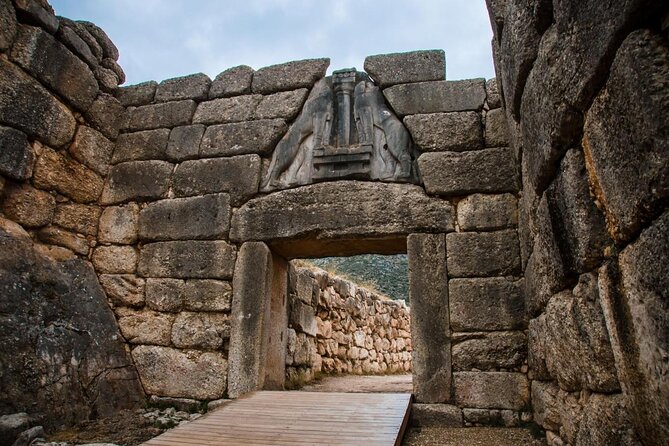
Then you shift into the Mycenaean world. Mycenae is a fortified citadel associated with the mythical King Agamemnon, and the site is built for wow-factor in both design and scale. You get about 1 hour at the ruins, which is a good amount of time if you focus on the must-sees rather than trying to read every stone inscription.
What to look for:
- The Cyclopean walls, massive and unmistakable
- The Lion’s Gate area
- The Tomb of Clytemnestra area
- The sense of a military stronghold controlling southern Greece and beyond in the Bronze Age
At its peak around 1350 BC, the citadel and lower town held about 30,000 people across roughly 32 hectares. Even if those numbers do not sink in fully, you will feel the scale when you walk the perimeter and take in the fortification logic.
After that, you visit the Archaeological Museum of Ancient Mycenae for about 30 minutes, located near the entrance before Lion Gate. This timing works well because the museum helps you interpret what you just saw at the citadel.
Treasury of Atreus: a short stop with a huge stone story
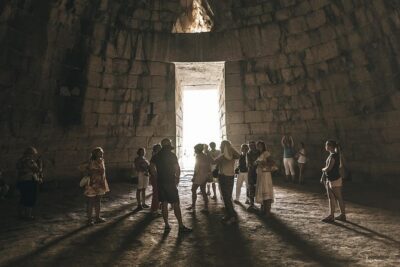
You also include a stop at the Citadel and Treasury of Atreus, also called the Tomb of Agamemnon. This is a tholos, often described as a beehive tomb, built around 1250 BC.
The standout detail is the engineering audacity: the doorway lintel is reported at 120 tons, with large dimensions for that era. You get about 10 minutes here, which means you will want to spend that time looking at the entrance structure and letting your imagination do its job. Do not try to solve every historical question on the spot. The goal is the physical impact and the feeling of entering a world that created monumental stone for a reason.
Mycenae admissions are not included, and the listed fee is €20 per person.
Epidaurus: the theatre that makes ancient design feel alive
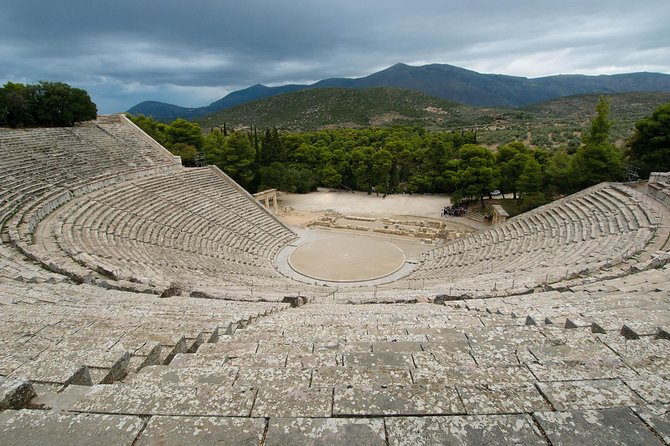
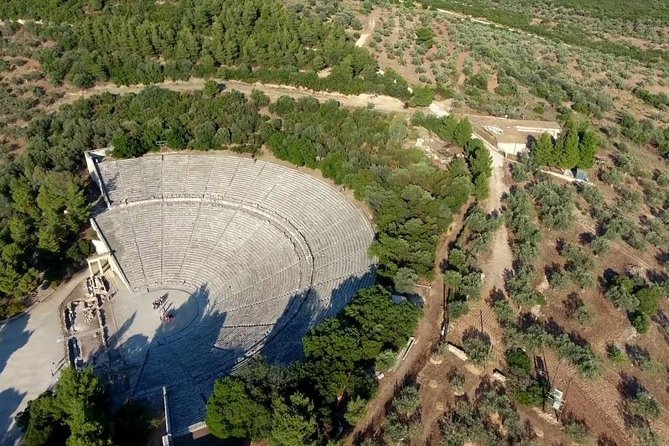
Epidaurus is where your day starts shifting from ruins-as-architecture to ruins-as-experience. You visit the Ancient Theatre of Epidaurus for about 1 hour. This theatre is widely considered a standout for acoustics and aesthetics, and it retains the classical setup: theatron, orchestra, and skene.
Even if you do not test acoustics (you might), you can still feel why people rave about this place. The theatre is shaped in a way that makes the relationship between space and sound feel intentional, not accidental. It is the kind of stop that gives you that rare moment where the stones seem to explain themselves.
Sanctuary of Asklepios: why this place mattered for healing
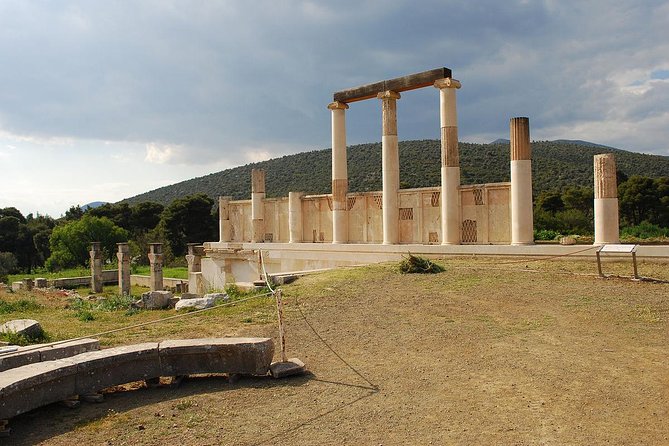
After the theatre, you go to the Sanctuary of Asklepios for about 20 minutes. This is the main holy site dedicated to Asclepius and it rivals other major cult centers like Olympia and Delphi.
The temple was built in the early 4th century BC, and later use would have been affected by late Roman restrictions on non-Christian worship. You do not come here for long reading time, and you do not need to. You come here to understand the broader cultural purpose behind Epidaurus. It was not just entertainment. It was a place people visited with hope, belief, and the desire to be restored.
Again, admissions for Epidaurus are not included, and the listed fee is €20 per person.
Nafplio: lunch, Venetian charm, harbour photos, and slow time
Once the ruins and museums are done, you get a real break in Nafplio, with about 2 hours. The tour includes time for a superb lunch, plus coffee or shopping. Nafplio is often called the Naples of the East, and you will see why once you are walking around: cobbled squares, Venetian-style architecture, and castles with commanding views over the Argolic Gulf.
Nafplio also layers on historical roles, from medieval seaport importance to being capital during the Greek Revolution (1821 to 1834). That history does not require a lecture. You will pick it up as you move from harbour views to older fortification areas.
A practical add-on you should plan for: you have time to enjoy the view of Bourtzi, the Venetian water castle sitting in the middle of the harbour. This is a great spot for photos, especially from the harbour side where you can frame it against the waterfront.
Palamidi Castle and Acronauplia: the payoff is at the top
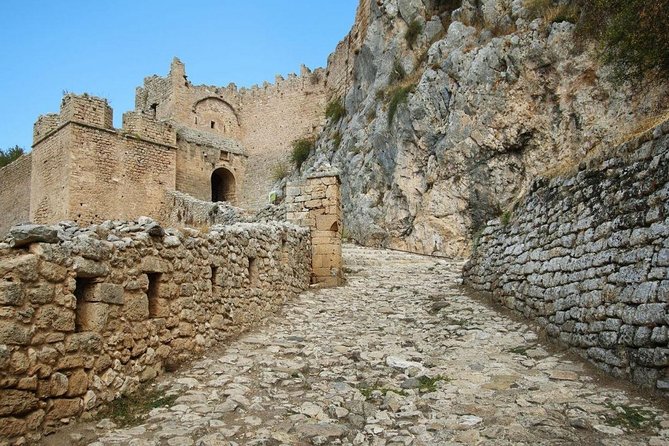
After Nafplio, you have a chance to climb into full fortress mode with Palamidi Castle for about 30 minutes. Palamidi sits on a hill around 216 metres high, and the climb is famous for its steps. The tour description notes 913 steps from town to the fortress, and it also says people call it over one thousand to the top.
You do not need to race it. Think of this as a scenic workout and a view mission. From the fortress, you get a broad look over Nafplio and the Argolic Gulf, which is exactly what you came for after all those ancient-city high points earlier in the day.
Then there is Acronauplia, the oldest part of Nafplio. This area was transformed by the Venetians and Franks into fortifications, and later it was used as a prison. Today, part of it is a hotel complex, chosen partly because the views benefit tourism.
If you know you will skip Palamidi, that is fine. But if you are the type who loves stepping into a place where the elevation changes everything, Palamidi is one of the best uses of your time on this route.
Tickets, admissions, and how to budget this day correctly
The tour price is $259.03 per person, and it includes private transport, bottled water, air-conditioned comfort, and the focus on three UNESCO sites. What is not included is admissions at the archaeological sites, listed as:
- Mycenae: €20
- Corinth: €15
- Epidaurus: €20
So you should plan for roughly €55 in site fees per person, not counting anything you may buy in shops or at lunch. That is the biggest variable in your final cost.
I think this matters because your decision is not just about price. It is about avoiding the time tax of figuring out transport, ticket timing, and route coordination for three UNESCO locations in one day. If you value that peace of mind, the total value tends to make sense.
What you are actually paying for: private transport plus on-the-road facts
This is a private tour, and the vehicle is part of the value. You are not stuck waiting at multiple stops for other groups, and you get a smoother day than you would trying to do the route by yourself.
The driver provides historical facts, and that is part of why people rate the experience so highly. There are even names tied to strong guiding, like Dimitris and George, both described as friendly and very knowledgeable in English, while keeping the day on schedule.
One important nuance: the driver is not a licensed site guide. A licensed tour guide in the archaeological sites may be available upon request and depending on availability. If you want deeper explanations at each site, it is worth asking ahead of time whether a licensed guide can be arranged for your preferred locations.
A note on comfort, conversation style, and staying in control
Private tours are personal. That is the upside, but it also means you might want to set expectations early.
One past guest said their driver went beyond site commentary into personal religious conversation, including remarks that felt inappropriate. The operator response indicated that topics can be adjusted if you tell the driver you do not want that kind of discussion. So my practical advice is simple: when you get in the car, set the tone. If you want history only, say so. If you have a question, ask it. You are in the driver’s world, but you still control what you are comfortable with.
Who this tour fits best
This is the right choice if you want:
- A single day that hits major UNESCO highlights around the Peloponnese
- Comfort and convenience from Athens pickup to drop-off
- A plan that moves efficiently but still leaves time to explore
It is also a strong option for groups that do not want to split up or negotiate separate transport. Since this is private for your group, you can build a day that matches your pace, especially at the sites where a museum moment or a slower walk is worth it.
Should you book this Athens to Corinth, Mycenae, Epidaurus, and Nafplio tour?
I would book it if you like structured time with real payoff. The itinerary is built around three UNESCO anchors plus a memorable seaside town, and the private car removes most of the stress that usually comes with Peloponnese touring.
Skip it, or ask questions first, if you strongly dislike stairs or you want long, slow guided museum time at every stop. Also, if you want only strict history commentary and nothing personal in conversation, tell your driver upfront so the day stays exactly what you expect.
Given the 4.9 rating and 96% recommending in past feedback, this is one of the safer bets for an Athens day trip that actually delivers big sights without turning your holiday into a logistics project.
More Day Trips out of Athens
- From Athens: Hydra, Poros, and Aegina Day Cruise with Lunch
★ 4.1 · 4,305 reviews - Cape Sounion and Temple of Poseidon Half-Day Small-Group Tour from Athens
★ 4.5 · 3,205 reviews - From Athens: Delphi Full Day V.R. Audio Guided Tour
★ 4.6 · 3,028 reviews - From Athens: Small-Group Mycenae, Epidaurus & Nafplio Trip
★ 4.8 · 2,805 reviews
Freshly listed near Athens
- Athens: Premium Guided E-Scooter Tour in Acropolis Area★ 5.0 · 133 reviews
- Athens: Wine Workshop Create your Own Wine under the Acropolis★ 5.0 · 77 reviews
- Ceramic and Pottery Creative Workshop with Two Local Artists★ 4.0 · 57 reviews
- Private Tour and Tasting at Zeginis Winery★ 5.0 · 18 reviews
- Athens: Greek Wines Tasting with Sommelier and Acropolis Views★ 5.0 · 88 reviews
- Private Day Trip to Nafplio from Athens★ 5.0 · 20 reviews
- Athens Old City Private Photoshoot Tour / 2 hrs★ 5.0 · 109 reviews
- Greek food and wine tasting★ 5.0 · 18 reviews
Mycenae & Epidaurus Day Trips, compared.
Small-Group Mycenae, Epidaurus & Nafplio Trip
Read our review →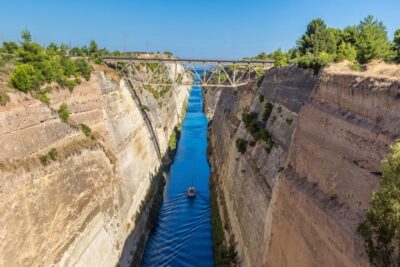
Mycenae, Epidaurus and Nafplio Tour from Athens
Read our review →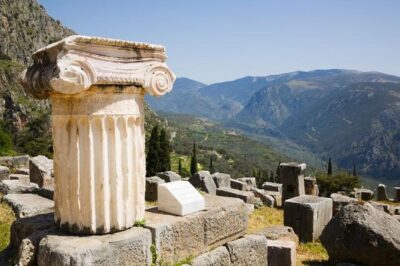
4-Day Classical Greece Tour: Epidaurus, Mycenae, Olympia, Delphi, Meteora
Read our review →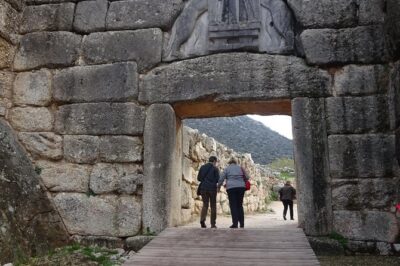
Mycenae and Nafplion Day Trip from Athens with Official guide
Read our review →
3-Day Classical Greece Tour: Epidaurus, Mycenae, Nafplion, Olympia, Delphi
Read our review →
Corinth Canal, Mycenae & Nafplio Premium Guided Tour
Read our review →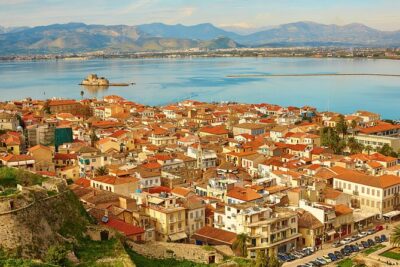
Mycenae, Epidaurus & Nafplio Full-Day V.R audio guided Tour
Read our review →Browse the lists this tour appears in