
Reviewed · ACROPOLIS TICKETS & GUIDED TOURS
Acropolis of Athens Historical Tour For History Enthusiasts
The Acropolis clicks into place fast. This 2-hour 40-minute tour gives you a guided storyline across the hill, with earset headsets so you do not miss the details, and a licensed guide who is a historian or archaeologist. It is history you can actually keep in your head, not just photos you scroll past.
I like the way the tour starts with a human-civilization framework, so ancient Greece does not feel like random dates. You also get stop-by-stop context that connects philosophy, theatre, religion, and politics to what people still talk about today.
One thing to watch: admission and entry fees depend on the ticket option you choose, so check what is included before you go.
In This Review
- Key things to know before you go
- Why the Acropolis tour feels different from a basic walk
- Before you climb: meeting point, headsets, and how the tour runs
- South Slope stop: the quick origin story that makes the rest make sense
- Theatre of Dionysus: when drama becomes public culture
- Odeon of Herodes Atticus: a memorial built into the city’s music-life
- Temple of Athena Nike: victory, devotion, and state messaging
- Propylaea: the gateway that frames your view of Athens
- Erechtheion: myths made physical, and sculptures you will notice up close
- The Parthenon: the crown jewel and a technical flex
- Price and value: is $36.14 a good deal for this much storytelling?
- Who this tour suits best, and who might want another option
- Tips to get the best experience on the day
- Should you book this Acropolis historical tour?
- FAQ
- What is the duration of the Acropolis Historical Tour?
- How much does the tour cost?
- Is the tour offered in English?
- What does the itinerary include?
- Are admission tickets included?
- Where do you meet and where does the tour end?
- How big are the groups?
- What if the weather is bad?
- What is the cancellation policy?
Key things to know before you go
- Headsets for every guest, so you can hear every insight even in busy sections
- Historian or archaeologist guide, which changes the feel from tour commentary to explained history
- A civilization starter lesson that frames Athens in the bigger story of human development
- Theatre and democracy in the mix, with stops tied to drama, politics, and belief
- Smart stop pacing, built around major monuments without rushing past them
- A small-group cap (max 25), which helps questions and photo pauses
Why the Acropolis tour feels different from a basic walk
The Acropolis can be overwhelming. You see marble. You see views. You see crowds. Then you leave with a blur of names.
This tour makes it simpler. You start with the idea that human civilization had a long build-up, then you place ancient Greece, and Athens in particular, inside that larger timeline. That matters because the monuments do not just look impressive. They start to explain a culture.
I also love that the guide is not only a storyteller. The tour is led by a licensed English-speaking historian or archaeologist, which shows in how they explain what you are looking at. The tone tends to be conversational but grounded in evidence, and it helps you notice what you might otherwise gloss over.
And yes, the Acropolis is still breathtaking. The difference is you know what you are looking at, and why people cared enough to build it.
More Acropolis entries and guided walks:
- Athens: Acropolis & up to 5 Archaeological Sites Combo Pass
★ 4.2 · 13,904 reviews - Athens: Acropolis, Parthenon & Acropolis Museum Guided Tour
★ 4.8 · 9,316 reviews - The Acropolis, Parthenon & Acropolis Museum Guided Tour
★ 4.7 · 8,493 reviews
Before you climb: meeting point, headsets, and how the tour runs
You meet at Dionysiou Areopagitou 17, Athina 117 42, Greece. The tour ends at the Parthenon, on top of the hill, so you are walking upward through multiple monuments rather than doing a flat loop.
A big practical win is the personal earset receivers. You get your own listening setup, which is ideal at sites like this where it is easy to miss a key point when the group shifts. If you tend to tune out when it gets noisy, this format is a lifesaver.
The group size is capped at 25, which is small enough to keep things moving but large enough to feel social. Expect a guide who checks in, answers questions, and keeps the pace steady rather than herding everyone like a slideshow.
South Slope stop: the quick origin story that makes the rest make sense
The first stop is on the South Slope of the Acropolis. This is not where most people start taking selfies, but it is where the tour earns its value.
The guide gives you a concise lesson on how human civilization developed, then positions ancient Greek civilization, with Athens as a key example. That start changes how you read everything that follows. When later you see temples, theatres, and public spaces, you understand them as products of a society that was inventing new ways to live together.
What I like here is that it is not too academic. It is designed to act like a map in your head. Instead of memorizing facts, you learn how the pieces connect.
You also get admission included at this stop if you choose the option that includes entry fees. If you do not, you will still get the same storytelling, but you may need to handle admissions on your side.
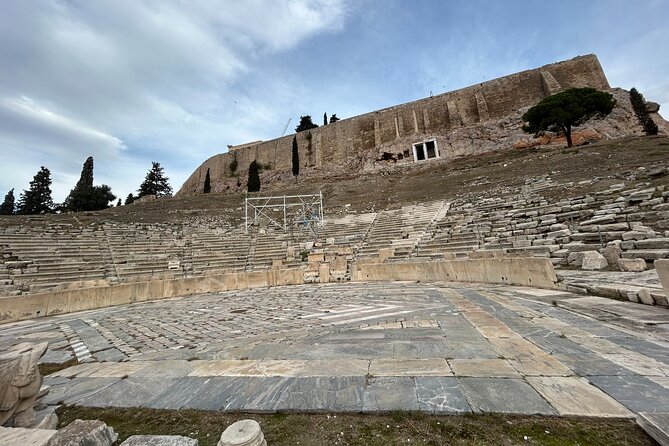
Theatre of Dionysus: when drama becomes public culture

Next up is the Theatre of Dionysus. The tour calls it the first theatre in human history, and even if you only remember one idea from the day, remember this: theatre and civic life were linked here.
This is where tragedies and comedies were performed for the Athenian public. The guide ties the space to major writers associated with Greek drama, including Sophocles, Euripides, and Aeschylus. As you stand there, it is easier to picture how plays were not just entertainment, but a kind of public conversation.
A practical note: this stop is shorter, but it is a turning point. Once you get theatre in your head, the rest of Athens feels less like monuments and more like a culture system.
Other ways to spend the day near Athens
- Historical Delphi One Day Tour with Arachova Stop & Expert Guide
★ 4.5 · 1,247 reviews - Historic Athens: Small Group Electric Bike Tour
★ 4.9 · 966 reviews - Acropolis, Parthenon & Athens Old City Heritage Walking Tour
★ 4.5 · 876 reviews - Athens: Small Group E-Bike Tour of Historic Highlights
★ 4.9 · 154 reviews
Odeon of Herodes Atticus: a memorial built into the city’s music-life
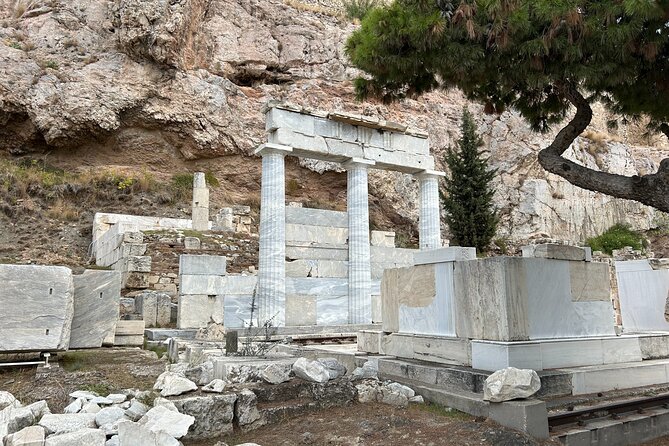
As you make your way up, you reach the Odeon of Herodes Atticus. This structure was built by a benefactor and famous philosopher of the 2nd century AD, and it was built in memory of his deceased wife.
This stop adds a layer people often miss. You are not only seeing Classical Greece. You are also seeing how later Athenians and Roman-era patrons remixed the idea of using monumental architecture to shape public life.
Even in limited time, this is a good reminder: the Acropolis did not freeze in time. It kept getting used, adapted, and reinterpreted.
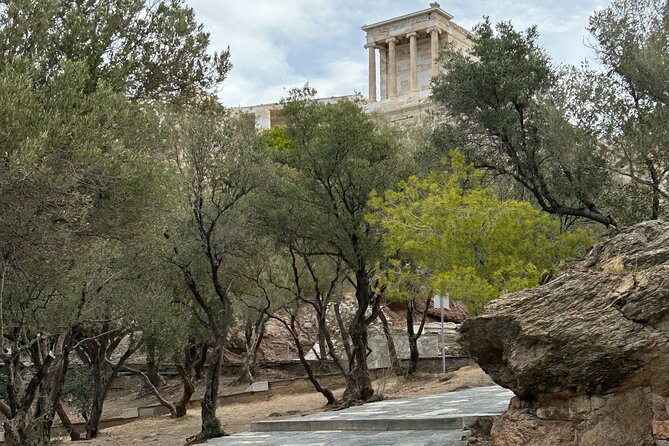
Temple of Athena Nike: victory, devotion, and state messaging
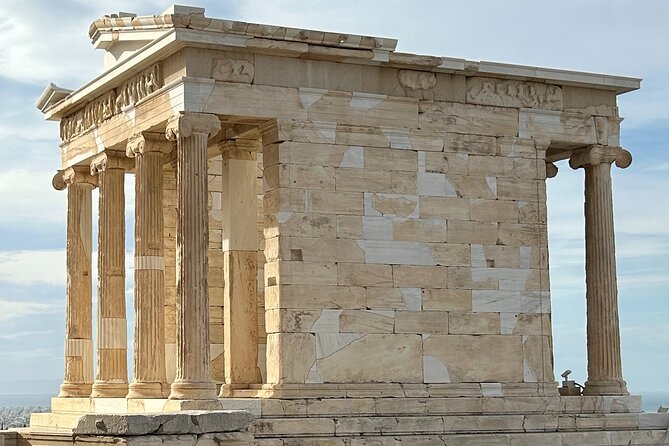
At the Temple of Athena Nike, you get a focused look at a sanctuary space dedicated to a goddess of victory. The name alone signals what the Athenians wanted to communicate: victory was not just a military event. It was tied to religious meaning and civic pride.
The tour keeps this stop at about 20 minutes, with admission included at this stop depending on your ticket option. It is enough time to understand the function of the temple within the larger Acropolis sanctuary area without turning the visit into a museum lecture.
If you have ever wondered why so much effort went into symbols, this is the kind of stop where the symbols start to feel practical. They served a political and religious purpose at the same time.
Propylaea: the gateway that frames your view of Athens
Next you reach the Propylaea, the monumental gateway leading into the sanctuary. This stop is both architecture and orientation.
You admire the view of the surrounding hills while also walking up toward the interior. The Propylaea helps you understand something important about the Acropolis design: movement and arrival were part of the experience. People did not just walk to buildings. They entered through a statement.
From a traveler perspective, this section is also where you start to feel the “how do I get a photo without losing the story” problem. A guide who can time photo moments makes a big difference, and the headset setup means you can keep listening even when you pause.
Erechtheion: myths made physical, and sculptures you will notice up close
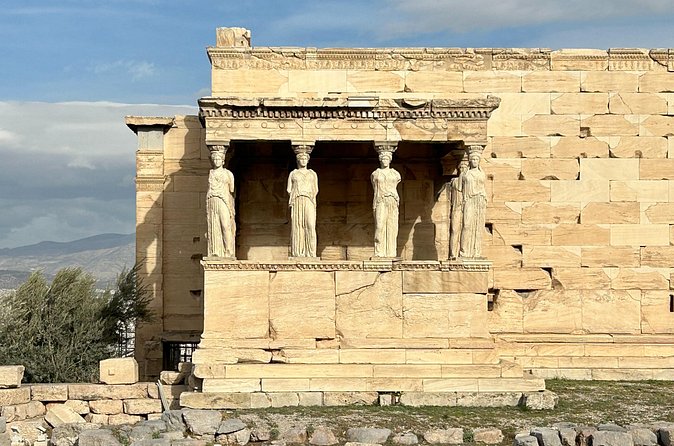
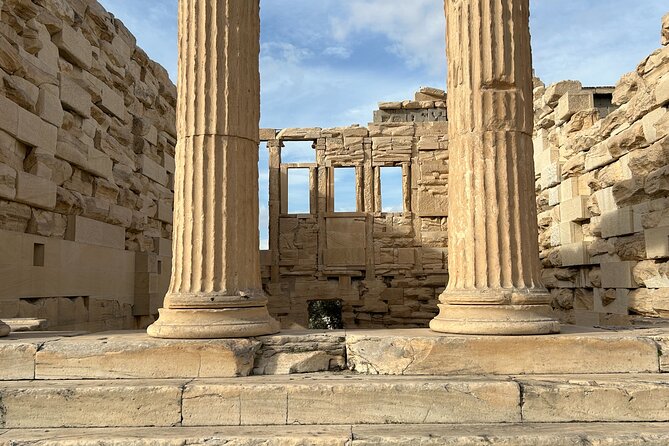
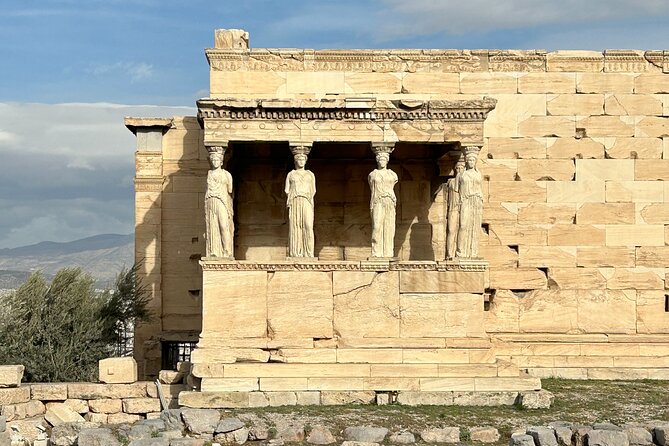
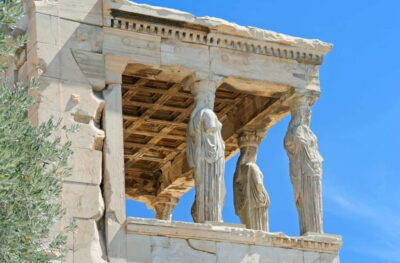
Your penultimate stop is the Erechtheion, often described as a temple of myths and legends. It is also famous for its unique sculptures.
This is one of the most rewarding stops if you enjoy the human side of architecture. You are not only looking at stone shapes. You are looking at the way stories, worship, and identity show up in design details.
Erechtheion is also a good place to slow your attention down. The guide will help you connect the myths to what you see. And because this is near the end of the climb sequence, you are mentally ready to pay closer attention to how the carvings and layout work.
Admission is included at this stop if your chosen ticket option includes entry fees. Either way, the explanation is what turns the sculpture work from decorative into meaningful.
The Parthenon: the crown jewel and a technical flex
Finally, you reach the Parthenon, the tour’s last and most famous stop, described as the jewel in the crown. The guide frames it as a gift to Athens’ patron goddess and emphasizes it as a masterpiece of Classical-period ancient Greek architecture.
The tour also highlights a point I think you should care about: the Parthenon is presented as a technical achievement of the democratic state. That is more than a slogan. It links the idea of democracy to building projects and public culture, not just voting.
You get about 30 minutes at the Parthenon area, which is a smart amount of time because it gives you breathing room for:
- taking in the full structure
- hearing what makes it significant
- getting your own perspective from different angles
This is also where the views start to do their job. Modern Athens stretches below the hill, and that contrast helps you understand the Acropolis as a continuous reference point, not a totally sealed-off ruin.
If you want the day’s biggest payoff, focus on asking yourself one question while you look: what problem was the culture trying to solve with a building this complex? The tour’s framing nudges you toward the politics, religion, and identity behind the stone.
Price and value: is $36.14 a good deal for this much storytelling?
At $36.14 per person for about 2 hours 40 minutes, the price is competitive for a top-of-the-hill experience in central Athens, especially because you get more than a walk-by.
Here is where the value really comes from:
- You get a historian or archaeologist guide, which changes the quality of the explanations.
- You get headsets for each guest, which improves how much you actually hear and retain.
- The stops are chosen to cover the Acropolis as a cultural system, not just a set of landmark photos.
- The tour includes admission only if you pick the option that includes entry fees, which you can plan around.
If you already plan to pay for entry tickets anyway, the “option with admission” can make the whole day feel like a packaged deal. If you plan to book tickets separately, you can still benefit from the guide and the headsets, but your total cost may differ.
Either way, the tour is priced for people who want context. If you only want monuments at a glance, you may not get your money’s worth.
Who this tour suits best, and who might want another option
This tour is a strong fit if you care about how ideas connect. You will likely enjoy it most if you like:
- philosophy, theatre, and how public culture works
- learning what political systems mean in real buildings
- history that does not feel like memorizing dates
It also tends to be a good choice for couples and groups that want a guided experience without feeling stuck in a rigid script. The small group size helps questions stay natural.
It may be less ideal if you prefer total freedom, silent listening, or slow museum-style pacing. This tour gives you depth quickly, but it still has a time structure.
Tips to get the best experience on the day
A few practical things will help your day go smoothly:
- Wear comfortable, grippy shoes. You are on a hill and moving between multiple stops.
- If weather is iffy, keep an eye on conditions. The experience requires good weather, and there is flexibility if it gets cancelled.
- Bring a phone with enough battery. You will want photos, especially at the gateway and Parthenon angles.
- Go in with a curious mindset. Ask questions. The best moments come when you connect what you see to what the guide is explaining about society and belief.
Should you book this Acropolis historical tour?
If you want the Acropolis to make sense, yes, I would book it. The combination of headsets, a historian or archaeologist guide, and a storyline that starts with how civilization develops gives you a framework that most self-guided visits do not provide.
I would especially recommend it if you are the type who looks at famous buildings and immediately wonders why they were built and how they shaped daily life. This tour answers that, stop by stop.
Just remember to double-check the ticket option you choose, because entry fees are not always included. If you plan around that, this feels like a smart buy for a top site in Athens.
FAQ
What is the duration of the Acropolis Historical Tour?
The tour lasts about 2 hours 40 minutes.
How much does the tour cost?
The price is $36.14 per person.
Is the tour offered in English?
Yes, the tour is offered in English.
What does the itinerary include?
You will visit the South Slope, the Theatre of Dionysus, the Odeon of Herodes Atticus, the Temple of Athena Nike, the Propylaea, the Erechtheion, and end at the Parthenon.
Are admission tickets included?
Admission or entry fees are included only if you choose the option that includes them. If you choose the option without admission, entry fees are not included.
Where do you meet and where does the tour end?
The meeting point is Dionysiou Areopagitou 17, Athina 117 42, Greece. The tour ends in front of the Parthenon temple at the top of the Acropolis hill, at ParthenonAthens 105 58, Greece.
How big are the groups?
The tour has a maximum of 25 travelers.
What if the weather is bad?
This experience requires good weather. If it is canceled due to poor weather, you will be offered a different date or a full refund.
What is the cancellation policy?
You can cancel for free up to 24 hours in advance for a full refund. If you cancel less than 24 hours before the experience starts, the amount you paid will not be refunded.
Freshly listed near Athens
- Athens: Premium Guided E-Scooter Tour in Acropolis Area★ 5.0 · 133 reviews
- Athens: Wine Workshop Create your Own Wine under the Acropolis★ 5.0 · 77 reviews
- Ceramic and Pottery Creative Workshop with Two Local Artists★ 4.0 · 57 reviews
- Private Tour and Tasting at Zeginis Winery★ 5.0 · 18 reviews
- Athens: Greek Wines Tasting with Sommelier and Acropolis Views★ 5.0 · 88 reviews
- Private Day Trip to Nafplio from Athens★ 5.0 · 20 reviews
- Athens Old City Private Photoshoot Tour / 2 hrs★ 5.0 · 109 reviews
- Greek food and wine tasting★ 5.0 · 18 reviews
Acropolis Tickets & Guided Tours, compared.
Acropolis & up to 5 Archaeological Sites Combo Pass
Read our review →
Acropolis Ticket with Optional Audio or Live Guide
Read our review →
Acropolis, Parthenon & Acropolis Museum Guided Tour
Read our review →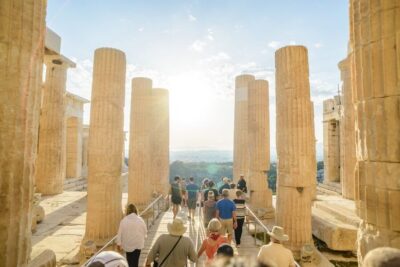
Acropolis: Premium Acropolis and Parthenon Guided Tour
Read our review →


Athens Scenic Electric Bike Tour with optional Acropolis visit
Read our review →
Acropolis monuments & Parthenon Walking Tour with Optional Acropolis Museum
Read our review →Browse the lists this tour appears in